
Why Do Teenagers Get Hormonal Acne? Causes, Treatment & Prevention Guide for Girls
Learn why teenagers get hormonal acne, what causes it during puberty, natural treatments, prevention tips, and when to see a doctor.
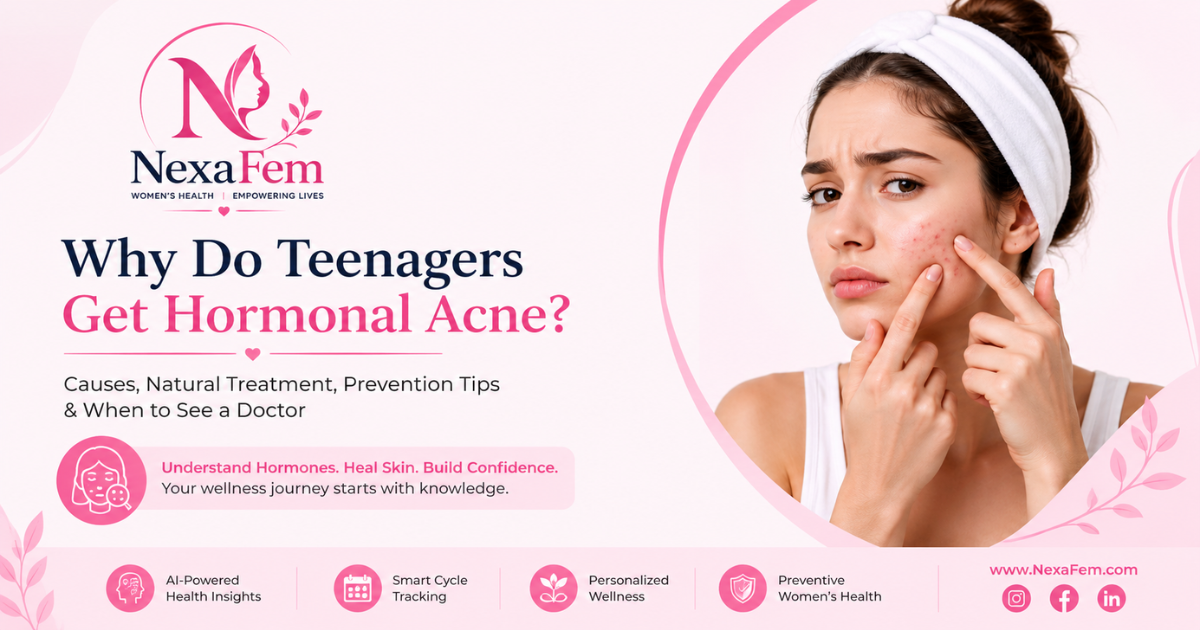
Hormonal acne is one of the most common concerns during adolescence, yet it can feel deeply personal. For many teen girls, breakouts arrive just as they're navigating new emotions, changing bodies, and growing confidence. A few pimples can quickly become painful cysts, persistent redness, or frustrating acne that seems impossible to control despite trying every skincare trend online.
If you've ever wondered, "Why do teenagers get hormonal acne?", you're not alone. The answer lies in the natural hormonal changes that occur during puberty. While acne is common, understanding why it happens can make it far less overwhelming—and help you make informed decisions about caring for your skin.
At NexaFem, we believe skin health is part of overall hormonal health. By understanding your body's changing hormone patterns, menstrual cycle, lifestyle, and symptoms, you can take a more proactive approach to your wellbeing instead of simply reacting to breakouts.
Quick Summary (TL;DR)
Hormonal acne develops because puberty increases androgen hormones, stimulating excess oil production.
Most teenagers experience acne during puberty, especially girls around the time periods begin.
Gentle skincare, healthy lifestyle habits, and evidence-based treatments usually improve acne over time.
Severe, painful, or scarring acne should be assessed by a healthcare professional.
Tracking menstrual cycles and hormonal symptoms may help identify acne patterns and support preventive care.
What Is Hormonal Acne?
Hormonal acne is acne that develops due to fluctuations in hormones that influence the skin's oil-producing glands.
During puberty, the body naturally produces more androgens, a group of hormones present in both boys and girls. These hormones enlarge sebaceous (oil) glands, causing them to produce more sebum. When excess oil combines with dead skin cells and bacteria, pores become clogged, leading to acne.
Unlike occasional pimples caused by irritation, hormonal acne tends to recur in similar areas and often follows hormonal changes such as menstrual cycles.
According to the NHS, acne affects the majority of teenagers and usually begins during puberty when hormone levels rise. See the NHS acne overview: https://www.nhs.uk/conditions/acne/
Why Do Teenagers Get Hormonal Acne?
The simple answer is:
Teenagers get hormonal acne because puberty increases hormone production, leading to excess oil, clogged pores, inflammation, and acne.
Several biological processes happen at the same time.
Puberty Increases Hormone Levels
Puberty triggers dramatic hormonal changes.
Girls experience increases in:
Androgens
Estrogen
Progesterone
Although estrogen often supports skin health, higher androgen activity stimulates oil production, making acne more likely.
This explains why puberty and acne in girls are so closely linked.
Increased Sebum Production
Sebum is the skin's natural oil.
It protects the skin barrier, but too much sebum creates an ideal environment for clogged pores.
When excess oil cannot escape normally, acne develops.
Clogged Hair Follicles
Dead skin cells naturally shed every day.
During puberty, these cells can mix with excess oil and block hair follicles.
These blockages become:
Whiteheads
Blackheads
Inflamed pimples
Skin Bacteria
The skin naturally contains Cutibacterium acnes (formerly Propionibacterium acnes).
When pores become blocked, these bacteria multiply, increasing inflammation and producing painful acne lesions.
Inflammation
Hormonal acne isn't just about oily skin.
The immune system reacts to blocked follicles and bacteria, causing redness, swelling, tenderness, and sometimes deeper cystic acne.
Teen Acne Causes Beyond Hormones
Hormones are the main driver, but several other factors can worsen acne.
These include:
Family history of acne
Oily skincare or makeup products
Picking or squeezing pimples
High stress levels
Poor sleep
Smoking
Certain medications
High-glycemic diets in some individuals
Importantly, acne is not caused by poor hygiene. Washing your face excessively can actually irritate the skin and worsen breakouts.
What Does Hormonal Acne Look Like?
Hormonal acne may include:
Blackheads
Whiteheads
Red bumps
Painful pimples
Deep cysts
Tender nodules
Oily skin
Acne around the jawline, chin, cheeks, or forehead
Teen girls often notice flare-ups just before or during their menstrual period as hormone levels fluctuate.
If you're noticing this pattern, tracking your symptoms with an AI Cycle Tracker or Hormone Symptom Tracker can help identify recurring trends to discuss with a healthcare provider.
Who Is More Likely to Experience Hormonal Acne?
Some girls are more susceptible than others.
Risk factors include:
Early puberty
Family history
Polycystic Ovary Syndrome (PCOS)
Irregular menstrual cycles
Higher androgen levels
Obesity
Chronic stress
Persistent acne combined with irregular periods, excessive facial hair, or unexplained weight gain may warrant evaluation for underlying hormonal conditions such as PCOS. The American College of Obstetricians and Gynecologists (ACOG) provides guidance on adolescent gynecologic health: https://www.acog.org/
How Is Hormonal Acne Diagnosed?
There is no single blood test for routine hormonal acne.
Healthcare professionals typically diagnose acne through:
Medical history
Skin examination
Menstrual history
Symptom assessment
Family history
If hormonal disorders are suspected, additional investigations may be recommended.
How to Treat Hormonal Acne Naturally
Many teenagers with mild acne benefit from consistent healthy habits alongside evidence-based skincare.
Natural approaches include:
Use a Gentle Cleanser
Wash your face twice daily using a mild, fragrance-free cleanser.
Avoid harsh scrubs that damage the skin barrier.
Moisturize Daily
Even oily skin needs hydration.
Choose a non-comedogenic moisturizer.
Wear Sunscreen
Daily sunscreen helps reduce post-inflammatory pigmentation and protects healing skin.
Eat a Balanced Diet
While no single food causes acne, some studies suggest lower glycemic eating patterns may help certain individuals.
Focus on:
Fruits
Vegetables
Whole grains
Lean proteins
Healthy fats
Prioritize Sleep
Sleep supports hormone regulation and skin repair.
Teenagers generally need 8–10 hours each night.
Manage Stress
Stress does not directly cause acne but can worsen hormonal fluctuations and inflammation.
Helpful strategies include:
Exercise
Mindfulness
Journaling
Spending time outdoors
Relaxation techniques
Avoid Picking Pimples
Picking increases:
Infection
Scarring
Pigmentation
Healing time
Medical Treatment Options
For moderate to severe acne, healthcare professionals may recommend treatments such as:
Benzoyl peroxide
Topical retinoids
Topical antibiotics (usually combined with other therapies)
Oral antibiotics for limited durations
Hormonal therapies (for appropriate patients)
Isotretinoin for severe or scarring acne under specialist supervision
Treatment depends on acne severity, age, medical history, and individual circumstances. Guidance from the National Institute for Health and Care Excellence (NICE) emphasizes personalized treatment plans and avoiding unnecessary long-term antibiotic use: https://www.nice.org.uk/guidance/ng198
The Emotional Impact of Hormonal Acne
Acne affects more than skin.
Many teenagers experience:
Lower confidence
Anxiety
Social withdrawal
Embarrassment
Reduced self-esteem
Parents and caregivers should remember that acne can have a meaningful emotional impact. Offering reassurance, avoiding criticism, and seeking help early when needed can make a significant difference.
Mental wellbeing is an essential part of women's health—not separate from it.
Can Hormonal Acne Be Prevented?
Acne cannot always be prevented because puberty is a normal biological process.
However, healthy habits may reduce flare-ups.
These include:
Gentle skincare routines
Consistent sunscreen use
Avoiding heavy pore-clogging cosmetics
Managing stress
Getting adequate sleep
Eating a balanced diet
Avoiding smoking
Seeking early treatment before scarring develops
Understanding your menstrual cycle through a Cycle Health Dashboard may also help identify hormonal patterns and encourage earlier conversations with your healthcare provider.
Common Mistakes Teen Girls Make
Many popular acne "hacks" can actually worsen the skin.
Common mistakes include:
Washing the face too often
Using harsh alcohol-based products
Popping pimples
Trying multiple new products at once
Expecting overnight results
Following unverified social media skincare advice
Skipping sunscreen
Healthy skin usually improves through consistency rather than aggressive treatment.
Lifestyle Tips for Healthier Skin
Healthy skin reflects overall wellbeing.
Small daily habits can support both hormonal balance and skin health.
Stay hydrated.
Exercise regularly.
Eat nutrient-rich meals.
Prioritize quality sleep.
Manage stress in healthy ways.
Follow a simple skincare routine.
Track recurring symptoms using trusted digital health tools.
NexaFem's AI-powered wellness features are designed to help women recognize hormonal patterns over time, encouraging preventive care rather than waiting until symptoms become more severe.
When Should You See a Doctor?
Seek medical advice if:
Acne is painful or severe.
Acne leaves scars.
Over-the-counter treatments have not helped after several weeks.
Breakouts are affecting mental wellbeing.
Acne is associated with irregular periods, excess facial hair, or sudden weight changes.
Large cysts frequently develop.
Early assessment may prevent long-term scarring and identify underlying hormonal conditions.
Red Flag Symptoms
Although most acne is harmless, seek prompt medical evaluation if acne is accompanied by:
Rapid onset of severe acne
Signs of infection (fever, spreading redness, severe swelling)
Significant scarring
Sudden excessive facial or body hair growth
Very irregular or absent menstrual periods
Symptoms suggesting an endocrine disorder
Frequently Asked Questions
Share this post
Comments (0)
No comments yet. Be the first to comment!