
Why Iron Deficiency in Women Is Still Massively Ignored
Iron deficiency in women often goes undiagnosed despite symptoms like fatigue, hair loss, brain fog, and weakness. Learn the warning signs, causes, and how to improve iron levels naturall
You're losing more hair than usual. Your brain feels foggy. You wake up exhausted no matter how long you sleep. Your motivation is low, your workouts feel harder, and even small tasks seem mentally draining.
You finally visit a doctor, get a basic blood test, and hear the frustrating words:
"Everything looks normal."
But what if the real issue was never properly checked?
Iron deficiency is one of the most common yet overlooked health problems in women. Millions of women experience symptoms of low iron for years without receiving answers because standard testing often misses the early stages of deficiency.
The truth is this: you do not need to be anaemic to suffer from iron deficiency.
Long before anaemia develops, low ferritin levels can quietly affect your energy, hormones, hair, mood, metabolism, and cognitive function.
And because these symptoms often develop slowly, many women begin believing their exhaustion is simply normal.
It is not.
Why Women Are More Vulnerable to Iron Deficiency
Women naturally require more iron than men due to:
Menstruation
Pregnancy
Postpartum recovery
Breastfeeding
Hormonal fluctuations
At the same time, many women:
Eat less red meat
Diet chronically
Skip meals
Follow restrictive eating patterns
Experience digestive issues affecting nutrient absorption
This creates the perfect environment for iron stores to gradually decline over time.
What Is Ferritin and Why Does It Matter?
Ferritin is the body's iron storage protein.
Think of ferritin as your iron savings account. Even if your haemoglobin appears normal, low ferritin means your body is running on depleted reserves.
This is where many women get missed.
Most standard blood tests only check haemoglobin, which usually drops only after iron deficiency becomes severe.
That means you can feel:
Exhausted
Foggy
Weak
Anxious
Unmotivated
while still being told your blood work is "normal."
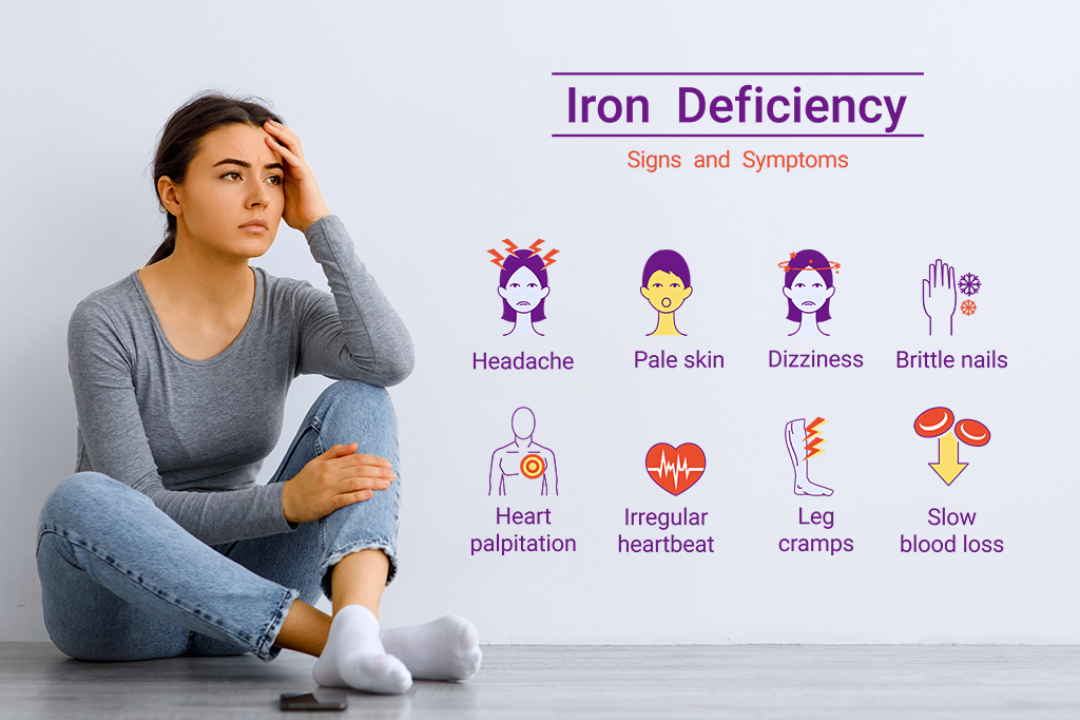
The Symptoms of Low Iron in Women
Iron affects oxygen transport, brain chemistry, energy production, hormone balance, and cellular function throughout the body.
When iron stores drop, symptoms can appear almost everywhere.
Physical Symptoms of Iron Deficiency
1. Constant Fatigue
One of the most common symptoms is persistent exhaustion that doesn't improve with sleep.
Women often describe:
Feeling drained by midday
Waking up tired
Needing caffeine constantly
Feeling physically heavy
Iron is essential for oxygen delivery to tissues and muscles. Without enough iron, the body struggles to produce energy efficiently.
2. Hair Fall and Hair Thinning
Low ferritin is strongly linked to:
Increased shedding
Thinning hair
Weak hair growth
Poor hair quality
Hair follicles require significant oxygen and nutrients to remain in the active growth phase.
When iron stores fall, the body prioritises essential organs over hair growth.
Many women spend years trying expensive hair products when the issue may actually be nutritional.
3. Brain Fog and Poor Concentration
Iron plays a major role in dopamine production, focus, memory, and mental clarity.
Low iron may cause:
Difficulty concentrating
Forgetfulness
Mental fatigue
Reduced motivation
Trouble processing information
Many women describe feeling like their brain is "slower" than usual.
4. Shortness of Breath
Even mild iron deficiency can reduce oxygen transport throughout the body.
This may cause:
Breathlessness climbing stairs
Increased heart rate
Feeling weak during exercise
Dizziness or lightheadedness
5. Cold Hands and Feet
Women with low iron often feel cold constantly because oxygen circulation becomes less efficient.
6. Brittle Nails and Pale Skin
Iron deficiency can affect:
Nail strength
Skin tone
Skin texture
Some women notice:
Pale skin
Dark under eye circles
Weak nails
Cracking around the mouth
The Emotional Impact of Iron Deficiency
Iron deficiency affects more than physical energy.
Low ferritin can also contribute to:
Anxiety
Irritability
Low mood
Emotional exhaustion
Reduced stress tolerance
This happens because iron is involved in neurotransmitter production and nervous system regulation.
Many women are incorrectly treated only for anxiety or burnout when iron deficiency may be playing a major role.
Why Iron Deficiency Often Goes Undiagnosed
One of the biggest problems in women's healthcare is incomplete iron testing.
Many doctors only order:
Haemoglobin
Basic CBC testing
But haemoglobin can remain normal for a long time while ferritin quietly crashes.
This creates a dangerous "grey zone" where women:
Feel awful
Experience symptoms daily
Struggle physically and emotionally
Yet continue being told they are healthy
Who Is Most at Risk?
Women With Heavy Periods
Heavy menstrual bleeding is one of the leading causes of iron depletion in women.
Even moderate monthly blood loss adds up significantly over time.
Vegetarian and Vegan Women
Plant based iron is harder for the body to absorb compared to iron from animal sources.
Women following vegetarian or vegan diets may require additional attention to iron intake and absorption.
Pregnant Women
Iron needs increase dramatically during pregnancy because the body supports:
Increased blood volume
Placental development
Fetal growth
Low iron during pregnancy can affect both mother and baby.
Women With Gut Health Issues
Conditions like:
IBS
Coeliac disease
H. pylori infection
Chronic digestive inflammation
can reduce iron absorption significantly.
How To Properly Test Iron Levels
If you suspect iron deficiency, ask for a complete iron panel including:
Ferritin
Serum iron
Transferrin saturation
TIBC
Complete blood count
Ferritin is especially important because it reflects stored iron levels.
Many experts consider ferritin levels below optimal even when they technically fall inside the laboratory reference range.
How Women Can Improve Iron Levels Naturally
Eat More Iron Rich Foods
Best Sources of Haem Iron
Red meat
Liver
Shellfish
Eggs
Haem iron is absorbed more efficiently by the body.
Plant Based Iron Sources
Lentils
Beans
Spinach
Pumpkin seeds
Tofu
Dark leafy greens
Pair Iron With Vitamin C
Vitamin C improves iron absorption significantly.
Helpful combinations include:
Lemon with spinach
Orange with lentils
Berries with iron rich meals
Avoid Blocking Iron Absorption
Certain foods and drinks reduce iron absorption when consumed alongside iron rich meals.
These include:
Coffee
Tea
Calcium supplements
Excess dairy
Try spacing them away from iron rich meals when possible.
Iron Supplements Can Help — But Carefully
Iron supplements can dramatically improve symptoms when used correctly.
However:
Not all forms are well tolerated
Some cause constipation or nausea
Too much iron can be harmful
Ferrous bisglycinate is often easier on digestion compared to standard iron supplements.
Always supplement under medical guidance.
What About Iron Infusions?
For women with:
Extremely low ferritin
Severe symptoms
Poor absorption
Ongoing heavy bleeding
IV iron infusions may be recommended.
Many women report improvements in:
Energy
Hair growth
Brain fog
Exercise tolerance
Mood
within weeks of treatment.
Low Iron Is Not "Just Being Tired"
Women are too often conditioned to normalise exhaustion.
But constant fatigue is not a personality trait.
Hair fall is not always stress.
Brain fog is not laziness.
Sometimes your body is simply missing one of the most essential nutrients required for oxygen, energy, hormones, and neurological function.
Your Symptoms Deserve Investigation
If you have been struggling with:
Fatigue
Hair loss
Brain fog
Weakness
Dizziness
Poor concentration
do not ignore it.
And do not settle for "your tests are normal" without checking ferritin properly.
Iron deficiency is common.
It is measurable.
And most importantly — it is treatable.
Your body deserves more than survival mode.
Share this with a woman who's constantly exhausted but keeps being told she's "fine." She deserves answers. 💜
Frequently Asked Questions
Share this post
Comments (0)
No comments yet. Be the first to comment!