
How AI in Women's Healthcare Is Transforming Prevention, Diagnosis, and Personalized Care
Discover how AI in women's healthcare is improving prevention, diagnosis, reproductive health, and personalized wellness for women.
Women have long faced healthcare challenges that often go unnoticed, misunderstood, or diagnosed too late. From irregular menstrual cycles and hormonal imbalances to fertility concerns and menopause symptoms, many women spend years searching for answers.
Today, a new wave of technology is changing that experience.
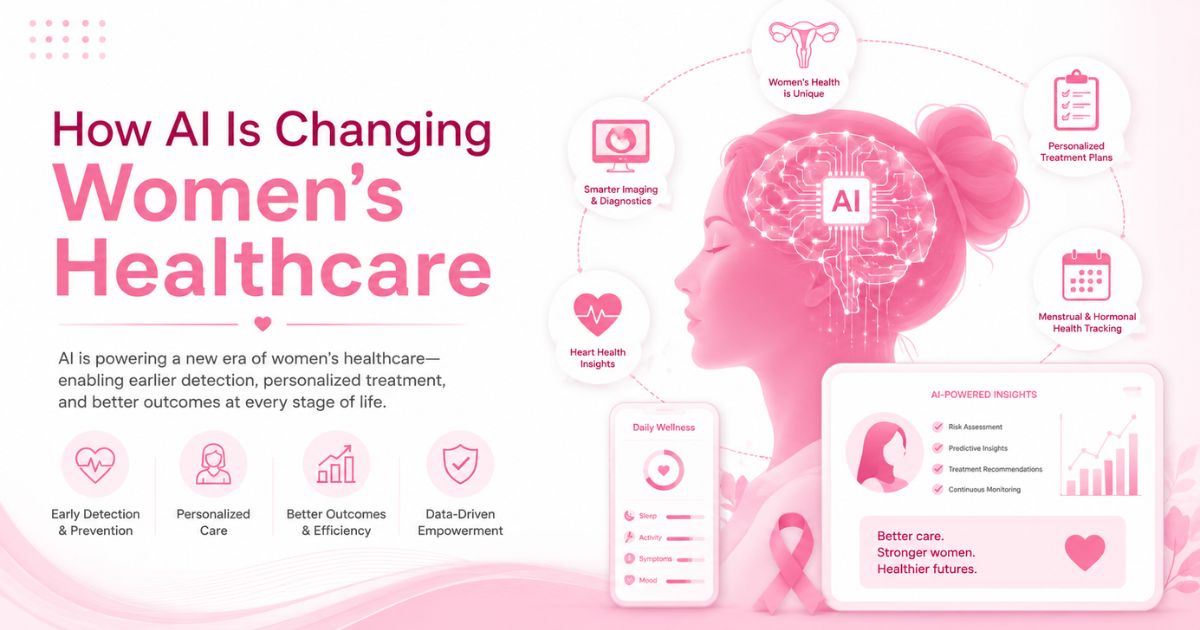
Artificial intelligence (AI) is helping healthcare providers identify patterns, predict risks, personalize treatment recommendations, and support women in understanding their health more effectively than ever before.
While AI cannot replace healthcare professionals, it is becoming a powerful tool that supports earlier intervention, better decision-making, and more personalized healthcare experiences.
For women seeking proactive wellness support, the rise of AI in women's healthcare represents an important shift toward prevention rather than reaction.
Quick Summary (TL;DR)
AI in women's healthcare helps identify health risks earlier and supports personalized care.
AI tools are increasingly used in reproductive health, fertility tracking, breast cancer screening, and symptom monitoring.
Personalized women's healthcare is becoming more accessible through health apps, wearable devices, and predictive analytics.
AI can improve healthcare efficiency but should always complement—not replace—medical professionals.
The future of women's health technology is focused on prevention, personalization, and earlier intervention.
What Is AI in Women's Healthcare?
Artificial intelligence refers to computer systems that can analyze large amounts of health information, identify patterns, and assist healthcare professionals in making informed decisions.
In women's healthcare, AI can help:
Analyze symptoms
Monitor menstrual cycles
Predict ovulation windows
Assess health risks
Support fertility planning
Improve screening accuracy
Deliver personalized wellness insights
Simply put, AI acts like an intelligent assistant that helps transform complex health data into actionable information.
Why Women's Healthcare Needs Better Personalization
Women's health is influenced by multiple interconnected factors, including:
Hormones
Menstrual cycles
Pregnancy
Fertility
Mental health
Lifestyle habits
Sleep quality
Nutrition
Genetics
Traditional healthcare often relies on brief appointments and isolated health data.
AI allows healthcare systems to connect multiple pieces of information and identify trends that may otherwise be missed.
This is one reason personalized women's healthcare is becoming a major focus in modern medicine.
How AI Is Improving Women's Healthcare
Earlier Detection of Health Conditions
One of the most promising applications of AI is identifying health concerns earlier.
AI systems can analyze:
Medical records
Imaging scans
Laboratory results
Symptom patterns
Wearable device data
Researchers are exploring AI tools that may help improve the detection of conditions such as:
Breast cancer
Cervical cancer
Endometriosis
Polycystic Ovary Syndrome (PCOS)
Cardiovascular disease
According to the CDC, early detection plays a critical role in improving outcomes for many chronic conditions.
AI for Reproductive Health
AI for reproductive health is rapidly evolving.
Modern fertility and reproductive health platforms can help women:
Track ovulation patterns
Monitor cycle irregularities
Identify fertility windows
Predict menstrual cycles
Record reproductive symptoms
By analyzing long-term trends rather than isolated symptoms, AI can provide more personalized reproductive insights.
For women planning pregnancy, understanding ovulation patterns and hormonal changes can support more informed conversations with healthcare providers.
Women interested in reproductive wellness may also benefit from learning about menstrual cycle tracking for hormonal health and understanding early signs of fertility challenges.
AI and Menstrual Health Intelligence
Many women experience symptoms that fluctuate throughout the menstrual cycle, including:
Fatigue
Mood changes
Headaches
Bloating
Sleep disturbances
Energy shifts
AI-powered health platforms can analyze these recurring patterns and help women understand potential connections between symptoms and hormonal changes.
This emerging field is often called menstrual intelligence.
Rather than viewing symptoms as isolated events, women can begin to identify recurring patterns that may deserve further medical evaluation.
Can AI Help With PCOS and Hormonal Disorders?
PCOS affects millions of women worldwide and remains one of the most commonly underdiagnosed hormonal conditions.
Common symptoms include:
Irregular periods
Acne
Weight changes
Excess hair growth
Fertility challenges
AI tools may help identify symptom clusters associated with hormonal disorders and encourage earlier medical assessment.
However, it is important to understand that AI cannot diagnose PCOS.
Diagnosis still requires evaluation by a qualified healthcare professional based on medical history, symptoms, laboratory testing, and clinical assessment.
Women concerned about hormonal health may also explore topics such as understanding PCOS symptoms naturally and signs of hormonal imbalance every woman should know.
AI in Pregnancy and Maternal Health
Pregnancy care is another area benefiting from technological innovation.
AI-supported systems can help monitor:
Blood pressure trends
Glucose levels
Pregnancy symptoms
Fetal health indicators
Appointment adherence
Healthcare organizations continue to study how AI may support earlier identification of pregnancy complications and improve maternal health outcomes.
The World Health Organization emphasizes the importance of timely monitoring and preventive care during pregnancy, making predictive technologies particularly valuable when used responsibly.
How AI Supports Preventive Healthcare
Preventive healthcare focuses on identifying potential risks before serious problems develop.
AI can assist by:
Monitoring long-term health trends
Detecting unusual symptom patterns
Encouraging earlier screenings
Providing personalized health reminders
Supporting healthy lifestyle habits
This approach aligns closely with NexaFem's mission of empowering women through preventive intelligence and symptom awareness.
Instead of waiting until symptoms become severe, women can become active participants in their health journey.
The Mental Wellness Connection
Women's physical and emotional health are deeply connected.
Hormonal fluctuations can influence:
Stress levels
Mood
Anxiety
Sleep quality
Emotional wellbeing
AI-powered wellness tools increasingly incorporate mental health tracking alongside physical health monitoring.
This integrated approach helps women recognize how emotional and physical symptoms may influence one another.
Women experiencing recurring emotional symptoms may benefit from exploring the connection between hormones and mental wellness and strategies for stress management during hormonal transitions.
Benefits of Personalized Women's Healthcare
The shift toward personalized women's healthcare offers several advantages.
More Relevant Health Insights
Instead of generic recommendations, AI systems can provide guidance based on individual patterns.
Improved Symptom Awareness
Tracking symptoms consistently helps women recognize trends that might otherwise be overlooked.
Better Preventive Care
Earlier awareness may encourage timely screenings and medical consultations.
Increased Health Engagement
Women who understand their health data often feel more empowered to participate in healthcare decisions.
What Are the Risks and Limitations of AI in Women's Healthcare?
Although AI offers exciting opportunities, it is not perfect.
Important limitations include:
AI Is Not a Doctor
AI cannot replace medical expertise, diagnosis, or treatment planning.
Data Quality Matters
Recommendations are only as accurate as the information entered.
Privacy Concerns
Women's health data should be protected using strong privacy and security standards.
Potential Bias
Healthcare AI systems must be carefully developed to avoid biases that could affect care quality.
Healthcare organizations and regulators continue working to establish safe and ethical standards for AI implementation.
Common Mistakes Women Make When Using Health Technology
Many women unintentionally reduce the effectiveness of health tracking tools.
Common mistakes include:
Tracking symptoms inconsistently
Ignoring persistent symptoms
Self-diagnosing based on app results
Delaying medical evaluation
Assuming AI recommendations are medical advice
Technology works best when combined with professional healthcare guidance.
Lifestyle Tips to Get the Most From AI Health Tools
To maximize the value of AI-powered wellness platforms:
Track symptoms regularly
Record menstrual cycle changes
Prioritize sleep quality
Maintain balanced nutrition
Monitor stress levels
Attend routine health screenings
Share relevant data with healthcare providers
Consistent tracking often produces more meaningful insights over time.
Red Flag Symptoms That Require Medical Attention
Seek prompt medical evaluation if you experience:
Heavy or prolonged bleeding
Severe pelvic pain
Sudden unexplained weight loss
Persistent breast changes
Fainting episodes
Significant menstrual changes
Difficulty breathing
Severe depression or thoughts of self-harm
These symptoms require professional assessment and should not be managed solely through digital health tools.
When to See a Doctor
Consider speaking with a healthcare professional if:
Symptoms persist for several months
Menstrual cycles become irregular
Fertility concerns arise
Hormonal symptoms interfere with daily life
AI-generated insights reveal recurring concerning patterns
You experience any red flag symptoms
Early evaluation often leads to better outcomes and greater peace of mind.
What Is the Future of Women's Health Technology?
The future of women's health technology is moving toward highly personalized and predictive healthcare.
Emerging innovations may include:
Advanced hormonal pattern recognition
Personalized preventive health plans
Enhanced fertility prediction models
AI-assisted screening tools
Integrated wearable health monitoring
More individualized symptom forecasting
As technology continues to evolve, women may gain access to healthcare experiences that are increasingly proactive, personalized, and data-driven.
The goal is not replacing clinicians but helping women and healthcare professionals make more informed decisions together.
Final Thoughts
Women's healthcare is entering a transformative era.
AI in women's healthcare is creating new opportunities for earlier detection, reproductive health support, symptom awareness, and personalized wellness guidance.
While technology cannot replace medical expertise, it can help women better understand their bodies, recognize important patterns, and seek timely care.
For organizations like NexaFem, the future lies in combining medical credibility, preventive intelligence, and compassionate technology to empower women at every stage of life.
The most effective healthcare model is likely to be one where human expertise and artificial intelligence work together—helping women make informed, confident decisions about their health long before problems become crises.
Sources & References
World Health Organization (WHO)
https://www.who.int
National Health Service (NHS)
https://www.nhs.uk
American College of Obstetricians and Gynecologists (ACOG)
https://www.acog.org
Centers for Disease Control and Prevention (CDC)
https://www.cdc.gov
National Institute for Health and Care Excellence (NICE)
https://www.nice.org.uk
Medical Disclaimer
This article is provided for informational and educational purposes only and should not be considered medical advice, diagnosis, or treatment. Health information is constantly evolving, and individual circumstances vary. Always consult a qualified physician, gynecologist, endocrinologist, or other licensed healthcare professional regarding any medical concerns, symptoms, diagnosis, treatment options, or healthcare decisions. Never ignore professional medical advice or delay seeking care because of information you have read in this article.
Frequently Asked Questions
Share this post
Comments (0)
No comments yet. Be the first to comment!