
Signs Your Body Is Asking You to Slow Down: 12 Signs Your Body Needs Rest
Learn the signs your body needs rest, recognize burnout early, and discover practical ways to restore your physical and mental well-being.
Modern life often rewards staying busy. Between work, family responsibilities, social commitments, and endless notifications, many women become experts at pushing through exhaustion. The problem is that your body keeps score.
Long before complete burnout happens, your body usually sends quiet signals asking for recovery. Persistent fatigue, poor sleep, frequent headaches, mood changes, digestive issues, and hormonal shifts are often early warning signs—not personal failures.
Recognizing these signs early gives you an opportunity to protect your health before stress begins affecting your physical, emotional, and hormonal well-being.
At NexaFem, we believe preventive healthcare starts with listening to your body—not waiting until symptoms become impossible to ignore.
Quick Summary (TL;DR)
Persistent fatigue despite sleep is one of the most common signs your body needs rest.
Chronic stress can affect hormones, mental health, digestion, immunity, and menstrual cycles.
Small lifestyle changes made early may help reduce the impact of prolonged stress.
Seek medical advice if symptoms are severe, persistent, or accompanied by concerning warning signs.
What Does It Mean When Your Body Is Asking You to Slow Down?
Your body constantly adapts to physical and emotional stress. Short periods of stress are normal and even helpful. However, when stress becomes continuous without enough recovery, your nervous system remains activated for too long.
This prolonged stress response may contribute to:
Increased cortisol levels
Poor-quality sleep
Hormonal imbalance
Increased inflammation
Reduced immune function
Mental exhaustion
According to the World Health Organization (WHO), burnout is recognized as an occupational phenomenon resulting from chronic workplace stress that has not been successfully managed. It is not considered a medical condition itself but can significantly affect well-being. World Health Organization – Burn-out overview
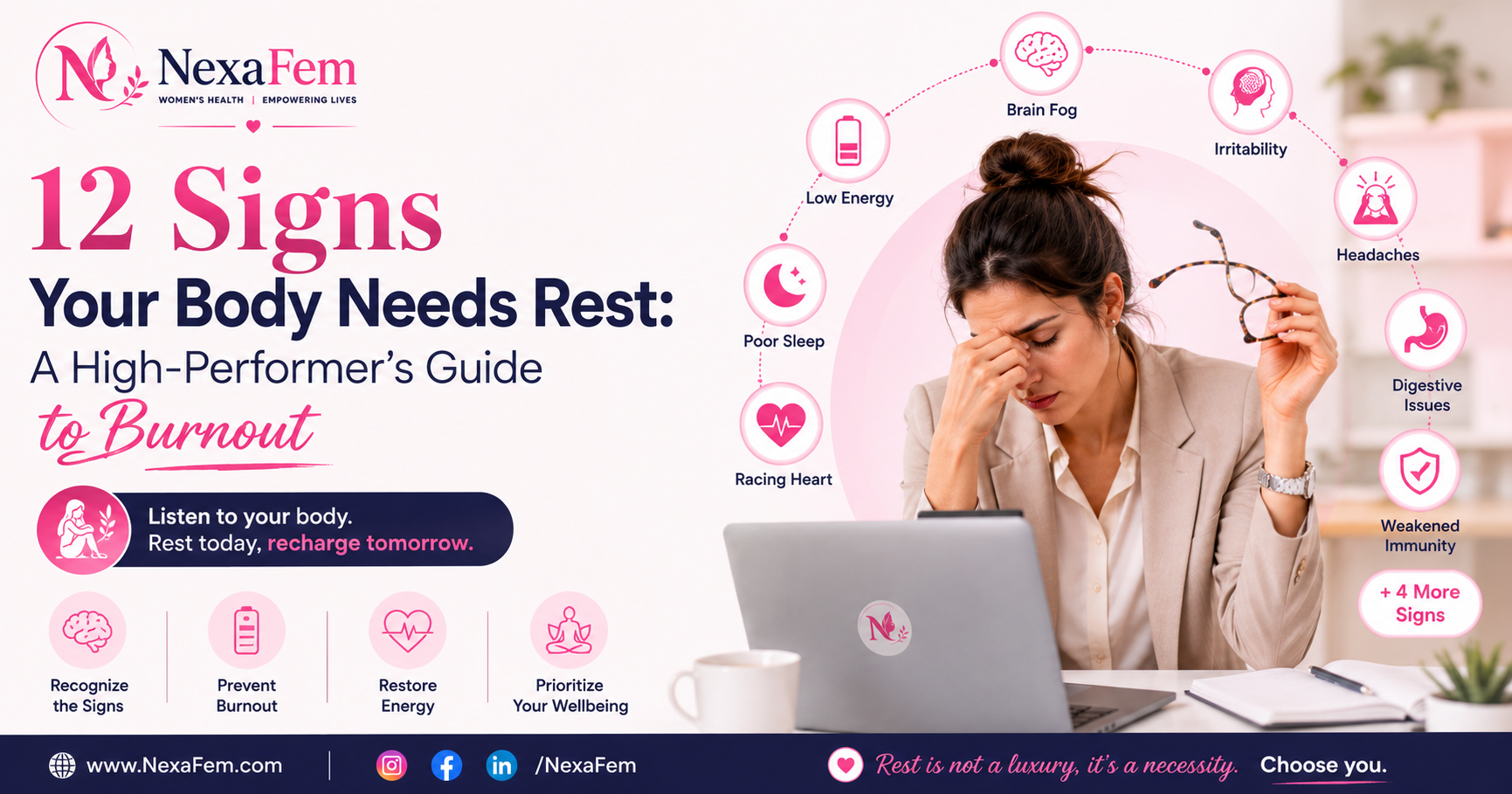
12 Signs Your Body Needs Rest
1. You're Always Tired—Even After Sleeping
One of the earliest physical signs of burnout is waking up tired despite getting enough hours of sleep.
You may notice:
Low morning energy
Afternoon crashes
Difficulty concentrating
Feeling exhausted after simple tasks
Persistent fatigue may also have other causes, including anemia, thyroid disorders, sleep disorders, or nutritional deficiencies, so ongoing symptoms deserve medical evaluation.
2. Your Sleep Feels Restless
Stress doesn't just reduce sleep duration—it affects sleep quality.
Common symptoms include:
Difficulty falling asleep
Waking during the night
Early morning awakening
Feeling unrefreshed
The NHS recommends maintaining consistent sleep habits as an important part of supporting both physical and mental health. NHS – Sleep and tiredness
3. Frequent Headaches or Muscle Tension
Stress often causes muscles to remain tight for long periods.
Many women notice:
Neck stiffness
Shoulder pain
Jaw clenching
Tension headaches
Back discomfort
These symptoms are often your body telling you to slow down.
4. Your Menstrual Cycle Changes
Chronic stress may temporarily affect communication between the brain and reproductive hormones.
Some women experience:
Delayed periods
Irregular cycles
More painful cramps
Heavier or lighter bleeding
Increased PMS symptoms
If menstrual changes persist for several months, consult a healthcare professional. For a deeper understanding, explore our guide on How Menstrual Tracking Helps You Understand Hormonal Health, and consider using the NexaFem Cycle Tracker to monitor patterns over time.
The American College of Obstetricians and Gynecologists (ACOG) emphasizes that menstrual changes can provide important clues about overall health. ACOG – Menstruation in Girls and Adolescents
5. You Get Sick More Often
Long-term stress may weaken immune defenses.
You may notice:
Frequent colds
Slow recovery
Recurring infections
Persistent fatigue after illness
6. Brain Fog and Poor Concentration
If simple decisions suddenly feel overwhelming, chronic stress may be affecting cognitive function.
Signs include:
Forgetfulness
Reduced focus
Difficulty completing tasks
Mental exhaustion
7. Mood Swings Become More Common
Your emotional health is closely connected to your physical health.
You might experience:
Irritability
Anxiety
Feeling emotionally overwhelmed
Reduced motivation
Increased sensitivity
The CDC notes that chronic stress can affect both emotional and physical health, reinforcing the importance of stress management and self-care. CDC – Coping with Stress
8. Digestive Problems Appear
Stress influences the gut through the gut-brain connection.
Symptoms may include:
Bloating
Constipation
Diarrhea
Indigestion
Appetite changes
If digestive symptoms are persistent, severe, or associated with weight loss or bleeding, seek medical evaluation.
9. You're Losing Interest in Things You Enjoy
This may reflect emotional exhaustion.
Activities that once felt exciting may begin to feel like obligations.
10. Your Exercise Recovery Is Slower
Overworking your body without adequate recovery may lead to:
Persistent soreness
Reduced performance
Increased injury risk
Lack of motivation to exercise
Nutrition, hydration, sleep, and recovery days all play essential roles in healthy fitness routines.
11. Increased Sugar or Caffeine Cravings
Many women rely on coffee or sugary snacks to overcome fatigue.
While occasional cravings are normal, persistent dependence on stimulants may indicate your body is compensating for insufficient rest.
For more practical strategies, read our article on Hormone-Supportive Nutrition for Women, and use the NexaFem Wellness Insights Tool to build healthier daily habits.
12. Everything Feels Harder Than Usual
Perhaps the biggest warning sign is when routine tasks require enormous effort.
You may find yourself constantly saying:
"I just can't keep up anymore."
That feeling deserves attention—not guilt.
What Causes Chronic Stress and Burnout?
Common contributors include:
Heavy workload
Caregiving responsibilities
Poor sleep
Financial stress
Relationship challenges
Chronic illness
Lack of recovery time
Perfectionism
Usually, burnout develops gradually rather than overnight.
How Chronic Stress Can Affect Women's Hormones
Stress influences the hypothalamic-pituitary-adrenal (HPA) axis, which interacts with reproductive hormones.
This may contribute to:
Irregular menstrual cycles
Worsening PMS
Sleep disruption
Reduced fertility in some individuals
Increased menopausal symptoms
Changes in appetite and metabolism
If you're interested in this connection, our guide on 7 Silent Symptoms Your Hormones May Be Out of Balance explains how hormonal changes can overlap with stress-related symptoms.
Who Is Most at Risk?
Risk factors include:
Women balancing careers and caregiving
College students
Healthcare professionals
Shift workers
New mothers
Women approaching menopause
People with chronic health conditions
How Is Burnout or Chronic Stress Evaluated?
There is no single medical test for burnout.
A healthcare professional may:
Review your symptoms and medical history.
Assess sleep, mood, and lifestyle factors.
Screen for anxiety or depression when appropriate.
Consider blood tests if symptoms suggest conditions such as thyroid disease, anemia, or vitamin deficiencies.
Evaluate other possible causes before attributing symptoms solely to stress.
The National Institute for Health and Care Excellence (NICE) provides evidence-based guidance on identifying and managing common mental health conditions. NICE – Common Mental Health Problems Guidance
Lifestyle Strategies That Support Recovery
Recovery usually requires consistent habits rather than quick fixes.
Prioritize Sleep
Aim for a regular sleep schedule and create a calming bedtime routine.
Nourish Your Body
Focus on:
Protein
Fiber-rich foods
Fruits
Vegetables
Healthy fats
Adequate hydration
Move Gently
Walking, yoga, stretching, and moderate exercise can support overall well-being without overloading your body.
Build Recovery Into Your Schedule
Recovery is productive.
Allow time for:
Rest
Relaxation
Hobbies
Social connection
Support Your Mental Health
Mindfulness, counseling, therapy, journaling, or stress-management programs may help many people manage chronic stress more effectively.
Common Mistakes Women Make
Many women unintentionally delay recovery by:
Ignoring persistent fatigue
Skipping meals
Depending on caffeine
Sleeping too little
Exercising intensely despite exhaustion
Assuming burnout is simply "part of adulthood"
Delaying medical evaluation for ongoing symptoms
Red Flag Symptoms
Seek urgent medical attention if fatigue or stress-related symptoms occur alongside:
Chest pain
Difficulty breathing
Fainting
Sudden weakness
Confusion
Severe depression or thoughts of self-harm
Heavy unexplained bleeding
Rapid, unexplained weight loss
These symptoms require prompt medical assessment and should not be attributed to stress alone.
When Should You See a Doctor?
Schedule an appointment if:
Fatigue lasts longer than several weeks.
Symptoms interfere with daily life.
Menstrual changes persist.
Sleep problems continue despite lifestyle changes.
Anxiety or low mood becomes overwhelming.
Physical symptoms worsen or remain unexplained.
Early evaluation may help identify treatable medical conditions and support better long-term health outcomes.
Final Thoughts
Your body rarely asks you to slow down without a reason. Fatigue, mood changes, poor sleep, digestive discomfort, and hormonal shifts are not signs of weakness—they may be signals that your body needs recovery and care.
Listening to these early warning signs can help prevent more serious health concerns and improve your long-term well-being. Preventive healthcare is about paying attention before small problems become bigger ones.
At NexaFem, we believe that combining evidence-based education with AI-powered wellness tools can help women better understand their bodies, recognize patterns early, and make informed decisions about their health.
Disclaimer
This article is provided for informational and educational purposes only and should not be considered medical advice. It is not intended to diagnose, treat, cure, or prevent any medical condition. If you have persistent symptoms, concerns about your physical or mental health, or questions about your menstrual cycle or hormone health, please consult a qualified healthcare professional for personalized diagnosis and treatment.
Sources & References
World Health Organization (WHO): Burn-out as an occupational phenomenon — https://www.who.int/news-room/questions-and-answers/item/burn-out-an-occupational-phenomenon
NHS: Sleep and tiredness — https://www.nhs.uk/every-mind-matters/mental-wellbeing-tips/how-to-fall-asleep-faster-and-sleep-better/
American College of Obstetricians and Gynecologists (ACOG): Menstruation as a Vital Sign — https://www.acog.org/clinical/clinical-guidance/committee-opinion/articles/2015/12/menstruation-in-girls-and-adolescents-using-the-menstrual-cycle-as-a-vital-sign
Centers for Disease Control and Prevention (CDC): Coping with Stress — https://www.cdc.gov/mentalhealth/stress-coping/index.html
National Institute for Health and Care Excellence (NICE): Common Mental Health Problems — https://www.nice.org.uk/guidance/cg123
Frequently Asked Questions
Share this post
Comments (0)
No comments yet. Be the first to comment!