

Amla in Ayurveda: Benefits for Immunity, Skin & Hair
Discover amla benefits for immunity, skin and hair, its Ayurvedic uses, nutrition, evidence, ways to use it and important safety precautions.
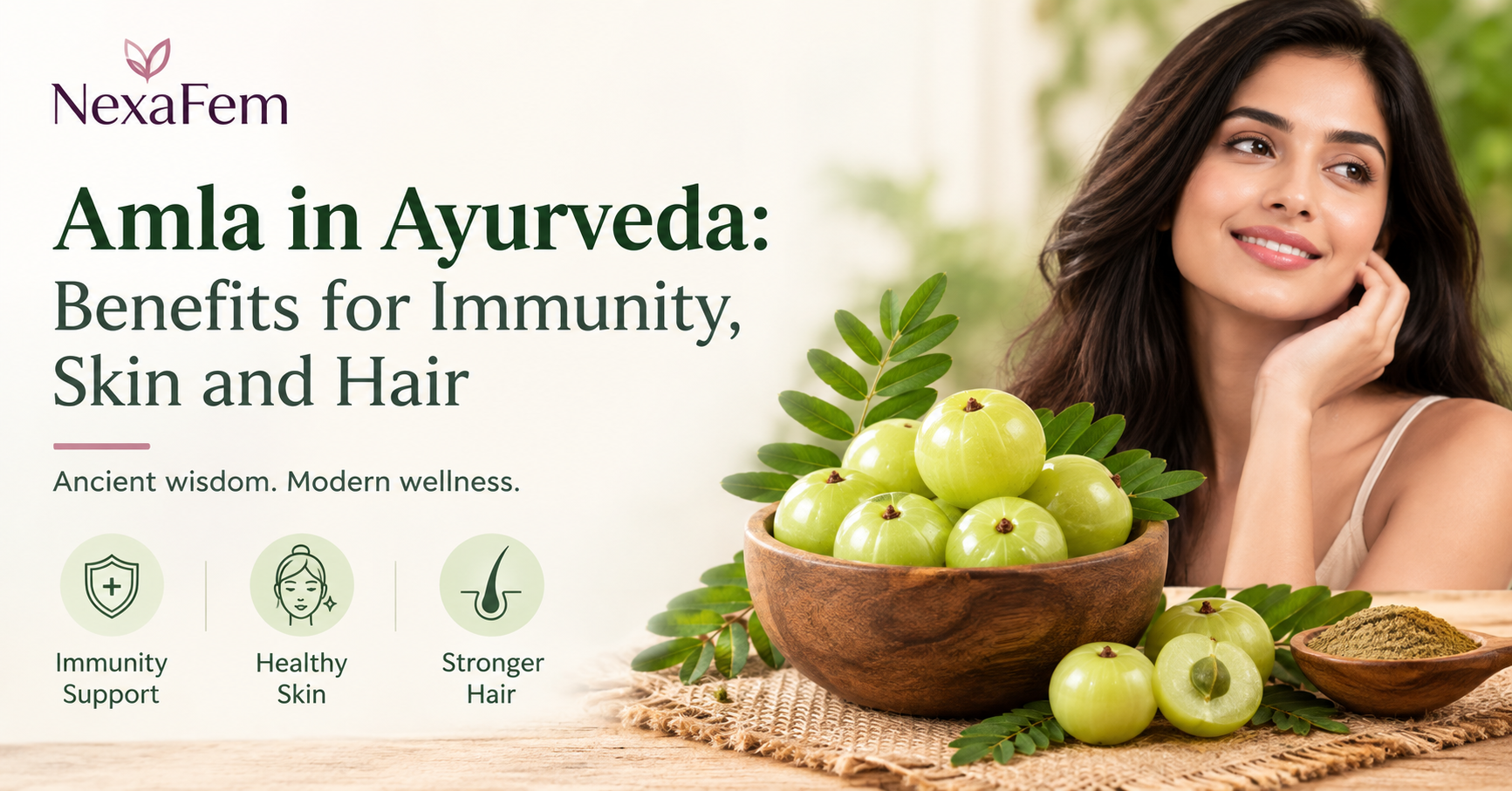
Amla in Ayurveda: Benefits for Immunity, Skin and Hair
Amla has a special place in Indian food traditions and Ayurveda. Known as Indian gooseberry and botanically as Phyllanthus emblica, this small, tart fruit has been traditionally valued as a nourishing and rejuvenating ingredient.
You may have heard that amla supports immunity, promotes glowing skin, strengthens hair or provides powerful antioxidants. Some of these claims have a reasonable nutritional or preliminary scientific basis, while others are based mainly on traditional use or early-stage research.
That distinction matters.
Amla contains vitamin C and numerous plant compounds, including polyphenols and tannins. Vitamin C has established roles in immune function, collagen production and antioxidant protection. Research on amla itself is also growing, but studies differ considerably in the form of amla used, the dose, the duration and the health outcome being measured.
So, should amla be part of a woman's wellness routine?
For many people, fresh amla or amla as part of a balanced diet can be a nutritious food choice. But it should not be viewed as a cure for hair loss, skin disease, recurrent infections or other medical conditions.
This guide looks at amla through two lenses: what Ayurveda traditionally says and what modern evidence can reasonably tell us.
Quick Summary
Amla, or Indian gooseberry, is a nutrient-rich fruit traditionally used in Ayurveda and contains vitamin C and a variety of polyphenolic compounds.
Vitamin C contributes to normal immune function and collagen formation, which are relevant to skin and overall health.
Preliminary clinical research suggests that amla preparations may have potential benefits for certain metabolic, skin and hair-related outcomes, but the evidence is not strong enough to treat amla as a cure or universal therapy.
Amla can be enjoyed as a food, but concentrated powders, extracts and supplements should be used thoughtfully.
If you have a medical condition, take medicines, are pregnant or breastfeeding, or are considering concentrated amla supplements, speak with an appropriate healthcare professional.
What Is Amla?
Amla is the fruit of Phyllanthus emblica, also known as Emblica officinalis in older literature.
It is commonly called:
Indian gooseberry
Amla
Amalaki
Dhatri in some Ayurvedic contexts
The fruit has a distinctive sour, astringent taste and is used in many Indian culinary and traditional preparations.
From a nutritional perspective, amla contains vitamin C and a range of plant compounds, including polyphenols and tannins. Reviews of Phyllanthus emblica describe considerable phytochemical diversity and antioxidant activity.
What Does Ayurveda Say About Amla?
In Ayurveda, amla is traditionally regarded as a Rasayana—a substance associated with nourishment and rejuvenation within the Ayurvedic framework.
Traditional Ayurvedic literature has used amla in a variety of formulations and dietary preparations. Modern reviews describe its historical role in Ayurvedic medicine and its traditional use as both a food and medicinal plant.
However, an Ayurvedic classification such as Rasayana should not be interpreted as proof that amla prevents ageing or cures disease.
What Does Modern Research Say?
Modern research has identified antioxidant and other biological activities associated with amla's phytochemicals. Some human studies have also investigated standardized amla preparations.
But an important limitation is that research on a concentrated amla extract is not necessarily equivalent to eating fresh amla.
The preparation, dose and population studied matter.
Amla Benefits: What Does the Evidence Actually Show?
1. Amla May Support Normal Immune Function
One of the most common reasons people consume amla is for immunity.
There is a reasonable nutritional connection here because vitamin C is essential for normal immune function. It also acts as an antioxidant and is involved in maintaining epithelial tissues that form part of the body's protective barriers.
Amla contains vitamin C as well as other bioactive compounds, which is why researchers have investigated its antioxidant and immunomodulatory properties.
Traditional Ayurvedic Perspective
Ayurvedic traditions have historically valued amla as a nourishing and rejuvenating fruit and have included it in formulations intended to support general vitality.
What Modern Evidence Says
Research on Phyllanthus emblica suggests antioxidant and potentially immune-related biological activity. However, laboratory and animal findings cannot automatically be translated into a proven ability to prevent infections in humans.
Vitamin C itself is important for immune health, but taking more vitamin C does not necessarily mean stronger immunity in someone who already gets enough.
Practical Takeaway
Including amla as part of a varied diet can contribute useful nutrients. Think of it as one nutritious food, not an immunity treatment.
2. Amla May Support Skin Health
Skin health depends on much more than a single food. Adequate protein, essential fats, vitamins, minerals, hydration, sleep and sun protection all matter.
Amla is interesting because vitamin C has a well-established role in collagen production. Collagen is an important structural protein in skin and connective tissue.
Amla also contains polyphenolic compounds with antioxidant activity.
What Does Research Show?
There is some preliminary human research involving amla-containing preparations.
For example, a randomized controlled study involving 99 healthy women examined a drink containing lingonberry and amla extracts. The researchers reported improvements in several measured skin parameters after 12 weeks. However, because the product contained both lingonberry and amla, the results cannot be attributed to amla alone.
Another small clinical study investigated a topical preparation containing standardized amla branch extract and reported improvements in certain measures of skin ageing. Again, this was a specific topical extract, not evidence that eating ordinary amla produces the same effect.
Practical Takeaway
Amla can contribute nutrients relevant to skin health, particularly vitamin C.
But if your concern is acne, pigmentation, eczema, premature ageing or another skin condition, amla should not replace evidence-based dermatological care.
3. Is Amla Good for Hair?
Amla has been used traditionally in Indian hair-care practices for generations. Amla oil, powders and hair preparations are commonly associated with scalp and hair wellness.
There is also emerging scientific interest in this area.
Traditional Ayurvedic Perspective
Amla is traditionally incorporated into hair and scalp preparations and is often described as supportive of hair strength and general hair wellness.
Traditional use can explain why amla remains popular in hair oils and other preparations, but it does not by itself establish clinical effectiveness.
What Modern Evidence Says
A 2024 randomized controlled trial investigated an oral amla-containing product in 60 women with female androgenetic alopecia. The researchers reported improvements in the anagen-to-telogen ratio after 12 weeks compared with placebo. The study was relatively small and investigated a particular amla syrup preparation, so its findings should not be generalized to every amla supplement or to fresh fruit.
Other research has examined amla extracts in laboratory models and in combination hair products. Such studies are interesting but provide weaker evidence than larger, independently replicated clinical trials.
Practical Takeaway
Amla may have potential for supporting hair and scalp health, but hair loss has many possible causes.
For women, hair shedding may be associated with:
iron deficiency
thyroid disorders
hormonal changes
PCOS
nutritional deficiencies
postpartum changes
stress
illness
genetic hair loss
certain medications
If hair loss is persistent, sudden or significant, identifying the underlying cause is more important than simply adding an amla product.
4. Amla Provides Antioxidant Compounds
Antioxidants are compounds that help protect cells from oxidative damage.
Amla is particularly interesting because it contains vitamin C and a range of polyphenolic compounds. Reviews of Phyllanthus emblica describe substantial antioxidant activity associated with its phytochemical profile.
Why Does Oxidative Stress Matter?
Oxidative processes occur naturally in the body. They can also be influenced by factors such as smoking, environmental pollution, UV exposure and other forms of physiological stress.
This does not mean that consuming an antioxidant-rich food will prevent every disease associated with oxidative stress.
Rather, it means that nutrient-rich plant foods can form part of an overall dietary pattern that supports health.
5. Amla May Support Metabolic Health—But It Is Not a Treatment
Research has also examined amla in relation to blood lipids and glucose metabolism.
A systematic review and meta-analysis of randomized controlled trials found potentially favourable effects of amla supplementation on several lipid-related and inflammatory markers. However, the researchers emphasized limitations in the available evidence and the need for further research.
Another meta-analysis involving clinical trials found reductions in LDL cholesterol and triglycerides, but also noted heterogeneity among studies and advised caution when interpreting the findings.
This is useful information—but it should not lead to claims that amla treats diabetes or high cholesterol.
Practical Takeaway
If you have diabetes, prediabetes, high cholesterol or another metabolic condition, dietary changes and prescribed treatment should remain the foundation of care.
Amla may be included as a food if appropriate, but it should not replace medication or professional dietary advice.
How Can Women Include Amla in Their Diet?
For most healthy adults, choosing amla as a food rather than a concentrated supplement is a straightforward way to incorporate it into the diet.
Possible options include:
Fresh Amla
Fresh amla can be eaten on its own or incorporated into meals and chutneys.
Its strong sour and astringent flavour means that some people prefer it with other foods.
Amla Chutney
Amla can be combined with ingredients such as coriander, mint and other vegetables or herbs to make a flavourful accompaniment.
Be mindful of added salt and sugar.
Amla in Traditional Preparations
Amla appears in numerous Indian food and Ayurvedic preparations.
However, products such as commercial tonics, powders and formulations can vary substantially in concentration and ingredients.
Read the label carefully rather than assuming that every product has the same nutritional or medicinal profile.
Amla Powder
Amla powder is convenient, but it is a concentrated dried product rather than fresh fruit.
There is no universal dose appropriate for every person.
If you are using amla powder specifically for a health concern rather than simply as a food ingredient, discuss the product and amount with a qualified professional.
Amla, Amla Juice and Amla Supplements: Are They the Same?
No.
This distinction is often overlooked.
Fresh amla is a whole food.
Amla juice may contain varying amounts of fruit, water, sugar or other ingredients.
Amla powder is dried and therefore more concentrated by weight.
Amla extracts or capsules can contain standardized or concentrated amounts of particular compounds.
Research conducted on a standardized extract cannot automatically be used to establish the effects of fresh fruit or a homemade juice.
For this reason, avoid assuming that more concentrated means more beneficial.
Amla for Women During Different Life Stages
Amla can fit into a varied diet across adulthood, but the reason someone chooses it may change with age.
Young Adult Women
For younger women, amla can be one source of vitamin C and plant compounds within a balanced diet.
Vitamin C can also improve absorption of non-heme iron from plant foods, which may be relevant to women who menstruate and have higher iron requirements.
However, amla itself should not be considered a treatment for iron-deficiency anaemia.
Women With PCOS
There is interest in amla's potential metabolic effects, but current evidence does not establish amla as a treatment for PCOS.
Women with PCOS should focus on individualized nutrition, physical activity, sleep, appropriate medical management and monitoring of metabolic and reproductive health.
Perimenopause and Menopause
During perimenopause and menopause, nutritional priorities include adequate protein, calcium, vitamin D, fibre and overall dietary quality.
Amla can be one fruit within this pattern.
It should not be marketed as a way to "balance hormones" or reverse menopause-related changes.
Amla and Ayurveda: Understanding the Difference Between Tradition and Evidence
One of the most important principles in responsible Ayurveda communication is distinguishing traditional knowledge from modern clinical evidence.
Traditional Ayurvedic Perspective
Amla has a long history of use in Ayurveda and is traditionally regarded as a rejuvenating and nourishing substance.
Its traditional status helps explain its continuing role in Indian wellness practices.
Modern Evidence
Modern studies have identified biologically active compounds and investigated possible antioxidant, metabolic, skin and hair-related effects.
Some clinical findings are promising, but many studies are small, use specific extracts or combine amla with other ingredients.
Practical Takeaway
Amla can reasonably be viewed as a nutritious traditional Indian fruit with interesting scientific potential.
That is a much more evidence-informed claim than saying amla can cure disease, reverse ageing or guarantee better hair and skin.
Is Amla Safe for Everyone?
Food-level consumption of amla is different from taking concentrated supplements.
If you are considering regular or high-dose amla supplements, speak with a healthcare professional if you:
take prescription medicines
have diabetes
have a bleeding disorder
have kidney or other chronic disease
are pregnant
are breastfeeding
have a history of kidney stones
have food allergies
are preparing for surgery
are using several herbal supplements
Clinical research has investigated certain amla extracts with generally reassuring short-term findings in specific populations, but this does not establish long-term safety for every preparation or every person.
Could Amla Interact With Medicines?
Potential interactions are one reason concentrated herbal products deserve caution.
Because amla preparations can differ considerably in concentration and composition, people taking medicines should discuss supplement use with their doctor or pharmacist rather than assuming that a traditional product is interaction-free.
Natural does not automatically mean safe.
What About Amla During Pregnancy and Breastfeeding?
Amla as an ordinary food may be different from medicinal-dose amla extracts or multi-herbal formulations.
Pregnancy and breastfeeding are times when safety should take priority over experimentation.
If you are pregnant or breastfeeding, talk with your obstetric or primary healthcare professional before using concentrated amla supplements, extracts or Ayurvedic formulations for therapeutic purposes.
Do not replace prenatal nutrition, prescribed supplements or medical treatment with amla.
Common Myths About Amla
Myth 1: Amla Can Cure Hair Loss
Hair loss has many causes. Although preliminary research on amla-containing products is interesting, there is not enough evidence to say that amla cures hair loss.
Myth 2: Amla Gives Everyone Glowing Skin
Skin appearance is influenced by genetics, age, hormones, nutrition, sleep, sun exposure and skin conditions.
Amla provides nutrients and bioactive compounds that may contribute to overall health, but it cannot guarantee a particular cosmetic result.
Myth 3: More Amla Means More Benefits
Not necessarily.
A concentrated extract can have a different physiological effect from a serving of fresh fruit. More is not automatically better.
Myth 4: Amla Prevents All Infections
Amla contains vitamin C, which contributes to normal immune function. That does not mean eating amla prevents all infections.
Myth 5: Amla Can Replace Medical Treatment
It cannot.
If you have persistent hair loss, a skin disorder, abnormal blood sugar, high cholesterol or another medical problem, seek appropriate evaluation.
When Should You See a Doctor or Dermatologist?
Amla can be part of wellness, but persistent symptoms deserve proper assessment.
For example, seek professional advice if you experience:
sudden or severe hair loss
bald patches
persistent scalp itching or scaling
unexplained changes in skin pigmentation
severe or persistent acne
unexplained fatigue
recurrent infections
unexplained weight changes
symptoms suggesting thyroid problems
unusually heavy menstrual bleeding
For hair concerns particularly, nutritional deficiencies, thyroid disease, hormonal conditions and dermatological disorders may need to be ruled out.
Food should support health; it should not delay diagnosis.
A Simple Evidence-Informed Way to Think About Amla
Rather than asking whether amla is a "miracle fruit," ask where it fits into your overall lifestyle.
A healthy pattern might include:
a varied diet rich in vegetables and fruits
adequate protein
whole grains and other high-fibre foods
nuts and seeds
adequate hydration
regular physical activity
sufficient sleep
stress-management practices
appropriate medical screening
evidence-based treatment when required
Amla can be one part of that pattern.
It does not need to carry the responsibility of improving every aspect of your health.
Amla is a culturally important Indian fruit with a long history in Ayurveda and a nutritional profile that makes it interesting from a modern health perspective.
Its vitamin C content is relevant to immune function and collagen production, while its polyphenols and other plant compounds have demonstrated antioxidant activity.
Research into amla and skin, hair and metabolic health is promising in some areas, but the evidence is still developing. Some clinical studies have shown potential benefits, while others are limited by small sample sizes, specific formulations or combination products.
For most women, the most sensible approach is simple: enjoy amla as part of a varied diet if you like it, but don't expect one fruit to replace a balanced lifestyle or medical care.
That balance—respecting Ayurveda while being honest about what science does and does not yet establish—is at the heart of responsible women's wellness.
Disclaimer: This article is provided for general informational and educational purposes only. It is not intended to diagnose, treat, cure or prevent any disease and should not be used as a substitute for advice from a qualified healthcare professional.
The Ayurvedic information presented here describes traditional uses and perspectives. Traditional use does not automatically establish clinical effectiveness or safety. Amla and other herbal products should not be considered guaranteed treatments or replacements for prescribed medicines or evidence-based medical care.
If you are pregnant or breastfeeding, have a chronic medical condition, take prescription medicines, have allergies, or are considering concentrated amla extracts, powders or supplements for a specific health concern, consult an appropriate healthcare professional before use. For individualized Ayurvedic guidance, consult a qualified Ayurveda practitioner.
Sources & References
NIH Office of Dietary Supplements — Vitamin C Fact Sheet for Health Professionals
Explains vitamin C's established roles in collagen synthesis, antioxidant activity, immune function and iron absorption.
NIH Vitamin C Fact SheetNIH Office of Dietary Supplements — Dietary Supplements for Immune Function and Infectious Diseases
Provides evidence-based information about vitamin C and immune function and explains the limitations of supplementation claims.
NIH Immune Function Fact SheetPubMed — Functional and Nutraceutical Significance of Amla (Phyllanthus emblica L.): A Review
Reviews amla's nutritional composition, vitamin C, polyphenols and biological activity.
PubMed: Functional and Nutraceutical Significance of AmlaPubMed — Phyllanthus emblica Linn: Comprehensive Review of Traditional Uses, Phytonutrients and Applications
Reviews the plant's traditional uses, phytochemical composition and research findings.
PubMed: Phyllanthus emblica Comprehensive ReviewPubMed — Clinical Evaluation of Amla in Healthy Human Subjects
A randomized, double-blind crossover study examining selected biomarkers and safety outcomes from a standardized amla preparation.
PubMed: Clinical Evaluation of AmlaPubMed — Amla and Cardiovascular Risk Factors: Systematic Review and Meta-analysis
Reviews randomized clinical trials examining amla and lipid/inflammatory outcomes, while noting limitations in the evidence.
PubMed: Amla Cardiovascular Systematic ReviewPubMed — Amla and Lipid Profile, Glucose and CRP: Systematic Review and Meta-analysis
Examines randomized controlled trials and highlights the need for further research.
PubMed: Amla Metabolic Health Meta-analysisPubMed — Amla and Female Androgenetic Alopecia
Randomized controlled trial investigating an oral amla-containing product in women with female androgenetic alopecia.
PubMed: Amla and Female Androgenetic AlopeciaPubMed — Amla-containing Product and Skin Conditions
Randomized, double-blind, placebo-controlled study investigating a combined lingonberry and amla extract beverage in healthy women.
PubMed: Amla and Skin Health StudyPubMed — Amla Branch Extract and Skin Ageing
Small clinical study investigating a standardized topical amla branch extract preparation.
PubMed: Amla Skin Ageing Study
Frequently Asked Questions
Share this post
Comments (0)
No comments yet. Be the first to comment!