
Understanding the Four Phases of the Menstrual Cycle: Hormones, Symptoms & Health Insights
Learn the four menstrual cycle phases, hormonal changes, symptoms, fertility signs, and ways to support your health throughout your cycle.
For many women, the menstrual cycle can feel unpredictable. One week you may feel energetic and motivated, while another week brings fatigue, cravings, mood changes, or bloating. These shifts are not random—they are often linked to the natural hormonal changes that occur throughout the menstrual cycle.
Understanding the menstrual cycle phases can help you better interpret your body's signals, manage symptoms, support your hormonal health, and make informed wellness decisions. Whether you're trying to understand fertility, manage PMS, navigate perimenopause, or simply improve your overall well-being, learning how your cycle works is a powerful form of preventive healthcare.
At NexaFem, we believe menstrual intelligence is a key part of women's health intelligence. The more you understand your cycle, the better equipped you are to recognize normal patterns, identify potential concerns early, and support your long-term health.
Quick Summary (TL;DR)
The menstrual cycle consists of four phases: menstrual, follicular, ovulation, and luteal.
Hormones including estrogen and progesterone rise and fall throughout the cycle.
Physical symptoms, energy levels, mood, and fertility change during each phase.
Tracking cycle patterns can help identify potential hormonal imbalances and reproductive health concerns.
Understanding your cycle supports preventive healthcare, symptom awareness, and overall wellness.
What Are the Four Menstrual Cycle Phases?
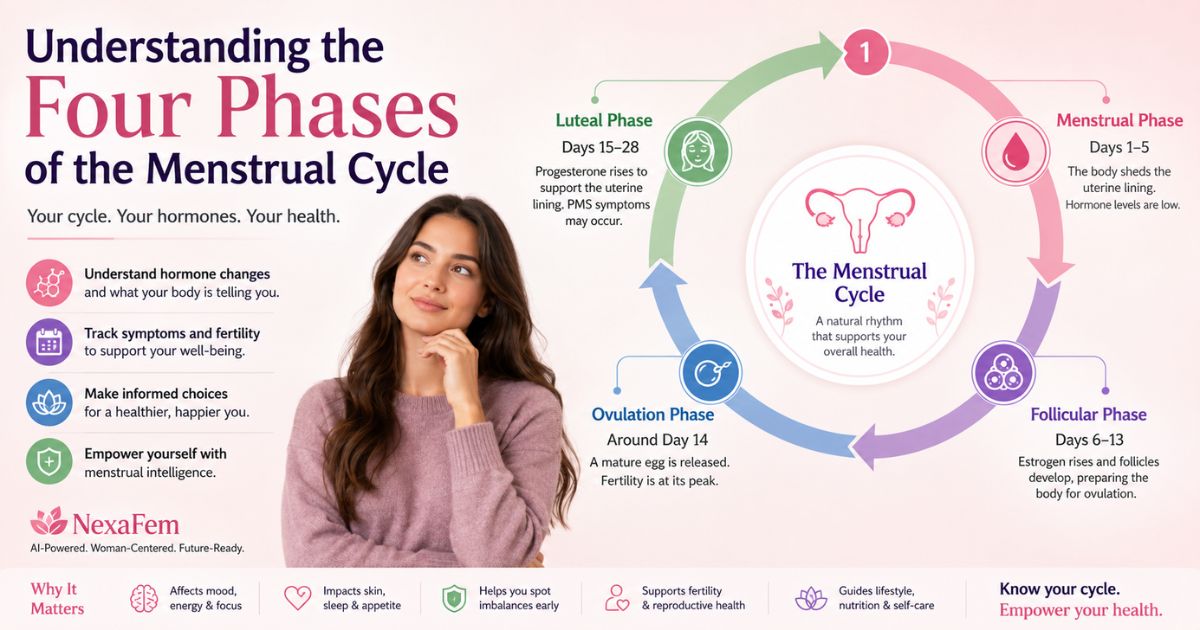
The menstrual cycle is a monthly hormonal process that prepares the body for a potential pregnancy. According to guidance from organizations such as the NHS and ACOG, the average menstrual cycle lasts about 21–35 days, although cycle length varies from person to person.
The four menstrual cycle phases are:
Menstrual Phase
Follicular Phase
Ovulation Phase
Luteal Phase
Each phase is driven by changing hormone levels and may influence your physical health, emotional well-being, energy, and fertility.
Phase 1: The Menstrual Phase
The menstrual phase begins on the first day of your period and typically lasts between 3 and 7 days.
During this stage, the uterus sheds its lining because pregnancy did not occur during the previous cycle.
What Happens Hormone-Wise?
Estrogen and progesterone levels drop significantly. This hormonal decline triggers menstrual bleeding.
Common Symptoms During the Menstrual Phase
Women may experience:
Vaginal bleeding
Menstrual cramps
Lower back discomfort
Fatigue
Headaches
Breast tenderness
Mood changes
Not every woman experiences the same symptoms, and symptom intensity can vary from cycle to cycle.
How to Support Your Body
Focus on:
Staying hydrated
Getting adequate rest
Gentle movement such as walking or stretching
Iron-rich foods to support blood loss
Stress management practices
For additional support, many women benefit from learning about a hormone-supportive nutrition plan and nutrient-rich foods that support menstrual health.
Mini Summary
The menstrual phase is your body's natural reset period, characterized by shedding of the uterine lining and lower hormone levels.
Phase 2: The Follicular Phase
The follicular phase overlaps with menstruation and continues until ovulation.
This phase is often considered a period of renewal because hormone levels begin rising again.
What Happens Hormone-Wise?
The brain releases follicle-stimulating hormone (FSH), encouraging ovarian follicles to mature.
As follicles develop, estrogen levels gradually increase.
Common Symptoms and Changes
Many women notice:
Improved energy
Better concentration
Enhanced motivation
Increased confidence
Improved exercise performance
Nutrition During the Follicular Phase
This phase can be an excellent time to prioritize:
Lean proteins
Fresh fruits and vegetables
Whole grains
Healthy fats
Supporting stable blood sugar levels may help optimize energy and hormonal balance.
Mini Summary
The follicular phase is associated with rising estrogen levels, increased energy, and preparation for ovulation.
Phase 3: Ovulation Phase
Ovulation is the shortest but often most important phase for fertility.
It usually occurs around the midpoint of the cycle, although timing varies significantly among individuals.
What Happens During Ovulation?
A surge in luteinizing hormone (LH) triggers the release of a mature egg from the ovary.
The egg remains viable for approximately 12–24 hours.
Signs of Ovulation
Possible signs include:
Clear, stretchy cervical mucus
Mild pelvic discomfort
Increased libido
Slight rise in basal body temperature
Heightened sense of smell
Why Ovulation Matters
Ovulation is a key indicator of reproductive and hormonal health.
Consistent ovulation often suggests healthy communication between the brain, ovaries, and reproductive system.
Women interested in fertility awareness methods often track ovulation using cycle tracking tools, cervical mucus observations, and basal body temperature monitoring.
Mini Summary
Ovulation is the phase when an egg is released, representing peak fertility and an important marker of hormonal health.
Phase 4: The Luteal Phase
After ovulation, the luteal phase begins and usually lasts 12–14 days.
What Happens Hormone-Wise?
The empty follicle transforms into the corpus luteum, which produces progesterone.
Progesterone helps prepare the uterine lining for possible implantation.
Common Symptoms During the Luteal Phase
Women may experience:
Bloating
Food cravings
Mood swings
Breast tenderness
Fatigue
Anxiety
Sleep disturbances
These symptoms are often associated with premenstrual syndrome (PMS).
Mental Wellness and the Luteal Phase
Hormonal fluctuations can influence neurotransmitters that affect mood.
Many women report:
Increased emotional sensitivity
Irritability
Reduced stress tolerance
Changes in motivation
Tracking emotional symptoms alongside physical symptoms can provide valuable insights into hormonal patterns.
Mini Summary
The luteal phase is dominated by progesterone and is commonly associated with PMS symptoms and emotional changes.
Why Do Menstrual Cycle Phases Matter?
Understanding menstrual cycle phases provides important health insights.
Cycle changes can sometimes signal underlying issues such as:
Polycystic ovary syndrome (PCOS)
Thyroid disorders
Endometriosis
Premature ovarian insufficiency
Perimenopause-related hormonal changes
Recognizing these patterns early supports preventive healthcare and timely medical evaluation.
What Causes Menstrual Cycle Changes?
Several factors can affect menstrual cycle phases and hormone patterns.
Common Causes
Stress
Sleep disruption
Excessive exercise
Significant weight changes
Certain medications
Hormonal disorders
Perimenopause
Temporary variations are common, but persistent changes should be evaluated by a healthcare professional.
How Are Menstrual Cycle Problems Diagnosed?
Healthcare providers may assess:
Menstrual history
Symptom patterns
Hormone levels
Thyroid function
Pelvic ultrasound findings
Lifestyle factors
Keeping a detailed menstrual symptom tracker can significantly improve diagnostic accuracy.
A menstrual cycle tracking tool can help identify trends and provide useful information during healthcare visits.
Lifestyle Support for a Healthy Menstrual Cycle
While lifestyle changes cannot treat every underlying condition, they can support overall hormonal wellness.
Prioritize Sleep
Aim for consistent, quality sleep to support hormone regulation.
Manage Stress
Chronic stress may affect ovulation and menstrual regularity.
Helpful strategies include:
Mindfulness practices
Deep breathing exercises
Yoga
Counseling when needed
Stay Physically Active
Regular movement supports:
Hormonal balance
Cardiovascular health
Mood regulation
Metabolic health
Eat a Balanced Diet
Focus on:
Fiber-rich foods
Healthy fats
Lean proteins
Iron-rich foods
Omega-3 fatty acids
Can Nutrition Affect Menstrual Cycle Symptoms?
Yes.
Emerging research suggests that nutrition may influence inflammation, energy levels, and symptom severity.
A balanced eating pattern may help support:
PMS management
Energy levels
Mood stability
Hormonal regulation
Women interested in improving hormone health often explore the best foods for hormonal balance as part of a comprehensive wellness approach.
Common Mistakes Women Make When Understanding Their Cycle
Many women unintentionally overlook important cycle clues.
Common mistakes include:
Assuming irregular periods are always normal
Ignoring severe menstrual pain
Not tracking symptoms consistently
Dismissing mood changes as unrelated to hormones
Delaying medical evaluation for significant cycle changes
Awareness is one of the most effective tools for early intervention.
When to See a Doctor
Seek medical advice if you experience:
Very heavy bleeding
Bleeding between periods
Periods that suddenly become irregular
Severe pelvic pain
Cycles consistently shorter than 21 days or longer than 35 days
Difficulty becoming pregnant
Symptoms affecting daily life
Early evaluation can help identify treatable causes and support long-term health.
Red Flag Symptoms
Contact a healthcare professional promptly if you experience:
Sudden severe pelvic pain
Extremely heavy bleeding
Fainting during menstruation
Signs of anemia
Persistent missed periods unrelated to pregnancy
Significant changes in cycle patterns
These symptoms may indicate conditions requiring medical assessment.
Final Thoughts
Your menstrual cycle is more than just a monthly period—it is a powerful indicator of overall health.
By understanding the menstrual cycle phases, you can develop greater awareness of your body's natural rhythms, recognize changes earlier, and make informed decisions about your well-being. This knowledge supports preventive healthcare, empowers symptom tracking, and encourages meaningful conversations with healthcare professionals.
As women's healthcare continues to evolve, tools that provide personalized hormonal insights and menstrual intelligence can help transform symptom awareness into proactive health management. At NexaFem, our vision is to support women with AI-powered preventive intelligence that helps them better understand their bodies and make confident health decisions throughout every stage of life.
Sources & References
World Health Organization (WHO): https://www.who.int
NHS Menstrual Health Information: https://www.nhs.uk
American College of Obstetricians and Gynecologists (ACOG): https://www.acog.org
National Institute for Health and Care Excellence (NICE): https://www.nice.org.uk
Centers for Disease Control and Prevention (CDC): https://www.cdc.gov
Disclaimer
This article is intended for informational and educational purposes only and should not be considered medical advice, diagnosis, or treatment. Health information can vary based on individual circumstances. Always consult a qualified healthcare professional, gynecologist, or licensed medical provider for personalized medical guidance, diagnosis, treatment recommendations, or concerns regarding your menstrual cycle, hormonal health, fertility, or overall well-being.
Frequently Asked Questions
Share this post
Comments (0)
No comments yet. Be the first to comment!