
10 Women's Health Warning Signs You Should Never Ignore | Early Symptoms That Need Medical Attention
Learn 10 women's health warning signs that deserve medical attention. Know when to see a doctor and protect your long-term health with early action.
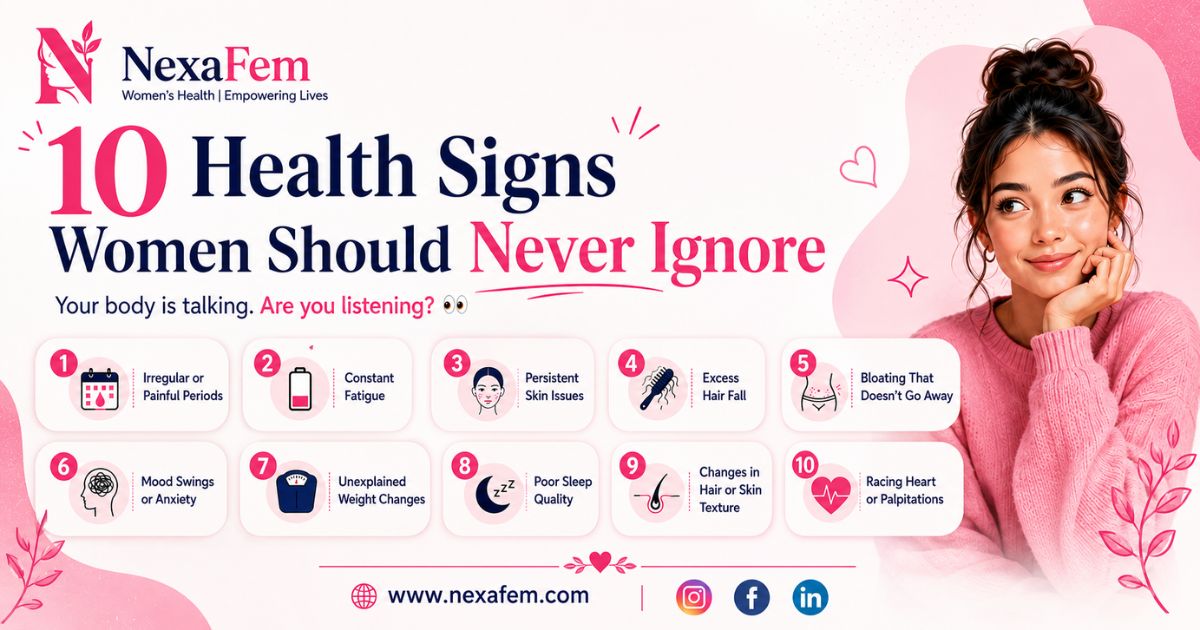
Every woman experiences changes in her body throughout life. Hormonal fluctuations, menstrual cycles, pregnancy, perimenopause, menopause, stress, and aging can all affect how you feel from day to day. Because many symptoms seem "normal" or temporary, it's easy to dismiss them.
However, some symptoms are your body's way of signaling that something deserves closer attention.
Recognizing women's health warning signs early can make a meaningful difference. Many conditions—including hormonal disorders, heart disease, reproductive health conditions, thyroid disorders, autoimmune diseases, and certain cancers—are more treatable when identified promptly.
At NexaFem, we believe that preventive healthcare starts with understanding your body. Listening to persistent or unusual symptoms isn't about worrying—it is about making informed decisions that protect your future health.
Quick Summary (TL;DR)
Certain symptoms should never be ignored, especially if they are persistent, severe, or worsening.
Changes in menstrual cycles, unexplained weight loss, persistent fatigue, abnormal bleeding, chest pain, and breast changes deserve medical evaluation.
Early diagnosis often leads to better treatment outcomes and improved quality of life.
Lifestyle habits, preventive screenings, and symptom tracking can help women recognize patterns earlier.
If something feels unusual for your body, trust your instincts and speak with a healthcare professional.
What Are Women's Health Warning Signs?
Women's health warning signs are symptoms that may indicate an underlying medical condition requiring evaluation rather than simply being part of everyday hormonal changes.
Many symptoms have harmless explanations. However, symptoms that are new, persistent, severe, or progressively worsening should not be ignored.
According to guidance from organizations including the NHS, CDC, WHO, ACOG, and NICE, early recognition and timely medical care improve outcomes for many health conditions.
1. Unexplained Vaginal Bleeding
Unexpected bleeding outside your normal menstrual cycle deserves medical attention.
Possible causes
Hormonal imbalance
Uterine fibroids
Endometrial polyps
Pregnancy complications
Cervical abnormalities
Endometrial cancer (less common but important to rule out)
Bleeding after menopause should always be evaluated by a healthcare provider.
If you're experiencing irregular cycles, you may also find our guide on Understanding Irregular Periods and Hormonal Imbalance helpful.
2. Persistent Pelvic Pain
Pelvic discomfort that lasts for weeks or repeatedly returns is not something to simply "live with."
It may be associated with
Endometriosis
Ovarian cysts
Pelvic inflammatory disease
Fibroids
Urinary tract disorders
Gastrointestinal conditions
Persistent pelvic pain can also affect sleep, relationships, work productivity, and emotional wellbeing.
Diagnosis may involve:
Physical examination
Pelvic ultrasound
Laboratory tests
MRI (when appropriate)
Referral to a gynecologist
3. A Breast Lump or Noticeable Breast Changes
Not every breast lump is cancer, but every new breast change deserves evaluation.
Watch for:
A new lump
Thickened tissue
Skin dimpling
Nipple discharge (especially bloody)
Changes in breast shape
Persistent redness
Many breast changes are benign, such as cysts or fibroadenomas. However, early assessment is essential.
Women should also become familiar with what is normal for their breasts and promptly report changes to their healthcare provider.
4. Persistent Fatigue That Doesn't Improve
Feeling tired after a busy week is common.
Feeling exhausted for weeks despite adequate sleep is different.
Common health problems in women associated with fatigue include
Iron-deficiency anemia
Thyroid disorders
Depression
Anxiety
Sleep disorders
Vitamin deficiencies
Diabetes
Autoimmune diseases
Chronic fatigue often develops gradually, making it easy to overlook until daily activities become difficult.
If fatigue is accompanied by dizziness, breathlessness, weight changes, or persistent weakness, medical evaluation is recommended.
5. Sudden Chest Pain or Shortness of Breath
Heart disease remains one of the leading causes of death among women worldwide.
Women's heart attack symptoms may differ from the "classic" symptoms commonly seen in men.
Women may experience:
Chest pressure
Jaw pain
Back pain
Shoulder discomfort
Nausea
Sweating
Extreme fatigue
Shortness of breath
These symptoms require immediate medical attention.
Do not assume they are caused by anxiety or indigestion.
6. Unexplained Weight Loss or Weight Gain
Unexpected weight changes without changes in diet or physical activity can indicate underlying medical conditions.
Potential causes include:
Thyroid disorders
PCOS
Diabetes
Digestive diseases
Depression
Chronic infections
Certain cancers
Weight changes are also closely connected with hormone health.
Tracking your symptoms using a Women's Hormone Health Tracker can help identify patterns to discuss with your healthcare provider.
7. Changes in Your Menstrual Cycle
Your menstrual cycle provides valuable information about your overall health.
Seek medical advice if you notice:
Very heavy bleeding
Periods lasting longer than seven days
Missing several periods (without pregnancy)
Bleeding between periods
Severe menstrual pain
Cycles becoming suddenly irregular
Hormonal disorders such as PCOS, thyroid disease, and perimenopause commonly influence menstrual patterns.
Our Cycle Intelligence Guide explains how menstrual changes can reflect hormonal health.
8. Persistent Digestive Symptoms
Digestive problems are often blamed on diet or stress.
However, persistent symptoms deserve evaluation.
Symptoms include:
Ongoing bloating
Difficulty swallowing
Persistent constipation
Chronic diarrhea
Blood in stool
Ongoing abdominal pain
Occasionally, persistent bloating can be an early warning sign of serious illness in women, including ovarian cancer, especially when accompanied by feeling full quickly or pelvic discomfort.
9. Frequent Mood Changes or Depression
Mental health is an essential part of women's health.
Hormonal changes, life transitions, chronic stress, and underlying medical conditions can all contribute to emotional symptoms.
Watch for:
Persistent sadness
Anxiety
Loss of interest
Irritability
Difficulty concentrating
Sleep changes
Depression and anxiety are treatable.
Seeking support is a sign of strength, not weakness.
If emotional symptoms interfere with daily life or include thoughts of self-harm, seek urgent professional help immediately.
10. Changes in Moles or Skin Lesions
Skin changes are sometimes overlooked.
Schedule a medical evaluation if you notice:
A mole changing shape
New irregular borders
Multiple colors
Bleeding
Rapid growth
Persistent sores that do not heal
The ABCDE rule (Asymmetry, Border, Color, Diameter, Evolving) is commonly used to identify concerning skin lesions.
Risk Factors
Several factors increase the likelihood of developing health conditions.
These include:
Family history
Smoking
Obesity
High blood pressure
Diabetes
Physical inactivity
Chronic stress
Poor sleep
Increasing age
Previous reproductive health conditions
Understanding your personal risk factors allows for more proactive healthcare decisions.
How Doctors Diagnose Women's Health Symptoms
Diagnosis begins with listening carefully to your symptoms.
Depending on your situation, your healthcare provider may recommend:
Medical history review
Physical examination
Blood tests
Hormone testing
Thyroid function tests
Pelvic examination
Ultrasound
Mammography
Pap test
STI testing
ECG
Imaging studies
Accurate diagnosis often combines symptoms, examination findings, and appropriate investigations.
Hormonal Health Matters
Hormones influence nearly every system in the body.
Changes in estrogen, progesterone, thyroid hormones, cortisol, and insulin can contribute to:
Mood changes
Sleep disturbances
Weight fluctuations
Irregular periods
Acne
Hair thinning
Fatigue
Fertility concerns
Using an AI-powered Hormone Symptom Checker or Cycle Tracker can help identify recurring patterns that support informed conversations with your healthcare provider. These tools are designed to complement—not replace—professional medical evaluation.
Nutrition That Supports Women's Health
Good nutrition supports hormone regulation, cardiovascular health, immune function, and energy levels.
Focus on:
Iron-rich foods
Calcium
Vitamin D
Omega-3 fatty acids
Whole grains
Fruits
Vegetables
Lean proteins
Adequate hydration
Women with heavy menstrual bleeding may benefit from discussing iron testing with their healthcare provider.
Mental Wellness and Physical Health Are Connected
Physical symptoms and emotional wellbeing often influence one another.
Living with unexplained symptoms may contribute to:
Anxiety
Stress
Sleep disruption
Reduced confidence
Social withdrawal
Likewise, chronic stress may worsen pain, digestive symptoms, menstrual irregularities, and fatigue.
Practicing stress management, maintaining social support, and seeking professional mental health care when needed are important components of preventive healthcare.
Lifestyle Tips for Better Women's Health
Small daily habits can have a meaningful impact on long-term health.
Aim to:
Exercise regularly.
Prioritize quality sleep.
Eat a balanced diet.
Attend routine preventive screenings.
Stay up to date with vaccinations.
Avoid smoking.
Limit alcohol intake.
Manage stress.
Track menstrual cycles and symptoms.
Schedule annual health check-ups.
Common Mistakes Women Make
Many women unintentionally delay diagnosis by:
Assuming symptoms are "just hormones"
Ignoring persistent fatigue
Delaying gynecological appointments
Self-diagnosing online without professional advice
Skipping preventive screenings
Normalizing severe period pain
Waiting until symptoms become severe
Listening to your body is one of the most important steps in preventive healthcare.
When to See a Doctor for Women's Health Symptoms
Many women ask, "When should I see a doctor for women's health symptoms?"
Arrange a medical appointment if symptoms:
Persist longer than two weeks
Become progressively worse
Interfere with daily life
Return repeatedly
Feel significantly different from your normal health
Early evaluation can often prevent complications and provide reassurance, even when symptoms turn out to be harmless.
Red Flag Symptoms Requiring Immediate Medical Care
Seek urgent medical attention if you experience:
Severe chest pain
Difficulty breathing
Heavy uncontrollable bleeding
Sudden weakness or numbness
Fainting
Severe abdominal pain
Confusion
Sudden vision loss
Suicidal thoughts
Signs of stroke
Do not delay emergency care if these symptoms occur.
Final Thoughts
Your body communicates with you every day. While not every ache, change, or symptom signals a serious illness, persistent or unusual changes deserve attention rather than dismissal.
Early recognition is one of the most powerful tools in preventive healthcare. Whether it's a change in your menstrual cycle, ongoing fatigue, unexplained pain, or a new breast lump, seeking timely medical advice can lead to earlier diagnosis, more treatment options, and better long-term health outcomes.
At NexaFem, we believe informed women make empowered healthcare decisions. By combining evidence-based education with AI-powered symptom tracking and hormonal intelligence, our goal is to help women better understand their bodies, recognize important health changes, and seek care with confidence.
Sources & References
The recommendations and medical guidance in this article are based on evidence and preventive care principles from internationally recognized health organizations.
World Health Organization (WHO): https://www.who.int
National Health Service (NHS): https://www.nhs.uk
National Institute for Health and Care Excellence (NICE): https://www.nice.org.uk
American College of Obstetricians and Gynecologists (ACOG): https://www.acog.org
Centers for Disease Control and Prevention (CDC): https://www.cdc.gov
Disclaimer
This article is provided for informational and educational purposes only. It is not intended to replace professional medical advice, diagnosis, or treatment. Every individual's health situation is unique. If you have persistent symptoms, concerns about your health, or experience any emergency warning signs, consult a qualified healthcare professional or seek immediate medical care. Never ignore or delay seeking medical advice because of information you have read online.
Frequently Asked Questions
Share this post
Comments (0)
No comments yet. Be the first to comment!