
Wearable Health Tech for Women: Helpful or Hype?
Discover how wearable health tech for women supports cycle tracking, wellness monitoring, and preventive healthcare—plus its limitations.
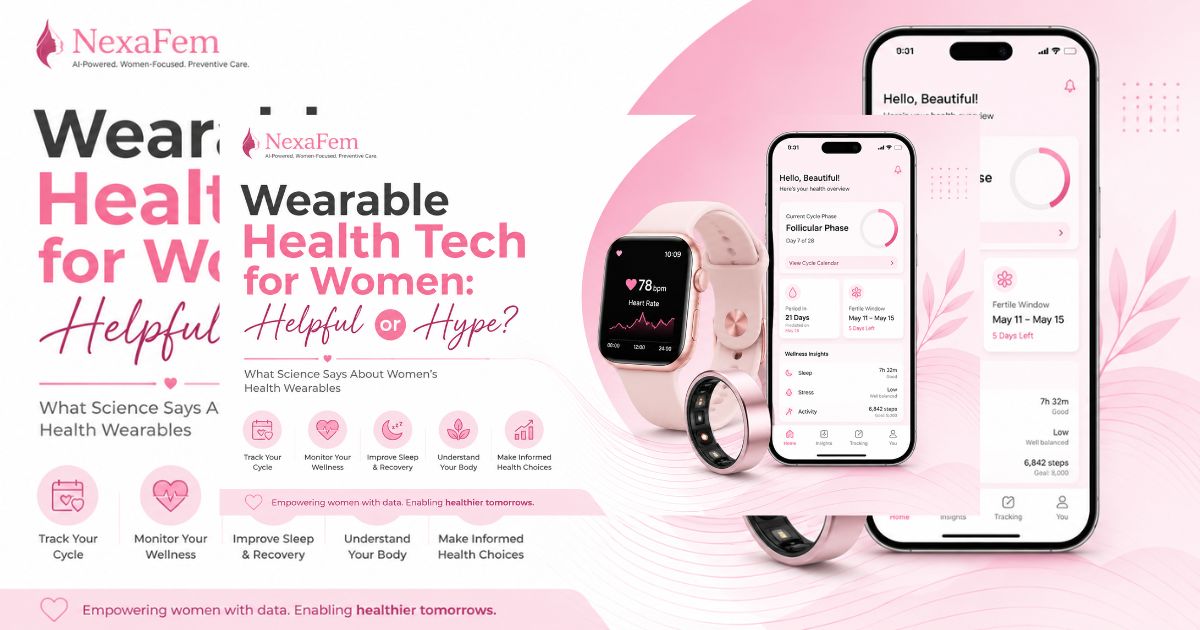
A smartwatch alerts you that your resting heart rate is higher than usual. Your menstrual cycle tracking wearable predicts ovulation. A health app suggests you may be entering a new hormonal phase.
For many women, wearable technology is becoming part of everyday health management. These devices promise deeper insights into sleep, stress, activity, fertility, menstrual cycles, and overall wellness. But with so many products making bold claims, an important question remains:
Is wearable health tech for women genuinely improving health outcomes, or is it mostly marketing hype?
The answer lies somewhere in between.
Modern wearable technologies can provide valuable health insights, increase symptom awareness, and encourage preventive healthcare behaviors. However, they are not diagnostic tools, and understanding their limitations is just as important as understanding their benefits.
As women's health enters a new era of personalized and AI-powered care, wearable devices are becoming powerful tools for self-awareness—when used wisely.
Quick Summary (TL;DR)
Wearable health tech for women can help track activity, sleep, menstrual cycles, stress, heart rate, and wellness trends.
Some devices support fertility awareness and menstrual cycle prediction.
Emerging hormone monitoring technology may offer deeper personalized insights in the future.
Wearables are useful for preventive health awareness but should not replace professional medical care.
The greatest benefit comes from identifying long-term health patterns rather than focusing on daily fluctuations.
What Is Wearable Health Tech for Women?
Wearable health tech for women refers to digital devices worn on the body that collect health-related data and provide personalized wellness insights.
Common examples include:
Smartwatches
Fitness trackers
Smart rings
Temperature-monitoring devices
Fertility tracking wearables
Sleep monitoring devices
These tools use sensors to monitor physiological signals and generate data that women can use to better understand their health.
Many devices now integrate artificial intelligence to identify patterns and provide personalized recommendations.
This growing intersection of women's health and technology is often referred to as FemTech—a rapidly expanding healthcare category focused on female-specific health needs.
Why Are More Women Using Health Wearables?
Women's health has historically been underrepresented in medical research. As a result, many women have experienced delayed diagnoses, misunderstood symptoms, or insufficient symptom tracking.
Wearables help bridge some of these gaps by allowing women to monitor changes between medical appointments.
Women commonly use smart health devices for women to track:
Menstrual cycles
Ovulation patterns
Physical activity
Sleep quality
Stress levels
Heart rate trends
Recovery status
Perimenopause symptoms
The appeal is simple: more information can lead to greater awareness and potentially earlier intervention.
How Do Menstrual Cycle Tracking Wearables Work?
Direct Answer
A menstrual cycle tracking wearable uses physiological data such as body temperature, heart rate variability, sleep patterns, and activity levels to estimate menstrual cycle phases and fertility windows.
Unlike traditional calendar tracking, wearables continuously collect data throughout the day and night.
Research shows that hormonal fluctuations throughout the menstrual cycle can influence:
Basal body temperature
Resting heart rate
Sleep quality
Heart rate variability
By analyzing these patterns, some devices can improve cycle predictions over time.
However, organizations such as the NHS and ACOG emphasize that fertility prediction technologies should not be considered foolproof methods for contraception or fertility treatment without professional guidance.
Women interested in understanding their reproductive health may also benefit from learning more about signs of hormonal imbalance and understanding irregular menstrual cycles.
Can Wearables Monitor Hormones?
This is one of the most exciting—and misunderstood—areas of women's health technology.
Current Reality
Most wearable devices do not directly measure hormones.
Instead, they track physiological changes influenced by hormones.
For example:
Estrogen changes may influence temperature patterns.
Progesterone can affect resting heart rate.
Cortisol may influence sleep and stress responses.
The Future of Hormone Monitoring Technology
Researchers and technology companies are developing advanced hormone monitoring technology capable of measuring biomarkers through sweat, saliva, interstitial fluid, and other non-invasive methods.
Although promising, many of these technologies remain in development or require additional clinical validation.
Experts generally agree that hormone monitoring technologies have potential but should currently be viewed as complementary tools rather than replacements for laboratory testing.
What Health Conditions Can Wearables Potentially Help Monitor?
Wearables cannot diagnose medical conditions.
However, they may help identify trends that prompt further medical evaluation.
Menstrual Health
Some women notice:
Changes in cycle length
Missed periods
Ovulation pattern shifts
Unusual symptoms
Tracking these changes can support conversations with healthcare providers.
PCOS
Women with PCOS often experience irregular cycles and metabolic changes.
Wearables may help monitor:
Activity levels
Sleep quality
Weight management trends
Menstrual irregularities
This complements broader strategies for managing PCOS symptoms naturally.
Perimenopause and Menopause
Perimenopause often brings symptoms such as:
Sleep disruption
Night sweats
Mood changes
Irregular periods
Wearables may help women identify symptom patterns and triggers during this transition.
Cardiovascular Health
According to the CDC, heart disease remains a leading health concern for women. Tracking resting heart rate, activity levels, sleep, and lifestyle habits may encourage preventive behaviors.
Benefits of Wearable Health Tech for Women
Improved Symptom Awareness
Many women struggle to remember symptoms between appointments.
Wearables create objective records that can support more productive healthcare conversations.
Better Preventive Healthcare
Preventive healthcare focuses on identifying risks before they become major problems.
Wearables encourage:
Daily movement
Sleep awareness
Stress management
Healthy routines
Personalized Wellness Insights
Instead of generic recommendations, wearable devices can provide individualized data trends.
This aligns closely with the future of AI-powered women's health, where care becomes increasingly personalized.
Increased Health Engagement
Women who regularly monitor their health often become more proactive about wellness behaviors.
Greater awareness can support healthier long-term choices.
The Limitations: Where Does the Hype Begin?
While wearable technology offers benefits, expectations should remain realistic.
Data Is Not Always Perfect
Consumer devices are improving, but they are not medical-grade diagnostic instruments.
Accuracy may vary depending on:
Device type
Sensor quality
Skin contact
User behavior
Individual physiology
Information Overload
Some women become overly focused on daily fluctuations that may be completely normal.
Health data should be interpreted as trends rather than isolated readings.
Anxiety and Health Tracking
For some individuals, constant monitoring may increase health-related anxiety.
Mental wellness matters just as much as physical health.
If health tracking begins causing stress, it may be helpful to reduce notifications or discuss concerns with a healthcare professional.
Not a Substitute for Medical Care
Perhaps the biggest misconception is believing that wearable data can replace professional evaluation.
Persistent symptoms should always be assessed by a qualified clinician.
Common Mistakes Women Make With Wearables
Many users unintentionally reduce the value of their devices.
Common mistakes include:
Obsessing over daily data fluctuations
Ignoring symptoms when data appears normal
Self-diagnosing medical conditions
Using wearables instead of seeking medical care
Assuming fertility predictions are 100% accurate
The most effective approach combines wearable insights with professional healthcare guidance.
Lifestyle Tips for Getting the Most From Wearable Health Tech
To maximize benefits:
Focus on long-term trends rather than daily changes.
Track symptoms alongside device data.
Prioritize sleep consistency.
Maintain regular physical activity.
Support hormonal health with balanced nutrition.
Use health reports during medical appointments.
Wearables work best when integrated into a broader preventive healthcare strategy.
Nutrition and Wellness Support
Technology alone cannot create good health.
The foundations of women's wellness remain unchanged:
Nutrient-dense foods
Regular movement
Quality sleep
Stress management
Social connection
Preventive healthcare screenings
Wearable devices can highlight patterns, but lifestyle habits create lasting health outcomes.
When to See a Doctor
Schedule a healthcare appointment if you experience:
Persistent irregular periods
Severe menstrual pain
Unexplained fatigue
Fertility concerns
Significant mood changes
Recurrent sleep disruption
Symptoms affecting daily life
Wearable data may help support these discussions but should not replace clinical evaluation.
Red Flag Symptoms
Seek prompt medical attention for:
Sudden chest pain
Shortness of breath
Severe dizziness
Fainting episodes
Heavy unexplained bleeding
Severe pelvic pain
Sudden neurological symptoms
These symptoms require professional assessment regardless of what a wearable device indicates.
Are Wearables Worth It?
Quick Answer
For many women, yes.
Wearable technology can increase health awareness, encourage healthy habits, and provide valuable information about menstrual, hormonal, and lifestyle patterns.
However, wearables are most effective when viewed as wellness tools—not diagnostic devices.
The future of women's healthcare is likely to combine wearable technology, artificial intelligence, clinical expertise, and personalized preventive care.
That future aligns with a growing movement toward hormonal intelligence, symptom awareness, and earlier intervention—helping women understand their bodies more deeply than ever before.
Final Thoughts
The conversation around wearable health tech for women should not be framed as helpful versus hype.
Instead, the better question is:
How can women use these tools responsibly and effectively?
The strongest evidence suggests that wearable technology can support self-awareness, preventive healthcare, and healthier daily habits. Its greatest value lies not in predicting every symptom or diagnosing every condition but in helping women recognize patterns that deserve attention.
As AI-powered healthcare continues to evolve, wearable technology may become an increasingly important partner in women's wellness journeys. Combined with medical expertise, healthy lifestyle choices, and personalized care, these tools have the potential to empower women with something incredibly valuable: a deeper understanding of their own health.
Sources & References
World Health Organization (WHO)
https://www.who.int
National Health Service (NHS)
https://www.nhs.uk
American College of Obstetricians and Gynecologists (ACOG)
https://www.acog.org
Centers for Disease Control and Prevention (CDC)
https://www.cdc.gov
National Institute for Health and Care Excellence (NICE)
https://www.nice.org.uk
Disclaimer
This article is provided for informational and educational purposes only and should not be considered medical advice, diagnosis, or treatment. Health information is constantly evolving, and individual circumstances vary. Always consult a qualified healthcare professional, gynecologist, endocrinologist, or other licensed medical provider regarding any symptoms, health concerns, diagnosis, treatment decisions, or questions related to your personal health.
Frequently Asked Questions
Share this post
Comments (0)
No comments yet. Be the first to comment!