Why Women Should Track More Than Just Their Period: A Complete Guide to Women's Health Tracking
Discover why women's health tracking goes beyond periods. Learn how symptoms, hormones, sleep, mood, and ovulation reveal important health insights.
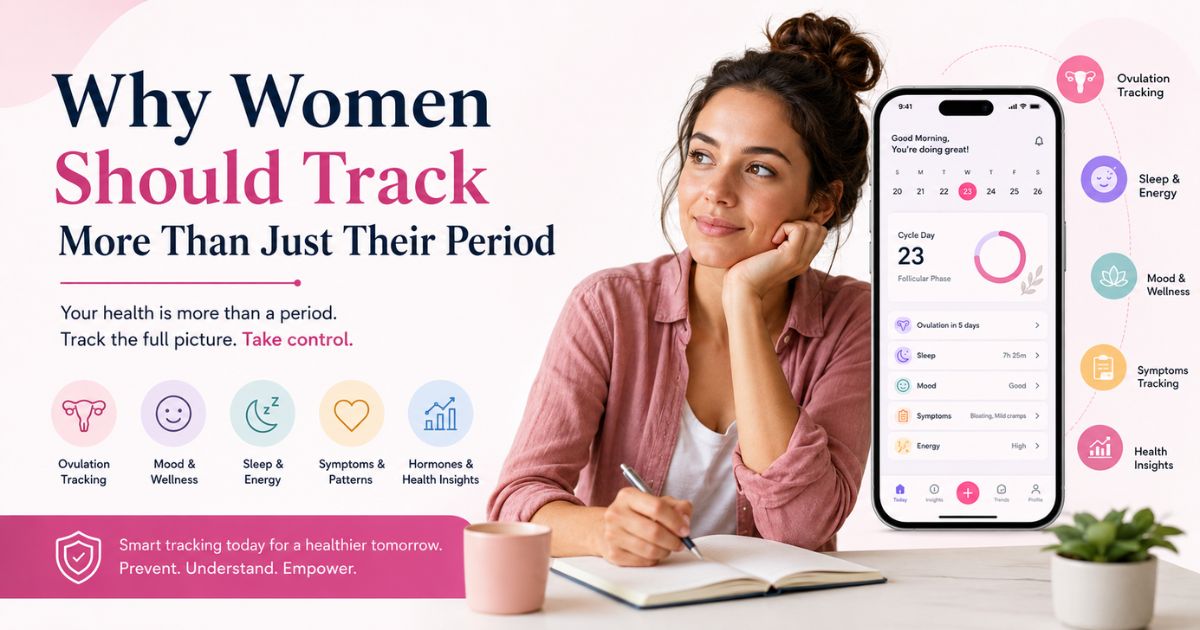
For many women, health tracking begins and ends with monitoring menstrual cycles.
A period tracker can certainly be helpful. It can predict upcoming periods, estimate fertile windows, and identify irregular cycle patterns. But your menstrual cycle is only one piece of a much larger health picture.
Your body provides valuable signals every day. Changes in energy levels, sleep quality, mood, digestion, skin health, stress levels, and physical symptoms can offer important clues about hormonal balance and overall wellness.
If you've ever felt exhausted despite getting enough sleep, struggled with unexplained mood swings, experienced persistent bloating, or wondered why your body feels different from month to month, those experiences may be connected to patterns that period tracking alone cannot reveal.
Modern women's health tracking focuses on understanding the whole person—not just one phase of the menstrual cycle. By monitoring multiple health indicators, women can gain deeper insights into their bodies, recognize potential issues earlier, and make more informed healthcare decisions.
As preventive healthcare continues to evolve, comprehensive health tracking is becoming an important tool for supporting long-term wellness and hormonal intelligence.
Quick Summary (TL;DR)
Women's health tracking should include more than menstrual dates alone.
Tracking sleep, mood, energy, symptoms, stress, and ovulation can reveal important health patterns.
Comprehensive tracking may help identify hormone imbalance symptoms earlier.
Consistent monitoring supports preventive healthcare and more productive conversations with healthcare providers.
AI-powered health platforms are making it easier to understand complex health patterns over time.
What Is Women's Health Tracking?
Women's health tracking is the process of monitoring physical, emotional, hormonal, and lifestyle-related health indicators over time.
While menstrual cycle tracking remains important, comprehensive health tracking may also include:
Ovulation patterns
Sleep quality
Energy levels
Mood changes
Stress levels
Physical symptoms
Exercise habits
Nutrition
Sexual health
Weight fluctuations
Skin changes
Digestive symptoms
Together, these data points create a more complete picture of health and wellness.
According to guidance from the NHS and ACOG, menstrual cycle patterns are increasingly recognized as an important indicator of overall health, but they should be evaluated alongside other symptoms and health factors.
Why Is Tracking More Than Your Period Important?
Your Hormones Affect More Than Your Menstrual Cycle
Hormones influence nearly every system in the body.
They can affect:
Sleep
Mood
Appetite
Energy
Metabolism
Fertility
Cognitive function
Sexual health
Because hormonal changes occur throughout the menstrual cycle, symptoms may appear long before a menstrual irregularity becomes noticeable.
Tracking these patterns can help women better understand how hormonal fluctuations affect their daily lives.
Symptoms Often Tell a Bigger Story
Many women normalize symptoms that may deserve attention.
Examples include:
Persistent fatigue
Brain fog
Mood swings
Frequent headaches
Acne flare-ups
Sleep disturbances
Unexplained weight changes
While these symptoms do not automatically indicate a medical condition, they can sometimes be associated with hormonal shifts, stress, nutritional deficiencies, thyroid disorders, polycystic ovary syndrome (PCOS), or other health concerns.
Keeping a detailed symptom record may help healthcare providers identify patterns more effectively.
Beyond Period Tracking: What Should Women Monitor?
Ovulation Tracking
Ovulation tracking provides insights that menstrual dates alone cannot.
Monitoring ovulation can help women:
Understand fertility windows
Identify cycle irregularities
Recognize potential hormonal imbalances
Detect anovulatory cycles
Signs of ovulation may include:
Changes in cervical mucus
Mild pelvic discomfort
Basal body temperature shifts
Increased libido
Women trying to conceive often benefit from ovulation tracking, but it can also provide valuable information for those focused on general health awareness.
For a deeper understanding, readers may also explore topics such as understanding ovulation signs and fertility awareness methods.
Mood and Mental Wellness
Hormonal fluctuations can influence emotional wellbeing.
Tracking mood changes may reveal connections between symptoms and specific phases of the menstrual cycle.
Women may notice patterns such as:
Increased anxiety before menstruation
Irritability during certain cycle phases
Low mood linked to sleep disruption
Stress-related symptom worsening
Recognizing these trends can support mental wellness and self-care planning.
Energy Levels
Energy fluctuations are often overlooked.
Questions worth tracking include:
When do you feel most productive?
When does fatigue occur?
Does tiredness correspond with specific cycle phases?
Energy patterns may provide valuable clues about recovery, stress, nutrition, and hormonal health.
Sleep Quality
Poor sleep affects nearly every aspect of health.
Research consistently shows that sleep influences:
Hormonal regulation
Mental health
Immune function
Metabolic health
Women who track sleep often discover relationships between rest quality, menstrual symptoms, stress, and overall wellbeing.
Physical Symptoms
Monitoring recurring symptoms can support greater menstrual health awareness.
Consider tracking:
Headaches
Bloating
Breast tenderness
Digestive issues
Joint pain
Cravings
Skin changes
Pelvic discomfort
Patterns may emerge that would otherwise go unnoticed.
Can Comprehensive Tracking Help Identify Hormone Imbalance Symptoms?
Direct Answer
Yes. Comprehensive health tracking can help women recognize patterns associated with hormone imbalance symptoms, although it cannot diagnose medical conditions on its own.
Common symptoms that women may track include:
Irregular periods
Acne
Fatigue
Mood swings
Hair thinning
Weight changes
Sleep disturbances
Low libido
According to the American College of Obstetricians and Gynecologists (ACOG), menstrual and reproductive health indicators can provide valuable information about overall health status.
Tracking these symptoms consistently may help healthcare professionals determine whether further evaluation is needed.
Risk Factors That Make Tracking Especially Valuable
Comprehensive tracking may be particularly useful for women who have:
PCOS
Endometriosis
Thyroid disorders
Fertility concerns
Perimenopause symptoms
Chronic stress
Family history of hormonal disorders
Irregular menstrual cycles
Tracking data can provide a clearer timeline of symptoms and health changes.
Women's Health Tracking During Different Life Stages
Ages 18–24
Common tracking priorities include:
Cycle regularity
Acne patterns
Mood changes
Stress levels
Sleep habits
Ages 25–34
Women may focus more on:
Fertility awareness
Ovulation tracking
Lifestyle factors
Hormonal symptoms
Ages 35–45
Tracking becomes increasingly valuable for:
Metabolic health
Energy changes
Stress management
Early hormonal transitions
Perimenopause
The NHS notes that perimenopause can involve significant hormonal fluctuations.
Tracking may help women monitor:
Hot flashes
Sleep disturbances
Mood changes
Cycle variability
Cognitive symptoms
Readers interested in this stage may also benefit from learning about early signs of perimenopause and hormonal transition support.
How AI Is Transforming Women's Health Tracking
Traditional tracking methods often rely on memory and manual observations.
Today, AI-powered health platforms can help identify patterns across multiple health indicators.
For example, advanced tracking tools may analyze:
Symptom trends
Cycle patterns
Sleep data
Mood fluctuations
Lifestyle habits
Rather than focusing on isolated symptoms, these tools aim to provide a more holistic view of health.
This aligns with NexaFem's vision of preventive intelligence—helping women understand their bodies earlier and more proactively.
Tools such as a hormone symptom tracker and cycle pattern insights dashboard can support women in recognizing trends that may otherwise be difficult to identify.
Lifestyle Factors Worth Tracking
Lifestyle habits influence hormonal health significantly.
Important areas include:
Nutrition
Track:
Meal timing
Protein intake
Hydration
Caffeine consumption
Alcohol intake
Nutrition patterns can affect energy, mood, and menstrual symptoms.
Physical Activity
Monitor:
Exercise frequency
Recovery levels
Energy during workouts
Exercise can support hormonal balance and overall wellbeing.
Stress
Chronic stress influences cortisol levels and may affect reproductive hormones.
Tracking stress levels can reveal meaningful connections between emotional and physical health.
Common Mistakes Women Make
Many women unintentionally limit the value of health tracking.
Common mistakes include:
Tracking only period dates
Ignoring symptom severity
Inconsistently logging information
Dismissing recurring symptoms
Waiting until symptoms become severe
Small patterns often become meaningful when viewed over several months.
When to See a Doctor
Health tracking should complement—not replace—professional medical care.
Consider scheduling an evaluation if you experience:
Persistent irregular periods
Severe menstrual pain
Heavy bleeding
Unexplained fatigue
Significant mood changes
Difficulty conceiving
New or worsening symptoms
Healthcare providers can assess whether additional testing or treatment is appropriate.
Red Flag Symptoms
Seek prompt medical attention if you experience:
Extremely heavy bleeding
Severe pelvic pain
Fainting episodes
Sudden severe headaches
Chest pain
Shortness of breath
Unexplained rapid weight loss
These symptoms may require urgent medical evaluation.
Final Thoughts
Your period is an important health indicator, but it is only one chapter of your health story.
Your sleep, energy, mood, symptoms, lifestyle habits, and hormonal patterns all provide valuable insights into how your body is functioning.
Comprehensive women's health tracking encourages a shift from reactive healthcare to preventive awareness. Instead of waiting for symptoms to become disruptive, women can begin recognizing patterns earlier and making informed decisions about their wellbeing.
As healthcare becomes increasingly personalized and AI-powered, tracking multiple aspects of health can empower women to understand their bodies with greater confidence, clarity, and compassion.
At NexaFem, we believe that every symptom matters, every pattern tells a story, and every woman deserves access to smarter preventive health insights.
Sources & References
World Health Organization (WHO)
https://www.who.int
National Health Service (NHS)
https://www.nhs.uk
American College of Obstetricians and Gynecologists (ACOG)
https://www.acog.org
Centers for Disease Control and Prevention (CDC)
https://www.cdc.gov
National Institute for Health and Care Excellence (NICE)
Disclaimer
This article is provided for informational and educational purposes only and is not intended to serve as medical advice, diagnosis, or treatment. Health information can vary based on individual circumstances, medical history, and existing conditions. Always consult a qualified physician, gynecologist, or licensed healthcare professional regarding any symptoms, health concerns, or medical decisions. Never ignore professional medical advice or delay seeking care because of information you have read in this article.
Frequently Asked Questions
Share this post
Comments (0)
No comments yet. Be the first to comment!