
How AI Women's Health Tracking Revolutionizes Care
Discover how AI-powered symptom tracking is bridging the historical data gap in female healthcare, transforming reactive treatments into predictive, preventive intelligence.
Did you know that until 1993, women of childbearing age were systematically excluded from early-stage clinical trials in the United States? This astonishing historical data gap has led to decades of misdiagnoses, dismissed symptoms, and a fundamentally reactive healthcare system that often treats the female body as a mere variation of the male norm. Today, we are standing on the precipice of a medical and technological revolution driven by AI Women's Health innovations. The convergence of artificial intelligence, longitudinal biometric data, and clinical research is rapidly replacing outdated, manual symptom diaries with dynamic, predictive intelligence. For modern women—navigating everything from intricate menstrual cycle fluctuations and PCOS to the complex transitions of perimenopause—AI-powered symptom tracking is no longer just a digital calendar. It is a vital diagnostic catalyst that empowers patients, accelerates clinical decision-making, and sets a new global standard for preventive healthcare.
The Historical Data Deficit: Why Women's Healthcare Needs AI
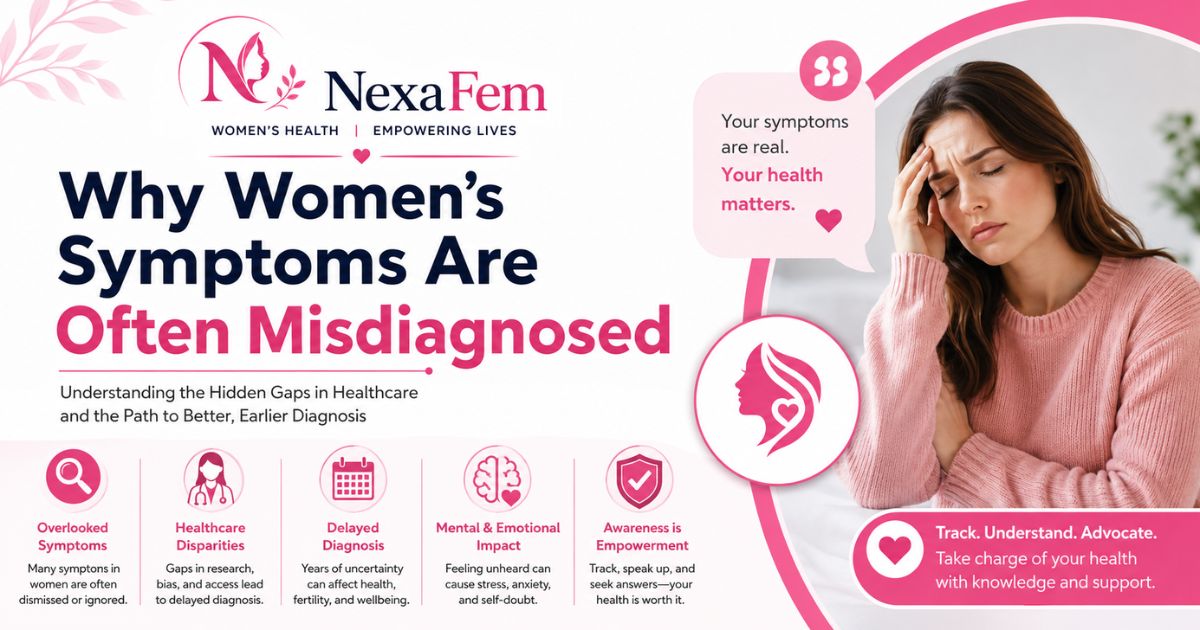
For generations, the global medical community operated on limited datasets regarding female-specific physiology. According to a landmark 2024 report by the World Economic Forum, closing the women's health gap could boost the global economy by $1 trillion annually by 2040, simply by giving women back the healthy years lost to delayed diagnoses. Conditions like endometriosis currently take an average of seven to ten years to formally diagnose, while polycystic ovary syndrome (PCOS) often goes unrecognized until a woman faces severe fertility challenges.
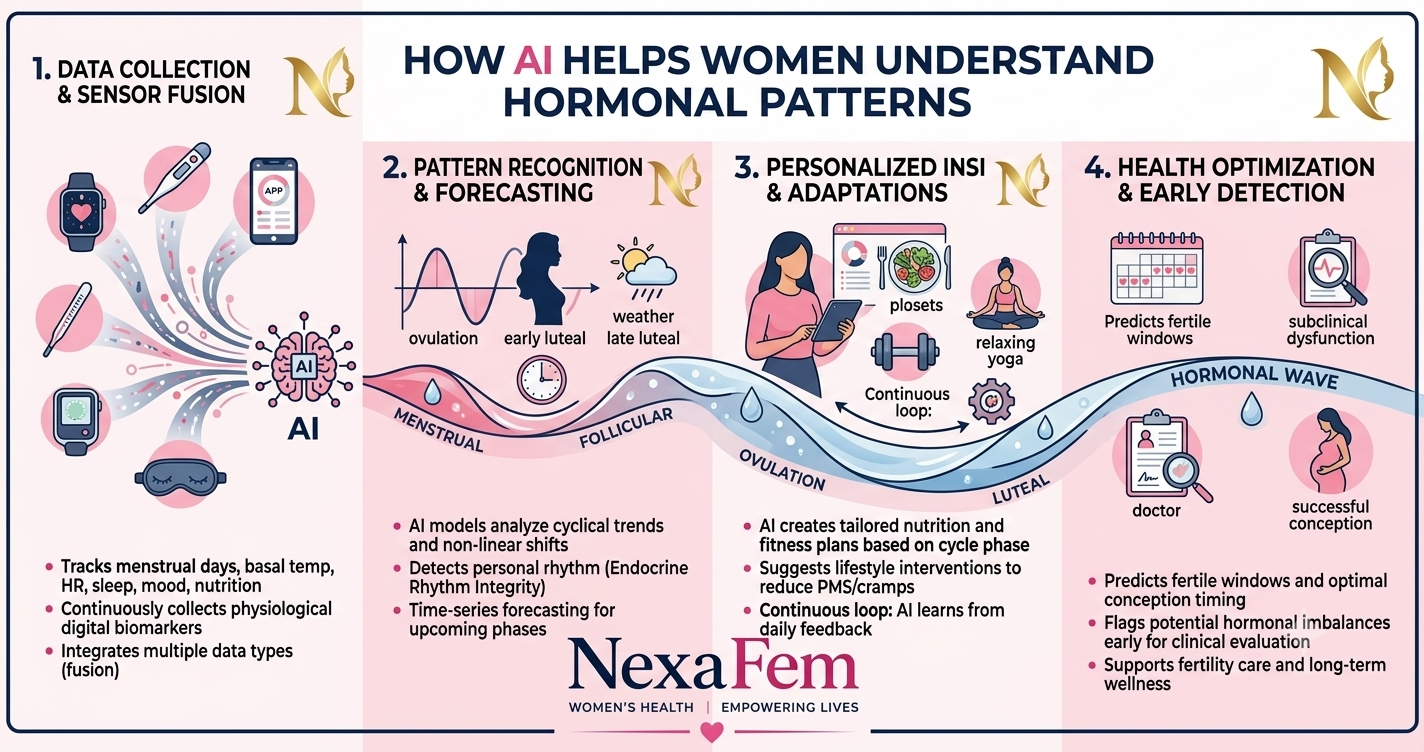
This systemic delay occurs because traditional healthcare relies on infrequent, snapshot visits rather than continuous data monitoring. When a patient reports complex, overlapping symptoms—such as fatigue, irregular cycles, and joint pain—it is incredibly difficult for a physician to identify patterns in a standard 15-minute consultation. Artificial intelligence bridges this gap by continuously aggregating and analyzing vast amounts of biometric and self-reported data. By processing these complex variables through advanced machine learning models, AI acts as a 24/7 digital health advocate, transforming subjective patient experiences into objective, clinically actionable insights.
"The integration of AI in women's health is not about replacing the clinician; it is about illuminating the blind spots of modern medicine with unprecedented, continuous data."
Beyond Basic Period Tracking: The Rise of Preventive Intelligence
The first generation of "FemTech" apps brought digitized period tracking to millions, but they were largely rudimentary. They functioned as simple digital calendars, applying standard 28-day cycle algorithms to every user, completely ignoring the biological reality that cycle lengths vary wildly based on stress, endocrinological shifts, and metabolic health. The new era of AI-powered tracking is fundamentally different—it is shifting the paradigm from passive observation to preventive intelligence.
Consider how leading global technology innovators are approaching health data. Apple has integrated wrist temperature monitoring and heart rate variability (HRV) into the Apple Watch to provide retrospective ovulation estimates, showcasing the power of wearable biometric integration. Google’s AI research division is actively developing models to improve maternal ultrasound interpretations in resource-limited areas. Similarly, enterprise giants like Microsoft and Amazon Web Services (AWS) are building secure, HIPAA-compliant cloud architectures that allow healthcare developers to process complex medical algorithms safely. By leveraging these enterprise-grade advancements, modern AI platforms analyze thousands of micro-datapoints—including sleep architecture, basal body temperature, and mood volatility—to map a woman's unique hormonal blueprint.
Connecting the Dots Across the Lifespan
True predictive intelligence understands that women's health is a continuum. A sudden variance in cycle length combined with increased insulin resistance markers isn't just an "irregular period"—it could be an early indicator of PCOS. Likewise, an AI tracking system can recognize the subtle onset of perimenopause years before clinical menopause occurs, flagging symptoms like vasomotor changes (hot flashes), brain fog, and disrupted sleep architectures that frequently mimic other conditions. By identifying these patterns early, AI empowers women to seek targeted interventions rather than suffering in silence.
How AI Algorithms Decode Complex Hormonal Conditions
To understand the profound impact of AI-powered symptom tracking, we must examine its application in managing chronic hormonal conditions. Conditions like PCOS, endometriosis, and thyroid dysfunction are notoriously difficult to manage because their symptoms fluctuate dynamically with a woman's hormonal cycle.
- Polycystic Ovary Syndrome (PCOS): AI algorithms can correlate dietary inputs, glucose responses, and dermatological symptoms (like cystic acne) with cycle phases, helping users and their endocrinologists pinpoint exact metabolic triggers.
- Endometriosis: By utilizing natural language processing (NLP) to analyze the severity, location, and timing of pelvic pain reported by the user, AI can generate detailed pain-mapping reports that align with diagnostic criteria set by organizations like the American College of Obstetricians and Gynecologists (ACOG).
- Perimenopause and Menopause: AI tracks the trajectory of vasomotor symptoms and mood fluctuations, offering predictive insights into when symptoms might peak and providing data-backed lifestyle or therapeutic recommendations aligned with the latest guidelines from the National Institute for Health and Care Excellence (NICE).
Instead of arriving at a doctor's office with vague complaints, a patient arrives armed with a longitudinal, mathematically verified health report. This dramatically shifts the power dynamic, fostering a more collaborative and efficient doctor-patient relationship.
Aligning AI With Clinical Excellence and Medical Responsibility
In the realm of digital health, innovation must never outpace patient safety. The most robust AI-powered platforms in women's health are those that adhere strictly to evidence-based medicine. This means their underlying algorithms are trained on diverse, medically validated datasets and operate within the frameworks established by the World Health Organization (WHO), the CDC, and leading gynecological societies.
Clinical credibility is the cornerstone of trust. When a platform utilizes AI, it must clearly define the boundaries of its technology. AI is a triage and tracking tool, not a definitive diagnostic engine. Top-tier platforms utilize predictive modeling to flag risk factors and symptom clusters, subsequently prompting the user to share these specific findings with a licensed healthcare professional. Furthermore, by ensuring that training datasets are inclusive of diverse ethnicities, ages, and socioeconomic backgrounds, responsible AI helps eliminate the inherent biases that have historically plagued medical research.
Data Privacy and Security in the Age of Health AI
With the aggregation of highly sensitive biometric and reproductive data comes the immense responsibility of data protection. High-profile data breaches and the shifting landscape of reproductive rights globally have made data privacy a primary concern for consumers. To operate at the level of Fortune 500 healthcare entities like Johnson & Johnson or global consultancies like Deloitte's life sciences division, an AI platform must implement military-grade security architectures.
State-of-the-art AI symptom trackers utilize end-to-end encryption, decentralized data storage, and zero-knowledge architectures. This means that while the AI model learns from the user's data locally on their device, the personal identifiers are stripped away before any aggregated data reaches the cloud. Compliance with international standards such as GDPR in Europe and HIPAA in the United States is strictly non-negotiable. Trust is the currency of healthcare; without rigorous, transparent privacy protocols, even the most advanced predictive algorithms will fail to achieve user adoption.
Key Takeaways
- Closing the Data Gap: AI-powered symptom tracking is rectifying decades of systemic exclusion of women from medical research by providing continuous, objective health data.
- Predictive Over Reactive: Modern algorithms move beyond basic cycle tracking to offer preventive intelligence, recognizing early warning signs for conditions like PCOS and perimenopause.
- Empowering Consultations: AI synthesizes complex symptom patterns into clinical-grade reports, reducing the average 7-10 year diagnostic delay for chronic hormonal conditions.
- Clinical and Ethical Alignment: The best AI tools are co-developed with medical experts, strictly adhering to ACOG, NICE, and WHO guidelines to ensure patient safety.
- Uncompromising Privacy: Enterprise-grade security, including end-to-end encryption and decentralized storage, is essential for protecting sensitive reproductive health data.
Final Thoughts
The future of female healthcare is deeply intertwined with the ethical, innovative application of artificial intelligence. We are moving away from an era where women's pain is dismissed or misunderstood, entering a new paradigm where data validates experience. By translating scattered symptoms into clear, predictive insights, technology is fundamentally changing how women interact with their own biology and the medical establishment. As we continue to innovate at the intersection of clinical science and machine learning, NexaFem is proud to lead this charge, dedicated to becoming the AI-powered preventive intelligence platform for women’s health. It is time to stop merely tracking symptoms and start predicting, preventing, and thriving.
Frequently Asked Questions
Share this post
Comments (0)
No comments yet. Be the first to comment!