
Ayurvedic Dinacharya for Women: A Simple Daily Self-Care Routine
Discover Dinacharya, the Ayurvedic daily routine, adapted into 13 simple, flexible self-care habits for women — from mindful mornings to peaceful evenings.

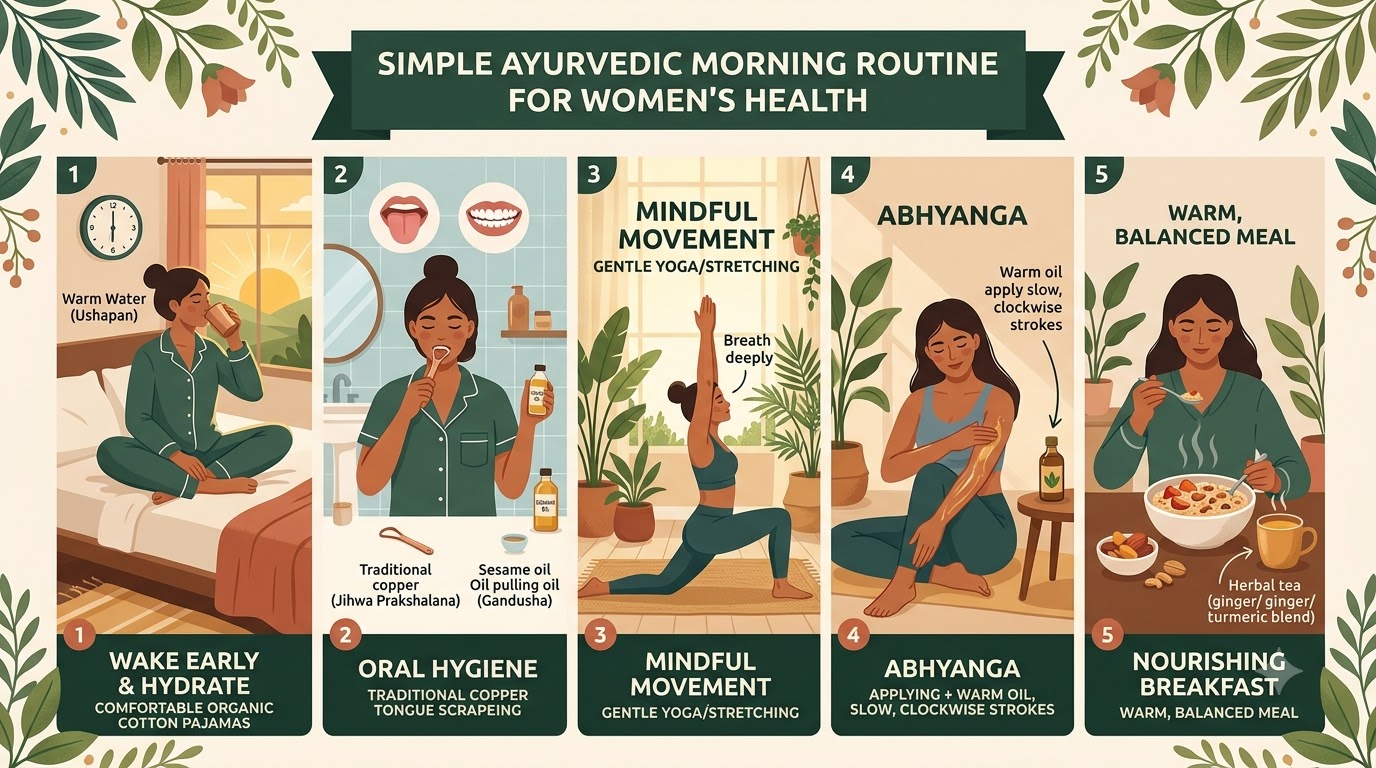
Modern life can be demanding. Women often move between work, family, relationships, household responsibilities, and personal goals, leaving little time to pause and care for themselves.
Ayurveda offers a gentle reminder that self-care does not have to be complicated. Small, consistent habits can create moments of nourishment, relaxation, and connection with your body and mind.
One of Ayurveda’s traditional approaches to daily wellness is Dinacharya, a daily routine designed around healthy habits and regular rhythms. Rather than following a strict checklist, Dinacharya can be adapted to your lifestyle, energy levels, age, season, menstrual cycle, and individual needs.
For women, a mindful daily routine can provide a simple framework for starting the morning with intention, staying balanced during the day, and creating a peaceful transition into the evening.
What Is Dinacharya?
The Sanskrit term Dinacharya combines dina, meaning “day,” and charya, referring to conduct, activity, or routine. In Ayurveda, it describes a structured approach to everyday habits intended to support overall well-being.
Traditional Dinacharya may include practices such as waking at a regular time, oral hygiene, movement, bathing, mindful eating, meditation, and a consistent bedtime.
Today, these ideas can be approached more flexibly. The purpose is not to complete dozens of rituals every day. Instead, it is to develop simple habits that help you feel more comfortable, grounded, focused, and rested.
1. Begin Your Morning Slowly
Try not to reach for your phone the moment you wake up.
Give yourself a few quiet moments to transition from sleep to wakefulness. Notice your breathing, stretch gently, or simply sit quietly before beginning the day.
Ayurvedic traditions often encourage rising early, sometimes before sunrise. However, your routine should also respect your sleep requirements and lifestyle. Getting enough quality sleep is more important than forcing yourself to follow an unrealistic wake-up time.
Simple practice: Spend the first five to ten minutes of your morning away from screens.
2. Start the Day With Water
A glass of water after waking is an easy way to begin your day hydrated.
Room-temperature or comfortably warm water may be preferable if it feels soothing to you. There is no need for complicated detox drinks or elaborate morning beverages.
Your hydration needs can vary depending on factors such as activity, climate, diet, pregnancy, breastfeeding, and health conditions.
Simple practice: Keep a glass or bottle of water nearby so that hydration becomes an easy part of your morning.
3. Make Oral Hygiene Part of Your Routine
Traditional Ayurvedic practices place considerable emphasis on morning oral care.
Brush your teeth and gently clean your tongue as part of your daily routine. Tongue cleaning can help remove the coating that naturally develops overnight.
Oil pulling is another traditional practice that involves gently swishing edible oil around the mouth. If you choose to practise it, consider it an optional ritual rather than a substitute for brushing, flossing, professional dental care, or treatment for oral problems.
Avoid swallowing the oil and stop if the practice causes discomfort.
4. Move Your Body in a Way That Feels Good
Daily movement does not have to mean an intense workout.
Choose an activity that matches your fitness level, energy, and schedule. You might enjoy:
- Gentle yoga
- Stretching
- Walking
- Mobility exercises
- Breathing practices
- Strength training
- Dancing or other enjoyable activities
5. Explore Abhyanga, the Ayurvedic Self-Massage
Abhyanga is a traditional Ayurvedic practice involving self-massage with oil.
Warm oil is traditionally massaged gently over the body before bathing. Beyond being a personal-care ritual, it can create an opportunity to slow down and become more aware of your body.
You can massage areas such as your arms, legs, shoulders, hands, and feet using comfortable pressure.
If your mornings are busy, you do not have to perform a full-body massage. Even a few minutes of foot, hand, or scalp massage can become a relaxing ritual.
Choose products that are appropriate for your skin and avoid applying oil to broken, irritated, or infected skin. Take care around slippery surfaces after applying oil.
6. Turn Your Bath Into a Moment of Calm
A shower or bath can be more than a daily hygiene task. It can also become a simple transition between sleep and the activities ahead.
Use comfortably warm or lukewarm water and take a few moments to breathe and slow down.
Keep your personal-care routine simple and choose products that suit your skin. You do not need numerous herbs, oils, or beauty products to create a meaningful self-care ritual.
7. Eat a Nourishing Breakfast
Food is an important part of traditional Ayurvedic living.
Rather than following restrictive diets or complicated food rules, focus on meals that are satisfying, nourishing, and appropriate for your individual needs.
Depending on your preferences, breakfast could include:
- Warm porridge with fruit and nuts
- Eggs with vegetables
- Idli or other traditional breakfast foods
- Vegetable-based dishes
- A nourishing grain-based meal
- Yogurt with fruit and other suitable additions
Pay attention to hunger and fullness rather than assuming that one breakfast or eating pattern works for everyone.
8. Carry Mindfulness Into Your Workday
Self-care does not need to end when your morning routine is over.
During the workday, take short breaks to stand, stretch, walk around, drink water, or rest your eyes from screens.
Whenever possible, eat away from your desk and slow down while having meals. Paying attention to your food and your body’s hunger and fullness signals can make eating feel more intentional.
Even a two-minute pause between tasks can provide a valuable mental reset.
Try this simple practice:
- Stop what you are doing.
- Relax your shoulders.
- Take three slow breaths.
- Notice how your body feels.
- Return to your task with greater awareness.
9. Adapt Your Routine to Your Menstrual Cycle
A woman’s energy, mood, appetite, sleep, and exercise preferences may change throughout the menstrual cycle.
Instead of expecting yourself to maintain exactly the same routine every day, allow some flexibility.
On energetic days, you may enjoy walking, strength training, yoga, or other active exercise. When you feel tired or uncomfortable, gentle stretching, walking, relaxation, and additional rest may feel more appropriate.
Traditional Ayurvedic practices relating to women’s health can be incorporated as personal wellness rituals, but they should not replace appropriate medical care.
Persistent pelvic pain, unusually heavy bleeding, severe fatigue, dizziness, or significant changes in your menstrual cycle should be discussed with a healthcare professional.
10. Make Space for Mental Well-Being
A complete self-care routine should support your mind as well as your body. Consider making time for activities such as:
- Meditation
- Gentle breathing practices
- Journaling
- Reading
- Spending time in nature
- Prayer or spiritual reflection
- Quiet time without screens
- Connecting with someone you trust
You do not need to meditate for an hour to benefit from a moment of stillness. Even five minutes of intentional quiet can create space to pause, breathe, and reset.
11. Enjoy a Relaxed Evening Meal
Whenever possible, avoid making dinner rushed, extremely heavy, or unnecessarily late.
Choose a balanced meal that feels satisfying and comfortable for you. Try to eat without working, scrolling, or multitasking when your schedule allows.
There is no single Ayurvedic dinner that is appropriate for every woman. Nutritional requirements vary according to age, activity, health, preferences, and other individual factors.
The most important thing is to develop an eating pattern that is nourishing and realistic for your life.
12. Create a Peaceful Evening Routine
The transition from a busy day to restful sleep can be easier when you follow a predictable evening routine. You might:
- Reduce screen time before bed
- Dim bright lights in the evening
- Take a warm shower or bath
- Do a few gentle stretches
- Practise slow breathing or meditation
- Read or journal for a few minutes
- Prepare for the next day
- Go to bed at a reasonably consistent time
Traditional Ayurvedic routines often encourage an early bedtime. In modern life, however, the priority should be getting sufficient, restful sleep while maintaining a schedule that works for you.
13. End the Day With a Foot Massage
A few minutes of gentle foot massage can be a comforting way to finish the day.
Apply a small amount of suitable moisturiser or oil and massage your feet using comfortable pressure. Avoid areas that are painful, injured, or irritated.
You do not need to think of this as a treatment. It can simply be a few quiet minutes to slow down and reconnect with yourself.
An Easy Dinacharya for Busy Women
You do not need to adopt every traditional Ayurvedic practice immediately. A simple routine might look like this:
Morning
- Wake at a consistent time
- Drink some water
- Brush your teeth and clean your tongue
- Stretch or move for 5–15 minutes
- Take a mindful shower
- Eat a nourishing breakfast
During the Day
- Stay hydrated
- Eat regular, balanced meals
- Take short movement breaks
- Step away from screens when possible
- Practise a few minutes of mindful breathing
Evening
- Eat dinner without rushing
- Reduce stimulating screen use
- Spend a few quiet minutes reading, journaling, or meditating
- Massage your feet if you enjoy it
- Prepare for the next day
- Maintain a consistent sleep schedule
Consistency Matters More Than Perfection
Perhaps the most valuable lesson of Dinacharya is that your routine does not have to be perfect.
You do not need to wake before sunrise, prepare elaborate drinks, complete a long yoga session, or follow dozens of traditional rules to practise self-care.
Start with one or two habits that genuinely fit your life. Maybe that means drinking water after waking, taking five minutes to stretch, eating one meal without distractions, or creating a peaceful bedtime ritual.
Final Thoughts
Dinacharya offers a simple way to turn ordinary moments into opportunities for self-care.
A glass of water can become a mindful start to the morning. A few stretches can become a moment of connection with your body. A warm shower can help you transition into the day. And a few quiet minutes before bed can give you space to breathe, reflect, and let go of the day’s demands.
You do not need a perfect routine. You need a routine that supports your life, respects your individual needs, and gives you regular opportunities to care for yourself.
Start small. Stay consistent. Listen to your body. And make self-care part of your everyday rhythm.
Share this post
Comments (0)
No comments yet. Be the first to comment!