
Ayurvedic Foods for Hormonal Balance: What to Eat
Discover Ayurvedic foods that may support hormonal health, including whole grains, dals, vegetables, nuts, seeds and traditional spices.
Ayurvedic Foods That May Support Hormonal Balance Naturally
Hormones influence far more than the menstrual cycle. They interact with metabolism, reproductive health, sleep, appetite, mood, bone health and many other systems throughout a woman's life.
That is why the phrase “hormonal balance” can mean different things to different women. Someone with PCOS may be thinking about irregular periods or acne. A woman in perimenopause may be dealing with changing cycles, hot flushes or sleep disruption. Another woman may simply want to eat in a way that supports energy, digestion and long-term health.
Food cannot “reset” hormones overnight, and there is no single Ayurvedic food that can correct every hormonal concern. However, a varied, nutrient-dense eating pattern can support the metabolic and nutritional foundations on which healthy hormonal function depends. Modern nutrition guidance emphasizes vegetables, fruits, legumes, whole grains, nuts and other minimally processed foods, while Ayurveda has long placed importance on food quality, preparation, quantity, timing and individual suitability.
The most useful approach is therefore not to search for a miracle food, but to build sustainable eating habits that respect both nutritional science and the traditional wisdom of Ayurveda.
Quick Summary
There is no single food that guarantees hormonal balance. Hormonal health depends on many factors, including nutrition, sleep, physical activity, stress, age, genetics and medical conditions.
Ayurvedic eating emphasizes factors such as food quality, preparation, quantity, timing, digestion and individual constitution rather than relying on one “superfood.”
Nutrient-dense foods such as vegetables, fruits, pulses, whole grains, nuts, seeds and healthy protein sources can form the foundation of a hormone-supportive eating pattern.
For women with PCOS, current evidence does not support one particular diet as universally superior. A sustainable healthy eating pattern tailored to the individual is recommended.
During perimenopause and menopause, adequate calcium, vitamin D, protein and overall dietary quality become particularly important for long-term health.
What Does “Hormonal Balance” Actually Mean?
“Hormonal balance” is a useful wellness phrase, but it is not a single medical diagnosis.
Your body produces many hormones, including estrogen, progesterone, insulin, thyroid hormones, cortisol and others. Their levels naturally change according to age, menstrual-cycle stage, pregnancy status, sleep, stress, energy availability and other physiological factors.
For example, estrogen and progesterone change substantially across the menstrual cycle. During perimenopause, ovarian hormone production becomes more variable before eventually declining after menopause.
This means that a healthy hormone profile does not look exactly the same for every woman.
Instead of trying to keep every hormone at one fixed level, it is more useful to focus on the foundations that support overall health: adequate nutrition, regular movement, sufficient sleep, stress management and appropriate medical care when symptoms require evaluation.
How Can Food Support Hormonal Health?
Food does not directly control every hormone in isolation. Its effects are broader.
A nutritious dietary pattern can provide protein, fibre, essential fatty acids, vitamins and minerals needed for normal physiological processes. It can also support healthy body composition, digestion and metabolic health.
For women with PCOS in particular, lifestyle management is a core part of care. The 2023 international evidence-based guideline recommends healthy eating and physical activity, while also emphasizing that there is no evidence that one specific dietary composition is superior for hormonal, reproductive or metabolic outcomes.
This is an important distinction.
The goal is not to “balance hormones” by eating one special ingredient. The goal is to create a dietary pattern that supports the body as a whole.
Ayurvedic Perspective on Food and Hormonal Wellness
Ayurveda views food as an important part of maintaining health. Traditional Ayurvedic dietary principles consider factors such as the nature of the food, preparation method, combinations, quantity, location, season, timing and the person consuming it. The Ministry of Ayush's guidance on Ayurvedic dietary principles similarly describes multiple factors that influence how food is selected and consumed.
Ayurveda also traditionally uses concepts such as Agni, or digestive capacity, and Prakriti, an individual's constitutional characteristics, when discussing dietary choices.
These concepts belong to the Ayurvedic medical framework and should not automatically be interpreted as equivalent to modern physiological measurements.
A practical way to combine the two perspectives is to ask:
Is the food nutrient-dense?
Is the overall diet varied?
Is the food prepared in a way that suits you?
Are you eating adequate protein and fibre?
Are you relying heavily on ultra-processed foods?
Are your meals sustainable and culturally appropriate?
Do your choices need to change with your life stage or medical needs?
That approach respects Ayurvedic dietary traditions without presenting them as scientifically proven treatments for hormonal disorders.
1. Whole Grains and Traditional Millets
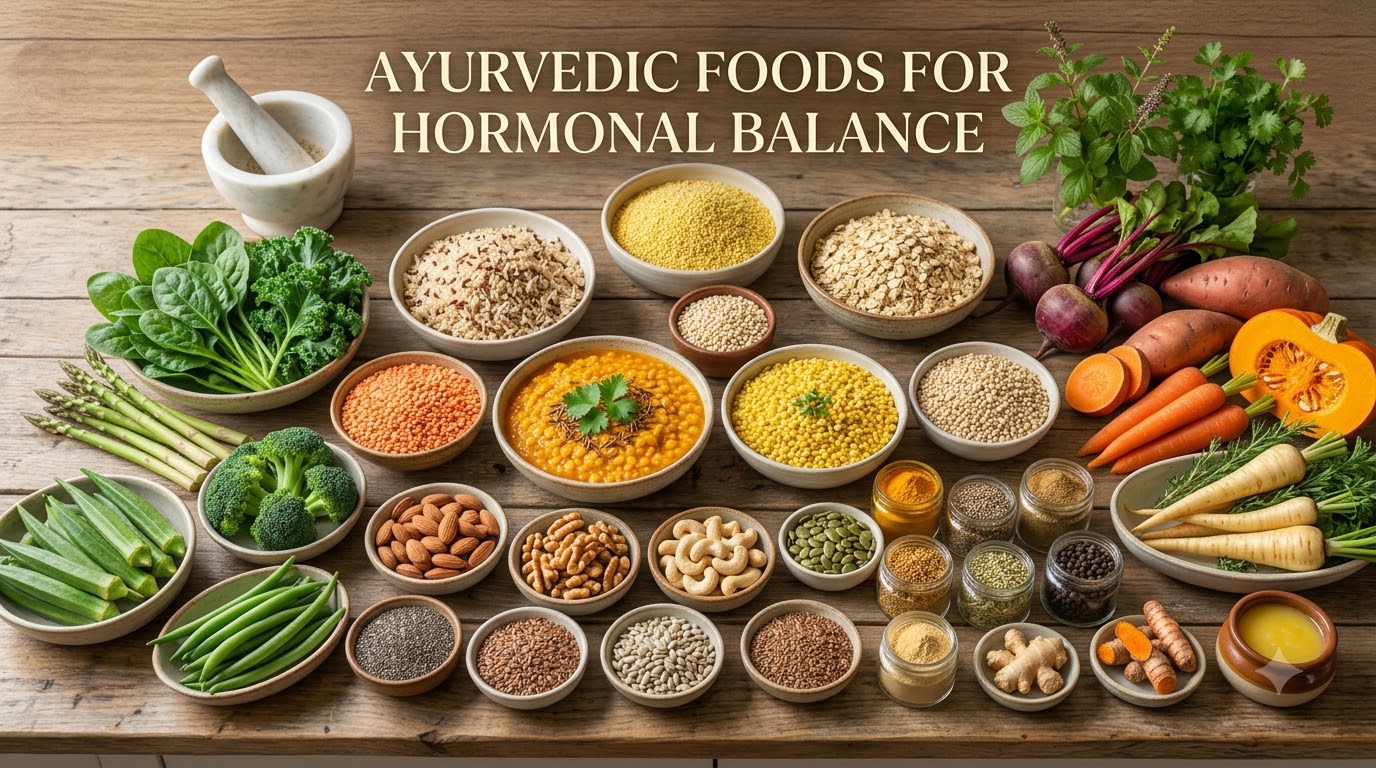
Whole grains can be valuable sources of complex carbohydrates, fibre and micronutrients. Depending on dietary preference and availability, options include oats, brown rice, whole wheat, barley and traditional Indian millets such as ragi, jowar and bajra.
From a modern nutrition perspective, whole grains and other minimally processed carbohydrate sources can form part of a healthy dietary pattern. WHO recommends obtaining carbohydrates primarily from whole grains, vegetables, fruits and pulses.
From an Ayurvedic perspective, grains have long been incorporated into traditional diets, with preparation and suitability considered important.
How to use them
Instead of eliminating carbohydrates completely, consider combining a whole-grain or millet-based food with:
Dal or another protein source
Vegetables
Curd or another suitable protein-rich food
Nuts or seeds where appropriate
For example, a balanced meal might include vegetable sambar with millet, or dal with brown rice and cooked vegetables.
Practical takeaway: Whole grains and millets can be part of a balanced diet. They are not “hormone-balancing medicines,” and there is no need to assume that one grain is universally better for every woman.
2. Pulses, Dal and Legumes
Dal, chickpeas, rajma, green gram and other legumes are particularly useful in Indian diets because they provide protein, fibre and several micronutrients.
A diet rich in legumes, vegetables and whole grains is consistent with general healthy-diet recommendations.
For women concerned about metabolic health or PCOS, this can be especially relevant because sustainable dietary patterns matter more than restrictive “hormone diets.” Current PCOS guidelines recommend healthy eating tailored to individual preferences and needs rather than one specific diet composition.
An Ayurvedic consideration
Some women experience bloating or digestive discomfort from certain legumes. Traditional preparation methods such as soaking, thorough cooking and using digestive spices may make meals more comfortable for some people.
However, persistent digestive symptoms should not automatically be attributed to “weak Agni.” Conditions such as food intolerance, coeliac disease, inflammatory bowel disease and other medical problems may require professional assessment.
3. Leafy Greens and Colourful Vegetables
Spinach, amaranth leaves, drumstick leaves, methi leaves, carrots, pumpkin, beans, gourds, beetroot, broccoli and other vegetables can provide fibre, folate, potassium, carotenoids and other micronutrients.
Rather than searching for a single vegetable that “balances estrogen,” aim for variety and colour.
WHO recommends a diverse diet containing vegetables, fruits, legumes, whole grains, nuts and other nutrient-dense foods.
For women in midlife, maintaining a nutrient-rich diet also becomes important for cardiovascular and bone health.
4. Nuts and Seeds
Nuts and seeds can contribute healthy unsaturated fats, protein, fibre and minerals.
Useful options include:
Almonds
Walnuts
Pumpkin seeds
Sunflower seeds
Sesame seeds
Flaxseeds
Chia seeds
Flaxseed and other plant foods contain compounds with phytoestrogenic activity. During menopause, foods containing phytoestrogens such as soy, legumes and lignan-containing foods have been explored for potential effects on symptoms, although responses vary and these foods should not be considered replacements for evidence-based menopause treatment.
What about “seed cycling”?
Seed cycling is often promoted online as a way to regulate estrogen and progesterone through different phases of the menstrual cycle.
There is currently insufficient high-quality evidence to conclude that seed cycling reliably regulates reproductive hormones or treats hormonal disorders.
That does not mean seeds are unhealthy. They can be nutritious additions to a balanced diet; the stronger evidence relates to their overall nutritional value rather than a guaranteed hormone-regulating effect.
5. Soy and Other Plant Protein Foods
Soy foods such as tofu, tempeh, edamame and unsweetened soy beverages can provide protein and naturally occurring isoflavones.
Phytoestrogens are plant compounds that can interact with estrogen receptors differently from human estrogen. Their effects are complex and should not be described as simply “increasing estrogen.”
Some menopause guidance includes soy and other phytoestrogen-containing foods as possible dietary options for women experiencing symptoms, although individual responses differ.
For most women, including a reasonable amount of whole soy foods as part of a balanced diet can be a practical nutritional choice.
If you have a specific medical condition or are considering concentrated phytoestrogen supplements, discuss this with a healthcare professional.
6. Amla and Other Fruits
Amla, or Indian gooseberry, is deeply familiar within Ayurvedic traditions and is valued as a food and traditional wellness ingredient.
Fruits more broadly provide fibre, vitamins, minerals and various plant compounds. WHO recommends a varied intake of fruits and vegetables as part of a healthy dietary pattern.
Amla can therefore be included as one nutritious food among many.
However, claims that amla directly “balances estrogen,” “normalizes periods” or “cures PCOS” go beyond what can responsibly be concluded from current evidence.
7. Ginger and Turmeric
Ginger and turmeric are traditional Indian culinary ingredients with long histories of use in Ayurveda.
Modern research has investigated compounds in ginger and turmeric for various biological effects, including inflammatory and metabolic pathways. However, evidence about their ability to directly regulate reproductive hormones in women remains limited and condition-specific.
One small randomized clinical trial in women with PCOS examined cinnamon and ginger supplementation, but results from an individual study should not be interpreted as proof that these spices can replace established PCOS treatment.
Practical takeaway
Using ginger or turmeric as culinary spices can be a simple way to add flavour and plant compounds to meals.
That is very different from taking concentrated extracts or high-dose supplements.
8. Cinnamon and Fenugreek: Traditional Ingredients With Important Limits
Cinnamon and fenugreek are common ingredients in Indian cooking and traditional wellness practices. Both have been investigated for possible metabolic effects.
Some studies have reported potentially interesting findings, including research involving women with PCOS. However, the evidence is not strong enough to recommend either ingredient as a universal treatment for hormonal disorders. The broader evidence base for Ayurvedic approaches to PCOS also has important limitations, including study quality and inconsistent safety reporting.
For everyday cooking, these foods can be part of a varied diet.
High-dose supplements are a different matter and should be discussed with a qualified healthcare professional.
What About Dairy and Fermented Foods?
Curd and other fermented dairy foods can provide protein and calcium, depending on the product.
Calcium becomes particularly important during and after menopause because declining estrogen levels are associated with changes in bone health. Menopause guidance commonly recommends calcium-rich foods and attention to vitamin D, alongside weight-bearing and resistance exercise.
If you do not consume dairy, calcium-fortified alternatives and other calcium-rich foods can be considered.
Women with lactose intolerance, milk allergy or other dietary restrictions should choose alternatives appropriate to their individual needs.
Foods to Eat Less Often
Supporting hormonal health is not only about adding “superfoods.” It is also about reducing patterns that may make a healthy diet harder to maintain.
Consider limiting frequent intake of:
Sugary beverages
Highly processed snacks
Excessively refined foods
Foods high in added sugars
Foods high in saturated and trans fats
Excessive alcohol
WHO recommends limiting free sugars, unhealthy fats and highly processed foods while emphasizing dietary variety.
This does not mean that you need a perfectly clean diet or must eliminate every favourite food.
A sustainable diet allows flexibility.
Ayurvedic Eating Habits That May Complement a Healthy Diet
Ayurveda's contribution is not simply a list of herbs or ingredients. Traditional Ayurvedic dietary practice also emphasizes how, when and why food is eaten.
Depending on individual needs, useful principles may include:
Eat mindfully
Try to reduce distracted eating and pay attention to hunger, fullness, taste and digestion.
Prefer appropriately prepared foods
Many traditional Indian meals use cooking methods that make grains, pulses and vegetables easier to consume. Warm, cooked meals may also feel more comfortable for some people, although there is no universal requirement that every meal must be warm.
Respect individual tolerance
A food considered beneficial in one person's diet may cause symptoms in another. Food allergies, intolerances, medical conditions and nutritional requirements need to be considered.
Consider seasonality
Ayurveda traditionally recognizes seasonal changes through concepts associated with Ritucharya. Choosing locally available seasonal foods can naturally increase dietary variety and may align well with practical nutrition.
Avoid extreme restriction
Ayurvedic eating should not be interpreted as a reason to eliminate major food groups without a nutritional reason.
Can These Foods Help With PCOS?
They may contribute to a healthy dietary pattern, but no food can be described as a cure for PCOS.
PCOS is a complex endocrine and metabolic condition. Current international guidance supports healthy eating and physical activity for women with PCOS, but does not identify one specific diet as superior for hormonal or reproductive outcomes.
Research into Ayurveda and PCOS is ongoing. A scoping review identified clinical research involving Ayurvedic interventions, but also highlighted important gaps, including the need for stronger research on Ayurvedic diet and lifestyle interventions and more rigorous safety reporting.
If you have PCOS, nutritious foods such as vegetables, pulses, whole grains, nuts, seeds and suitable protein sources can form part of a balanced eating pattern. But irregular periods, infertility, excessive hair growth, persistent acne or other symptoms deserve proper medical evaluation.
What About Perimenopause and Menopause?
Hormonal changes during perimenopause and menopause can affect periods, sleep, body composition, mood, temperature regulation and bone health.
Nutrition cannot stop menopause, but a balanced diet can support health during this transition.
Priorities include:
Adequate protein
Calcium-rich foods
Vitamin D
Vegetables and fruit
Whole grains and legumes
Healthy fats
Sufficient hydration
Regular physical activity
NHS guidance also recommends healthy eating, regular exercise, calcium-rich foods and weight-bearing activity during menopause.
For persistent hot flushes, significant sleep problems, vaginal symptoms, abnormal bleeding or other troublesome symptoms, speak with a healthcare professional. Dietary changes should complement—not replace—appropriate menopause care.
A Simple Ayurvedic-Inspired Plate for Hormonal Wellness
Instead of following a complicated “hormone reset,” try building meals around a simple structure.
Breakfast:
Vegetable poha or upma with a protein-rich accompaniment, or oats with nuts, seeds and fruit.
Lunch:
Dal + vegetable sabzi + roti or brown rice/millet + curd where appropriate.
Snack:
Fruit with a small portion of nuts or seeds.
Dinner:
A lighter balanced meal such as vegetable khichdi with a suitable protein source and vegetables.
Flavour:
Use familiar culinary spices such as ginger, turmeric, cumin, coriander or cinnamon according to taste and tolerance.
This is an example, not a prescribed diet. Individual nutritional needs can vary significantly based on age, activity, medical conditions, dietary preferences and life stage.
Lifestyle Matters as Much as the Food on Your Plate
Hormonal health cannot be reduced to nutrition.
Regular physical activity, adequate sleep and stress management are also important parts of preventive health.
For women with PCOS, evidence-based guidelines recommend lifestyle management as a core component of care, while emphasizing that benefits can occur even without weight loss.
For perimenopause and menopause, regular exercise, healthy eating, sleep and mental wellbeing can also support overall health.
Gentle yoga, meditation, breathing exercises and mindful routines may be useful for relaxation and wellbeing. They should be viewed as supportive practices rather than treatments for an underlying hormonal disorder.
Common Misconceptions About Ayurvedic Foods and Hormones
“One food can balance all hormones.”
No. Hormones have different functions and are regulated by complex systems. A single food cannot reliably normalize every hormone.
“Natural means completely safe.”
No. The Ministry of Ayush's pharmacovigilance resources specifically emphasize that the belief that natural products are always safe is a misconception. Traditional medicines and concentrated preparations can have adverse effects or interactions.
“If a food is Ayurvedic, it can replace medical treatment.”
No. Ayurveda can be part of an individual's healthcare approach, but evidence-based medical evaluation remains important when symptoms suggest a medical condition.
“Carbohydrates should be avoided for hormonal health.”
Not necessarily. Whole grains, pulses, vegetables and fruits provide important nutrients and fibre. Current PCOS guidance does not support one specific carbohydrate or diet composition as universally superior.
“More herbs means better results.”
Not necessarily. Concentrated herbs and supplements can have pharmacological effects and may interact with medications or medical conditions.
When Should You Speak With a Doctor?
Food-based wellness is appropriate for general health, but certain symptoms should not be managed through diet alone.
Consider seeking medical evaluation if you experience:
Very irregular or absent periods
Extremely heavy menstrual bleeding
Persistent pelvic pain
New or severe acne or excess facial/body hair
Difficulty becoming pregnant
Unexplained major changes in weight
Persistent fatigue or weakness
Symptoms of thyroid problems
Significant hot flushes or sleep disruption
Bleeding after menopause
If you are pregnant, breastfeeding, planning pregnancy, taking prescription medication, managing a chronic condition or considering concentrated Ayurvedic supplements, speak with an appropriate healthcare professional before making significant dietary or herbal changes.
There is no single “hormone-balancing food.”
The more evidence-informed approach is to build a varied dietary pattern around vegetables, fruits, pulses, whole grains, nuts, seeds and appropriate protein sources. These foods support overall nutrition and metabolic health, while traditional Ayurvedic principles can offer a culturally relevant framework around food preparation, seasonality, mindful eating and individual suitability.
For women with PCOS, perimenopause or menopause, nutrition can be an important part of overall care, but it should be tailored to the individual and used alongside appropriate medical guidance.
The goal is not perfection. It is creating eating habits that are nourishing, sustainable and appropriate for your body and stage of life.
Sources & References
World Health Organization (WHO) — Healthy Diet
General guidance on dietary diversity, whole grains, vegetables, fruits, legumes, nuts, fibre, sugars and fats.
WHO: Healthy DietWHO India — Healthy Diet
Guidance on diversified healthy eating in the Indian context, including cereals, legumes, vegetables, fruits and animal-source foods.
WHO India: Healthy DietAmerican Society for Reproductive Medicine — 2023 International Evidence-Based PCOS Guideline
Evidence-based recommendations on lifestyle and dietary management of PCOS.
ASRM: PCOS Evidence-Based Guideline RecommendationsMonash University — International Evidence-Based PCOS Guideline
Evidence summaries covering lifestyle, diet and physical activity in PCOS.
Monash University: PCOS GuidelineMinistry of Ayush — AYUSH Research Portal
Government of India's research resource for Ayurveda and other traditional Indian systems.
AYUSH Research PortalMinistry of Ayush — Standard Treatment Guidelines: Metabolic Disorders
Includes traditional Ayurvedic dietary principles and the Ayurvedic framework for food selection and consumption.
Ministry of Ayush: Ayurvedic Standard Treatment GuidelinesPubMed — A Scoping Review of Ayurveda Studies in Women With PCOS
Reviews the existing clinical evidence and identifies limitations and research gaps concerning Ayurveda and PCOS.NHS — Things You Can Do to Help Menopause and Perimenopause Symptoms
Guidance on diet, exercise, calcium, vitamin D, sleep and complementary medicines during menopause.
NHS: Menopause and Perimenopause Lifestyle AdviceCambridge University Hospitals NHS — Menopause: A Healthy Lifestyle Guide
Nutrition guidance covering calcium, vitamin D, fruit and vegetables, refined carbohydrates and phytoestrogen-containing foods.
Cambridge University Hospitals: Menopause Nutrition GuidePubMed — Ginger and Turmeric: Endocrine Functions Review
Scientific review discussing biological mechanisms investigated for ginger and turmeric.Health Disclaimer
This article is provided for informational and educational purposes only and is not a substitute for professional medical advice, diagnosis or treatment.
The Ayurvedic information discussed here describes traditional concepts and practices and should not be interpreted as a guaranteed treatment for hormonal imbalance, PCOS, menstrual disorders, menopause or any other medical condition.
“Natural” does not automatically mean safe. Concentrated herbal preparations and supplements may cause adverse effects or interact with medicines. Women who are pregnant, breastfeeding, planning pregnancy, taking prescription medication or managing a chronic health condition should consult an appropriate healthcare professional before making significant dietary or herbal changes.
If you have persistent, severe or unusual symptoms, consult a qualified doctor. For individualized Ayurvedic dietary or herbal guidance, consult a qualified Ayurveda practitioner who can consider your health history and current treatment.
Frequently Asked Questions
Share this post
Comments (0)
No comments yet. Be the first to comment!