
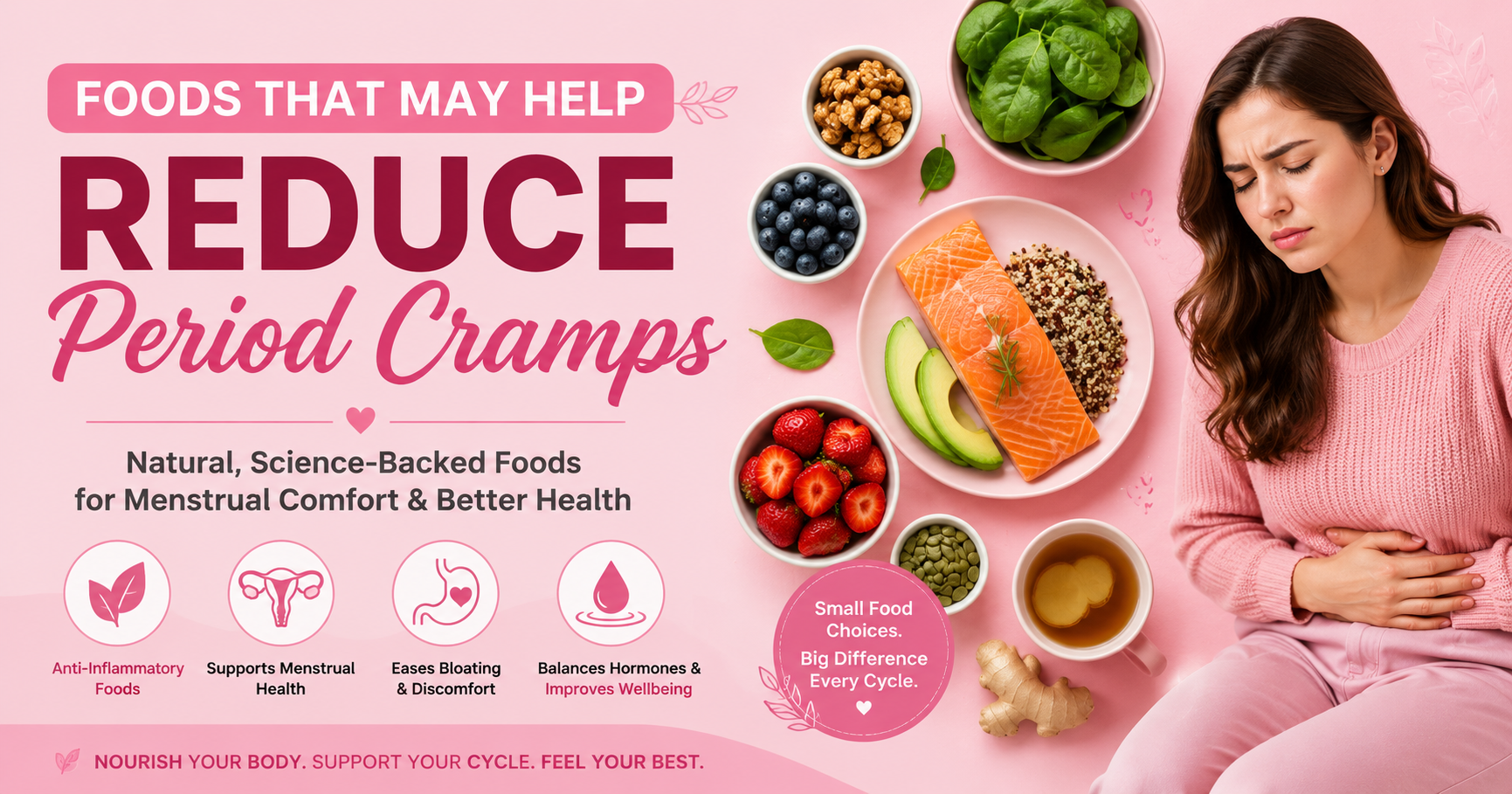
Foods That May Help Reduce Period Cramps: A Science-Backed Guide for Better Menstrual Health
Discover foods that may help reduce period cramps, support menstrual health, and ease discomfort with evidence-based nutrition strategies.
Periods can be challenging enough without painful cramps disrupting your day.
For many women, menstrual cramps can make it difficult to focus at work, attend classes, exercise, socialize, or simply feel comfortable. While medications can provide relief, many women are increasingly looking for supportive lifestyle approaches that complement medical care.
One area that continues to gain attention is nutrition.
Emerging research suggests that certain foods may help support the body's natural inflammatory response, hormonal balance, and muscle function—all of which can play a role in menstrual comfort. Although no food can completely eliminate period pain, a nutrient-rich diet may help reduce the severity of cramps and support overall menstrual health.
Understanding which foods may help—and why—can empower you to make informed choices throughout your cycle.
Quick Summary (TL;DR)
Certain foods may help reduce period cramps by supporting healthy inflammation levels and muscle relaxation.
Omega-3-rich fish, leafy greens, fruits, nuts, seeds, and whole grains are among the most beneficial options.
Hydration is important and may help reduce bloating and discomfort.
Anti-inflammatory foods for period pain can support overall menstrual health when consumed regularly.
Severe or worsening cramps should always be evaluated by a healthcare professional.
What Are Period Cramps?
Period cramps, medically known as dysmenorrhea, are painful sensations that occur before or during menstruation.
The pain is caused primarily by prostaglandins, hormone-like substances produced in the uterus. High levels of prostaglandins trigger stronger uterine contractions, which can lead to pain and discomfort.
According to the UK's National Health Service (NHS), menstrual pain is common and can range from mild discomfort to severe pain that affects daily life. Women experiencing severe symptoms should seek medical evaluation to rule out underlying conditions such as endometriosis or adenomyosis.
Source: NHS Menstrual Pain Guidance
What Causes Menstrual Cramps?
Several factors may contribute to period pain.
Primary Dysmenorrhea
This refers to common menstrual cramps that are not caused by an underlying medical condition.
Secondary Dysmenorrhea
Pain may result from conditions such as:
Endometriosis
Adenomyosis
Uterine fibroids
Pelvic inflammatory disease (PID)
Risk Factors
Women may be more likely to experience significant menstrual cramps if they:
Started menstruating at a younger age
Have heavy periods
Smoke
Experience high levels of stress
Have a family history of painful periods
Common Symptoms of Menstrual Cramps
Symptoms may include:
Lower abdominal pain
Pelvic pressure
Lower back pain
Pain radiating into the thighs
Nausea
Fatigue
Headaches
Bloating
Digestive discomfort
For some women, symptoms may begin one to two days before menstruation and continue for several days.
Can Diet Really Help Reduce Period Cramps?
The short answer is: possibly, yes.
Diet is not a cure for menstrual pain. However, certain nutrients may influence inflammatory pathways, muscle contractions, hydration status, and hormone regulation.
Organizations such as the American College of Obstetricians and Gynecologists (ACOG) recognize that healthy lifestyle habits—including nutrition and exercise—can support menstrual wellness.
Source: ACOG Dysmenorrhea Guidance
Best Foods That May Help Reduce Period Cramps
1. Fatty Fish Rich in Omega-3 Fatty Acids
Examples include:
Salmon
Sardines
Mackerel
Trout
Omega-3 fatty acids possess anti-inflammatory properties and may help reduce the production of inflammatory compounds associated with menstrual discomfort.
Including fatty fish two to three times per week may support menstrual health while also benefiting heart and brain health.
2. Leafy Green Vegetables
Examples include:
Spinach
Kale
Swiss chard
These vegetables are rich in:
Magnesium
Iron
Folate
Antioxidants
Magnesium plays a role in muscle relaxation and may help reduce uterine muscle tension during menstruation.
Women who experience heavy periods may also benefit from iron-rich foods to support healthy iron levels.
3. Nuts and Seeds
Particularly beneficial options include:
Walnuts
Almonds
Chia seeds
Flaxseeds
Pumpkin seeds
These foods provide healthy fats, magnesium, zinc, and fiber.
Some research suggests that zinc may support healthy prostaglandin balance and menstrual comfort.
4. Fruits Rich in Antioxidants
Excellent choices include:
Berries
Oranges
Kiwi
Pineapple
Cherries
These fruits contain vitamins, antioxidants, and hydration-supporting nutrients that may help combat oxidative stress associated with inflammation.
5. Whole Grains
Examples include:
Oats
Brown rice
Quinoa
Whole wheat
Whole grains provide complex carbohydrates that help maintain stable energy levels and support overall hormonal health.
They also contain magnesium and B vitamins that contribute to normal muscle and nerve function.
6. Ginger
Ginger is one of the most studied natural foods for menstrual discomfort.
Research suggests ginger may help reduce menstrual pain intensity in some women when consumed during the menstrual cycle.
You can enjoy ginger through:
Herbal tea
Fresh ginger infusions
Soups
Smoothies
7. Yogurt and Fermented Foods
Examples include:
Yogurt
Kefir
Kimchi
Sauerkraut
A healthy gut microbiome may play a role in hormone metabolism and immune regulation.
Fermented foods may support digestive health and contribute to overall wellness during menstruation.
8. Water and Hydrating Foods
Hydration is often overlooked.
Drinking adequate water may help:
Reduce bloating
Support circulation
Improve overall comfort
Hydrating foods include:
Cucumber
Watermelon
Strawberries
Celery
Anti-Inflammatory Foods for Period Pain
Women searching for anti-inflammatory foods for period pain often benefit from focusing on dietary patterns rather than individual foods.
A menstrual-supportive eating pattern typically includes:
Fruits and vegetables
Whole grains
Legumes
Fatty fish
Nuts and seeds
Olive oil
This approach resembles the Mediterranean-style diet, which is associated with lower levels of chronic inflammation and improved overall health.
Foods That May Worsen Menstrual Cramps
While individual responses vary, some women find that limiting certain foods helps improve symptoms.
Potential triggers include:
Highly processed foods
Excess added sugars
Sugary beverages
Excess alcohol
High-sodium packaged foods
Excessive caffeine
Keeping a symptom diary or using a menstrual symptom tracker can help identify personal triggers.
Hormonal Health and Period Pain
Hormones influence every stage of the menstrual cycle.
Nutrition supports the body's ability to:
Produce hormones
Metabolize hormones
Regulate inflammatory responses
Maintain energy balance
Women interested in understanding their cycle patterns may benefit from tracking symptoms using a menstrual health insights tool or cycle health tracker to identify recurring trends.
This aligns with NexaFem's preventive approach to menstrual intelligence and personalized wellness.
Mental Wellness and Menstrual Cramps
Pain does not only affect the body.
Menstrual discomfort can impact:
Mood
Concentration
Sleep quality
Productivity
Emotional wellbeing
Chronic or severe period pain may contribute to increased stress and anxiety.
Supporting mental wellness through adequate sleep, stress management, physical activity, and social support can be an important part of comprehensive menstrual care.
Lifestyle Tips for Menstrual Cramp Relief
Nutrition works best when combined with other healthy habits.
Helpful strategies include:
Regular physical activity
Gentle stretching
Heat therapy
Quality sleep
Stress reduction practices
Staying hydrated
Maintaining a balanced diet
Women interested in broader menstrual wellness may also explore topics such as how exercise affects menstrual health and early signs that period pain may indicate an underlying condition.
How Are Painful Periods Diagnosed?
Healthcare professionals typically evaluate:
Symptom history
Menstrual cycle patterns
Family history
Physical examination
In some cases, additional testing may be recommended, including:
Pelvic ultrasound
Blood tests
Imaging studies
Specialist gynecological evaluation
Diagnosis is especially important when symptoms suddenly worsen or interfere with daily life.
Treatment Overview
Treatment depends on the underlying cause.
Options may include:
Nonsteroidal anti-inflammatory drugs (NSAIDs)
Hormonal contraceptives
Treatment of underlying conditions
Lifestyle interventions
Nutritional support strategies
The best treatment plan should be determined in consultation with a qualified healthcare provider.
Common Mistakes Women Make
Many women unintentionally delay appropriate care.
Common mistakes include:
Assuming severe pain is normal
Ignoring persistent symptoms
Self-diagnosing without medical evaluation
Relying solely on supplements without dietary improvements
Avoiding professional care for worsening symptoms
Pain that disrupts daily activities deserves attention.
Red Flag Symptoms
Seek prompt medical evaluation if you experience:
Sudden severe pelvic pain
Extremely heavy bleeding
Fainting
Fever with pelvic pain
Pain that progressively worsens over time
New symptoms after years of painless periods
These symptoms may indicate conditions requiring medical treatment.
When to See a Doctor
You should consult a healthcare professional if:
Period pain prevents normal daily activities
Over-the-counter medications provide little relief
Symptoms worsen month after month
Menstrual pain begins later in adulthood
You suspect endometriosis or another gynecological condition
Early intervention often leads to better outcomes and improved quality of life.
Frequently Asked Questions
Share this post
Comments (0)
No comments yet. Be the first to comment!