
Is Intermittent Fasting Safe for Women? Benefits, Risks, Hormones & Best Schedules
Learn whether intermittent fasting is safe for women, its effects on hormones, risks, benefits, and the best fasting schedules for female health.
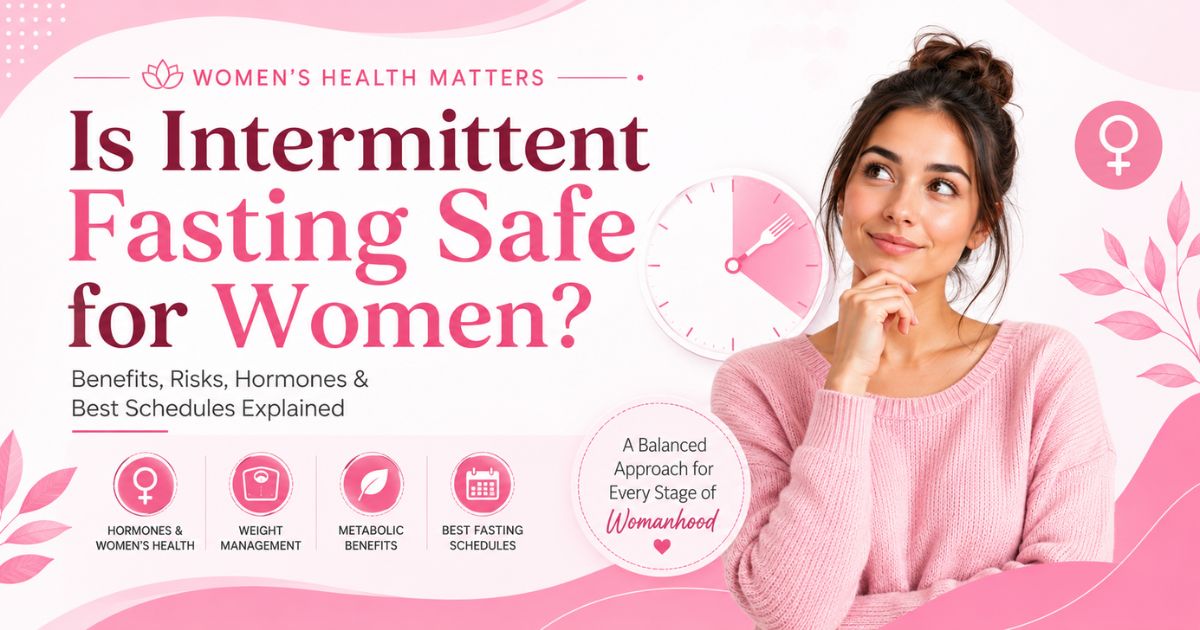
Intermittent fasting has become one of the most talked-about wellness trends in recent years. From social media influencers to health experts, many people claim it can support weight management, metabolic health, and energy levels.
But if you're a woman, you may have wondered:
"Is intermittent fasting safe for women?"
The answer is not a simple yes or no.
Women's bodies are uniquely influenced by hormonal fluctuations throughout the menstrual cycle, reproductive years, pregnancy, postpartum recovery, and menopause. Because of this, intermittent fasting can affect women differently than men.
For some women, intermittent fasting may be a helpful tool. For others, it may lead to unwanted symptoms such as fatigue, irregular periods, mood changes, or increased stress.
Understanding how fasting interacts with female physiology is essential before deciding whether it is right for you.
At NexaFem, we believe that preventive health starts with understanding your body's signals—not following one-size-fits-all wellness trends.
Quick Summary (TL;DR)
Intermittent fasting can be safe for some women when done appropriately and with adequate nutrition.
Women's hormones may respond differently to fasting than men's.
Longer or overly restrictive fasting schedules may increase the risk of menstrual irregularities, fatigue, and stress-related symptoms.
A gentle approach, such as a 12–14 hour fasting window, is often better tolerated than aggressive fasting plans.
Women who are pregnant, breastfeeding, underweight, or have a history of eating disorders should avoid fasting unless advised by a healthcare professional.
What Is Intermittent Fasting?
Intermittent fasting (IF) is an eating pattern that alternates between periods of eating and periods of fasting.
Unlike traditional diets, intermittent fasting focuses primarily on when you eat rather than what you eat. Common approaches include:
12:12 Method
Fast for 12 hours
Eat during a 12-hour window
Example:
Dinner at 8 PM
Breakfast at 8 AM
14:10 Method
Fast for 14 hours
Eat during a 10-hour window
16:8 Method
Fast for 16 hours
Eat within an 8-hour eating window
5:2 Method
Eat normally for five days
Reduce calorie intake significantly on two days per week
According to experts at Johns Hopkins Medicine, intermittent fasting may support weight management and metabolic health for some individuals, but it is not suitable for everyone and should be individualized.
Is Intermittent Fasting Safe for Women?
Direct Answer
Yes, intermittent fasting can be safe for some women, but its safety depends on age, hormonal status, medical history, nutritional intake, and fasting duration.
Unlike men, women's reproductive systems are highly sensitive to energy availability. When the body perceives prolonged calorie restriction or stress, hormonal signals can shift to preserve energy.
This does not mean fasting is harmful for all women.
However, it does mean that women should approach fasting more carefully and pay close attention to symptoms.
Intermittent Fasting and Women's Hormones
One of the biggest concerns surrounding fasting is its potential effect on hormonal balance.
Hormones regulate:
Menstrual cycles
Fertility
Ovulation
Mood
Energy
Sleep
Metabolism
When fasting is too restrictive, the body may perceive it as a stressor.
Hormones Potentially Affected
Insulin
Intermittent fasting may improve insulin sensitivity in some individuals, which can support blood sugar regulation and metabolic health. This may be particularly relevant for some women with insulin resistance.
Cortisol
Fasting can increase cortisol, the body's primary stress hormone.
Chronically elevated cortisol may contribute to:
Anxiety
Sleep disturbances
Fatigue
Increased cravings
Estrogen and Progesterone
Significant calorie restriction may affect reproductive hormones and menstrual regularity in some women.
Possible signs include:
Missed periods
Longer cycles
Changes in ovulation patterns
Thyroid Hormones
Insufficient energy intake may influence thyroid function and metabolism, particularly when fasting is combined with under-eating.
Potential Benefits of Intermittent Fasting for Women
Some women report positive experiences when fasting is done thoughtfully and sustainably.
Potential benefits may include:
Improved Eating Awareness
Many women find that time-restricted eating reduces mindless snacking and encourages more intentional meal choices.
Weight Management Support
Research suggests intermittent fasting can contribute to weight loss for some individuals, although recent reviews indicate it may not be significantly more effective than traditional calorie-controlled eating patterns.
Better Blood Sugar Control
Some studies suggest fasting may improve insulin sensitivity and metabolic markers in certain populations.
Simpler Meal Structure
Many women appreciate having fewer eating decisions throughout the day.
Risks of Intermittent Fasting for Women
Not every woman responds positively to fasting.
Common Side Effects
Women may experience:
Headaches
Dizziness
Irritability
Fatigue
Difficulty concentrating
Increased hunger
Mood changes
Community experiences frequently highlight dizziness, weakness, and anxiety symptoms when fasting windows are too long or poorly tolerated.
Menstrual Changes
Potential warning signs include:
Missed periods
Irregular cycles
Changes in flow
Worsening PMS symptoms
Increased Stress Response
Women who already experience:
Chronic stress
Poor sleep
High workloads
Anxiety
may find aggressive fasting particularly challenging.
Nutrient Deficiencies
When eating windows become too short, it may become difficult to consume sufficient:
Protein
Iron
Calcium
Fiber
Essential vitamins and minerals
Who Should Avoid Intermittent Fasting?
Intermittent fasting may not be appropriate for everyone.
Talk with a healthcare professional before fasting if you:
Are pregnant
Are breastfeeding
Have diabetes requiring medication adjustments
Have a history of eating disorders
Are underweight
Have significant hormonal disorders
Have chronic medical conditions requiring specialized nutrition
What Is the Best Intermittent Fasting Schedule for Women?
Best Intermittent Fasting Schedule for Women
For most women interested in trying intermittent fasting, a gradual approach is often safer and more sustainable.
Beginner-Friendly Option
12:12 Schedule
This approach closely resembles a normal overnight fast and is generally well tolerated.
Example:
Finish dinner by 8 PM
Eat breakfast at 8 AM
Moderate Option
14:10 Schedule
Many women find this schedule provides structure without excessive restriction.
Use Caution With
16:8 and Longer Fasts
While some women tolerate these schedules well, others may experience:
Hormonal symptoms
Fatigue
Mood changes
Increased hunger
There is no universal fasting schedule that works for every woman.
Personalization matters.
Intermittent Fasting During Different Life Stages
Women Aged 18–24
This stage often involves ongoing hormonal development and reproductive maturation.
Adequate nutrition remains critical.
Extreme fasting is generally not recommended.
Women Aged 25–34
Many women in this age group may experiment with fasting for weight management.
Monitoring cycle regularity and energy levels is important.
Women Aged 35–45
Metabolic changes, career stress, and family responsibilities may influence how fasting feels.
A moderate, flexible approach is often more sustainable.
Perimenopause
Hormonal fluctuations during perimenopause can affect sleep, mood, weight distribution, and appetite.
Some women find structured eating helpful, while others notice worsening fatigue or stress when fasting aggressively.
Listening to your body's response is especially important during this transition.
Common Mistakes Women Make
Many negative experiences with fasting occur because of avoidable mistakes.
Skipping Protein
Protein supports:
Hormonal health
Muscle maintenance
Satiety
Under-Eating
Fasting should not become chronic calorie deprivation.
Ignoring Symptoms
Persistent symptoms should never be dismissed.
Using Extreme Fasting Protocols
Long fasts are not automatically better.
Sustainability matters more than intensity.
Neglecting Sleep
Poor sleep combined with fasting can increase stress hormone activity.
Nutrition Tips While Intermittent Fasting
A healthy eating pattern remains more important than fasting itself.
According to WHO and CDC guidance, a balanced diet should emphasize fruits, vegetables, whole grains, healthy fats, and adequate protein while limiting highly processed foods.
Focus on:
Lean protein sources
Fiber-rich foods
Healthy fats
Fruits and vegetables
Adequate hydration
You may also benefit from using a hormone health tracker or menstrual symptom tracker to monitor how fasting affects your body over time.
Women concerned about metabolic health may find it helpful to learn about insulin resistance and women's health, cycle tracking for hormonal balance, and nutrition strategies for hormonal wellness.
Mental Wellness and Intermittent Fasting
Food is not just fuel.
Eating patterns can affect:
Mood
Stress levels
Social experiences
Relationship with food
If fasting causes:
Obsessive food thoughts
Anxiety around meals
Social isolation
Binge eating behaviors
it may not be the right strategy for you.
Your mental well-being is just as important as your physical health.
When to See a Doctor
Consult a healthcare professional if fasting leads to:
Persistent fatigue
Missed periods
Significant hair loss
Dizziness or fainting
Severe mood changes
Rapid unintended weight loss
Signs of nutritional deficiencies
Red Flag Symptoms
Seek medical evaluation promptly if you experience:
Repeated fainting
Severe weakness
Heart palpitations
Ongoing menstrual disruption
Signs of disordered eating
Persistent inability to meet nutritional needs
Final Thoughts
So, is intermittent fasting safe for women?
For many women, the answer is yes—when approached thoughtfully, flexibly, and with adequate nutrition.
However, fasting is not a magic solution, nor is it necessary for good health.
Current evidence suggests that intermittent fasting is one possible dietary strategy, but it may not outperform other balanced eating approaches for weight management.
The most effective wellness plan is one that supports your hormones, energy, mental health, and long-term sustainability.
At NexaFem, we encourage women to move beyond generic health trends and embrace a more personalized approach to preventive care. Through hormonal intelligence, menstrual awareness, symptom tracking, and data-driven health insights, women can make informed decisions that support lifelong well-being.
Sources & References
World Health Organization (WHO)
https://www.who.int/health-topics/healthy-dietWHO Healthy Diet Fact Sheet
https://www.who.int/en/news-room/fact-sheets/detail/healthy-dietCenters for Disease Control and Prevention (CDC) – Healthy Eating
https://www.cdc.gov/healthy-weight-growth/healthy-eating/index.htmlCDC Nutrition Guidance
https://www.cdc.gov/nutrition/features/healthy-eating-tips.htmlJohns Hopkins Medicine – Intermittent Fasting
https://www.hopkinsmedicine.org/health/expert-qa/intermittent-fasting-what-is-it-and-how-does-it-workDisclaimer
This article is intended for informational and educational purposes only and should not be considered medical advice, diagnosis, or treatment. Health information is constantly evolving, and individual circumstances vary. Always consult a qualified healthcare professional, registered dietitian, gynecologist, or physician before making significant dietary changes, starting intermittent fasting, or addressing concerns related to hormones, menstrual health, fertility, weight management, or any other medical condition.
Frequently Asked Questions
Share this post
Comments (0)
No comments yet. Be the first to comment!