

Ayurvedic Morning Routine for Women’s Health
Discover a simple Ayurvedic morning routine for women, combining dinacharya, mindful movement, oral care, nutrition, and healthy lifestyle habits.
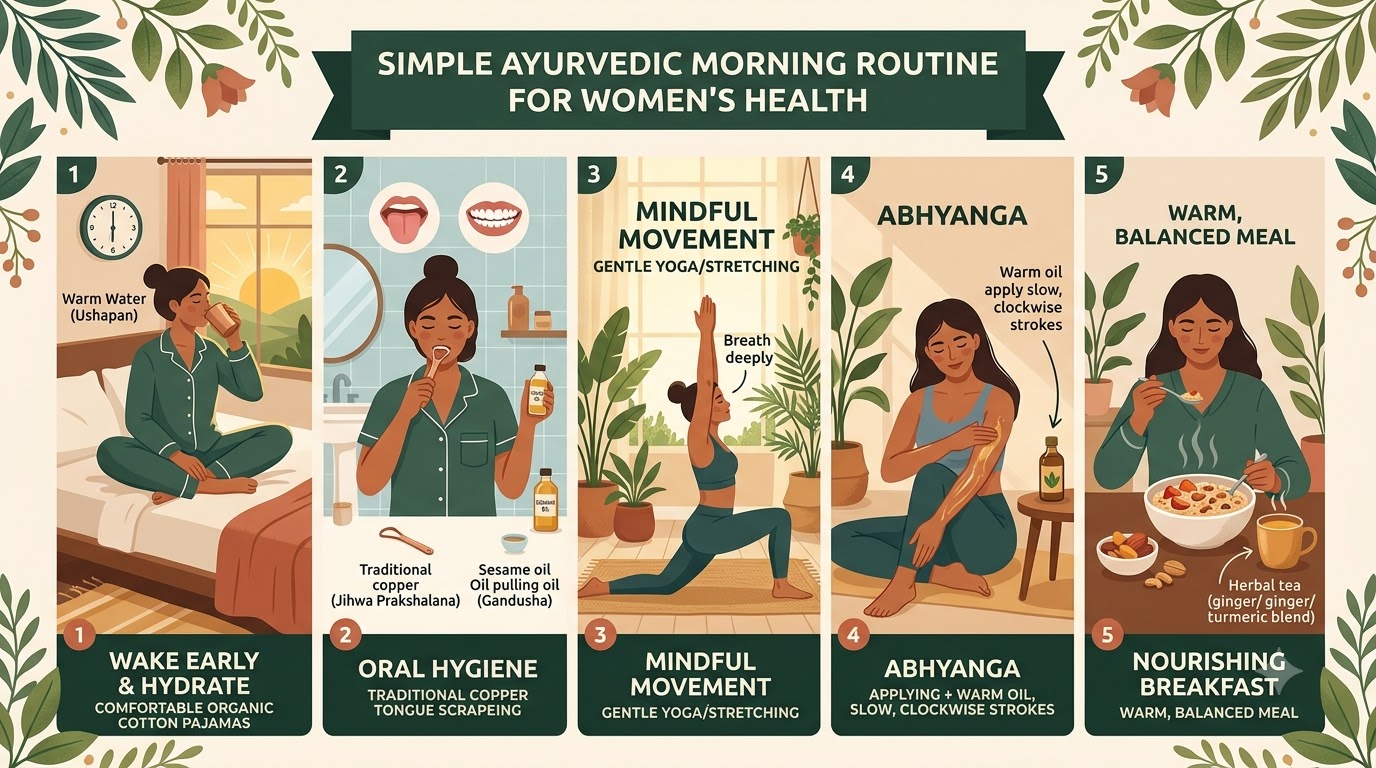
The Best Ayurvedic Morning Routine for Women’s Health
A morning routine does not have to mean waking before sunrise, drinking several herbal preparations, exercising intensely, and following a long list of rituals.
For many women, a healthier morning may be much simpler: wake at a reasonably consistent time, hydrate, care for your mouth, move your body, spend a few quiet minutes breathing or meditating, eat nourishing food when appropriate, and give yourself enough time to begin the day without unnecessary stress.
Ayurveda has a traditional framework for daily habits called dinacharya, which emphasizes regularity and routines that support overall wellbeing. Classical Ayurvedic texts describe morning practices as part of daily living, while modern health science supports several related habits, including adequate sleep, physical activity, healthy nutrition, stress management, and consistent daily schedules. (ayusoft.ayush.gov.in)
The key is to distinguish between traditional Ayurvedic practices and practices that have strong modern clinical evidence. Not every Ayurvedic recommendation has been studied sufficiently, and "natural" does not automatically mean safe.
A practical Ayurvedic morning routine should therefore complement—not replace—appropriate medical care.
Quick Summary
Dinacharya is the Ayurvedic concept of maintaining a healthy daily routine.
A useful Ayurvedic morning routine can include oral hygiene, hydration, gentle movement, breathing or meditation, nourishing food, and regular sleep-wake timing.
Traditional practices such as tongue cleaning and oil pulling may be included, but they should not replace evidence-based dental care.
Women do not need the same routine every day or at every life stage. Menstruation, pregnancy, postpartum recovery, perimenopause, menopause, health conditions, and medications may change what is appropriate.
The best routine is one that is safe, realistic, sustainable, and compatible with your individual health needs.
What Is an Ayurvedic Morning Routine?
An Ayurvedic morning routine is a set of daily practices inspired by Ayurveda's concept of dinacharya, or daily regimen.
Traditional Ayurvedic approaches emphasize regular habits involving personal hygiene, elimination, movement, food, rest, and mental wellbeing. The Ministry of AYUSH's Ayurvedic resources also document dinacharya as an important part of traditional Ayurvedic lifestyle guidance. (ayusoft.ayush.gov.in)
From a modern health perspective, some components of this approach overlap with established healthy-lifestyle principles.
For example, adults benefit from regular physical activity, adequate sleep, nutritious food, and attention to mental wellbeing. WHO recommends adults undertake regular physical activity, with at least 150–300 minutes of moderate-intensity aerobic activity per week for substantial health benefits, alongside muscle-strengthening activity on at least two days a week. (World Health Organization)
So, an Ayurvedic morning routine does not need to be complicated. Think of it as a structured beginning to your day that combines traditional self-care with evidence-informed healthy habits.
Why a Morning Routine Can Matter for Women’s Health
Women's health changes across the lifespan. Sleep, stress, nutrition, physical activity, menstrual cycles, pregnancy, postpartum recovery, perimenopause, and menopause can all influence daily wellbeing.
A predictable morning can create a sense of rhythm, but it should not become another source of pressure.For example, a woman working night shifts, caring for a baby, experiencing menstrual discomfort, or going through perimenopause may need a different morning routine from someone with a regular daytime schedule.
The goal is not perfection.
The goal is consistency where it is helpful and flexibility where it is necessary.
Adequate sleep is particularly important. The CDC recommends that adults aged 18–60 get at least seven hours of sleep each night, with sleep needs continuing to be important throughout later adulthood. (CDC)
That means waking extremely early is not automatically healthier if doing so reduces your total sleep.
The Ayurvedic Concept of Dinacharya
In Ayurveda, dinacharya refers broadly to daily routines intended to support health and wellbeing.
Traditional descriptions include practices involving waking, elimination, oral care, physical activity, bathing, food, and other daily habits. (ayusoft.ayush.gov.in)
There is an important modern interpretation to keep in mind:
Dinacharya should be viewed as a framework for healthy habits, not a rigid prescription that every woman must follow identically.
Your routine should take into account:
Your sleep schedule
Work and family responsibilities
Menstrual or menopausal symptoms
Fitness level
Pregnancy or postpartum status
Existing medical conditions
Medications
Food preferences and cultural habits
Climate and season
A Simple Ayurvedic Morning Routine for WomenHere is a practical routine that combines Ayurvedic principles with modern health considerations.
1. Wake Up at a Consistent Time
Traditional Ayurveda places importance on beginning the day early and maintaining regularity.
The modern takeaway is slightly different: prioritize adequate sleep and a reasonably consistent sleep-wake schedule rather than forcing yourself to wake at a specific hour.
If waking at 5 a.m. means sleeping only five hours, it is not a healthy trade-off.
Instead, aim for a sleep schedule that allows sufficient rest and fits your lifestyle.
If your schedule permits, gradually establishing a consistent wake time can make your morning feel less rushed.
2. Hydrate Mindfully
Drinking water after waking can be a simple way to rehydrate after the overnight period.
Some Ayurvedic traditions recommend warm or lukewarm water in the morning.
There is no strong evidence that warm water specifically "detoxes" the body or melts fat. Your liver, kidneys, lungs, gastrointestinal tract, and other physiological systems already perform the body's waste-processing functions.
The practical takeaway is simple:
Drink water according to your thirst and hydration needs.
You do not need to force large quantities of water immediately after waking.
3. Clean Your Tongue and Teeth
Tongue cleaning is a traditional Ayurvedic oral-care practice.
Modern research suggests that mechanical tongue cleaning can reduce tongue coating and may improve some measures associated with bad breath. (PubMed)
However, tongue scraping should complement—not replace—regular toothbrushing, fluoride toothpaste, flossing or interdental cleaning, and professional dental care.
Use a clean tongue scraper gently. Avoid aggressive scraping that causes pain, bleeding, or irritation.
If you have persistent bad breath, bleeding gums, tooth pain, or other oral symptoms, see a dental professional rather than relying solely on traditional remedies.
4. Consider Oil Pulling as an Optional Practice
Oil pulling involves swishing edible oil around the mouth and then spitting it out.
It is a traditional practice associated with Ayurvedic oral care.
Research has investigated whether oil pulling can improve oral health. A meta-analysis of randomized trials found that it may reduce salivary bacterial counts, but did not find significant differences in plaque or gingival indices compared with controls. Another systematic review found possible benefits for gingival health but rated the overall certainty of evidence as very low. (PubMed)
Practical takeaway: Oil pulling may be considered an optional complementary practice for some people, but it should never replace brushing with fluoride toothpaste or professional dental treatment.
Do not swallow the oil. Children should not be encouraged to perform oil pulling because of the risk of aspiration.
5. Use the Bathroom Without Rushing
Ayurveda places importance on regular elimination and not suppressing natural urges.
The modern health principle is also straightforward: listen to your body's signals.
If you frequently experience constipation, diarrhea, blood in the stool, severe abdominal pain, unexplained weight loss, or a persistent change in bowel habits, don't attempt to solve the problem solely through an Ayurvedic routine. Speak with a healthcare professional.
Adequate dietary fibre, fluids, physical activity, and a balanced diet can all contribute to healthy bowel function.
6. Practice Gentle Movement or Yoga
Morning movement can be one of the most valuable parts of your routine.
You might choose:
Gentle stretching
Yoga
Brisk walking
Mobility exercises
Strength training
Cycling
Another activity you enjoy
Ayurvedic and yogic traditions have long incorporated movement and mind-body practices. Modern evidence also strongly supports regular physical activity for overall health.
WHO recommends adults get 150–300 minutes of moderate aerobic activity per week, or the equivalent amount of vigorous activity, along with muscle-strengthening exercises on at least two days per week. (World Health Organization)
You do not need to complete all of that in the morning.
A 10–20 minute walk may be a realistic starting point.
If you are new to exercise, pregnant, postpartum, recovering from illness, or managing a chronic condition, choose activity appropriate for your circumstances and seek professional guidance when needed.
7. Add Pranayama or Meditation
A few quiet minutes can help create a calmer transition into the day.
You might practice:
Slow breathing
Mindfulness
Meditation
Gentle pranayama
Prayer or reflection
Ayurvedic and yogic traditions have their own frameworks for breathing and meditation. Modern research also suggests that mindfulness-based approaches may help reduce perceived stress, although results vary according to the intervention and population studied. (PubMed)
Keep the practice comfortable.
You do not need complicated breathing techniques to benefit from a few minutes of quiet attention.
If a breathing exercise causes dizziness, breathlessness, chest discomfort, or anxiety, stop and seek appropriate advice.
8. Eat a Nourishing Breakfast When Hungry
There is no universal Ayurvedic breakfast that every woman needs to eat.
Your nutritional needs depend on your age, activity level, health conditions, food preferences, medications, and overall dietary pattern.
A balanced breakfast might include combinations of:
Oats or other whole grains
Dalia
Idli with sambar
Vegetable poha
Upma with vegetables
Eggs
Curd or another suitable protein source
Dal or legumes
Nuts and seeds
Fruit
Vegetables
The broader principle is more important than a specific "Ayurvedic" recipe: choose a varied, nutrient-dense diet.
WHO recommends diets based on a variety of vegetables, fruits, pulses, nuts, and whole grains, while limiting excess free sugars, unhealthy fats, and highly processed foods. (World Health Organization)
If you have diabetes, PCOS, food allergies, an eating disorder, gastrointestinal disease, or another medical condition, your dietary approach may need individual adjustment.
What About Ayurvedic Drinks and Herbs?
Morning routines on social media often include turmeric water, ginger water, cumin water, herbal teas, honey-lemon drinks, or Ayurvedic formulations.
These should not automatically be considered necessary for health.
A spice used in cooking is different from a concentrated herbal preparation or supplement.
Some Ayurvedic products may contain multiple ingredients, and NCCIH notes that certain Ayurvedic preparations have been found to contain potentially toxic amounts of heavy metals such as lead, mercury, or arsenic. Evidence for Ayurveda across many health conditions also remains limited or mixed. (NCCIH)
Traditional Ayurvedic Perspective
Ayurvedic traditions use herbs, spices, food preparations, and individualized approaches according to concepts such as constitution, digestion, season, and health status.
What Modern Evidence Says
Evidence varies considerably by herb, preparation, dose, condition, and study quality. A traditional use does not automatically establish clinical effectiveness.
Practical Takeaway
You do not need a daily herbal drink to have an Ayurvedic-inspired morning.
If you want to use an Ayurvedic herb or formulation regularly, especially in concentrated or medicinal amounts, discuss it with a qualified healthcare professional or appropriately trained Ayurvedic practitioner.
This is particularly important during pregnancy, breastfeeding, when taking medication, or when managing a chronic condition.
Adapting the Routine Across Different Life Stages
Women in Their 20s
Focus on foundational habits:
Adequate sleep
Regular movement
Balanced nutrition
Stress management
Oral hygiene
Menstrual awareness
There is no need to follow an elaborate routine simply because it is trending online.
Women in Their 30s and 40s
Work, caregiving, pregnancy, fertility planning, and changing sleep patterns may affect your morning.
Prioritize sustainable habits rather than a long checklist.
If menstrual cycles become significantly irregular, unusually heavy, painful, or different from your normal pattern, discuss those changes with a healthcare professional.
Perimenopause
During perimenopause, sleep, mood, menstrual patterns, body composition, and temperature regulation can change.
A gentle morning routine can provide structure, but it should not be presented as a treatment for menopause symptoms.
Regular physical activity, adequate sleep, balanced nutrition, and stress management remain useful foundations.
Menopause and Beyond
Strength training becomes especially valuable as women age because maintaining muscle and physical function supports healthy aging.
A routine can combine walking or another aerobic activity with appropriate resistance exercise, mobility work, and relaxation.
Women experiencing persistent hot flashes, sleep problems, mood changes, vaginal symptoms, urinary symptoms, or other concerns should discuss treatment options with a healthcare professional.
Ayurvedic Morning Routine During Menstruation
There is no medical requirement for every woman to stop normal movement during menstruation.
Your comfort should guide the intensity.
If you feel well, normal activities may be appropriate. If you experience cramps, fatigue, migraine, heavy bleeding, or other symptoms, a gentler morning may be more suitable.
You might choose:
A relaxed walk
Gentle stretching
Comfortable yoga
Warm food and adequate hydration
Quiet breathing or meditation
Additional rest when needed
Severe period pain, very heavy bleeding, fainting, or symptoms that interfere significantly with daily life deserve medical evaluation.
A morning routine should support you—not pressure you to perform through significant symptoms.
Ayurveda and Women’s Hormonal Health
Ayurveda often describes health through interconnected concepts involving digestion, daily habits, mental wellbeing, sleep, and individual constitution.
Modern medicine approaches hormonal health through physiology, genetics, nutrition, metabolic health, reproductive health, endocrine function, and other measurable factors.
These frameworks should not be treated as interchangeable.
For example, an Ayurvedic morning routine may support healthy behaviours such as regular movement, balanced eating, adequate sleep, and stress management. However, it should not be described as a proven method for "balancing hormones" or curing conditions such as PCOS, thyroid disorders, infertility, or menopause.
If you have persistent acne, excess facial hair, significant hair loss, irregular periods, infertility, unexplained weight changes, or other symptoms that concern you, seek appropriate medical evaluation.
Seasonal Adaptation: Understanding Ritucharya
Ayurveda also includes the concept of ritucharya, or seasonal routines.
The traditional idea is that daily habits may need to change according to environmental and seasonal conditions.
A practical modern interpretation is sensible: adjust hydration, clothing, physical activity, sleep environment, food choices, and outdoor activity according to the climate and your individual needs.
For example, in hot weather you may need more attention to hydration and heat exposure. During colder months, you may naturally prefer warmer meals and additional layers.
There is no need to force seasonal detoxes or extreme dietary restrictions.
Common Mistakes to Avoid
Waking Extremely Early Despite Sleep Loss
Early rising is not beneficial if it consistently reduces your sleep.
Treating Warm Water as a Detox
Warm water can be pleasant and hydrating, but it is not a medically established detoxification treatment.
Replacing Dental Care With Oil Pulling
Oil pulling is complementary at most. It is not a replacement for evidence-based dental hygiene.
Taking Multiple Herbs Without Guidance
More herbs do not necessarily mean more health benefits. Herbal products can have side effects and interactions.
Following the Same Routine Every Day
Your needs can change with menstruation, pregnancy, postpartum recovery, illness, travel, work schedules, and menopause.
Believing That Natural Means Risk-Free
Natural products can contain pharmacologically active compounds and may interact with medications.
What Modern Evidence Says About an Ayurvedic Morning Routine
There is an important evidence distinction here.There is not strong clinical evidence that one specific Ayurvedic morning routine improves women's health across all women.
Instead, some individual components of a well-designed routine are supported by modern health evidence.
Regular physical activity has well-established health benefits. (World Health Organization)
Adequate sleep is essential for physical and emotional wellbeing, and adults generally need at least seven hours of sleep. (CDC)
A varied diet rich in vegetables, fruits, pulses, nuts, and whole grains supports healthy nutrition. (World Health Organization)
Tongue cleaning can help reduce tongue coating and bad breath, while evidence for oil pulling remains limited and of low certainty. (PubMed)
Mindfulness-based practices may help with stress for some people, although the evidence depends on the specific intervention and population. (PubMed)
This is why the strongest approach is to combine the useful lifestyle principles within Ayurveda with modern evidence-based healthcare.
A Practical 20–30 Minute Ayurvedic-Inspired Morning Routine
If you want something simple, try this:
Wake after adequate sleep.
Drink water according to thirst.
Brush your teeth and gently clean your tongue.
Use the bathroom without rushing.
Spend 10–15 minutes walking, stretching, or practicing suitable yoga.
Spend 3–5 minutes with slow breathing or meditation.
Eat a balanced breakfast if it fits your appetite and schedule.
Begin your day without feeling that you have to complete every ritual perfectly.
This is enough.
You do not need an expensive wellness kit, multiple supplements, or a complicated detox program to create a healthier morning.
When to Seek Professional Healthcare
An Ayurvedic morning routine is a wellness practice, not a diagnostic or treatment system.
Speak with a qualified healthcare professional if you experience:
Persistently irregular or absent periods
Very heavy menstrual bleeding
Severe or worsening period pain
Unexplained weight changes
Persistent fatigue
New or severe hair loss
Significant acne or excess facial hair
Fertility difficulties
Persistent digestive symptoms
Blood in the stool
Recurrent dizziness or fainting
Persistent sleep problems
Severe anxiety or low mood
New symptoms during perimenopause or menopause that concern you
If you want to incorporate Ayurvedic herbs, supplements, or therapeutic practices, an appropriately qualified Ayurveda practitioner can help assess whether they are suitable for you.
The Bottom Line
The best Ayurvedic morning routine for women's health is not necessarily the longest or most traditional one.
It is a routine that helps you build regular, sustainable habits without replacing evidence-based healthcare.
Use the principles of dinacharya as inspiration: create rhythm, care for your body, move regularly, eat nourishing food, make space for mental calm, and respect your body's changing needs.
Most importantly, remember that women's health is individual.
A routine that works beautifully for one woman may be unsuitable for another. Your age, menstrual cycle, pregnancy status, medications, health conditions, lifestyle, and personal preferences all matter.
Ayurveda can offer a culturally meaningful framework for daily self-care. Modern healthcare helps us understand which practices have evidence behind them, which remain uncertain, and where professional medical care is necessary.
That combination—tradition with responsible evidence-based thinking—is a healthier way to approach Ayurveda.
Sources & References
Ministry of AYUSH / Ayusoft — Dinacharya, Ashtanga Hridaya
Traditional Ayurvedic source describing daily-regimen practices. (ayusoft.ayush.gov.in)
Ayusoft — DinacharyaNational Center for Complementary and Integrative Health (NCCIH) — Ayurvedic Medicine: In Depth
Information about evidence, limitations, and safety considerations surrounding Ayurvedic medicine. (NCCIH)
NCCIH — Ayurvedic Medicine: In DepthWorld Health Organization — Physical Activity
Evidence-based physical activity recommendations for adults. (World Health Organization)
WHO — Physical ActivityWorld Health Organization — Healthy Diet
Guidance on balanced, diverse and nutritious dietary patterns. (World Health Organization)
WHO — Healthy DietCDC — About Sleep
Recommendations concerning sleep duration and healthy sleep. (CDC)
CDC — About SleepPubMed — Effectiveness of Oil Pulling for Improving Oral Health: A Meta-Analysis
Review of randomized controlled trials examining oil pulling and oral-health outcomes. (PubMed)
PubMed — Oil Pulling Meta-AnalysisPubMed — The Effect of Oil Pulling in Comparison With Chlorhexidine and Other Mouthwash Interventions
Systematic review and meta-analysis evaluating evidence for oil pulling. (PubMed)
PubMed — Oil Pulling Systematic ReviewPubMed — The Effect of Mechanical Tongue Cleaning on Oral Malodor and Tongue Coating
Research examining tongue cleaning and oral malodor. (PubMed)
PubMed — Mechanical Tongue Cleaning StudyPubMed — Effects of Mindfulness-Based Interventions on Perceived Stress
Recent systematic review and meta-analysis of mindfulness-based interventions and stress. (PubMed)
PubMed — Mindfulness and Stress Review
Health Disclaimer: This article is intended for general educational and informational purposes only. It does not provide medical diagnosis, treatment, or individualized medical advice and should not be used as a substitute for consultation with a qualified healthcare professional.
Ayurvedic practices described in this article represent traditional wellness concepts and should not be interpreted as guaranteed treatments or cures for any disease or hormonal condition. Evidence for individual Ayurvedic practices varies, and some herbs or Ayurvedic preparations may have side effects, interactions, or safety concerns.
Women who are pregnant, breastfeeding, taking prescription medicines, managing chronic health conditions, preparing for surgery, or experiencing persistent or concerning symptoms should consult an appropriate healthcare professional before beginning new supplements, herbs, or therapeutic practices. For individualized Ayurvedic recommendations, consult a qualified Ayurveda practitioner.
Frequently Asked Questions
Share this post
Comments (0)
No comments yet. Be the first to comment!