

Ayurvedic Sleep Tips for Better Rest & Hormone Health
Explore Ayurvedic sleep tips for better rest, stress support and healthy routines, with evidence-informed guidance for women across life stages.
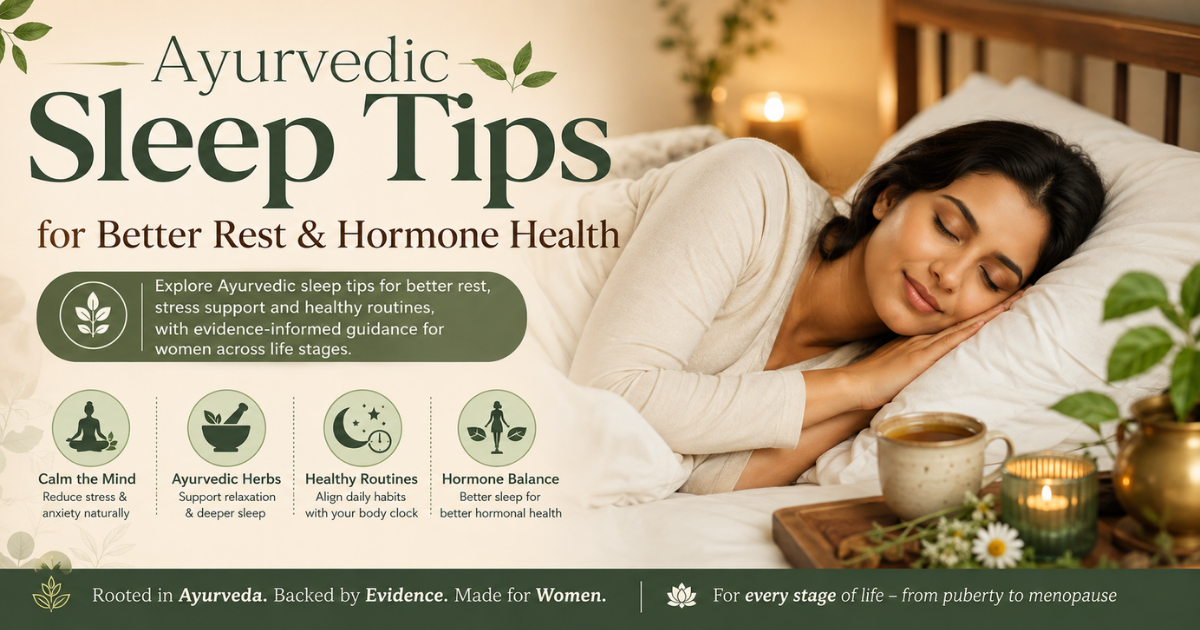
Ayurvedic Sleep Tips for Better Rest and Hormone Health
Sleep is more than the number of hours you spend in bed. For women, sleep can change alongside the menstrual cycle, pregnancy, postpartum life, perimenopause and menopause. Stress, changes in daily routines, hot flashes, menstrual symptoms, caregiving responsibilities and other health concerns can all make restful sleep harder to achieve. Research shows that women are particularly vulnerable to sleep disturbance during several stages of reproductive life. (PubMed)
Ayurveda has long viewed sleep, or nidra, as an important part of wellbeing. Traditional Ayurvedic approaches place emphasis on regular daily routines, calming evening practices, appropriate food and lifestyle habits, and creating conditions that encourage natural rest.
Modern sleep medicine approaches the subject differently. Rather than focusing on doshas or traditional classifications, it looks at circadian rhythms, sleep behaviour, mental health, hormones, medical conditions and environmental factors.
The most useful approach for today's woman does not require choosing one system over the other. Ayurvedic traditions can offer gentle lifestyle practices that complement evidence-based sleep care, while modern medicine helps identify when persistent sleep problems require assessment and treatment.
Here are practical Ayurvedic sleep tips that can help you build a calmer evening routine—without promising a “hormone reset” or treating Ayurveda as a replacement for medical care.
Quick Summary
Keep a consistent sleep-wake schedule. A predictable routine supports the body's sleep-wake rhythm.
Create a calming evening routine. Gentle stretching, breathing, meditation, reading or a warm bath may help you transition from activity to rest.
Use Ayurveda as a lifestyle framework, not a guaranteed treatment. Traditional practices may support relaxation, but evidence varies considerably.
Be cautious with Ayurvedic herbs and supplements. “Natural” does not automatically mean safe, and some herbs can interact with medicines.
Pay attention to persistent sleep problems. Chronic insomnia, loud snoring, breathing pauses, severe daytime sleepiness or major changes around menopause deserve professional evaluation.
Why Sleep Matters for Women's Health
Sleep and women's health are closely connected.
Women may experience changes in sleep during the premenstrual phase, pregnancy, postpartum period and menopausal transition. Hormonal fluctuations can influence sleep, while symptoms such as menstrual pain, hot flashes, night sweats, mood changes and physical discomfort can further disturb rest. (PubMed)
Sleep also interacts with broader metabolic health. NIH-supported research has found that chronic sleep restriction can increase insulin resistance in women, with particularly pronounced effects in postmenopausal women. (National Institutes of Health (NIH))
This does not mean that every night of poor sleep will cause hormonal problems. It means that consistent, restorative sleep is one part of a broader foundation for physical and emotional health.
Adults generally need at least seven hours of sleep per night, although individual needs vary. Recent CDC data also found that women were more likely than men to report difficulty staying asleep. (CDC)
What Does Ayurveda Say About Sleep?
In Ayurveda, nidra—sleep—is traditionally considered an important pillar of health.
Ayurvedic health practices commonly emphasize dinacharya, or daily routine, including regular timing of activities, appropriate food habits, personal care and preparation for rest.
Traditional Ayurvedic thinking also recognizes that mental activity, lifestyle patterns and disturbances in routine can affect the ability to settle into sleep.
However, traditional concepts such as doshas should not be interpreted as modern medical diagnoses. There is not enough scientific evidence to say that every sleep problem is caused by a particular dosha or that correcting a dosha will necessarily resolve insomnia.
Traditional Ayurvedic Perspective
Ayurvedic routines encourage regularity and a gradual transition from daytime activity toward nighttime rest.
Examples may include:
maintaining regular daily routines
reducing stimulating activity before bed
gentle self-care practices
calming breathing or meditation
appropriate evening meals
creating a peaceful sleeping environment
What Modern Evidence Says
Modern sleep research strongly supports consistent sleep schedules and behavioural approaches to sleep. For chronic insomnia, cognitive behavioral therapy for insomnia (CBT-I) has much stronger evidence than relying on sleep hygiene or complementary practices alone. (AASM)
Practical Takeaway
You can borrow the Ayurvedic emphasis on rhythm and calming routines while keeping expectations realistic: a bedtime ritual may support relaxation, but persistent insomnia may require evidence-based treatment.
7 Ayurvedic Sleep Tips for Better Rest
1. Keep Your Sleep and Wake Times Consistent
One of the simplest Ayurvedic-inspired habits is also supported by modern sleep science: give your body a predictable rhythm.
Try to go to bed and wake up at approximately the same time each day, including weekends when practical.
Your body uses environmental signals such as light, activity and timing to regulate its sleep-wake cycle. An irregular schedule can make it harder to feel sleepy at the desired time.
Instead of trying to “catch up” on sleep by dramatically changing your schedule, aim for a sustainable routine.
Try this: Choose a realistic bedtime and wake time that allow enough opportunity for sleep, then maintain the pattern most days.
2. Create a Gentle Ayurvedic Bedtime Routine
Your body may need a transition period between work, household responsibilities, social media and sleep.
An Ayurvedic-inspired bedtime routine might include:
Finish demanding work or mentally stimulating activities.
Dim the lights and reduce unnecessary screen use.
Take a warm bath or shower if it feels relaxing.
Practise gentle stretching or breathing.
Read something calming.
Go to bed when you feel sleepy.
The goal is not to create a complicated ritual. Consistency matters more than complexity.
A routine that takes 20–30 minutes and feels comfortable is more useful than a long routine that becomes another source of pressure.
3. Try Gentle Yoga or Relaxation Before Bed
Yoga can be a useful addition to a healthy sleep routine, particularly when stress or physical tension makes it difficult to unwind.
Research involving women with sleep problems found that yoga interventions were associated with improvements in sleep quality, although the evidence was less convincing for treating insomnia itself. Results were also less consistent in peri- and postmenopausal women. (PubMed Central (PMC))
Gentle evening practices may include:
slow breathing
gentle seated stretches
supported child's pose
gentle spinal movements
restorative yoga
brief relaxation practice
Avoid turning bedtime yoga into a vigorous workout if intense exercise leaves you more alert.
What About Yoga Nidra?
Yoga Nidra is a guided relaxation practice often described as “yogic sleep.”
Recent systematic reviews suggest that Yoga Nidra may have potential for improving sleep, but the evidence remains limited and uncertain because studies are small and methodological limitations remain. (PubMed)
Practical takeaway: Yoga Nidra can be considered a relaxation practice, but it should not be presented as a proven cure for chronic insomnia.
4. Use Breathing or Meditation to Quiet the Mind
Sometimes the body is tired but the mind continues working.
You may replay conversations, think about tomorrow's responsibilities or worry about not sleeping. This can create a frustrating cycle: worrying about sleep makes it harder to sleep.
A short relaxation practice may help you shift attention away from mental activity.
Try five minutes of slow, comfortable breathing or a simple mindfulness practice before bed.
Evidence for mindfulness and meditation in insomnia is mixed. Some research suggests potential improvements in sleep quality, but guidelines have not established mindfulness alone as a definitive treatment for chronic insomnia. (NCCIH)
Think of meditation as a tool for relaxation, not a guaranteed sleep treatment.
5. Be Thoughtful About Evening Food and Drinks
Ayurvedic traditions often emphasize digestion and appropriate meal timing as part of daily wellbeing.
From a modern perspective, very heavy meals close to bedtime can be uncomfortable for some people, particularly those prone to reflux or digestive symptoms.
Practical habits include:
Avoid very heavy meals immediately before bed.
Notice whether spicy or fatty foods worsen nighttime discomfort.
Limit caffeine later in the day if it interferes with sleep.
Avoid relying on alcohol as a sleep aid.
Stay adequately hydrated during the day while avoiding excessive fluids immediately before bed if nighttime urination disrupts your sleep.
There is no single Ayurvedic dinner that guarantees better sleep. Your individual tolerance matters.
6. Make Your Bedroom a Sleep-Friendly Space
A calming environment is consistent with the Ayurvedic emphasis on peaceful surroundings and with modern sleep hygiene principles.
Consider:
keeping the bedroom dark and comfortable
maintaining a comfortable temperature
reducing unnecessary noise
keeping phones away from the bed when possible
using the bed primarily for sleep and intimacy
choosing comfortable bedding and sleepwear
For women experiencing menopause-related night sweats, temperature management can be particularly helpful.
Sleep disruption during perimenopause and menopause can be influenced by hormonal changes as well as symptoms such as hot flashes and night sweats. (PubMed)
7. Give Your Body Daytime Signals for Better Nighttime Sleep
Good sleep begins before bedtime.
Morning daylight, regular physical activity and a predictable daytime schedule can help reinforce the body's sleep-wake rhythm.
Rather than focusing entirely on what to do at night, build a full-day routine:
Morning: Get natural light and begin your day at a consistent time.
Daytime: Stay physically active and avoid spending the entire day sedentary.
Evening: Gradually reduce stimulation.
Night: Give yourself enough opportunity for sleep.
This whole-day approach fits naturally with the Ayurvedic concept of dinacharya, while also aligning with modern understanding of circadian rhythms.
Ayurvedic Herbs for Sleep: What Should Women Know?
Herbs are one area where Ayurveda and modern health communication require particular care.
Ashwagandha
Ashwagandha (Withania somnifera) has a long history of use in Ayurvedic medicine and is commonly marketed today for stress and sleep.
The evidence is promising but not definitive. NCCIH notes that some ashwagandha preparations may help with insomnia and stress, but studies have often been small and have used different preparations. (NCCIH)
More importantly, ashwagandha is not suitable for everyone.
NCCIH advises avoiding it during pregnancy and breastfeeding. It may also be inappropriate for people with thyroid or autoimmune disorders and can interact with several medications. Rare cases of liver injury have also been reported. (NCCIH)
Therefore, do not assume that taking an Ayurvedic sleep supplement is automatically safe simply because it is herbal.
Other Ayurvedic Herbs
Ayurvedic traditions use several herbs and formulations in approaches to sleep and relaxation. However, the quality and amount of modern clinical evidence varies substantially between individual herbs and products.
When considering an Ayurvedic supplement, discuss it with a qualified healthcare professional and, where appropriate, a qualified Ayurveda practitioner.
Product quality, dosage, contamination, interactions and individual medical history all matter.
Can Better Sleep Support Hormone Health?
It is more accurate to say that sleep and hormonal health influence each other than to say that sleep “balances hormones.”
Hormonal fluctuations can affect sleep, and persistent sleep disruption can influence metabolic and stress-related pathways.
For example, sleep disturbances are reported during different phases of the menstrual cycle, and sleep problems become particularly common during the menopausal transition. (PubMed)
Women with PCOS/PMOS may also experience sleep-related concerns. Hyperandrogenism associated with PCOS has been linked with sleep disturbances and conditions such as obstructive sleep apnea. (PubMed)
This is why improving sleep should be viewed as one component of overall women's health, rather than a standalone treatment for hormonal conditions.
Ayurvedic Sleep Tips Across Different Stages of a Woman's Life
For Younger Women
College, early career, late-night screen use, social activities, irregular meals and academic or professional stress can disrupt sleep.
Focus on:
a consistent wake time
morning daylight
limiting late caffeine
reducing late-night screen stimulation
regular physical activity
a simple pre-bed routine
During the Menstrual Cycle
Some women notice poorer sleep during the premenstrual phase or menstruation, particularly when PMS, cramps or mood symptoms are present. (PubMed)
Instead of assuming that every sleep change is a “hormonal imbalance,” track your symptoms across several cycles.
A menstrual and sleep diary can help identify patterns worth discussing with a healthcare professional.
During Perimenopause
Perimenopause can bring irregular periods, hot flashes, night sweats and changes in sleep.
If you repeatedly wake because of night sweats, experience significant insomnia or feel exhausted during the day, do not assume you simply need a better bedtime routine.
Menopause-related sleep disturbances can have multiple causes and may require individualized medical assessment. (PubMed)
After Menopause
Postmenopausal women can continue to experience insomnia or fragmented sleep.
Age, medical conditions, medications, hot flashes, mood symptoms and sleep disorders can all contribute.
A calm evening routine may help, but persistent symptoms deserve proper evaluation rather than being attributed entirely to “low hormones.”
Common Misconceptions About Ayurveda and Sleep
“Ayurveda can cure insomnia.”
There is not enough evidence to make this claim.
Ayurvedic lifestyle practices may support relaxation and healthy routines, but chronic insomnia has evidence-based treatments, particularly CBT-I. (NCCIH)
“If an herb is natural, it cannot harm me.”
False.
Herbs can have pharmacological effects, side effects and drug interactions. Ashwagandha, for example, has important safety considerations. (NCCIH)
“Poor sleep always means my hormones are imbalanced.”
Not necessarily.
Sleep can be affected by stress, anxiety, medications, caffeine, alcohol, pain, reflux, sleep apnea, environmental factors, pregnancy, menopause and many other conditions.
“Sleep hygiene alone will fix chronic insomnia.”
Not always.
Sleep hygiene is useful, but it is not considered sufficient as a standalone treatment for chronic insomnia. CBT-I has substantially stronger evidence. (AASM)
When Should You See a Doctor About Sleep Problems?
Occasional poor sleep is common. Persistent or severe sleep problems deserve attention.
Speak with a healthcare professional if you:
regularly struggle to fall asleep or stay asleep
experience significant daytime sleepiness
wake repeatedly and cannot return to sleep
snore loudly or wake gasping or choking
notice breathing pauses during sleep
experience persistent morning headaches
have severe or worsening sleep disruption during perimenopause or menopause
have sleep problems affecting work, relationships, mood or daily functioning
rely regularly on sleeping pills, alcohol or supplements to sleep
Women may experience sleep apnea differently from the stereotypical presentation of loud snoring, and hormonal transitions can change the risk of sleep disorders. Persistent symptoms should therefore not be dismissed as simply “stress” or “hormonal imbalance.” (PubMed)
A Simple Ayurvedic-Inspired Night Routine
If you want a practical starting point, keep it simple:
2–3 hours before bed: Finish a comfortable evening meal and avoid unnecessary stimulation.
1 hour before bed: Reduce bright screens and demanding work.
30 minutes before bed: Take a warm shower or bath, read, or practise gentle stretching.
5–10 minutes before bed: Try slow breathing, meditation or a guided relaxation practice.
At bedtime: Keep the room comfortable, dark and quiet.
Every morning: Wake at a reasonably consistent time and get some natural light.
You do not need to perform every step perfectly. The purpose of a routine is to make sleep easier—not to create another checklist to worry about.
Ayurvedic sleep practices can offer a thoughtful way to create more rhythm, relaxation and self-care around bedtime. Consistent routines, gentle movement, calming practices and a comfortable sleep environment are reasonable foundations for better sleep.
But responsible Ayurveda does not mean promising that one herb, oil, drink, breathing exercise or bedtime ritual will “balance your hormones” or cure insomnia.
For women, sleep changes can be closely connected with the menstrual cycle, pregnancy, postpartum life, perimenopause and menopause. Persistent sleep problems should therefore be evaluated in the context of the whole person.
The most useful approach is integrative: respect traditional Ayurvedic knowledge, use practices supported by reasonable evidence where appropriate, and seek qualified medical care when symptoms persist or require diagnosis.
Sources & References
National Center for Complementary and Integrative Health (NCCIH) — Ashwagandha: Usefulness and Safety
NCCIH: Ashwagandha (NCCIH)NCCIH — Sleep Disorders and Complementary Health Approaches
NCCIH: Sleep Disorders and Complementary Health Approaches (NCCIH)PubMed — Sleep and Women's Health
PubMed: Sleep and Women's Health (PubMed)PubMed — Sleep Disturbances Across a Woman's Lifespan: Role of Reproductive Hormones
PubMed: Sleep Disturbances Across a Woman's Lifespan (PubMed)CDC/NCHS — Short Sleep Duration and Sleep Difficulties Among Adults
CDC: Short Sleep Duration and Sleep Difficulties (CDC)NIH — Chronic Sleep Deficiency and Insulin Resistance in Women
NIH: Sleep Deficiency and Insulin Resistance in Women (National Institutes of Health (NIH))NCCIH — Mind and Body Practices for Sleep Disorders
NCCIH: Mind and Body Practices for Sleep Disorders (NCCIH)PubMed — Yoga for Sleep Quality and Insomnia in Women: Systematic Review and Meta-analysis
PubMed: Yoga, Sleep Quality and Insomnia in Women (PubMed)PubMed — Yoga Nidra and Sleep Disturbances: Systematic Review and Meta-analysis
PubMed: Yoga Nidra and Sleep Disturbances (PubMed)PubMed — The Role of Ovarian Hormones in Perimenopausal Sleep Disturbances
PubMed: Perimenopausal Sleep Disturbances (PubMed)
Health Disclaimer
This article is intended for informational and educational purposes only and is not a substitute for professional medical advice, diagnosis or treatment.
Ayurvedic practices and herbs discussed here should not be interpreted as guaranteed treatments for insomnia, hormonal conditions or other health problems. “Natural” does not automatically mean safe. Herbal products may have side effects, interactions or contraindications.
Women who are pregnant, breastfeeding, taking prescription medicines, managing chronic health conditions, preparing for surgery, or experiencing persistent or severe sleep problems should consult an appropriate healthcare professional before using supplements or making significant changes to their health routine.
For individualized Ayurvedic assessment or treatment, consult a qualified Ayurveda practitioner. For persistent insomnia or suspected sleep disorders, consult a qualified medical or sleep-health professional.
Frequently Asked Questions
Share this post
Comments (0)
No comments yet. Be the first to comment!