
Can PCOS Be Managed Naturally? Evidence-Based Ways to Support Hormonal Health
Learn how to manage PCOS naturally with nutrition, lifestyle changes, exercise, and preventive care backed by medical guidance.
Polycystic Ovary Syndrome (PCOS) is one of the most common hormonal conditions affecting women of reproductive age. Yet many women spend years wondering why their periods feel unpredictable, why weight management seems unusually difficult, or why symptoms such as acne, hair thinning, or fatigue keep appearing without clear answers.
If you have recently been diagnosed with PCOS—or suspect you may have it—you may be asking an important question:
Can PCOS be managed naturally?
The short answer is yes, many women can significantly improve PCOS symptoms through evidence-based lifestyle changes. However, "natural management" does not mean ignoring medical care. The most effective approach often combines healthy lifestyle habits with appropriate medical support when needed.
Understanding how to manage PCOS naturally can help you build better hormonal balance, improve metabolic health, and feel more in control of your long-term wellbeing.
Quick Summary (TL;DR)
PCOS cannot currently be cured, but symptoms can often be effectively managed.
Nutrition, exercise, sleep, and stress management play a major role in symptom improvement.
A balanced PCOS diet plan may help support insulin sensitivity and hormonal regulation.
Early diagnosis and preventive healthcare can reduce the risk of future complications.
Medical treatment may still be necessary for some women depending on symptoms and health goals.
What Is PCOS?
PCOS is a hormonal and metabolic condition that affects how the ovaries function.
Women with PCOS may experience:
Irregular or absent periods
Excess androgen (male hormone) levels
Ovarian cysts seen on ultrasound
Difficulties with ovulation
Insulin resistance
Weight gain or difficulty losing weight
PCOS affects more than reproductive health. It can also influence metabolism, cardiovascular health, mental wellbeing, and fertility.
What Causes PCOS?
Researchers do not know one single cause of PCOS. Instead, several factors appear to contribute.
Insulin Resistance
Many women with PCOS have insulin resistance, meaning the body's cells do not respond effectively to insulin. This can lead to higher insulin levels, which may increase androgen production.
Genetics
PCOS often runs in families, suggesting a genetic component.
Hormonal Imbalances
Elevated androgen levels can interfere with normal ovulation and menstrual cycles.
Chronic Inflammation
Low-grade inflammation may contribute to metabolic and hormonal changes associated with PCOS.
What Are the Common Symptoms of PCOS?
Symptoms can vary significantly between women.
Common signs include:
Irregular menstrual cycles
Missed periods
Acne
Excess facial or body hair
Hair thinning or hair loss
Weight gain
Difficulty losing weight
Fatigue
Fertility challenges
Mood changes
Sleep disturbances
Because symptoms can overlap with other conditions, proper medical evaluation is important.
Can PCOS Be Managed Naturally?
Direct Answer
Yes. Many women experience meaningful improvements through natural ways to manage PCOS, particularly when lifestyle changes target insulin resistance, inflammation, sleep quality, and stress levels.
However, natural management is not a substitute for diagnosis or medical treatment when clinically indicated.
The goal is not perfection. The goal is creating sustainable habits that support hormonal and metabolic health over time.
How to Manage PCOS Naturally: The Key Pillars
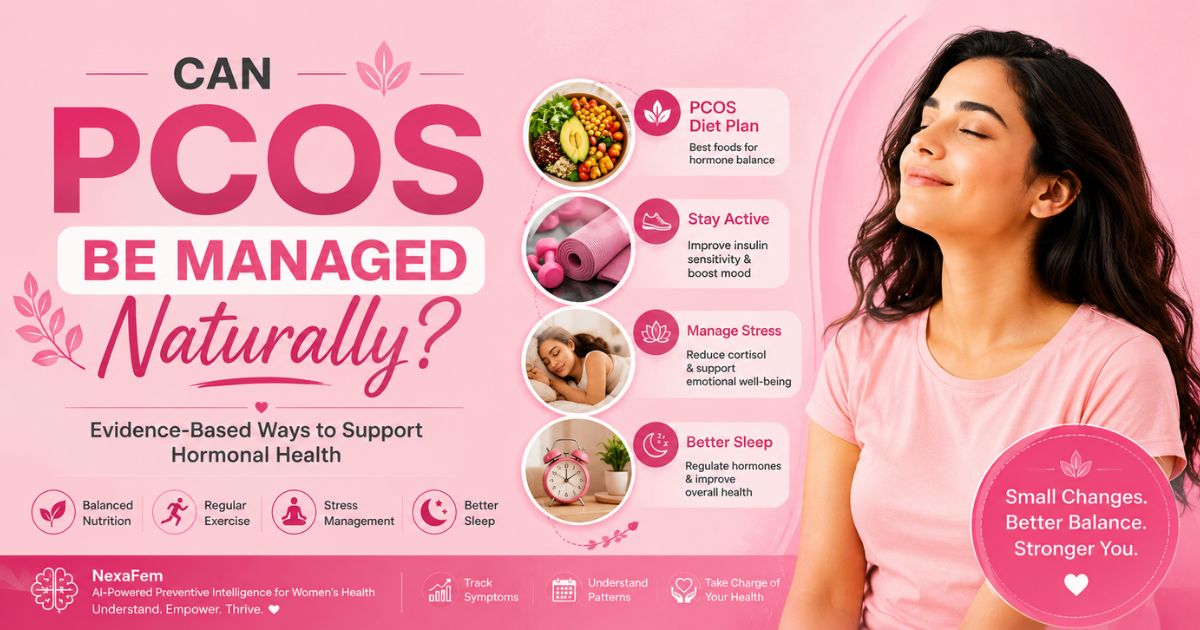
1. Follow a Balanced PCOS Diet Plan
Nutrition is often one of the most powerful tools available.
The ideal PCOS diet plan focuses on stabilizing blood sugar levels and supporting insulin sensitivity.
Best Foods for PCOS
Include:
Vegetables of all colors
Leafy greens
Whole grains
Beans and lentils
Fruits rich in fiber
Nuts and seeds
Fatty fish
Eggs
Lean proteins
Greek yogurt and fermented foods
Foods to Limit
Try reducing:
Sugary beverages
Highly processed snacks
Refined carbohydrates
Excessive added sugars
Ultra-processed foods
Rather than following restrictive diets, focus on building balanced meals that combine protein, fiber, and healthy fats.
Mini Summary
A sustainable PCOS diet plan supports blood sugar regulation, hormone balance, and long-term metabolic health.
2. Exercise Regularly
Physical activity improves insulin sensitivity and supports overall hormonal health.
You do not need extreme workouts to see benefits.
Effective options include:
Walking
Strength training
Cycling
Swimming
Yoga
Pilates
Aim for consistency rather than intensity.
Even moderate movement performed regularly can improve energy levels, mood, and metabolic function.
3. Prioritize Sleep
Sleep is often overlooked in discussions about hormonal health.
Poor sleep may affect:
Insulin sensitivity
Appetite regulation
Stress hormones
Menstrual health
Helpful sleep habits include:
Maintaining a consistent bedtime
Limiting screen exposure before sleep
Creating a calm sleep environment
Reducing caffeine later in the day
4. Manage Stress Effectively
Chronic stress can influence cortisol levels and may worsen hormonal symptoms.
Healthy stress-management strategies include:
Mindfulness practices
Meditation
Journaling
Gentle exercise
Therapy or counseling
Spending time outdoors
Mental wellness is an important part of PCOS care—not a separate issue.
How Does PCOS Affect Mental Health?
Research consistently shows higher rates of:
Anxiety
Depression
Low self-esteem
Body image concerns
Living with unpredictable symptoms can be emotionally exhausting.
If you are struggling emotionally, seeking support is a sign of strength, not weakness.
At NexaFem, this is where hormonal intelligence and symptom tracking can become valuable. Understanding patterns often helps women feel more informed and empowered rather than overwhelmed.
Who Is at Higher Risk for PCOS?
Risk factors may include:
Family history of PCOS
Insulin resistance
Obesity
Type 2 diabetes in close relatives
Certain metabolic conditions
Having risk factors does not guarantee a diagnosis, but awareness supports earlier intervention.
How Is PCOS Diagnosed?
Diagnosis typically involves:
Medical History
A healthcare professional reviews menstrual patterns and symptoms.
Physical Examination
Assessment may include weight, blood pressure, and signs of excess androgen levels.
Blood Tests
Hormone levels, blood sugar, and cholesterol may be evaluated.
Ultrasound
An ultrasound may help assess ovarian appearance.
Diagnosis should always be made by a qualified healthcare professional.
Can Natural Approaches Replace Medical Treatment?
Not always.
Some women successfully manage mild symptoms through lifestyle changes alone.
Others may require:
Hormonal contraceptives
Fertility treatments
Medications to improve insulin sensitivity
Treatments for acne or excess hair growth
The best plan depends on individual symptoms, health goals, and medical history.
Common Mistakes Women Make When Managing PCOS
Following Extremely Restrictive Diets
Severe calorie restriction may be difficult to sustain and can negatively affect wellbeing.
Ignoring Sleep
Nutrition matters, but sleep is equally important.
Expecting Immediate Results
Hormonal changes often take months, not days.
Self-Diagnosing
Many conditions mimic PCOS symptoms.
Focusing Only on Weight
PCOS management is about overall health, not just the number on a scale.
Lifestyle Tips for Long-Term Hormonal Health
Consider these habits:
Eat balanced meals regularly
Include protein at breakfast
Stay physically active
Prioritize sleep
Manage stress consistently
Attend routine health screenings
Track symptoms over time
A symptom tracker, menstrual health tracker, or hormone pattern assessment tool can help identify trends that may otherwise go unnoticed.
When Should You See a Doctor?
Schedule an evaluation if you experience:
Irregular periods
Missed periods
Persistent acne
Excess facial hair growth
Fertility concerns
Unexplained weight changes
Significant fatigue
Early evaluation can help prevent delays in diagnosis and treatment.
Red Flag Symptoms
Seek prompt medical attention if you experience:
Extremely heavy bleeding
Severe pelvic pain
Sudden worsening symptoms
Signs of uncontrolled diabetes
Severe depression or thoughts of self-harm
These symptoms require professional medical assessment.
Preventive Care and Long-Term Health
PCOS is not only about periods or fertility.
Long-term monitoring can help reduce risks associated with:
Type 2 diabetes
High cholesterol
High blood pressure
Cardiovascular disease
Sleep disorders
Preventive healthcare is one of the most important aspects of managing PCOS successfully.
This is where modern women's health is evolving—from reactive treatment toward proactive, personalized wellness supported by data, symptom awareness, and early intervention.
Final Thoughts
So, can PCOS be managed naturally?
For many women, the answer is yes—at least in part.
Evidence-based lifestyle strategies such as a balanced PCOS diet plan, regular exercise, quality sleep, and stress management can significantly improve symptoms and support hormonal health.
Natural approaches work best when they are realistic, sustainable, and integrated into a broader healthcare plan.
PCOS management is not about chasing perfection. It is about understanding your body, recognizing patterns, making informed decisions, and seeking support when needed.
With the right combination of education, preventive care, and personalized guidance, women with PCOS can take meaningful steps toward better hormonal health and long-term wellbeing.
Sources & References
Disclaimer
This article is intended for informational and educational purposes only and should not be considered medical advice, diagnosis, or treatment. Health information is constantly evolving, and individual circumstances vary. Always consult a qualified healthcare professional, gynecologist, endocrinologist, or other licensed medical provider for personalized medical guidance regarding PCOS or any other health concern.
Frequently Asked Questions
Share this post
Comments (0)
No comments yet. Be the first to comment!