
Daily Habits That Support Hormone Balance Naturally
Discover evidence-based daily habits and actionable hormone balance tips to optimize your endocrine health, backed by clinical data and AI-driven insights.

Eighty percent of women will experience a clinically significant hormonal imbalance during their lifetime, yet the majority will endure their symptoms in silence, dismissing chronic fatigue, mood fluctuations, and metabolic resistance as simply 'normal.' This passive approach to women's health is rapidly becoming a relic of the past. According to a landmark report by McKinsey & Company, closing the women’s health gap could inject $1 trillion into the global economy annually by 2040. As we transition from reactive sick-care to proactive wellness, mastering your endocrine health has never been more critical. Whether you are navigating the complexities of PCOS, seeking fertility optimization, or managing the transition into perimenopause, implementing scientifically backed Hormone Balance Tips is the foundation of long-term vitality. Welcome to the new era of preventive intelligence, where understanding your body's biochemical signals is your greatest strategic advantage.
The New Era of Preventive Intelligence in Women’s Health
For decades, women's hormonal health was largely under-researched and misunderstood. However, the paradigm is shifting. Global technology leaders and Fortune 500 companies are heavily investing in digital health infrastructure. Apple, through its groundbreaking Women's Health Study in partnership with the Harvard T.H. Chan School of Public Health, has collected unprecedented longitudinal data on menstrual cycles. Similarly, tech giants like Google and Amazon are deploying AI models to track and predict physiological changes with remarkable precision.
This corporate acceleration highlights a crucial reality: hormonal health is not a niche wellness topic; it is a foundational pillar of human performance and longevity. At NexaFem, we believe that AI-powered preventive intelligence is the key to unlocking this potential. By combining predictive analytics with clinical guidelines from organizations like the WHO, ACOG, and NICE, women can now forecast hormonal fluctuations and mitigate symptoms before they manifest.
According to the World Health Organization (WHO), preventive lifestyle interventions can reduce the risk of chronic endocrine disorders by up to 60%, highlighting the profound impact of daily habits on our biochemical baseline.
Understanding Your Endocrine Symphony
Before diving into specific habits, it is vital to understand that your endocrine system operates like a finely tuned orchestra. When one hormone is out of sync, the entire system falls out of rhythm. The 'big three' metabolic hormones dictate this delicate balance:
- Cortisol: Your primary stress hormone. Chronic elevation leads to systemic inflammation and steals precursors needed for reproductive hormones.
- Insulin: The master metabolic switch. Insulin resistance is the core driver of conditions like Polycystic Ovary Syndrome (PCOS).
- Thyroid (T3/T4): The cellular metronome regulating your metabolism, energy levels, and body temperature.
When these three baseline hormones are stabilized, your reproductive hormones—estrogen, progesterone, and testosterone—can function optimally, ensuring a healthy menstrual cycle, robust fertility, and a smoother transition through perimenopause.
5 Daily Habits That Support Hormone Balance Naturally
Achieving equilibrium doesn't require extreme protocols. Instead, it relies on consistent, evidence-based micro-habits. Here are the most effective daily practices to optimize your endocrine system.
1. Optimize Blood Sugar with Strategic Nutrition
Blood sugar dysregulation is the enemy of hormonal harmony. Spikes and crashes in glucose lead to elevated insulin, which in turn stimulates the ovaries to produce excess androgens (testosterone)—a primary driver of PCOS symptoms like acne, hair loss, and irregular cycles. Clinical guidelines emphasize a low-glycemic, anti-inflammatory dietary approach.
To stabilize glucose, focus on eating a savory breakfast rich in protein and healthy fats rather than carbohydrates. Companies like Deloitte and Accenture have integrated continuous glucose monitoring (CGM) education into their executive wellness programs, recognizing that steady blood sugar equates to steady cognitive performance and hormonal stability. Aim for 30 grams of protein in the morning to blunt the glucose curve for the remainder of the day.
2. Master Cortisol Regulation to Prevent HPA-Axis Dysfunction
In our hyper-connected, always-on corporate culture, chronic stress is an epidemic. When your brain perceives continuous stress, the Hypothalamic-Pituitary-Adrenal (HPA) axis commands your adrenal glands to pump out cortisol. If left unchecked, this 'cortisol steal' suppresses progesterone production, leading to estrogen dominance, severe PMS, and early perimenopausal symptoms.
Organizations like Salesforce and Microsoft have introduced biofeedback and mindfulness zones into their corporate campuses to combat this exact issue. You can replicate this at home by implementing a daily 'cortisol reset.' Engage in 10 minutes of non-sleep deep rest (NSDR), somatic tracking, or box breathing to downregulate your sympathetic nervous system. Prioritizing rest is not a luxury; it is a biological necessity for endocrine health.
3. Eliminate Endocrine Disrupting Chemicals (EDCs)
We are exposed to hundreds of synthetic chemicals daily, many of which are known as Endocrine Disrupting Chemicals (EDCs). Substances like BPA, phthalates, and parabens mimic estrogen in the body, binding to hormone receptors and creating chaotic biochemical signaling. The CDC regularly monitors human exposure to these chemicals, and the data consistently shows higher burdens in women due to the use of conventional cosmetics and personal care products.
Detoxing your environment is a highly effective, yet often overlooked, intervention. Start by auditing your daily inputs: swap plastic food storage for glass, filter your drinking water, and transition to 'clean' beauty products that are free from synthetic fragrances and parabens. By reducing your allostatic load, you free up your liver to efficiently process and eliminate endogenous hormones naturally.
4. Sync Movement with Your Infradian Rhythm
Unlike men, whose hormonal cycle resets every 24 hours (circadian rhythm), women in their reproductive years operate on a 28-day (average) infradian rhythm. Expecting your body to perform the same high-intensity workout every single day is a biological mismatch. Adapting your exercise routine to your menstrual phases is a powerful way to support, rather than stress, your endocrine system.
- Follicular Phase: Estrogen is rising. Your body is primed for high-energy activities like HIIT or powerlifting.
- Ovulatory Phase: Peak estrogen and a surge in testosterone make this the optimal time for maximum exertion and social group fitness.
- Luteal Phase: Progesterone dominates, raising your core temperature and caloric needs. Transition to strength training, pilates, or steady-state cardio.
- Menstrual Phase: Hormones are at their lowest. Focus on restorative movement, such as yin yoga, walking, and deep stretching.
5. Leverage AI for Precision Sleep Architecture
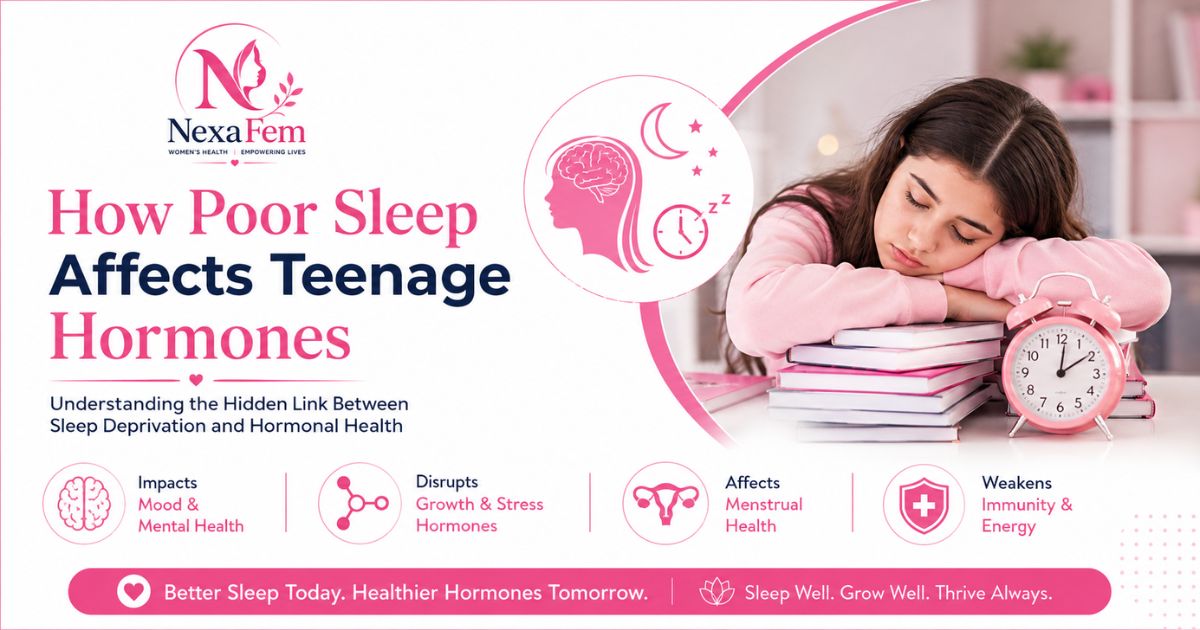
Sleep is the critical window during which your body clears metabolic waste, repairs cellular damage, and synthesizes key hormones like human growth hormone (HGH) and melatonin. Poor sleep architecture immediately impairs insulin sensitivity and elevates next-day cortisol levels. In the age of wearable tech, we no longer have to guess about our sleep quality.
Using data from wearables like the Oura Ring or Apple Watch—tools increasingly provided as perks by forward-thinking employers like IBM and LinkedIn—you can track your sleep stages and heart rate variability (HRV). Aim for 7-9 hours of consolidated sleep in a cool, pitch-black room. Crucially, cut off blue light exposure from screens at least 90 minutes before bed to protect your natural melatonin production.
NexaFem: Pioneering AI-Powered Preventive Intelligence
Information without application is merely data. To truly transform women's health, we must bridge the gap between clinical knowledge and daily action. NexaFem is engineered to do exactly that. By serving as your AI-powered preventive intelligence platform, NexaFem analyzes your unique physiological markers, cycle data, and lifestyle inputs to provide hyper-personalized health recommendations.
We are moving beyond the era of generic advice. Whether you are seeking to reverse PCOS symptoms naturally, optimize your fertility window, or gracefully navigate the perimenopause transition, NexaFem utilizes advanced predictive models to help you understand what your body needs before symptoms arise. It is medical-grade insight, delivered with deep emotional intelligence and modern technological precision.
Key Takeaways
- Proactive, Not Reactive: Shifting to preventive intelligence is the future of women’s health, mirroring the data-driven approaches of global tech leaders.
- Metabolism is Foundational: Managing insulin through a savory, high-protein breakfast is crucial for preventing conditions like PCOS.
- Control Cortisol: Chronic stress steals from your reproductive hormones; daily nervous system regulation is biologically essential.
- Audit Your Environment: Reducing exposure to Endocrine Disrupting Chemicals (EDCs) in plastics and cosmetics lowers your toxic burden.
- Cycle Syncing: Aligning your movement and nutrition with your infradian rhythm optimizes energy and reduces systemic stress.
Final Thoughts
Achieving hormonal balance is not a one-time event; it is a daily commitment to understanding and respecting your body's intricate design. By integrating these science-backed habits into your routine, you reclaim control over your physiological narrative. Do not wait for symptoms to disrupt your life before taking action. Join NexaFem today, and empower yourself with the AI-driven preventive intelligence necessary to thrive in every phase of your womanhood.
Frequently Asked Questions
Share this post
Comments (0)
No comments yet. Be the first to comment!