
Early Perimenopause Symptoms Every Woman Should Know: Signs, Causes & Checklist
Learn the early perimenopause symptoms, warning signs, causes, diagnosis, and treatment options with a complete perimenopause symptoms checklist.
Many women expect menopause to happen suddenly in their late 40s or early 50s. What often comes as a surprise is that the transition can begin years earlier.
You may notice your periods becoming unpredictable. Sleep might feel different. Anxiety may appear without a clear reason. Some women experience unexplained fatigue, mood changes, brain fog, or sudden sensitivity to stress and wonder if something is wrong.
These experiences can sometimes be the first signs of perimenopause.
Perimenopause is a natural hormonal transition that occurs before menopause. While it most commonly begins during the 40s, some women may notice early perimenopause symptoms in their late 30s or even earlier.
Understanding these changes can help you seek support sooner, make informed health decisions, and feel more confident about what your body is experiencing.
At NexaFem, we believe that hormonal intelligence starts with awareness. The earlier women recognize symptoms, the more opportunities they have for preventive care and personalized wellness support.
Quick Summary (TL;DR)
Perimenopause is the transitional stage before menopause caused by fluctuating hormone levels.
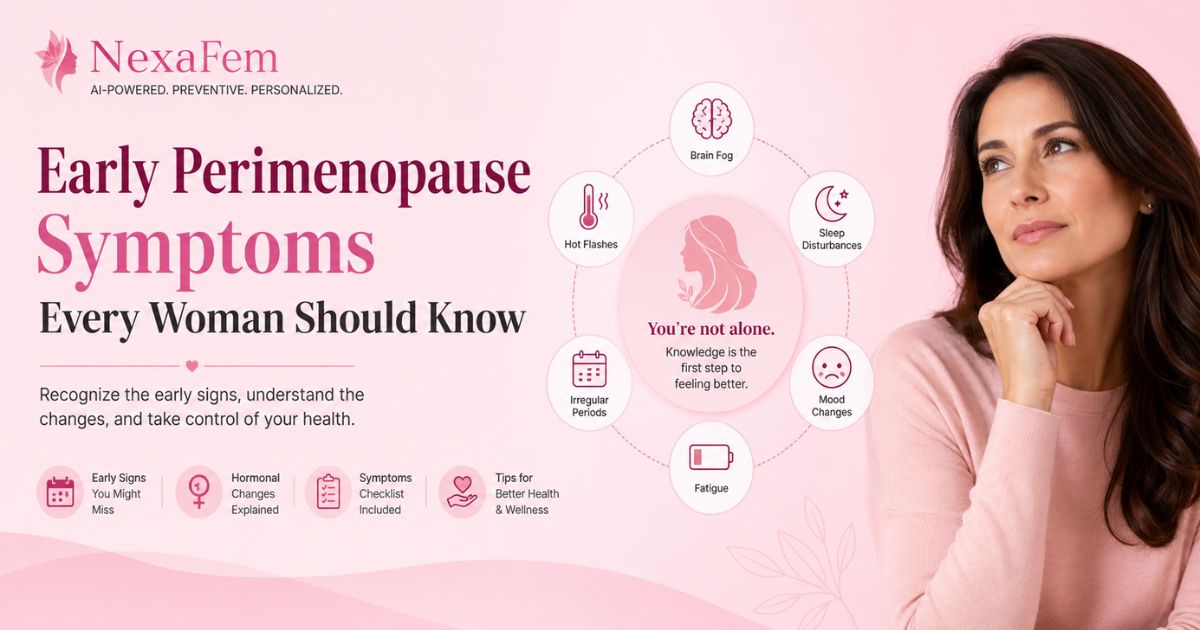
Common perimenopause symptoms include irregular periods, mood changes, sleep disturbances, hot flashes, and brain fog.
Early perimenopause symptoms may appear years before menopause and can sometimes start in the late 30s.
Lifestyle changes, nutrition, stress management, and medical support can help reduce symptom burden.
Persistent, severe, or unusual symptoms should be evaluated by a healthcare professional.
What Is Perimenopause?
Perimenopause is the period leading up to menopause when the ovaries gradually produce less estrogen and progesterone.
Unlike menopause, which is officially diagnosed after 12 consecutive months without a menstrual period, perimenopause can last several years. During this transition, hormone levels fluctuate unpredictably, creating a wide range of physical and emotional symptoms.
According to the American College of Obstetricians and Gynecologists (ACOG), changes in menstrual cycles are often among the earliest signs of perimenopause. Women may notice periods becoming shorter, longer, heavier, lighter, or more irregular.
What Are the Earliest Signs of Perimenopause?
For many women, menstrual changes are the first clue.
However, symptoms can vary significantly from person to person.
Common Early Perimenopause Symptoms
Irregular menstrual cycles
Changes in menstrual flow
Hot flashes
Night sweats
Difficulty sleeping
Increased anxiety
Mood swings
Irritability
Brain fog
Fatigue
Reduced concentration
Low libido
Vaginal dryness
Headaches
Weight changes
Some women experience only a few symptoms, while others notice multiple changes that affect daily life.
Perimenopause Symptoms Checklist
If you've been wondering whether hormonal changes could be contributing to how you feel, this perimenopause symptoms checklist may help.
Physical Symptoms
Periods arriving earlier or later than usual
Heavier or lighter bleeding
Hot flashes
Night sweats
Breast tenderness
Joint aches
Muscle discomfort
Weight gain, especially around the abdomen
Hair thinning
Dry skin
Vaginal dryness
Emotional and Cognitive Symptoms
Mood swings
Increased stress sensitivity
Anxiety
Low motivation
Brain fog
Memory lapses
Difficulty focusing
Sleep-Related Symptoms
Trouble falling asleep
Waking during the night
Early morning waking
Feeling unrefreshed after sleep
If several of these symptoms occur alongside menstrual changes, perimenopause may be a contributing factor.
Why Does Perimenopause Happen?
Perimenopause occurs because ovarian hormone production gradually changes over time.
The primary hormones involved include:
Estrogen
Estrogen affects:
Menstrual cycles
Bone health
Brain function
Heart health
Skin health
Vaginal tissues
As estrogen levels fluctuate, many common symptoms emerge.
Progesterone
Progesterone helps regulate menstrual cycles and supports sleep and mood stability.
Lower progesterone levels may contribute to:
Sleep disturbances
Anxiety
Irregular cycles
Testosterone
Although often discussed in relation to men, testosterone also plays important roles in women, including:
Sexual desire
Energy levels
Muscle maintenance
Changes in testosterone may contribute to reduced libido and fatigue.
Can Perimenopause Start in Your 30s?
Yes.
Although perimenopause most commonly begins during the 40s, some women experience symptoms earlier.
Early perimenopause symptoms may be influenced by:
Family history of early menopause
Smoking
Certain autoimmune conditions
Previous cancer treatments
Surgical removal of ovaries
Premature ovarian insufficiency (POI)
If symptoms appear unusually early, medical evaluation is important to identify other potential causes.
What Causes Symptoms to Feel So Different From Month to Month?
One of the most confusing aspects of perimenopause is inconsistency.
Unlike menopause, where hormone levels remain consistently low, perimenopause is characterized by hormonal fluctuations.
You may feel completely normal one month and experience multiple symptoms the next.
This unpredictability explains why many women initially attribute symptoms to stress, work pressure, parenting demands, or poor sleep rather than hormonal changes.
How Is Perimenopause Diagnosed?
There is no single test that definitively diagnoses perimenopause.
Healthcare professionals typically consider:
Age
Menstrual history
Symptom patterns
Medical history
For women over 45 with typical symptoms, diagnosis is often based on clinical assessment rather than hormone testing because hormone levels fluctuate significantly during this stage.
Your healthcare provider may order tests to rule out conditions with similar symptoms, including:
Thyroid disorders
Iron deficiency
Depression
Sleep disorders
Polycystic Ovary Syndrome (PCOS)
Women who have concerns about hormonal health may also benefit from tracking symptoms using a hormone symptom tracker or menstrual health insights tool over several months.
Mental Health and Emotional Well-Being During Perimenopause
Hormonal changes affect more than reproductive health.
Many women report:
Anxiety
Increased emotional sensitivity
Irritability
Low mood
Reduced confidence
These experiences are real and biologically influenced.
Fluctuating estrogen levels can affect neurotransmitters involved in mood regulation, including serotonin and dopamine.
If emotional symptoms begin affecting relationships, work performance, or overall quality of life, professional support can be valuable.
Understanding the connection between hormonal health and mental wellness often helps women feel less confused and more empowered.
This is also why learning about hormonal intelligence and understanding hormone-related mood changes can be helpful during this transition.
Nutrition Support During Perimenopause
Nutrition cannot stop perimenopause, but it can support overall health and symptom management.
Focus on:
Protein
Adequate protein supports:
Muscle health
Metabolism
Energy levels
Calcium and Vitamin D
These nutrients support bone health, which becomes increasingly important as estrogen levels decline.
Fiber
Fiber may help support:
Heart health
Blood sugar balance
Digestive health
Healthy Fats
Sources include:
Nuts
Seeds
Olive oil
Fatty fish
These foods contribute to overall cardiovascular and hormonal health.
The NHS and other health authorities also emphasize maintaining a balanced diet, regular activity, and healthy weight during midlife transitions.
Lifestyle Tips for Managing Perimenopause Symptoms
Small daily habits can make a meaningful difference.
Prioritize Sleep
Aim for consistent sleep and wake times.
Stay Physically Active
Regular movement supports:
Mood
Sleep
Bone health
Cardiovascular health
Manage Stress
Consider:
Meditation
Breathing exercises
Yoga
Journaling
Counseling
Limit Smoking
Smoking is associated with earlier menopause and may worsen symptoms.
Monitor Your Health
Routine preventive care becomes increasingly important during this stage.
Women should continue regular screenings and monitor key health indicators such as blood pressure, cholesterol, and metabolic health.
Treatment Options for Perimenopause
Treatment depends on symptoms, medical history, and personal preferences.
Options may include:
Hormone Therapy
Hormone therapy can help some women manage symptoms such as:
Hot flashes
Night sweats
Vaginal dryness
However, treatment decisions should always be individualized and discussed with a qualified healthcare professional.
Non-Hormonal Treatments
Depending on symptoms, healthcare providers may recommend:
Cognitive behavioral therapy
Sleep interventions
Certain prescription medications
Vaginal moisturizers or lubricants
Personalized Lifestyle Approaches
Many women benefit from combining medical treatment with:
Nutrition support
Exercise
Stress reduction
Symptom tracking
A personalized menopause wellness assessment tool can help women identify patterns and discuss concerns more effectively with their healthcare team.
Common Mistakes Women Make
Many women delay seeking support because they assume symptoms are unrelated.
Common mistakes include:
Ignoring menstrual changes
Assuming symptoms are "just stress"
Self-diagnosing without medical evaluation
Neglecting sleep health
Avoiding conversations about hormonal changes
Missing preventive health screenings
Early awareness often leads to better symptom management and improved quality of life.
When Should You See a Doctor?
Consider scheduling a medical evaluation if:
Symptoms interfere with daily activities
Sleep disruption becomes persistent
Mood changes become severe
Menstrual changes are concerning
Symptoms appear unusually early
You have questions about treatment options
Healthcare professionals can help determine whether symptoms are related to perimenopause or another medical condition.
Red Flag Symptoms That Need Prompt Medical Attention
Seek medical care if you experience:
Bleeding after menopause
Extremely heavy menstrual bleeding
Bleeding between periods
Severe pelvic pain
Chest pain
Shortness of breath
Sudden neurological symptoms
These symptoms should not automatically be assumed to be related to perimenopause.
Final Thoughts
Perimenopause is not a disease. It is a natural stage of life. Yet that doesn't mean the symptoms should be ignored or minimized.
Recognizing early perimenopause symptoms can help women understand their bodies, seek appropriate care, and make proactive decisions about long-term health.
The goal is not simply symptom management. It's building greater awareness, confidence, and hormonal intelligence.
At NexaFem, we believe that preventive women's healthcare starts with understanding the signals your body is already giving you. The more informed you are today, the more empowered you'll be tomorrow.
Sources & References
American College of Obstetricians and Gynecologists (ACOG) – Perimenopause & Menopause Resources
Centers for Disease Control and Prevention (CDC) – Women's Health
National Institute for Health and Care Excellence (NICE) – Menopause Guidance
Disclaimer
This article is intended for informational and educational purposes only and should not be considered medical advice, diagnosis, or treatment. Health information can vary from person to person. Always consult a qualified healthcare professional, gynecologist, or licensed medical provider regarding any symptoms, health concerns, treatment decisions, or questions related to perimenopause, menopause, hormonal health, or any other medical condition.
Frequently Asked Questions
Share this post
Comments (0)
No comments yet. Be the first to comment!