
Early Signs of PCOS Women Often Miss: Symptoms, Diagnosis, and What to Do Next
Learn the early signs of PCOS women often miss, including irregular periods, hormonal imbalance symptoms, and when to seek medical care.
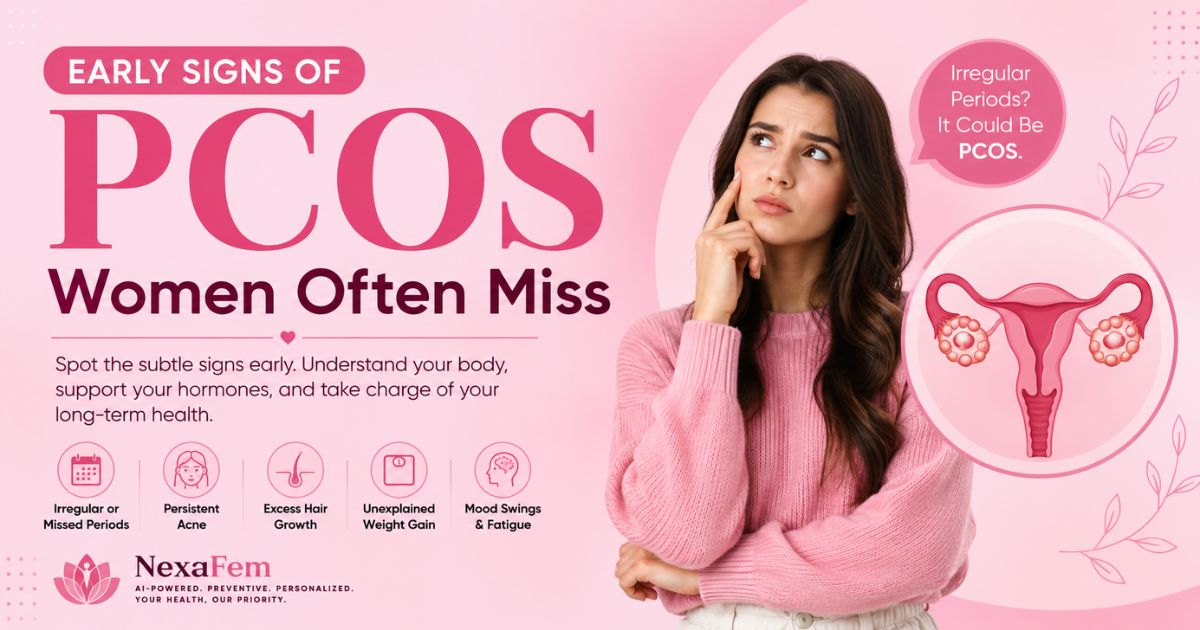
Polycystic Ovary Syndrome (PCOS) is one of the most common hormonal conditions affecting women of reproductive age. Yet many women live with symptoms for years before receiving a diagnosis.
You may notice that your periods have become unpredictable. Perhaps your skin has changed, you're experiencing stubborn weight gain, or you're feeling unusually tired. These symptoms are often dismissed as stress, lifestyle changes, or simply "normal hormonal fluctuations."
The reality is that early signs of PCOS can be subtle and easy to overlook.
Recognizing these signs early can help women seek timely medical guidance, support hormonal health, and reduce the risk of long-term complications. As preventive healthcare continues to evolve, platforms like NexaFem are helping women better understand patterns in their symptoms, menstrual cycles, and overall hormonal wellbeing.
Quick Summary (TL;DR)
Early signs of PCOS often include irregular periods, acne, excess facial hair, unexplained weight gain, and difficulty managing energy levels.
Irregular periods and PCOS are among the most common early warning signs.
Hormonal imbalances may affect skin health, mood, fertility, metabolism, and menstrual cycles.
Early diagnosis and lifestyle support can help manage symptoms and reduce future health risks.
Women experiencing persistent symptoms should consult a healthcare professional for proper evaluation.
What Is PCOS?
PCOS, or Polycystic Ovary Syndrome, is a hormonal disorder that affects how the ovaries function.
According to guidance from the NHS and other major medical organizations, PCOS is characterized by a combination of:
Irregular or absent ovulation
Higher-than-normal androgen (male hormone) levels
Polycystic ovaries on ultrasound in some women
Importantly, not every woman with PCOS will have ovarian cysts, and symptoms can vary significantly from person to person.
Source: NHS PCOS Guidance
Why Are Early Signs of PCOS Often Missed?
Many symptoms develop gradually.
Women may assume their experiences are normal because:
Menstrual irregularities are common during adolescence
Acne is often associated with puberty or stress
Weight fluctuations may be blamed on diet alone
Mood changes are frequently overlooked
Symptoms may appear individually rather than together
As a result, diagnosis is often delayed for years.
Early Signs of PCOS Women Often Miss
Irregular Periods
One of the most important early signs of PCOS is a change in menstrual patterns.
Women may experience:
Periods occurring more than 35 days apart
Fewer than eight periods per year
Unpredictable cycle lengths
Very heavy bleeding when periods do occur
When ovulation becomes irregular, menstrual cycles often become inconsistent.
If you've noticed ongoing cycle changes, learning about the four phases of the menstrual cycle can help you better understand what is normal and what may require medical attention.
Missed Periods and PCOS
Many women search online for the connection between missed periods and PCOS, and for good reason.
Missed periods occur because ovulation may not happen regularly.
Occasional missed periods can happen for various reasons, including stress or significant lifestyle changes. However, recurrent missed periods should be evaluated by a healthcare provider, particularly if accompanied by other symptoms of hormonal imbalance.
Persistent Acne Beyond the Teenage Years
Hormonal acne associated with PCOS often appears:
Along the jawline
On the chin
Around the neck
On the chest or upper back
Unlike occasional breakouts, hormonal acne may persist well into adulthood and often responds poorly to standard skincare routines.
Excess Facial or Body Hair
Higher androgen levels can contribute to unwanted hair growth, a condition called hirsutism.
Women may notice:
Increased facial hair
Hair growth on the chest
Hair growth on the abdomen
Dark, coarse hair in typically male-pattern areas
This symptom can develop gradually and may be one of the earliest indicators of underlying hormonal imbalance.
Thinning Hair or Hair Loss
While excess hair growth can occur in some areas, many women with PCOS experience thinning hair on the scalp.
Hair may become:
Noticeably thinner
Less voluminous
More prone to shedding
This pattern is often linked to elevated androgen levels.
Unexplained Weight Gain
Not every woman with PCOS is overweight.
However, many experience:
Weight gain around the abdomen
Difficulty losing weight
Increased insulin resistance
Research suggests insulin resistance plays a significant role in many PCOS cases and can contribute to metabolic changes.
Source: CDC PCOS Information
Skin Changes
Some women notice:
Darkened skin patches around the neck, groin, or underarms
Skin tags
Oily skin
Darkened skin patches may indicate insulin resistance and should be discussed with a healthcare professional.
Mood Changes and Emotional Health Challenges
Hormonal fluctuations can influence emotional wellbeing.
Women with PCOS may experience:
Increased anxiety
Low mood
Reduced self-confidence
Body image concerns
Stress related to fertility or menstrual irregularities
Mental wellness is an important but often overlooked component of PCOS care.
What Are the Most Common Hormonal Imbalance Symptoms?
Many hormonal imbalance symptoms overlap with PCOS.
Common signs include:
Irregular menstrual cycles
Missed periods
Acne
Excess facial hair
Hair thinning
Weight changes
Fatigue
Mood changes
Fertility challenges
These symptoms do not automatically mean someone has PCOS, but they warrant further evaluation if persistent.
What Causes PCOS?
The exact cause remains unclear, but experts believe several factors contribute.
Genetics
PCOS often runs in families.
Women with a family history of PCOS may have a higher risk of developing the condition.
Insulin Resistance
Many women with PCOS have insulin resistance, which causes the body to produce more insulin.
Higher insulin levels can stimulate excess androgen production.
Hormonal Dysregulation
Disruptions in reproductive hormones may affect ovulation and menstrual regularity.
According to leading organizations including ACOG, PCOS involves complex interactions between metabolic and reproductive hormones.
Source: ACOG PCOS Overview
Risk Factors for PCOS
Several factors may increase risk:
Family history of PCOS
Insulin resistance
Obesity
Type 2 diabetes in close relatives
History of irregular menstrual cycles
Having risk factors does not guarantee a diagnosis, but awareness can support earlier detection.
How Is PCOS Diagnosed?
There is no single test for PCOS.
Healthcare providers typically evaluate:
Medical History
Questions may focus on:
Menstrual cycle patterns
Weight changes
Hair growth
Skin concerns
Fertility history
Physical Examination
Providers may assess:
Blood pressure
Weight
Signs of androgen excess
Blood Tests
Testing may include:
Hormone levels
Blood sugar
Cholesterol levels
Thyroid function
Ultrasound
An ultrasound may help evaluate ovarian appearance, although not all women with PCOS have visible ovarian cysts.
Guidelines emphasize that diagnosis should be based on a combination of symptoms, medical history, and clinical findings.
Source: NICE Women's Health Guidance
Lifestyle Support for Managing PCOS
While there is no universal cure for PCOS, many women experience symptom improvement through lifestyle interventions.
Nutrition Strategies
Focus on:
Whole foods
Vegetables and fruits
Lean protein sources
High-fiber foods
Healthy fats
Limiting highly processed foods may support metabolic health.
Women interested in hormonal wellbeing may also benefit from understanding the relationship between nutrition and hormone balance.
Physical Activity
Regular movement can support:
Insulin sensitivity
Energy levels
Mood
Weight management
Even moderate activity can provide benefits when performed consistently.
Sleep and Stress Management
Poor sleep and chronic stress may worsen hormonal symptoms.
Helpful practices include:
Consistent sleep schedules
Mindfulness techniques
Relaxation exercises
Limiting excessive screen time before bed
Treatment Options for PCOS
Treatment varies depending on symptoms and individual goals.
Options may include:
Lifestyle modifications
Hormonal contraceptives
Medications to support ovulation
Treatments for acne
Management of insulin resistance
A healthcare provider can determine the most appropriate approach based on personal health needs.
PCOS and Fertility
Many women worry about fertility after a PCOS diagnosis.
Although PCOS can affect ovulation, many women with the condition successfully conceive.
Early diagnosis and appropriate management can improve reproductive health outcomes.
For women planning pregnancy, learning about fertility awareness and ovulation tracking may provide additional insight into cycle patterns.
Common Mistakes Women Make
Many women unintentionally delay diagnosis by:
Ignoring persistent cycle irregularities
Assuming missed periods are normal
Treating symptoms individually instead of seeing the bigger picture
Delaying medical evaluation
Relying solely on internet advice
Recognizing patterns across multiple symptoms is often the key to identifying underlying hormonal issues.
When to See a Doctor
Schedule an appointment if you experience:
Frequent missed periods
Irregular menstrual cycles lasting several months
Excess facial hair growth
Persistent acne
Difficulty becoming pregnant
Significant unexplained weight changes
Early evaluation can help identify the cause and support timely treatment.
Red Flag Symptoms
Seek prompt medical attention if you experience:
Very heavy bleeding
Severe pelvic pain
Rapid unexplained weight changes
Sudden onset of severe hormonal symptoms
Signs of severe depression or mental health distress
These symptoms may require urgent evaluation and could indicate conditions beyond PCOS.
Lifestyle Tips for Long-Term Hormonal Health
Building hormonal intelligence starts with awareness.
Consider:
Tracking menstrual cycles consistently
Monitoring recurring symptoms
Prioritizing sleep
Managing stress levels
Staying physically active
Scheduling regular health checkups
Digital tools such as a PCOS symptom tracker, hormone health assessment, and menstrual cycle insights tool can help women identify patterns that might otherwise go unnoticed.
Final Thoughts
The early signs of PCOS are often subtle, but they deserve attention.
Irregular periods, missed periods, acne, hair changes, weight fluctuations, and other hormonal imbalance symptoms are not always "just stress" or "normal hormones." They may be valuable signals from your body.
The earlier women recognize these signs, the sooner they can seek appropriate support, understand their hormonal health, and make informed decisions about their wellbeing.
At NexaFem, we believe the future of women's health lies in preventive intelligence—helping women recognize patterns, understand symptoms earlier, and take proactive steps toward healthier lives through personalized hormonal awareness and evidence-based education.
Sources & References
Implementation Note
Internal Link Anchor Text Opportunities
Anchor Text Used
Recommended Blog Title
Primary Keyword
four phases of the menstrual cycle
Understanding the Four Phases of the Menstrual Cycle
menstrual cycle phases
nutrition and hormone balance
How Nutrition Affects Hormone Balance in Women
hormone balance nutrition
fertility awareness and ovulation tracking
Fertility Awareness and Ovulation Tracking Explained
fertility awareness
hormonal wellbeing
Signs of Hormonal Imbalance Every Woman Should Know
hormonal imbalance symptoms
menstrual cycle patterns
What Your Menstrual Cycle Is Telling You About Your Health
menstrual health
Disclaimer
This article is intended for informational and educational purposes only and should not be considered medical advice, diagnosis, or treatment. Health information evolves over time, and individual circumstances vary. If you are experiencing symptoms such as irregular periods, missed periods, hormonal imbalance symptoms, fertility concerns, or any other health issue, consult a qualified healthcare professional for personalized medical guidance, diagnosis, and treatment recommendations. Never delay seeking professional medical care based on information found in this article.
Frequently Asked Questions
Share this post
Comments (0)
No comments yet. Be the first to comment!