
Fertility Myths Social Media Keeps Spreading: Evidence-Based Facts Every Woman Should Know
Discover common fertility myths spreading on social media and learn evidence-based fertility facts to support your reproductive health.
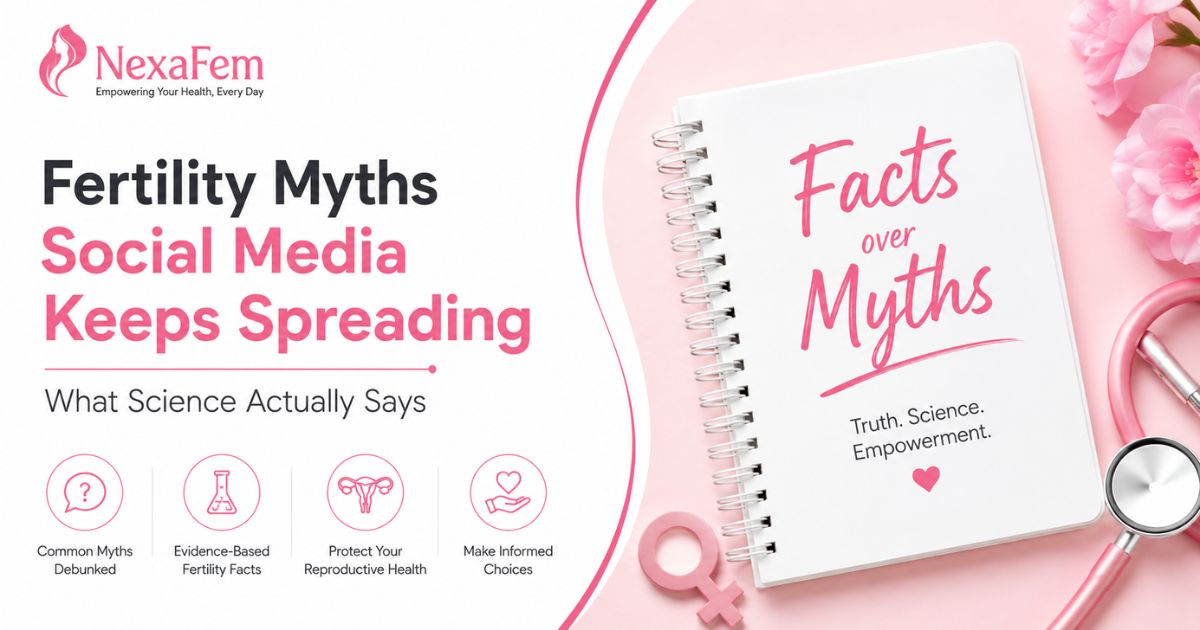
Social media has made health information more accessible than ever. A quick scroll can expose women to hundreds of fertility tips, pregnancy hacks, hormone advice videos, and personal success stories. While some content is helpful, much of it is incomplete, misleading, or simply not supported by science.
For women trying to understand their reproductive health, these messages can create unnecessary anxiety, confusion, and unrealistic expectations. Many women begin questioning their fertility after watching viral videos or reading comments from strangers online.
The truth is that fertility is influenced by multiple factors including age, overall health, hormonal balance, lifestyle habits, medical conditions, and genetics. There is rarely a single cause—or a single solution.
Understanding the difference between evidence-based fertility information and social media myths is an important step toward making informed decisions about your health.
At NexaFem, we believe preventive health starts with knowledge, awareness, and access to trustworthy information.
Quick Summary (TL;DR)
Many fertility myths circulating on social media are not supported by medical evidence.
Fertility depends on multiple biological and lifestyle factors, not viral "quick fixes."
Age affects fertility, but pregnancy is possible across different stages of reproductive life.
Diet and healthy habits support fertility but cannot guarantee conception.
Fertility awareness and early evaluation can help identify potential concerns sooner.
Trusted medical guidance is more reliable than anecdotal social media advice.
What Are Fertility Myths?
Fertility myths are commonly repeated beliefs about conception, reproductive health, pregnancy, and fertility treatments that are not supported by scientific evidence.
These myths often spread because:
Personal stories are shared as universal truths
Simplified advice gains more engagement online
Complex medical topics are reduced to short videos
Fertility struggles are emotionally sensitive and highly relatable
While personal experiences can be valuable, they do not replace clinical evidence or individualized medical care.
Why Fertility Misinformation Is So Common on Social Media
Social media platforms reward content that attracts attention quickly.
Unfortunately, fertility science is rarely simple.
Short-form content may leave out important details such as:
Individual health differences
Medical history
Age-related fertility changes
Underlying reproductive conditions
Limitations of studies
Organizations such as the World Health Organization (WHO) emphasize the importance of health literacy and evidence-based health information when making healthcare decisions.
According to the WHO, misinformation can negatively impact health behaviors and decision-making.
Throughout your fertility journey, understanding concepts such as menstrual cycle tracking, ovulation awareness, and reproductive health assessments can provide more reliable insights than viral trends.
Myth #1: If You Have Regular Periods, You Cannot Have Fertility Problems
This is one of the most common misconceptions online.
The Truth
Regular menstrual cycles often indicate that ovulation is occurring, but they do not guarantee fertility.
Women with regular periods may still experience:
Endometriosis
Blocked fallopian tubes
Uterine abnormalities
Reduced egg quality
Male factor infertility within a partner relationship
According to guidance from the American College of Obstetricians and Gynecologists (ACOG), fertility evaluation may be appropriate even when menstrual cycles appear normal.
Key Takeaway
Regular periods are a positive sign, but they do not provide a complete picture of fertility.
Myth #2: You Can Boost Fertility Dramatically With One Specific Food
Social media often promotes certain foods as fertility "superfoods."
Common examples include:
Pineapple
Avocados
Maca root
Bee pollen
Fertility teas
The Truth
Nutrition plays an important role in overall reproductive health, but no single food can dramatically increase fertility on its own.
Research supports dietary patterns rather than miracle foods.
A fertility-supportive diet generally includes:
Fruits and vegetables
Whole grains
Healthy fats
Lean proteins
Omega-3-rich foods
Adequate iron and folate
Healthy eating supports hormonal balance and overall wellness but should not be viewed as a fertility cure.
Women interested in improving fertility naturally may benefit from learning about fertility-supportive nutrition and hormone-friendly eating habits.
Myth #3: Infertility Is Mostly a Women's Problem
This myth remains surprisingly common.
The Truth
Infertility can affect both men and women.
According to the Centers for Disease Control and Prevention (CDC), male factors contribute to a substantial percentage of infertility cases.
Potential contributors include:
Sperm count issues
Sperm motility problems
Hormonal conditions
Genetic factors
Lifestyle influences
Key Takeaway
A fertility evaluation should consider both partners when applicable.
Myth #4: Birth Control Causes Permanent Infertility
Many women worry that using hormonal contraception for years may permanently damage fertility.
The Truth
Current evidence does not show that approved hormonal contraceptives cause permanent infertility.
After stopping birth control:
Ovulation may resume immediately for some women
Others may experience a temporary adjustment period
Fertility generally returns to the individual's baseline level
If menstrual cycles do not return after several months, healthcare providers may evaluate for underlying conditions that existed before contraception use.
Myth #5: You Can Always Tell When You Are Ovulating
Many social media posts suggest that ovulation symptoms are obvious.
The Truth
Some women notice:
Mild pelvic discomfort
Changes in cervical mucus
Increased libido
Breast tenderness
Others experience no noticeable symptoms at all.
Ovulation cannot be reliably confirmed based solely on physical sensations.
More accurate methods include:
Ovulation predictor kits
Basal body temperature tracking
Hormone monitoring tools
Clinical fertility assessments
Using a cycle insights tool or ovulation tracking platform may help women better understand their fertility patterns.
Myth #6: Fertility Doesn't Decline Until Your 40s
This misconception can create unrealistic expectations.
The Truth
Female fertility gradually declines with age.
According to ACOG and NHS guidance:
Fertility is generally highest during the 20s and early 30s
Decline becomes more noticeable after age 35
Fertility decreases further during the late 30s and 40s
This does not mean pregnancy becomes impossible.
Many women conceive naturally after age 35.
However, age remains one of the most important fertility factors.
Fertility Awareness Matters
Understanding age-related fertility changes allows women to make informed reproductive choices without fear or panic.
Myth #7: Stress Alone Causes Infertility
Social media often suggests that women simply need to "relax" to get pregnant.
The Truth
Stress does not directly cause most infertility cases.
However, chronic stress may influence:
Sleep quality
Hormonal regulation
Lifestyle habits
Emotional well-being
Fertility challenges themselves can also increase stress levels.
Mental health support can be valuable during fertility journeys, but reducing stress is not a guaranteed fertility treatment.
How Hormonal Health Influences Fertility
Hormones act as the body's reproductive communication system.
Hormonal imbalances may affect:
Ovulation
Menstrual cycles
Egg development
Pregnancy maintenance
Conditions that may impact fertility include:
Polycystic Ovary Syndrome (PCOS)
Thyroid disorders
Premature ovarian insufficiency
Hyperprolactinemia
Women experiencing irregular periods, unexplained weight changes, or persistent hormonal symptoms may benefit from hormonal health monitoring and preventive reproductive assessments.
Common Fertility Risk Factors Women Should Know
Understanding risk factors helps support proactive care.
Potential fertility risk factors include:
Increasing age
Smoking
Excessive alcohol use
Untreated sexually transmitted infections
Endometriosis
PCOS
Thyroid disease
Obesity
Underweight status
Certain medications
Previous pelvic surgery
Having a risk factor does not automatically mean infertility will occur.
It simply highlights the importance of early awareness.
How Fertility Problems Are Diagnosed
A fertility evaluation may involve:
Medical History Review
Healthcare providers assess:
Menstrual patterns
Previous pregnancies
Medical conditions
Lifestyle habits
Hormonal Testing
Blood tests may evaluate:
Ovarian function
Thyroid health
Reproductive hormones
Imaging Studies
Ultrasound may assess:
Ovaries
Uterus
Structural concerns
Ovulation Assessment
Tracking tools and laboratory testing can help confirm ovulation.
Male Fertility Testing
Semen analysis is often part of a comprehensive fertility evaluation.
Lifestyle Tips to Support Fertility
While lifestyle changes cannot guarantee pregnancy, they can support overall reproductive health.
Healthy Habits Include:
Maintaining a balanced diet
Engaging in regular physical activity
Prioritizing sleep
Managing stress
Avoiding smoking
Limiting excessive alcohol use
Attending routine health checkups
Preventive healthcare can help identify concerns before they become more significant.
Common Mistakes Women Make When Following Fertility Advice Online
Many women unknowingly make decisions based on misinformation.
Common mistakes include:
Delaying medical evaluation
Trusting anecdotal success stories over evidence
Trying expensive supplements without guidance
Ignoring irregular menstrual cycles
Assuming fertility problems always have obvious symptoms
Believing fertility treatments guarantee pregnancy
A balanced approach combines self-awareness with professional medical support.
Red Flag Symptoms That Should Not Be Ignored
Seek medical advice if you experience:
Very irregular periods
No menstrual periods
Severe pelvic pain
Heavy menstrual bleeding
Recurrent pregnancy loss
Pain during intercourse
Signs of hormonal imbalance
Difficulty conceiving after recommended timeframes
Early evaluation often provides more options and greater peace of mind.
When to See a Doctor
According to ACOG recommendations:
Women under 35 should consider evaluation after 12 months of trying to conceive.
Women aged 35 and older should consider evaluation after 6 months.
Women over 40 may benefit from earlier consultation.
Immediate evaluation may also be appropriate when significant reproductive symptoms are present.
The Mental Wellness Impact of Fertility Myths
Fertility misinformation can create emotional burdens that are often overlooked.
Women may experience:
Guilt
Self-blame
Anxiety
Shame
Frustration
Isolation
Remember that fertility challenges are medical issues, not personal failures.
Accurate information supports informed decisions, realistic expectations, and healthier emotional well-being.
Final Thoughts
Social media can be a valuable source of community and support, but it should not replace evidence-based medical information.
Many fertility myths spread because they offer simple answers to complex questions. Unfortunately, reproductive health is rarely that straightforward.
The most reliable approach combines fertility awareness, preventive healthcare, personalized medical guidance, and trustworthy scientific information.
At NexaFem, we believe every woman deserves access to accurate reproductive health education, personalized wellness insights, and preventive tools that empower informed decisions. Understanding your body today can help support healthier outcomes tomorrow.
Sources & References
World Health Organization (WHO)
https://www.who.int
National Health Service (NHS)
https://www.nhs.uk
American College of Obstetricians and Gynecologists (ACOG)
https://www.acog.org
Centers for Disease Control and Prevention (CDC)
https://www.cdc.gov
National Institute for Health and Care Excellence (NICE)
https://www.nice.org.uk
Disclaimer
This article is intended for informational and educational purposes only and should not be considered medical advice, diagnosis, or treatment. Health information evolves over time, and individual circumstances vary. Always consult a qualified healthcare professional, gynecologist, reproductive endocrinologist, or other licensed medical provider regarding any symptoms, fertility concerns, treatment decisions, or health conditions. Never delay seeking professional medical advice because of information you have read online.
Frequently Asked Questions
Share this post
Comments (0)
No comments yet. Be the first to comment!