
How Poor Sleep Affects Teenage Hormones: Growth, Cortisol & Development
Discover how sleep deprivation in teenagers disrupts growth hormone, cortisol, and puberty. Learn the signs, risks, and healthy fixes for teen sleep.
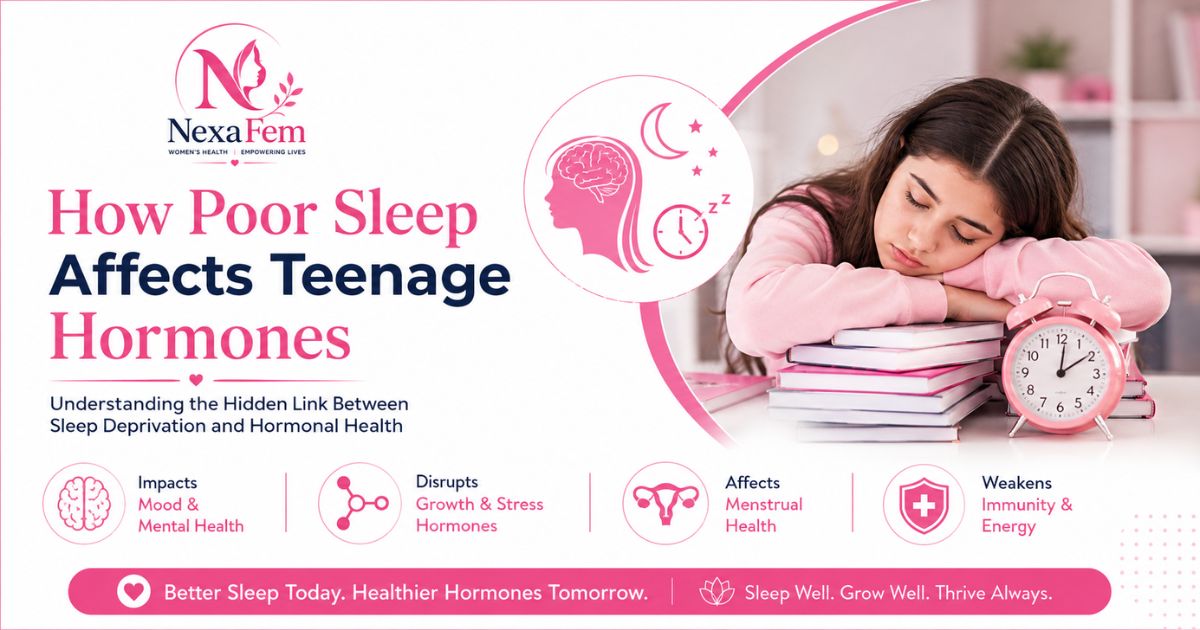
If you've ever watched a teenager in your life stumble through mornings on four hours of sleep, snap at breakfast, and then somehow come alive again at 11 p.m., you've witnessed something more biological than behavioral. It's easy to write it off as "just being a teenager." But underneath that exhaustion is a hormonal system working overtime to keep up with a body that isn't getting what it needs.
Sleep isn't a passive backdrop to adolescence — it's one of the most active hormonal windows of the entire lifespan. During the teenage years, the body is producing growth hormone, regulating stress hormones like cortisol, and fine-tuning the reproductive hormones that drive puberty, all largely while the body is asleep. When that sleep gets cut short night after night, the ripple effects touch growth, mood, metabolism, and long-term health.
This guide breaks down exactly what's happening inside a sleep-deprived teenage body, why it matters, and what caregivers and teens themselves can do to protect this critical stage of development.
Quick Summary (TL;DR)
Sleep deprivation in teenagers is extremely common — most adolescents fall short of the 8–10 hours recommended for their age.
Deep sleep is when the body releases most of its daily growth hormone, so cutting sleep short can interfere with physical development.
Poor sleep disrupts the body's cortisol rhythm, which can heighten stress reactivity, irritability, and anxiety.
Chronic short sleep is linked to mood changes, weight shifts, weakened concentration, and slower recovery from daily stress.
Consistent sleep routines, reduced evening screen use, and morning light exposure are among the most effective, low-cost ways to support hormonal balance in teens.
Why Sleep and Hormones Are So Closely Linked in Adolescence
Puberty is essentially a hormonal transformation project, and the body does most of its construction work at night. As adolescents move through puberty, the hypothalamic-pituitary-gonadal axis activates, driving major increases in reproductive hormones alongside a surge in growth hormone. Much of this hormonal activity is timed to the sleep cycle, particularly the deep, slow-wave stages of non-REM sleep, according to a review of adolescent sleep and hormonal development.
At the same time, adolescence brings a natural shift in the body clock. Melatonin, the hormone that signals it's time to sleep, begins releasing later in the evening during puberty, according to the NHS-affiliated Evelina London sleep guidance for teenagers. This means many teens genuinely aren't sleepy until closer to 11 p.m. or midnight, even though school schedules expect them up early. That mismatch between biology and daily life is one of the biggest drivers of teenage sleep deprivation.
Sleep and Growth Hormone in Teens
Growth hormone release is heavily concentrated during deep, slow-wave sleep, which typically occurs earlier in the night. Research published in Frontiers in Endocrinology describes growth hormone secretion as occurring predominantly during this deep sleep stage, with a strong link between disrupted or shortened sleep and reduced hormone output over time, as outlined in this review on growth hormone and sleep in children.
For a teenager, this matters beyond height. Growth hormone also supports muscle development, bone density, and tissue repair — all of which are especially active during the adolescent growth spurt. When teens routinely lose sleep, especially the earlier deep-sleep cycles, they may be shortchanging the very window their body relies on most for physical development.
It's worth noting that an occasional late night won't undo a teen's growth trajectory. The concern is chronic, repeated sleep restriction, which is unfortunately the norm rather than the exception for many adolescents.
Cortisol Levels in Sleep-Deprived Teens
Cortisol, often called the body's primary stress hormone, follows a natural daily rhythm — highest shortly after waking and lowest in the evening. Sleep plays a direct role in keeping that rhythm steady. Research on children and adolescents has found that poor sleep quality and shorter sleep duration are associated with a disrupted cortisol pattern, including higher cortisol later in the day and a flatter overall rhythm, as shown in a study on sleep and cortisol profiles in youth.
A disrupted cortisol rhythm doesn't just show up on a lab test. In daily life, it can look like a teen who feels wired and anxious in the evening but foggy and flat in the morning, or one whose stress response feels disproportionate to what's actually happening. Over time, a body that can't regulate its stress hormone efficiently is more vulnerable to sustained anxiety and difficulty winding down, which can create a frustrating cycle where poor sleep fuels stress, and stress fuels poor sleep.
Effects of Insomnia on Adolescent Development
Insomnia and chronic short sleep during adolescence extend well beyond feeling tired the next day. According to the CDC's guidance on sleep and health in adolescents, insufficient sleep in this age group is associated with a higher risk of obesity, difficulty with mood regulation, attention and behavior challenges, and reduced academic performance.
The scope of the problem is significant. National data show that only a small share of U.S. high schoolers get the recommended eight or more hours of sleep on school nights, a gap that has remained largely unchanged for over a decade, based on the CDC's Youth Risk Behavior Survey findings.
For girls specifically, sleep also intersects with reproductive hormone regulation as the menstrual cycle matures during adolescence. Supporting consistent, adequate sleep during these years is part of giving the body's hormonal systems — including those governing the cycle — the stability they need to mature in a healthy rhythm. This is an area where cycle and symptom tracking can help teens and caregivers notice patterns, such as irregular periods coinciding with stretches of poor sleep, long before they become a bigger concern.
Causes: Why Teens Struggle to Get Enough Sleep
A few overlapping factors typically drive teenage sleep deprivation:
A natural, puberty-driven delay in the body clock that pushes sleepiness later into the evening
Early school start times that don't match this shifted rhythm
Screen and blue-light exposure in the evening, which further delays melatonin release
Academic pressure, extracurriculars, and social commitments that crowd out wind-down time
Underlying stress or anxiety that makes falling and staying asleep harder
Symptoms and Risk Factors to Watch For
Signs that a teen's sleep may be affecting their hormonal and overall health include:
Persistent daytime fatigue despite "sleeping in" on weekends
Mood swings, irritability, or heightened emotional reactivity
Difficulty concentrating or a noticeable dip in school performance
Changes in appetite or weight
Irregular or unusually painful menstrual cycles in teen girls
Frequent headaches or getting sick more often than usual
Risk factors tend to cluster around heavy academic loads, high screen-time habits, inconsistent bedtimes, and household environments where sleep isn't prioritized or modeled by adults.
How Sleep Issues Are Typically Assessed
There's no single blood test for "not enough sleep," but a doctor or pediatrician will usually start with a detailed conversation about sleep patterns, energy levels, mood, and any physical symptoms. In some cases, they may recommend a sleep diary, screening for conditions like sleep apnea or delayed sleep phase syndrome, or blood work if a hormonal or thyroid issue is suspected alongside the sleep concerns. This is where a symptom and hormone tracking tool can be genuinely useful, giving both the teen and their doctor a clearer picture of patterns over weeks rather than relying on memory alone.
Lifestyle, Nutrition, and Prevention
Small, consistent changes tend to outperform dramatic overhauls when it comes to teen sleep. Helpful strategies include:
Keeping a consistent sleep and wake time, including on weekends, to stabilize the body clock
Getting natural light exposure soon after waking, which helps anchor the circadian rhythm
Limiting screens for at least 30–60 minutes before bed, since blue light delays melatonin release
Avoiding caffeine in the afternoon and evening
Creating a cool, dark, quiet sleep environment
Balanced evening meals that avoid heavy, sugar-dense foods close to bedtime, which can disrupt sleep quality
These habits won't override a genuinely shifted circadian rhythm overnight, but they create the conditions the body needs to sleep more efficiently within whatever schedule is realistic.
Treatment Overview
For most teens, addressing sleep deprivation starts with behavioral and environmental changes rather than medication. In cases involving diagnosed insomnia, delayed sleep phase syndrome, or sleep apnea, a doctor may recommend cognitive behavioral therapy for insomnia (CBT-I), a structured sleep schedule adjustment, or, when appropriate, further evaluation of an underlying medical cause. Melatonin supplements are sometimes used under medical guidance for circadian rhythm issues, but they aren't a substitute for consistent sleep hygiene and shouldn't be started without a healthcare provider's input.
Mental Wellness and Hormonal Impact
The relationship between sleep, mood, and hormones in teenagers runs in both directions. Poor sleep can worsen anxiety and low mood, and emotional stress can, in turn, make it harder to fall and stay asleep. Because cortisol and reproductive hormone regulation are so closely tied to consistent sleep, chronic sleep loss during adolescence can leave both the emotional and hormonal systems more reactive and less resilient. Supporting a teen's mental wellness and their sleep habits together, rather than treating them as separate issues, tends to produce better outcomes.
When to See a Doctor
Consider reaching out to a pediatrician or GP if a teen:
Regularly struggles to fall or stay asleep despite good sleep habits
Seems excessively tired during the day even after 8+ hours in bed
Shows signs of snoring, gasping, or pauses in breathing during sleep
Has noticeable, persistent changes in mood, weight, or menstrual cycles
Expresses ongoing anxiety, sadness, or hopelessness alongside sleep problems
Red Flag Symptoms
Some symptoms warrant a more prompt medical conversation, including sudden or severe weight changes, fainting or dizziness, absent or extremely irregular periods for several months, or expressions of self-harm or hopelessness. These deserve timely professional attention rather than a wait-and-see approach.
Common Mistakes Parents and Teens Make
Assuming daytime tiredness is "normal teenage laziness" rather than a sleep debt
Trying to fix sleep only on weekends through long lie-ins, which further disrupts the body clock
Using screens as a wind-down activity right before bed
Overlooking the connection between sleep and menstrual or mood changes
Reaching for caffeine or energy drinks to manage daytime fatigue instead of addressing the sleep gap itself
Lifestyle Tips for Better Teen Sleep
Set a "device curfew" an hour before bed
Encourage morning sunlight exposure, even just by a window
Build a short, calming pre-sleep routine
Keep weekend wake-up times within an hour of weekday ones
Talk openly about stress rather than letting it surface only at bedtime
Final Thoughts
Teenage exhaustion is rarely just an attitude problem — it's often a hormonal one. Growth hormone, cortisol, and the reproductive hormones driving puberty are all deeply intertwined with how much and how well a teenager sleeps. The good news is that sleep is one of the most modifiable factors in this equation. Small, consistent adjustments to routine, light exposure, and evening habits can meaningfully support a teenager's hormonal health during one of the most formative stages of their life.
This content is provided for informational and educational purposes only and is not intended as medical advice. It should not be used to diagnose or treat any health condition. Please consult a qualified healthcare professional or doctor for guidance specific to your or your teen's health needs.
Sources & References
Frontiers in Endocrinology – Growth Hormone and Sleep in Children
PMC – Changes in Sleep as a Function of Adolescent Development
PMC – Poor Sleep and the Diurnal Cortisol Profile in Children and Adolescents
Disclaimer
Disclaimer: This article is intended for informational and educational purposes only and should not be considered medical advice. Always consult a qualified healthcare professional for personalized diagnosis, treatment, or guidance regarding your health concerns.
Frequently Asked Questions
Share this post
Comments (0)
No comments yet. Be the first to comment!