
How Hydration Affects Your Menstrual Cycle
Discover how fluid dynamics impact your hormonal balance. Learn evidence-based strategies to optimize hydration across your menstrual cycle using AI-powered preventive intelligence.
Over 75% of women experience significant physical and emotional symptoms during their premenstrual and menstrual phases, yet one of the most powerful, evidence-based interventions is consistently overlooked: cellular hydration. As modern healthcare shifts from reactive treatments to proactive optimization, understanding the intricate relationship between Hydration and Menstrual Health has become paramount. For women navigating everything from demanding corporate boardrooms to daily wellness goals, chronic dehydration is not just a minor inconvenience. It is a physiological stressor that amplifies uterine cramping, intensifies cognitive fatigue, and disrupts delicate hormonal equilibrium. In an era where AI-powered preventive intelligence platforms like NexaFem are revolutionizing how we interpret our biometrics, unlocking the science of fluid dynamics during your cycle is the critical first step toward reclaiming your biological baseline and optimizing your long-term health.
The Clinical Science of Hormones and Fluid Dynamics
Your menstrual cycle is a complex biological symphony orchestrated primarily by estrogen and progesterone. According to clinical guidelines from the American College of Obstetricians and Gynecologists (ACOG), these hormonal fluctuations heavily dictate blood plasma volume, basal body temperature, and metabolic rate. When technology leaders like Apple introduced retrospective ovulation estimates via the Apple Watch, they illuminated a critical, population-wide data point: core temperature shifts during the cycle directly correlate with metabolic changes that demand superior hydration.
During the follicular phase (the first half of your cycle), rising estrogen levels naturally increase your body's ability to retain hydration within the cells, acting as a mild fluid regulator. However, as you cross into the luteal phase (post-ovulation), progesterone becomes the dominant hormone. Progesterone increases your core body temperature and accelerates your baseline metabolic rate, meaning your body naturally loses more water through insensible perspiration and respiration. Simultaneously, progesterone interacts with aldosterone—a hormone responsible for sodium and kidney regulation. This interaction often leads to fluid leaking into the extracellular space, creating the uncomfortable sensation of bloating, even as your actual cells become dehydrated.
How Dehydration Amplifies PMS and Menstrual Symptoms
Treating your body's hydration data with the same analytical rigor that firms like Deloitte or Accenture apply to business analytics can completely transform your experience of premenstrual syndrome (PMS). When cellular water levels drop, the downstream effects on your reproductive and nervous systems are profound.
1. The Dysmenorrhea (Cramping) Connection
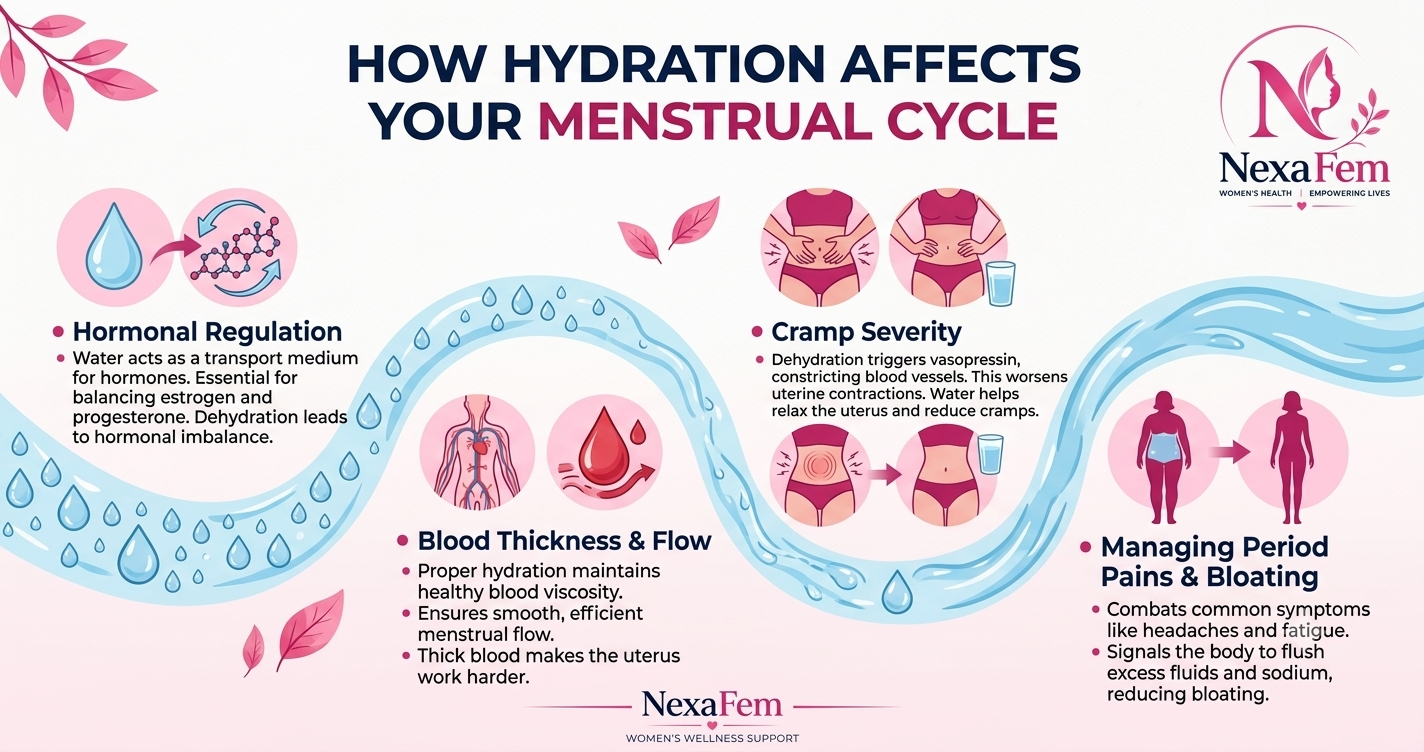
Primary dysmenorrhea, or painful period cramping, is caused by the release of prostaglandins—lipid compounds that trigger the uterine muscles to contract and shed the endometrial lining. When you are dehydrated, your overall blood volume decreases. This forces the body into a state of vasoconstriction, narrowing the blood vessels to maintain blood pressure. Reduced blood flow to the pelvic region causes uterine ischemia (a lack of oxygen to the muscle), which drastically amplifies the pain of prostaglandin-induced contractions. Proper hydration expands blood volume, keeping vessels dilated and oxygen flowing freely to the uterus, acting as a natural antispasmodic.
2. The Paradox of Water Retention and Bloating
It sounds counterintuitive, but the most effective way to eliminate premenstrual water retention is to drink more water. When the body senses a state of dehydration, evolutionary survival mechanisms trigger the release of anti-diuretic hormone (ADH). This causes the kidneys to hoard every drop of available water, leading to extracellular swelling in the abdomen, hands, and feet. By consistently consuming adequate water, you signal to your renal system that fluids are abundant, prompting the kidneys to flush out excess sodium and trapped extracellular water.
3. Cognitive Fatigue and Brain Fog
Corporate environments demand peak cognitive performance. A study highlighted by the National Institutes of Health reveals that even a mild 1.5% drop in total body water volume can significantly impair executive function, memory, and mood. For women leading projects at high-stakes companies like Google or Microsoft, luteal phase brain fog is often misattributed to stress or lack of sleep, when the primary culprit is actually a progesterone-induced shift in hydration needs. Maintaining optimal brain hydration stabilizes neurotransmitter production, mitigating the emotional volatility and fatigue commonly associated with PMS.
A Phase-by-Phase Guide to Cycle-Synced Hydration
Preventive healthcare requires moving away from generic advice like 'drink eight glasses a day' toward precision wellness. Here is how to sync your fluid intake with your biological rhythms.
The Menstrual Phase (Days 1-5)
During active bleeding, you are losing both fluid and vital minerals. Estrogen and progesterone are at their lowest. Focus on warm, soothing fluids like ginger tea or bone broth, which not only provide hydration but also deliver anti-inflammatory benefits to soothe the digestive tract and reduce cramping.
The Follicular Phase (Days 6-13)
As estrogen begins to rise, your energy levels increase, and cellular hydration stabilizes. This is the optimal time for high-intensity workouts. Your body is incredibly efficient at managing fluids during this window, making it the perfect time to establish a strong baseline of pure, filtered water intake to prepare for the metabolic demands of ovulation.
The Ovulatory Phase (Days 14-15)
An acute surge in luteinizing hormone (LH) and estrogen triggers ovulation. Your basal body temperature begins its upward shift. Cervical fluid production peaks, drawing heavily on your body's water reserves. NICE guidelines suggest increasing your water intake by at least 10-15% during this brief window to support the physical demands of releasing an egg.
The Luteal Phase (Days 16-28)
This is the most critical phase for intentional hydration. Progesterone peaks, raising your core temperature and increasing the risk of both dehydration and extracellular water retention. You must proactively drink water before you feel thirsty. Incorporating water-rich foods like cucumber, watermelon, and celery can help deliver structured water directly to your cells.
Electrolytes: The Missing Link in Women's Health
Drinking plain water without the appropriate mineral balance can sometimes dilute your blood's sodium levels, a condition known as hyponatremia. To optimize Hydration and Menstrual Health, water must be paired with electrolytes.
- Magnesium: Known as nature's relaxant, magnesium helps regulate over 300 biochemical reactions. It relaxes the smooth muscle of the uterus to prevent cramps and helps shuttle water directly into the cells.
- Potassium: Essential for nerve function and fluid balance, potassium counters the sodium-retaining effects of aldosterone during the luteal phase, acting as a natural diuretic.
- Trace Sodium: A small pinch of high-quality sea salt in your morning water can support adrenal function, which is heavily taxed during the hormonal shifts of the late luteal phase.
NexaFem: The Future of AI-Powered Preventive Intelligence
The future of women's health is predictive, not reactive. Just as enterprise tech giants like Amazon use sophisticated predictive modeling to anticipate global supply chain needs, NexaFem utilizes advanced AI to map your personal endocrine logistics. By analyzing biometric data, cycle tracking inputs, and lifestyle metrics, NexaFem's preventive intelligence platform anticipates when your body's hydration needs will shift. Instead of waiting for a debilitating migraine or severe bloating to occur, NexaFem empowers you with proactive, personalized insights—bridging the gap between daily habits and optimal hormonal health.
Key Takeaways
- Hormonal shifts during the menstrual cycle dictate your body's fluid dynamics, making hydration a moving target rather than a static daily goal.
- Dehydration exacerbates dysmenorrhea (cramping) by reducing blood volume and causing uterine ischemia.
- Counterintuitively, drinking more water during the luteal phase signals your kidneys to release stored sodium, drastically reducing PMS bloating.
- Integrating electrolytes like magnesium and potassium is non-negotiable for driving water into the cells and relaxing uterine muscles.
- Leveraging AI-powered preventive platforms like NexaFem allows for predictive, personalized hydration strategies that optimize long-term women's health.
Final Thoughts
Mastering the relationship between hydration and your menstrual cycle is one of the most accessible yet profoundly impactful steps you can take for your hormonal health. By treating your daily fluid intake as a dynamic, cycle-synced strategy rather than an afterthought, you can mitigate PMS, protect your cognitive function, and support your body's natural rhythms. As we embrace the next frontier of medical technology, let NexaFem be your AI-powered partner in preventive intelligence—helping you translate complex biological data into actionable, everyday wellness. Start tracking your unique hydration metrics today, and step into a more empowered, symptom-free cycle.
Frequently Asked Questions
Share this post
Comments (0)
No comments yet. Be the first to comment!