
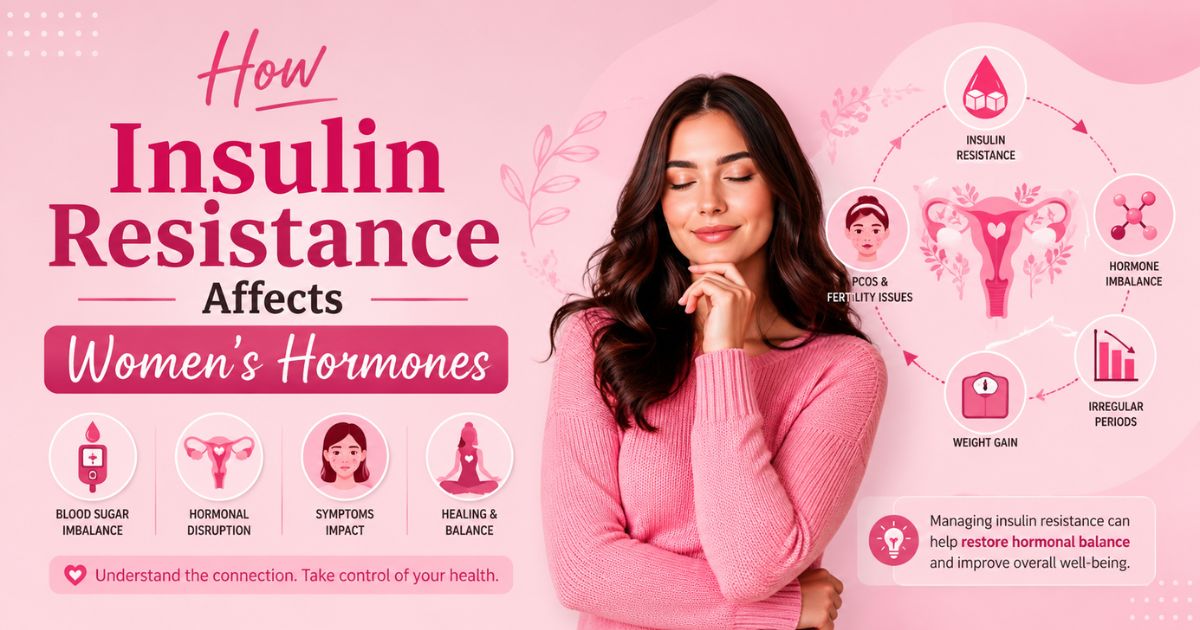
How Insulin Resistance Affects Women's Hormones
Discover how insulin resistance disrupts estrogen, progesterone, and testosterone in women — and what you can do to protect your hormonal health naturally.
You feel tired all the time. Your periods are irregular. Your weight keeps shifting even though your habits haven't changed. You've been told everything looks "normal" on your lab results — but something clearly isn't right.
For millions of women, these frustrating, overlapping symptoms point to one often-overlooked root cause: insulin resistance. And what makes it even more complex is how deeply insulin resistance affects your hormones — not just your blood sugar.
This article explains exactly what insulin resistance is, how it disrupts the delicate hormonal balance in women's bodies, and what you can do to take back control.
TL;DR — Quick Summary
Insulin resistance occurs when your body's cells stop responding properly to insulin, causing blood sugar and insulin levels to rise.
High insulin levels directly interfere with estrogen, progesterone, testosterone, cortisol, and thyroid hormones.
Women with PCOS, perimenopause, or irregular cycles are especially vulnerable.
Insulin resistance often goes undiagnosed for years because standard blood tests may appear "normal."
Lifestyle changes — particularly in nutrition, movement, and sleep — are among the most powerful tools for reversing early insulin resistance.
What Is Insulin Resistance?
Insulin is a hormone produced by the pancreas. Its primary job is to act as a key — unlocking your body's cells so they can absorb glucose (sugar) from the bloodstream and use it for energy.
When you develop insulin resistance, your cells stop responding to that key properly. The pancreas compensates by producing more and more insulin to get the job done. For a while, this works. But over time, blood sugar levels begin to rise, and the hormonal consequences throughout your body become significant.
According to the CDC, more than 1 in 3 adults in the US has prediabetes — a condition closely tied to insulin resistance — and the majority don't know it. Women are disproportionately affected because of how deeply insulin interacts with female reproductive hormones.
Why Insulin Is More Than Just a Blood Sugar Hormone
Most people think of insulin only in the context of diabetes. But insulin is a powerful metabolic signal that communicates with your entire endocrine system.
When insulin levels are chronically elevated, they send disrupted signals across your hormone network — affecting your ovaries, adrenal glands, thyroid, and even your brain's hormonal control centre (the hypothalamic-pituitary axis). Understanding this connection is essential for any woman managing her long-term health.
How Insulin Resistance Disrupts Women's Hormones
Estrogen Imbalance
Estrogen plays a central role in women's reproductive health, bone density, cardiovascular health, and mood regulation. Its relationship with insulin is bidirectional — each directly influences the other.
When insulin levels are high, the body converts more androgens (male hormones) into estrogen through a process called aromatisation, particularly in fat tissue. This can lead to estrogen dominance — a state where estrogen is relatively high compared to progesterone — which is associated with symptoms like heavy or painful periods, breast tenderness, bloating, and mood changes.
On the other hand, research published in the American Journal of Pathology confirms that declining estrogen levels — as seen during perimenopause and menopause — significantly increase the risk of insulin resistance, creating a reinforcing cycle that worsens over time.
Progesterone Deficiency
Progesterone is often called the "calming hormone." It supports healthy menstrual cycles, promotes sleep, reduces anxiety, and counterbalances estrogen. Insulin resistance quietly undermines it.
When insulin resistance drives inflammation and disrupts the normal hormonal cascade needed for ovulation, progesterone production drops. This is because progesterone is only produced in significant quantities after ovulation. If ovulation is irregular or absent — a common outcome of insulin-related hormonal disruption — progesterone levels fall, leaving estrogen unopposed.
For women trying to understand their cycle irregularities, tracking this connection between blood sugar and progesterone imbalance can be eye-opening. NexaFem's hormonal tracking tools can help you identify patterns across your cycle that may point to underlying metabolic issues.
Testosterone and Androgen Excess
This is one of the most well-documented effects of insulin resistance in women. High insulin levels stimulate the ovaries to produce excess testosterone and androgens. At the same time, insulin suppresses the liver's production of sex hormone-binding globulin (SHBG) — a protein that normally binds to free testosterone and keeps it in check.
The result: more free testosterone circulating in the bloodstream. This drives symptoms like acne, excess facial or body hair (hirsutism), hair thinning on the scalp, and disrupted menstrual cycles — classic signs that often lead to a diagnosis of PCOS.
Cortisol and the Stress Connection
Chronic stress raises cortisol, which in turn raises blood sugar — and over time, this contributes to insulin resistance. But the relationship also works in reverse: insulin resistance itself increases cortisol output, keeping the body in a state of low-grade physiological stress.
For women managing high-pressure lifestyles, this stress-insulin-cortisol loop can be difficult to break without addressing all three simultaneously. It also worsens sleep quality, which further impairs insulin sensitivity — making sleep one of the most underappreciated pillars of hormonal health.
Thyroid Disruption
Thyroid hormones regulate metabolism, energy, body temperature, and mood. Insulin resistance and thyroid dysfunction frequently co-exist in women, particularly hypothyroidism (underactive thyroid). Elevated insulin and inflammation can impair the conversion of inactive thyroid hormone (T4) to its active form (T3), contributing to symptoms like fatigue, brain fog, weight gain, and low mood — symptoms that are often mistakenly attributed solely to thyroid disease.
Insulin Resistance and PCOS: An Undeniable Link
Polycystic ovary syndrome (PCOS) is one of the most common hormonal conditions in women of reproductive age, affecting approximately 1 in 10 women worldwide according to the WHO. Insulin resistance sits at the heart of it.
Research shows that up to 70–80% of women with PCOS have some degree of insulin resistance — and this isn't limited to women who are overweight. Lean women with PCOS can also carry significant insulin resistance that goes undetected on routine testing.
The mechanism is clear: high insulin levels stimulate the ovaries to overproduce androgens, disrupt the LH/FSH hormonal ratio needed for regular ovulation, and suppress SHBG — collectively creating the hormonal environment that defines PCOS. Addressing insulin resistance is now considered a cornerstone of PCOS management by leading bodies including ACOG (American College of Obstetricians and Gynecologists).
If you've been diagnosed with PCOS or suspect you may have it, understanding your insulin health is one of the most important steps you can take. You can explore NexaFem's PCOS hormonal guide to learn how to map your patterns and prepare for informed conversations with your doctor.
Insulin Resistance and Menopause Hormones
The menopause transition is a particularly vulnerable time for insulin resistance to develop or worsen. As estrogen levels decline during perimenopause, the body becomes less sensitive to insulin. Fat distribution shifts toward the abdomen — a pattern associated with higher metabolic risk — and the protective effects of estrogen on glucose metabolism diminish.
A significant meta-analysis presented at the 2024 Annual Meeting of The Menopause Society, which reviewed 17 randomised controlled trials, found that hormone therapy significantly reduced insulin resistance in healthy postmenopausal women. Estrogen-only therapy showed the most prominent effect.
This doesn't mean hormone therapy is the right choice for every woman — that decision belongs to you and your healthcare provider. But it does highlight how powerfully hormonal changes during menopause affect metabolic health, and why women in their 40s and beyond should pay attention to early signs of insulin resistance.
Who Is Most at Risk?
Any woman can develop insulin resistance, but certain factors increase the likelihood:
A family history of type 2 diabetes or metabolic syndrome
PCOS or irregular menstrual cycles
Being in perimenopause or post-menopause
Excess weight, particularly around the abdomen
A sedentary lifestyle
Chronic poor sleep
High levels of ongoing stress
A diet high in refined carbohydrates and ultra-processed foods
A history of gestational diabetes
Common Symptoms of Insulin Resistance in Women
Insulin resistance is often called a "silent" condition because standard fasting glucose tests may remain normal for years. But the body usually gives signals long before a formal diagnosis. Watch for:
Persistent fatigue, especially after meals
Sugar cravings and difficulty feeling satisfied after eating
Weight gain around the abdomen that is hard to shift
Brain fog or difficulty concentrating
Irregular periods or worsening PMS
Acne, particularly along the jawline
Excess facial or body hair
Skin tags or darkening of the skin in folds (acanthosis nigricans)
Mood changes, anxiety, or low mood
If several of these feel familiar, it's worth discussing insulin resistance testing with your doctor — not just standard glucose checks, but a fasting insulin level and HOMA-IR calculation.
Standard blood glucose tests often miss insulin resistance in its early stages. More useful tests include:
Fasting insulin level — elevated fasting insulin (even with normal glucose) is an early marker of resistance.
HOMA-IR (Homeostatic Model Assessment of Insulin Resistance) — calculated from fasting glucose and insulin, this gives a clearer picture of how hard your pancreas is working.
HbA1c — reflects average blood sugar over the past three months.
Fasting lipid panel — high triglycerides and low HDL cholesterol are metabolic red flags often associated with insulin resistance.
Speak with your doctor about which combination of tests is most appropriate for your symptoms and history. NHS guidance on blood sugar testing provides useful background on what different results mean.
Lifestyle Strategies That Support Insulin Sensitivity
The good news is that insulin resistance — especially in its earlier stages — responds remarkably well to lifestyle changes. These aren't about restriction or perfection. They're about consistency and working with your body's natural rhythms.
Nutrition. A diet rich in fibre, whole foods, and quality protein supports healthy blood sugar regulation. Reducing refined carbohydrates and ultra-processed foods is one of the most effective dietary interventions. You don't need to eliminate carbohydrates — the quality and quantity matter. Including healthy fats from sources like avocado, nuts, olive oil, and oily fish also helps stabilise insulin response.
Movement. Both aerobic exercise and resistance training independently improve insulin sensitivity. Even a 10–15 minute walk after meals has been shown to blunt post-meal blood sugar spikes. You don't need an intense programme — consistency and enjoyment matter more.
Sleep. Poor sleep is one of the fastest ways to impair insulin sensitivity. Aim for 7–9 hours of quality sleep per night. Addressing sleep disruption — whether from stress, hormonal changes, or lifestyle factors — is a non-negotiable part of metabolic health.
Stress management. Chronic stress keeps cortisol elevated, which keeps blood sugar elevated. Practices like breathwork, gentle yoga, time in nature, or even structured rest periods can meaningfully reduce cortisol's impact on your insulin health.
Reduce alcohol. Alcohol interferes with liver glucose regulation and worsens insulin sensitivity over time, particularly with regular consumption.
Mental Wellness and Insulin Resistance
The hormonal disruption caused by insulin resistance has real mental health consequences. Fluctuating blood sugar affects mood, concentration, and energy throughout the day. The anxiety that can come with hormonal imbalance — particularly elevated androgens and low progesterone — compounds the emotional toll.
Women navigating PCOS, perimenopause, or unexplained hormonal symptoms often describe feeling dismissed, exhausted, and overwhelmed. Recognising that what you're experiencing is physiological — not a personal failing — is an important first step. Addressing the root metabolic cause often brings meaningful improvements in emotional wellbeing alongside physical symptoms.
Common Mistakes Women Make
Many women spend years managing individual symptoms — treating acne, adjusting birth control for irregular periods, or taking supplements for fatigue — without ever investigating the metabolic root cause.
Another common mistake is assuming that insulin resistance only affects women who are overweight or have a diabetes diagnosis. Lean women, young women, and women with "normal" blood sugar can all carry significant insulin resistance.
Relying solely on fasting glucose tests rather than asking for fasting insulin levels and a HOMA-IR calculation also leads to missed diagnoses. Advocating for more thorough testing is entirely reasonable and often necessary.
When to See a Doctor
You should speak with a healthcare professional if you experience:
Irregular, absent, or very heavy periods
Unexplained weight gain, particularly around the abdomen
Persistent fatigue not explained by lifestyle factors
Signs of androgen excess (acne, hirsutism, hair thinning)
A diagnosis of PCOS that has not included metabolic testing
Perimenopausal symptoms alongside increasing fatigue or weight changes
A family history of type 2 diabetes or metabolic syndrome
Red Flag Symptoms
Seek medical attention promptly if you notice:
Extreme thirst or frequent urination
Sudden, unexplained weight loss
Vision changes
Numbness or tingling in the hands or feet
Dark, velvety patches of skin in the neck, armpits, or groin (acanthosis nigricans)
These may indicate that insulin resistance has progressed to prediabetes or type 2 diabetes and requires prompt medical assessment.
Final Thoughts
Insulin resistance is not simply a blood sugar problem. For women, it is a hormonal condition — one that quietly disrupts estrogen, progesterone, testosterone, cortisol, and thyroid function, often for years before a formal diagnosis is made.
Understanding this connection is empowering. It means that many of the symptoms women are told to simply "manage" — irregular cycles, acne, fatigue, mood changes, unexplained weight shifts — may share a common, addressable root.
Preventive awareness is everything. The earlier insulin resistance is identified and addressed, the more effectively you can protect your hormonal health, metabolic health, and long-term wellbeing.
NexaFem exists to support exactly this kind of preventive, informed, personalised health awareness — because women deserve to understand what's happening in their own bodies.
Sources & References
CDC — Prediabetes: https://www.cdc.gov/diabetes/basics/prediabetes.html
WHO — Polycystic Ovary Syndrome: https://www.who.int/news-room/fact-sheets/detail/polycystic-ovary-syndrome
The Menopause Society — Hormone Therapy & Insulin Resistance (2024): https://menopause.org/press-releases/new-meta-analysis-shows-that-hormone-therapy-can-significantly-reduce-insulin-resistance
American Journal of Pathology — The Role of Estrogen in Insulin Resistance: https://ajp.amjpathol.org/article/S0002-9440(21)00245-5/fulltext
ACOG — Polycystic Ovary Syndrome: https://www.acog.org/
NHS — Blood Sugar Testing: https://www.nhs.uk/conditions/type-2-diabetes/understanding-medication/blood-sugar-testing/
Disclaimer
This article is provided for informational and educational purposes only and does not constitute medical advice. The content is not intended to replace professional medical consultation, diagnosis, or treatment. Always consult a qualified healthcare professional or expert doctor regarding any questions you may have about your health, symptoms, or medical conditions. Do not disregard or delay seeking professional medical advice based on information you have read here.
Frequently Asked Questions
Share this post
Comments (0)
No comments yet. Be the first to comment!