

Managing Stress Naturally Through Ayurveda
Learn how Ayurveda may support stress management through daily routines, yoga, meditation, nutrition, sleep and responsible herbal practices.
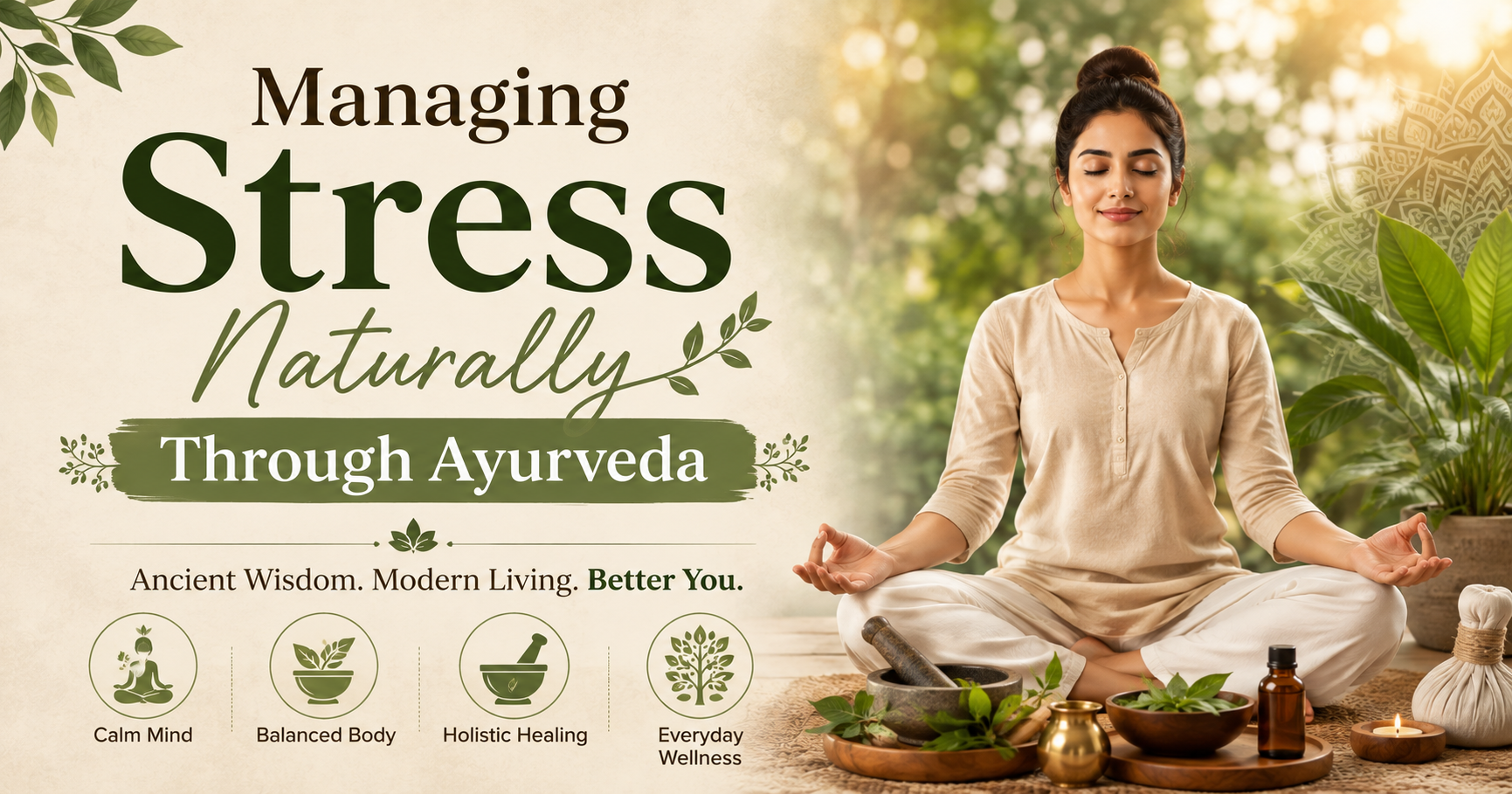
Managing Stress Naturally Through Ayurveda: A Practical Guide for Women
Stress is a normal part of life, but when it becomes frequent or overwhelming, it can affect much more than your mood. Sleep may become difficult, concentration can suffer, digestion may feel unsettled, and everyday responsibilities can suddenly feel harder to manage.
For women, periods of prolonged stress may also coincide with changes in sleep, appetite, energy and menstrual well-being. These experiences deserve attention rather than being dismissed as something you simply have to “push through.”
Ayurveda offers a holistic framework for supporting balance through daily routines, nourishing food, movement, breathing practices, meditation and mindful living. Some of these practices also have modern scientific research behind them, although the strength of evidence varies.
The goal is not to promise that Ayurveda can eliminate stress. Instead, Ayurveda can provide practical habits that may help you build a calmer, more consistent routine alongside appropriate healthcare when needed.
Quick Summary
Ayurveda traditionally approaches stress through balance in daily routines, sleep, diet, activity and mind-body practices.
Yoga, mindfulness, meditation and relaxation techniques may help reduce perceived stress and support emotional well-being. (NCCIH)
A regular sleep schedule, balanced meals, physical activity and supportive relationships are important parts of healthy stress management. (World Health Organization)
Ayurvedic herbs and supplements should be used cautiously because evidence and safety vary between products.
Persistent or severe stress, anxiety, depression or physical symptoms should not be self-treated with Ayurveda alone; professional support may be appropriate.
What Is Stress?
Stress is the body's natural response to difficult, demanding or threatening situations. It can involve both psychological and physical changes.
The World Health Organization describes stress as a state of worry or mental tension caused by a difficult situation. Some stress can help us respond to challenges, but excessive or prolonged stress can affect physical and mental well-being. (World Health Organization)
Common signs can include:
Feeling constantly worried or overwhelmed
Irritability or mood changes
Difficulty concentrating
Headaches
Muscle tension
Digestive discomfort
Changes in appetite
Sleeping too much or too little
Feeling tired despite resting
A racing heartbeat during stressful situations
Stress can look different from one woman to another. Recognising your own patterns is often the first step toward managing them.
How Does Ayurveda Understand Stress?
Ayurveda is a traditional Indian system of health that takes a whole-person approach to physical and mental well-being. Rather than treating stress as an isolated symptom, Ayurvedic thinking considers factors such as daily routine, sleep, digestion, diet, sensory stimulation, activity and emotional balance.
Traditional Ayurvedic concepts may discuss mental states in relation to the doshas, particularly when qualities associated with movement, intensity or heaviness become excessive.
These concepts belong to the Ayurvedic framework and should not be treated as direct equivalents of modern psychiatric or physiological diagnoses.
The practical value for many readers is simpler: Ayurveda encourages regularity, adequate rest, appropriate nourishment, mindful activity and attention to the relationship between the mind and body.
Traditional Ayurvedic Perspective
Ayurvedic wellness traditions place considerable emphasis on dinacharya, or daily routine. A predictable rhythm for waking, eating, working, resting and sleeping is traditionally considered supportive of overall balance.
What Modern Evidence Says
Modern research supports several of these lifestyle principles independently. Regular physical activity, adequate sleep, relaxation practices and social connection can contribute to healthier stress management. (World Health Organization)
Practical Takeaway
You do not need to follow an elaborate Ayurvedic routine. Start with a few consistent habits that are realistic for your life.
1. Create a Calmer Daily Routine
A busy schedule can make stress feel unavoidable. One practical Ayurvedic-inspired approach is to introduce more predictability into your day.
Consider keeping consistent times for:
Waking up
Meals
Physical activity
Relaxation
Going to bed
This does not mean every day has to follow a rigid timetable. Instead, think of routine as an anchor.
A regular schedule can also make it easier to notice changes in your energy, appetite, mood and sleep.
2. Prioritise Sleep
Poor sleep and stress can reinforce each other. You may feel stressed and sleep badly, then feel less emotionally resilient the following day.
The WHO recommends consistent sleep and good sleep habits as part of maintaining physical and mental well-being. Helpful habits include keeping a regular bedtime, reducing electronic-device use before sleep and creating a quiet, comfortable sleeping environment. (World Health Organization)
An Ayurveda-inspired evening routine could include:
Eating dinner at a comfortable time
Reducing stimulating activities before bed
Taking a gentle walk after dinner if comfortable
Practising a few minutes of slow breathing
Keeping the bedroom calm and comfortable
Going to bed at a consistent time
You do not need expensive wellness products to create a supportive bedtime routine.
3. Use Yoga as a Mind-Body Practice
Yoga has deep roots in Indian traditions and combines physical postures with practices such as breathing and meditation.
Modern research suggests that yoga may help with aspects of stress and general well-being, although studies vary in quality and type of yoga used. NCCIH reports evidence of beneficial effects on perceived stress in several reviews. (NCCIH)
For stress management, gentle practices may be more appropriate than pushing yourself into demanding poses.
A beginner-friendly routine might include:
Gentle stretching
Comfortable seated breathing
Simple mobility movements
A short relaxation period
If you are new to yoga, learning from a qualified instructor can help you practise safely. Yoga can cause injuries when performed improperly or excessively. (NCCIH)
4. Try Simple Breathing Practices
When you are stressed, your breathing may become faster or shallower. Deliberately slowing the breath can become a useful relaxation cue.
A simple approach is to sit comfortably and focus on breathing slowly without forcing the breath.
The goal is not to achieve a particular breathing pattern or “reset your hormones.” It is simply to create a few quiet minutes in which your attention moves away from constant stimulation.
Stop if a breathing exercise makes you dizzy, uncomfortable or more anxious.
5. Explore Meditation and Mindfulness
Meditation has roots in several traditional practices and is now widely studied as a mind-body approach.
Mindfulness involves paying attention to the present moment without immediately judging the experience. Research suggests that mindfulness-based practices may help reduce symptoms associated with stress and may support sleep in some people. (NCCIH)
A practical starting point is only five minutes.
Sit comfortably, notice your breathing and gently return your attention whenever your mind wanders.
There is no requirement to completely empty your mind.
An Important Safety Point
Meditation is generally considered low-risk, but it is not helpful for everyone in exactly the same way. Some people report unpleasant experiences, including increased anxiety or difficult thoughts. (NCCIH)
If meditation consistently makes you feel worse, stop and discuss your experience with a qualified professional.
6. Nourish Your Body Regularly
Stress can affect eating patterns. Some women lose their appetite, while others reach for highly processed foods or eat irregularly when overwhelmed.
There is no single “Ayurvedic stress diet” that has been scientifically established as a treatment for stress.
Instead, focus on basic nutritional principles:
Eat regular, balanced meals.
Include vegetables and fruits.
Choose whole grains and other minimally processed carbohydrates.
Include adequate protein.
Add healthy sources of fats.
Drink enough fluids.
Limit excessive caffeine if it worsens anxiety, palpitations or sleep problems.
The WHO also recommends balanced eating, adequate fluids and regular physical activity as part of healthy stress management. (World Health Organization)
Ayurveda may encourage attention to digestion and meal timing, but these concepts should complement—not replace—evidence-based nutritional guidance.
7. Make Movement Part of Your Day
Exercise does not have to mean an intense gym session.
Walking, cycling, swimming, dancing, strength training or yoga can all be ways to stay physically active.
Regular physical activity may help support mood, sleep and overall well-being, while the WHO identifies regular exercise as one practical way to help manage stress. (World Health Organization)
If you are already exhausted, starting with a short walk may be more sustainable than forcing yourself through a demanding workout.
Consistency matters more than perfection.
8. Build an Ayurveda-Inspired Evening Wind-Down
Your evening routine can become a transition between work and rest.
Try creating 20–30 minutes without work-related tasks or constant social-media checking.
For example:
Dim bright lights.
Put your phone away for a period.
Take a warm shower if relaxing for you.
Practise gentle stretching.
Read something calming.
Spend a few minutes with slow breathing.
Prepare for the next morning so you are not mentally planning everything in bed.
This type of routine is consistent with Ayurveda's broader emphasis on rhythm and rest while also fitting modern sleep-hygiene principles.
9. What About Ayurvedic Herbs for Stress?
Ayurvedic traditions include a number of herbs that are traditionally used in approaches to mental and physical well-being.
Commonly discussed herbs include ashwagandha, brahmi/Bacopa monnieri and other botanicals.
However, this is an area where responsible communication is especially important.
Research into individual herbs is ongoing, and evidence varies depending on the herb, preparation, dosage, population and health condition studied. Herbal supplements can also interact with medications or have adverse effects.
NCCIH notes that the safety of complementary products must be assessed individually and that herbal supplements can raise concerns about interactions and product contamination. (NCCIH)
Ashwagandha
Ashwagandha has a long history of use in Ayurveda and is commonly marketed for stress and sleep.
Some modern research has investigated its potential effects on stress-related outcomes, but this does not mean every product or preparation will produce the same result.
Women who are pregnant, breastfeeding, taking medication, preparing for surgery, or living with a chronic condition should speak with a qualified healthcare professional before using it.
Brahmi
Brahmi can refer to Ayurvedic preparations involving herbs such as Bacopa monnieri, although terminology can vary between products and traditions.
Research into Bacopa has examined cognitive and psychological outcomes, but evidence should not be interpreted as proof that it treats anxiety or chronic stress.
The Practical Rule
Do not assume that an Ayurvedic herb is automatically safe because it is natural.
Quality, dose, preparation, contamination, interactions and individual health circumstances all matter.
Some Ayurvedic preparations have also raised safety concerns because certain products may contain toxic levels of heavy metals. (NCCIH)
Choose reputable products and seek professional guidance rather than self-prescribing herbal formulations.
10. Reduce the Sources of Everyday Stress
Stress management is not only about adding wellness practices.
Sometimes the more important question is:
What is creating the stress in the first place?
Consider whether your stress is connected to:
Workload
Financial pressure
Relationship difficulties
Caregiving
Lack of sleep
Academic pressure
Social media
Health concerns
Lack of personal time
The NHS recommends identifying possible causes of stress and talking to someone you trust when you are struggling. (nhs.uk)
A five-minute breathing exercise cannot compensate for an unsustainable workload indefinitely.
Stress management may sometimes require setting boundaries, asking for help, changing routines or seeking professional support.
Ayurveda and Women's Hormonal Well-Being
Stress is often discussed in relation to women's hormones, but it is important not to oversimplify the relationship.
Stress can influence sleep, appetite, energy and other body systems. Some women may also notice changes around their menstrual cycle when experiencing significant stress.
However, not every menstrual or hormonal symptom is caused by stress.
Persistent irregular periods, unusually heavy bleeding, severe pelvic pain, significant acne, unexpected hair growth, fertility difficulties or other concerning changes deserve appropriate medical assessment rather than being attributed automatically to “stress hormones.”
Ayurveda can be part of a broader wellness routine, but it should not replace evaluation for conditions such as PCOS, thyroid disorders, endometriosis or other medical causes.
Dinacharya: Can Daily Ayurvedic Habits Help?
Dinacharya refers broadly to Ayurvedic daily routines.
For modern women, its most useful interpretation may be the idea of creating sustainable rhythms rather than following a rigid schedule.
A simple routine could look like this:
Morning:
Wake at a consistent time, hydrate, eat a nourishing breakfast if appropriate for you and spend a few minutes preparing mentally for the day.
Daytime:
Eat regular meals, take movement breaks and spend some time outdoors when possible.
Evening:
Reduce stimulation, complete essential tasks and create a transition into rest.
Night:
Maintain a consistent sleep schedule and prioritise adequate rest.
These habits are not a cure for chronic stress. They are building blocks for a healthier lifestyle.
Ritucharya and Seasonal Wellness
Ayurveda also describes ritucharya, or seasonal routines.
The practical modern interpretation is to recognise that your needs can change with the environment. Hot weather may require greater attention to hydration, while colder seasons may influence activity, sleep and food preferences.
Rather than following rigid seasonal rules, pay attention to how your body responds to changes in temperature, daylight, activity and routine.
Common Myths About Ayurveda and Stress
Myth 1: Ayurveda can cure stress.
Stress is a normal human response, and there is no single Ayurvedic treatment that can eliminate every cause of stress.
Ayurvedic practices may support well-being and coping, but persistent stress may require psychological, medical or social support.
Myth 2: Herbal remedies are always safer than medicines.
Natural does not mean risk-free. Herbal products can interact with medicines, vary in quality and sometimes contain contaminants. (NCCIH)
Myth 3: Meditation should make everyone feel calm.
Meditation can be helpful for many people, but experiences differ. Some people may experience increased anxiety or uncomfortable thoughts. (NCCIH)
Myth 4: You need a complicated Ayurvedic routine.
You do not need dozens of practices. A few sustainable habits—regular sleep, balanced meals, movement, relaxation and social connection—may be more useful than an elaborate routine you cannot maintain.
When Should You Seek Professional Help?
Occasional stress is normal. Persistent or overwhelming stress deserves attention.
Consider speaking with a healthcare or mental-health professional if stress:
Is interfering with work, studies or relationships
Is significantly affecting sleep
Causes persistent anxiety or low mood
Leads to major changes in eating
Makes daily activities difficult
Is accompanied by persistent physical symptoms
Feels impossible to manage on your own
The NHS notes that stress can affect physical symptoms, emotions, concentration, behaviour and sleep, and recommends seeking support when it becomes difficult to cope. (nhs.uk)
If you experience thoughts of self-harm or suicide, seek urgent professional help or contact your local emergency or crisis service immediately.
Ayurveda can be used as a complementary wellness approach, but it should not delay appropriate mental-health care.
A Simple Ayurveda-Inspired Stress Routine
If you want to start gently, try this approach:
Morning:
Begin the day without immediately checking stressful notifications. Take a few slow breaths and establish your priorities.
During the day:
Eat regular meals, stay hydrated and include some physical activity.
Afternoon:
Take a short movement or breathing break if your schedule allows.
Evening:
Reduce unnecessary screen stimulation and create time to transition away from work.
Before bed:
Try gentle stretching, relaxation or a short mindfulness practice.
Weekly:
Make time for people, activities and environments that genuinely help you feel connected and restored.
The best routine is one you can realistically continue.
The Bottom Line
Ayurveda offers a useful traditional framework for looking at stress through the lens of daily rhythm, rest, nourishment, movement and mind-body practices. Some practices commonly associated with Ayurveda—particularly yoga, mindfulness and relaxation techniques—also have modern evidence suggesting potential benefits for stress and well-being. (NCCIH)
At the same time, evidence for specific Ayurvedic herbs and formulations is more variable, and safety needs to be considered carefully.
Managing stress naturally does not mean managing it alone. A balanced approach combines healthy routines with appropriate medical or mental-health care when necessary.
Health Disclaimer
This article is intended for informational and educational purposes only and is not a substitute for professional medical advice, diagnosis or treatment.
Ayurvedic practices and herbs discussed here should not be interpreted as guaranteed treatments for stress or any medical or mental-health condition. Natural does not automatically mean safe. Herbal products may interact with medications or may not be appropriate for everyone.
If you are pregnant, breastfeeding, taking medication, managing a chronic condition, or experiencing persistent or severe symptoms, consult a qualified healthcare professional before starting a new supplement or therapeutic practice. For personalised Ayurvedic guidance, consult a qualified Ayurveda practitioner.
If stress is significantly affecting your daily life or mental health, seek appropriate professional
Sources & References
World Health Organization — Stress — Information on stress, symptoms, sleep, exercise, nutrition and social connection.
NCCIH — Stress — Evidence on mindfulness, yoga and relaxation approaches.
NCCIH — Yoga: Effectiveness and Safety — Research and safety considerations for yoga.
NCCIH — Meditation and Mindfulness: Effectiveness and Safety — Evidence and safety information for meditation.
NHS — Get Help With Stress — Symptoms, causes and guidance on seeking support.
NCCIH — Safe Use of Complementary Health Products and Practices — Safety considerations for supplements and complementary practices.
NCCIH — Ayurvedic Medicine: In Depth — Evidence and safety considerations relating to Ayurvedic medicine.
Ministry of Ayush, Government of India — Ayurveda Research Portal — Official Indian government resource for Ayurveda research and information.
Frequently Asked Questions
Share this post
Comments (0)
No comments yet. Be the first to comment!