
Puberty Changes Every Girl Should Understand: A Complete Guide to Growing Up
Learn the physical and emotional changes during puberty, what’s normal, when to seek help, and how to support healthy development.
For many girls, puberty can feel exciting, confusing, and sometimes overwhelming. One month the body feels familiar, and the next there are new emotions, growth spurts, breast development, or a first period. Questions like “Is this normal?”, “Why am I feeling so emotional?”, or “Am I developing too early or too late?” are incredibly common.
The good news is that puberty changes in girls are a natural part of growing up. Understanding what happens during this stage can reduce anxiety, improve confidence, and help girls recognize when they may need medical support.
At NexaFem, we believe that puberty health education is an important part of preventive women’s healthcare. The earlier girls understand their bodies, hormones, and menstrual health, the better equipped they are to make informed decisions throughout life.
Quick Summary (TL;DR)
Puberty usually begins between ages 8 and 13 and is driven by hormonal changes.
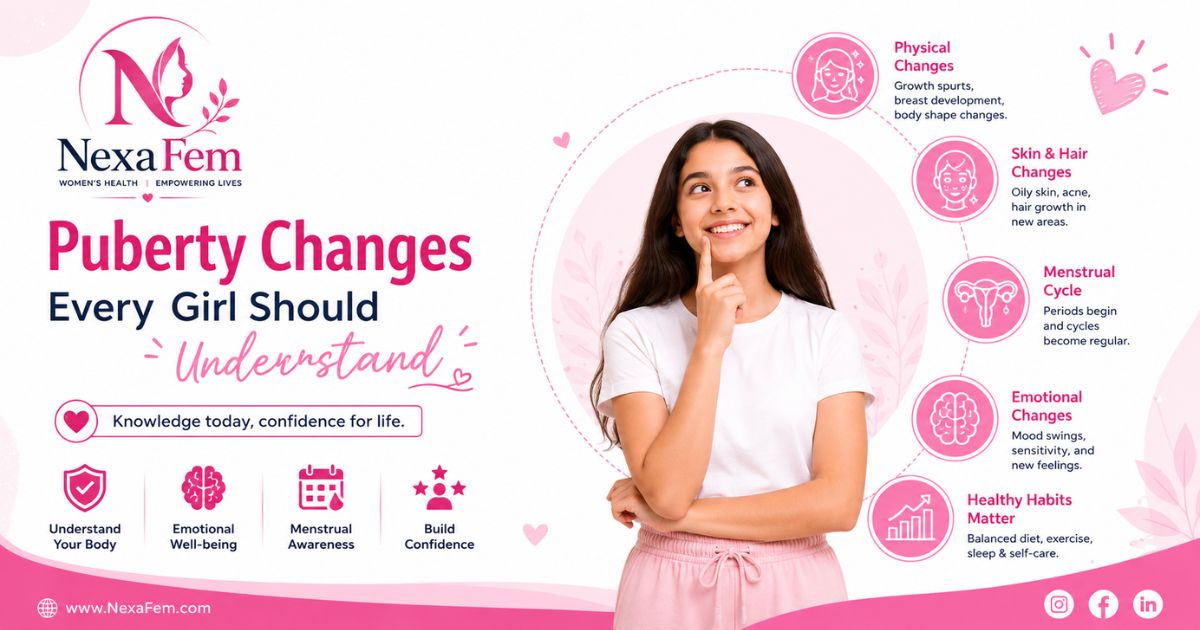
Common physical changes during puberty include breast development, growth spurts, body hair, acne, and menstruation.
Emotional changes in puberty can include mood swings, increased sensitivity, anxiety, and a stronger need for independence.
Most changes are completely normal, but very early or very delayed puberty should be discussed with a healthcare professional.
Healthy nutrition, sleep, exercise, and open conversations can make puberty easier to navigate.
What Is Puberty?
Puberty is the stage when a child’s body begins maturing into an adult body capable of reproduction. This process is controlled by hormones released by the brain, pituitary gland, and ovaries.
According to the NHS and the ACOG, most girls start puberty between 8 and 13 years of age, though normal timing varies from person to person.
What Causes Puberty?
Puberty begins when the brain activates a hormonal system called the hypothalamic-pituitary-gonadal (HPG) axis.
This leads to increased production of hormones such as estrogen, which helps drive many of the physical and emotional changes that occur during adolescence.
Physical Changes During Puberty
These are the most common physical changes during puberty.
1. Breast Development
Usually the first visible sign of puberty.
Small breast buds appear under the nipples.
Breasts may develop at different rates.
Mild tenderness is common.
2. Growth Spurt
Girls often experience rapid growth in height.
Feet and hands may grow first.
Growth typically peaks before the first period.
3. Body Hair
Hair gradually appears in the:
Pubic area
Underarms
Sometimes on arms and legs
4. Skin Changes and Acne
Increased oil production can cause:
Acne
Blackheads
Oily skin
5. Body Shape Changes
Estrogen causes:
Wider hips
Increased body fat around the hips, thighs, and breasts
A more adult body shape
6. Menstruation (Periods)
The first period, called menarche, usually occurs 2–3 years after breast development begins.
Early periods may be irregular for the first few years.
Emotional Changes in Puberty
Many girls notice significant emotional changes in puberty, and these changes are just as important as the physical ones.
Common Emotional Changes
Mood swings
Increased sensitivity
Feeling self-conscious
Wanting more privacy
Strong friendships
Crushes or romantic interest
Anxiety or irritability
Hormones play a role, but emotional changes are also influenced by school, friendships, family dynamics, social media, and self-image.
Mini summary:
Emotional ups and downs during puberty are common, but persistent sadness, severe anxiety, or major behavior changes should be discussed with a healthcare professional.
What Are the First Signs of Puberty in Girls?
Direct answer: The first sign is usually breast budding, followed by growth spurts, body hair, and later menstruation.
When Does Puberty Start and End?
Stage
Typical Age
Puberty begins
8–13 years
Growth spurt
10–14 years
First period
10–15 years
Puberty completion
15–17 years
These ranges are averages. Some healthy girls develop earlier or later.
What Is Considered Early or Delayed Puberty?
Early Puberty
Possible concern if puberty starts before age 8.
Delayed Puberty
Possible concern if there are no signs of breast development by age 13 or no period by age 15.
Guidance from organizations such as the NHS and ACOG supports medical evaluation when puberty appears significantly early or delayed.
Hormonal Impact of Puberty
Puberty is largely driven by estrogen, but other hormones are involved too.
Hormonal changes can affect:
Menstrual cycles
Skin
Hair growth
Sleep
Energy levels
Emotions
Appetite
Understanding these patterns is part of developing hormonal intelligence, a key aspect of long-term women’s wellness.
Nutrition for Healthy Puberty
A balanced diet supports growth and hormone production.
Focus on
Protein
Iron-rich foods
Calcium
Vitamin D
Fruits and vegetables
Whole grains
Healthy fats
Iron becomes especially important
Once periods begin, girls need enough iron to support healthy blood production.
Lifestyle Tips for Puberty
Aim for 8–10 hours of sleep for teenagers.
Stay physically active.
Learn basic menstrual hygiene.
Practice gentle skincare.
Limit comparison with others.
Talk openly with trusted adults.
Mental Wellness During Puberty
Puberty can affect self-esteem and body image.
Girls may benefit from:
Supportive conversations
Accurate health education
Healthy social media habits
Stress-management skills
Knowing that bodies develop at different rates
Early awareness can help identify concerns before they become more serious.
Common Mistakes Women Make When Talking About Puberty
Assuming every girl develops at the same age.
Dismissing emotional changes as “just hormones.”
Ignoring severe period pain.
Using shame-based language.
Avoiding conversations about menstruation.
When to See a Doctor
Consider medical advice if a girl has:
Puberty before age 8.
No breast development by 13.
No period by 15.
Very heavy bleeding.
Severe period pain.
Rapid weight changes.
Significant emotional distress.
Red Flag Symptoms
Seek prompt medical evaluation for:
Fainting with periods.
Bleeding that soaks through pads hourly.
Severe pelvic pain.
Signs of an eating disorder.
Thoughts of self-harm.
Sudden puberty changes that seem unusual.
Final Thoughts
Puberty is not just a physical transformation—it is the beginning of a lifelong relationship with one’s body, hormones, and health.
Most puberty changes in girls are completely normal, even when they feel unfamiliar or emotional. With accurate puberty health education, supportive conversations, and preventive healthcare awareness, girls can move through this stage with greater confidence and less fear.
At NexaFem, we believe that understanding your body early is one of the strongest foundations for lifelong women’s wellness, hormonal intelligence, and informed healthcare decisions.
Disclaimer
This article is for informational and educational purposes only and should not be considered medical advice. It is not intended to diagnose, treat, cure, or prevent any condition. If you have concerns about puberty, menstrual health, hormone-related symptoms, or your child’s development, please consult a qualified healthcare professional or doctor for personalized medical guidance.
Sources & References
NHS – Puberty in girls: https://www.nhs.uk/conditions/early-or-delayed-puberty/
ACOG – Healthy children and adolescent development: https://www.acog.org/womens-health
CDC – Child and adolescent development: https://www.cdc.gov/ncbddd/childdevelopment/
WHO – Adolescent health: https://www.who.int/health-topics/adolescent-health
Implementation Note (for NexaFem CMS Team)
Anchor text opportunities used in the article:
hormonal intelligence
menstrual health
puberty health education
emotional changes in puberty
physical changes during puberty
severe period pain
heavy menstrual bleeding
body image and mental wellness
early puberty
delayed puberty
Frequently Asked Questions
Share this post
Comments (0)
No comments yet. Be the first to comment!