
How Chronic Stress Affects Women's Hormones and Menstrual Cycle: Symptoms, Causes, and Recovery
Discover how chronic stress affects hormones, menstrual cycles, fertility, and overall health. Learn symptoms, prevention strategies, and when to seek help.
Modern life often asks women to do it all.
Build a career. Maintain relationships. Care for family. Manage finances. Stay healthy. Keep moving forward.
While stress is a normal part of life, chronic stress can quietly influence nearly every system in the body—including the delicate hormonal pathways that regulate menstrual health.
If you've noticed irregular periods, worsening PMS, unexpected mood changes, fatigue, sleep problems, or unexplained hormonal imbalance symptoms during stressful periods of life, you're not imagining it.
Your brain and reproductive hormones are deeply connected.
Understanding this connection is one of the most important steps toward protecting your long-term health.
At NexaFem, we believe preventive healthcare begins with awareness. By recognizing how stress affects your hormones and menstrual cycle, you can take proactive steps toward hormonal intelligence, menstrual intelligence, and overall wellness.
Quick Summary (TL;DR)
Chronic stress can disrupt hormone production and menstrual cycle regulation.
Elevated cortisol levels may contribute to irregular periods, missed periods, PMS symptoms, and ovulation changes.
Stress-related hormonal changes can affect fertility, sleep, mood, metabolism, and overall health.
Lifestyle interventions such as stress management, nutrition, exercise, and sleep support hormonal balance.
Persistent menstrual changes should be evaluated by a healthcare professional.
What Is Chronic Stress?
Stress is the body's natural response to challenges or perceived threats.
In short-term situations, stress can be helpful. It activates survival mechanisms that increase focus and energy.
However, when stress continues for weeks, months, or years, it becomes chronic stress.
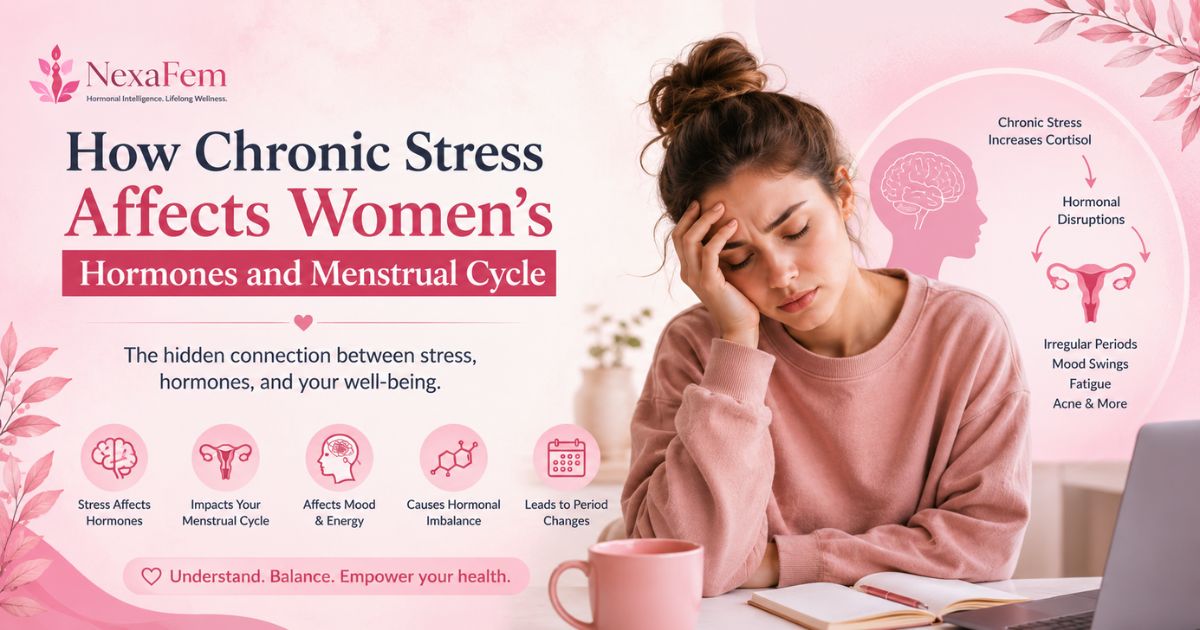
Chronic stress keeps the body's stress-response system activated, increasing production of hormones such as cortisol and adrenaline.
According to the World Health Organization (WHO), prolonged stress can significantly affect both physical and mental health.
Source: https://www.who.int/news-room/questions-and-answers/item/stress
How Are Stress and Hormones Connected?
The Brain-Hormone Connection
The relationship between stress and hormones in women begins in the brain.
A network known as the hypothalamic-pituitary-adrenal (HPA) axis helps regulate the body's response to stress.
When stress occurs:
The hypothalamus sends signals to the pituitary gland.
The pituitary gland stimulates the adrenal glands.
The adrenal glands release cortisol.
Cortisol is often called the "stress hormone."
While cortisol is essential for survival, chronically elevated levels can interfere with reproductive hormone signaling.
Why Does Stress Affect Female Hormones?
The body prioritizes survival over reproduction.
When the brain perceives ongoing stress, it may temporarily reduce resources dedicated to reproductive processes.
This can affect:
Estrogen production
Progesterone production
Ovulation
Menstrual cycle regularity
Fertility
This biological response explains why stressful life events are sometimes associated with menstrual changes.
How Does Chronic Stress Affect the Menstrual Cycle?
Irregular Periods
One of the most common effects of stress and menstrual cycle disruption is cycle irregularity.
Periods may become:
Earlier than expected
Delayed
Unpredictable
More variable in length
Missed Periods
In some women, chronic stress can contribute to temporary disruptions in ovulation.
Without ovulation, menstrual periods may become infrequent or stop altogether.
Heavier or Lighter Bleeding
Hormonal fluctuations caused by prolonged stress may influence uterine lining development.
This can result in:
Heavier periods
Lighter periods
Spotting between cycles
Worsening PMS Symptoms
Stress can intensify symptoms associated with premenstrual syndrome.
Women may experience:
Increased irritability
Anxiety
Mood swings
Fatigue
Headaches
Sleep disturbances
The NHS recognizes that emotional stress can contribute to menstrual changes and symptom severity.
Source: https://www.nhs.uk
What Are Common Hormonal Imbalance Symptoms Caused by Stress?
Not every woman experiences stress-related hormonal changes in the same way.
However, common hormonal imbalance symptoms may include:
Irregular menstrual cycles
Missed periods
Increased PMS symptoms
Fatigue
Difficulty sleeping
Mood swings
Anxiety
Reduced libido
Weight fluctuations
Brain fog
Hair thinning
Acne flare-ups
These symptoms do not automatically mean a hormonal disorder is present. However, persistent symptoms deserve medical attention.
Can Stress Affect Ovulation and Fertility?
Short Answer: Yes
Chronic stress and hormones are closely linked to reproductive function.
Research suggests prolonged stress may influence ovulation timing and menstrual regularity.
Potential effects include:
Delayed ovulation
Irregular ovulation
Reduced fertility awareness accuracy
Longer menstrual cycles
The American College of Obstetricians and Gynecologists (ACOG) emphasizes the importance of addressing overall health, including emotional well-being, when evaluating fertility concerns.
Source: https://www.acog.org/womens-health
Important Perspective
Stress alone is not always the sole cause of fertility difficulties.
Fertility is influenced by many factors including:
Age
PCOS
Thyroid disorders
Endometriosis
Lifestyle factors
Underlying medical conditions
Effects of Stress on Women's Health Beyond the Menstrual Cycle
Hormones affect far more than reproduction.
When stress becomes chronic, women may experience broader health consequences.
Mental Health Impact
Stress can increase the risk of:
Anxiety
Emotional exhaustion
Mood instability
Burnout
Sleep Disruption
Sleep and hormones have a two-way relationship.
Poor sleep increases stress hormones, while elevated stress hormones can impair sleep quality.
Metabolic Changes
Long-term cortisol elevation may contribute to:
Increased appetite
Sugar cravings
Weight gain
Energy fluctuations
Immune Function
According to the CDC, chronic stress can affect immune function and overall health resilience.
Source: https://www.cdc.gov
Risk Factors for Stress-Related Hormonal Changes
Certain factors may increase vulnerability to hormonal disruption.
These include:
High-pressure work environments
Financial stress
Caregiving responsibilities
Chronic illness
Poor sleep habits
Overtraining
Nutritional deficiencies
Anxiety disorders
Perimenopause
Women approaching perimenopause may notice that stress-related period changes become more pronounced due to naturally fluctuating hormone levels.
For deeper understanding, readers may benefit from learning about early signs of perimenopause and hormonal transition.
How Are Stress-Related Hormonal Issues Diagnosed?
Healthcare professionals may evaluate:
Menstrual history
Symptom patterns
Lifestyle factors
Sleep habits
Mental health concerns
Blood hormone testing
Thyroid function testing
Pelvic imaging when appropriate
Tracking symptoms through a hormone health assessment tool or cycle insights dashboard can help identify patterns worth discussing with a healthcare provider.
Lifestyle Support for Hormonal Balance
Prioritize Sleep
Sleep is one of the most powerful hormone regulators.
Aim for:
Consistent bedtime routines
7–9 hours of sleep
Reduced evening screen exposure
Supportive Nutrition
A balanced diet can support hormone regulation.
Focus on:
Vegetables and fruits
Lean proteins
Healthy fats
Whole grains
Adequate hydration
Women interested in prevention may also explore foods that support hormone balance naturally.
Move Your Body Regularly
Physical activity supports stress management and hormonal health.
Options include:
Walking
Yoga
Strength training
Swimming
Cycling
Stress Management Practices
Helpful approaches may include:
Mindfulness meditation
Breathing exercises
Journaling
Therapy
Social connection
Small, consistent habits often create more sustainable results than dramatic lifestyle changes.
Common Mistakes Women Make
Many women unintentionally overlook important warning signs.
Common mistakes include:
Assuming irregular periods are always normal
Ignoring ongoing fatigue
Using stress as the explanation for every symptom
Neglecting sleep quality
Avoiding medical evaluation when symptoms persist
Tracking periods inconsistently
Hormonal health deserves attention, even when life feels busy.
When to See a Doctor
Consult a healthcare professional if you experience:
Missing three or more periods
Significant menstrual irregularity
Heavy bleeding
Severe PMS symptoms
Persistent fatigue
Infertility concerns
Worsening hormonal imbalance symptoms
Early evaluation often leads to more effective care and peace of mind.
Red Flag Symptoms
Seek prompt medical attention if you experience:
Sudden severe pelvic pain
Extremely heavy bleeding
Fainting
Unexplained weight loss
Severe depression
Persistent abnormal bleeding
These symptoms may indicate conditions unrelated to stress that require medical evaluation.
Stress, Hormonal Intelligence, and Preventive Healthcare
One of the most important shifts in modern women's healthcare is moving from reactive treatment to proactive awareness.
Understanding how stress influences hormonal health empowers women to recognize patterns earlier, seek care sooner, and make informed wellness decisions.
At NexaFem, we believe that AI-powered preventive intelligence can help women better understand symptom trends, cycle changes, and hormonal health signals before they become larger concerns.
Through personalized symptom tracking, cycle monitoring, and health insights, women can build greater confidence in understanding their bodies and advocating for their health.
Final Thoughts
Stress is not simply an emotional experience.
It is a biological process that can influence hormones, menstrual cycles, fertility, mood, sleep, and overall well-being.
If you've noticed changes in your cycle during stressful periods of life, your body may be signaling that it needs additional support.
The good news is that awareness creates opportunity.
By understanding the relationship between stress and hormones in women, you can take meaningful steps toward prevention, early intervention, and long-term wellness.
Sources & References
World Health Organization (WHO)
https://www.who.int/news-room/questions-and-answers/item/stress
National Health Service (NHS)
https://www.nhs.uk
American College of Obstetricians and Gynecologists (ACOG)
https://www.acog.org/womens-health
Centers for Disease Control and Prevention (CDC)
https://www.cdc.gov
National Institute for Health and Care Excellence (NICE)
https://www.nice.org.uk
Medical Disclaimer
This article is intended for informational and educational purposes only and should not be considered medical advice, diagnosis, or treatment. Individual health circumstances vary, and medical information continues to evolve. Always consult a qualified healthcare professional, gynecologist, endocrinologist, or other licensed medical provider for personalized medical advice, diagnosis, treatment, or guidance regarding your specific health concerns. Never ignore professional medical advice or delay seeking care because of information you have read in this article.
Frequently Asked Questions
Share this post
Comments (0)
No comments yet. Be the first to comment!