
What Is SCAD? The Little-Known Heart Condition Affecting Healthy Women
Learn about the SCAD heart condition, symptoms, causes, risk factors, diagnosis, treatment, and why healthy women can experience SCAD.
Many women assume that heart attacks only happen to older adults with high cholesterol, diabetes, or long-standing cardiovascular disease.
But what if a seemingly healthy woman in her 30s, 40s, or even younger suddenly develops severe chest pain and experiences a heart attack?
This is the reality of a little-known condition called Spontaneous Coronary Artery Dissection (SCAD).
Although relatively rare, the SCAD heart condition is increasingly recognized as an important cause of heart attacks in women—particularly those who may not have traditional heart disease risk factors. Understanding SCAD can help women recognize symptoms earlier, seek timely care, and become more informed advocates for their cardiovascular health.
At NexaFem, we believe preventive health starts with awareness. The more women understand their bodies and symptoms, the more empowered they are to make informed healthcare decisions.
Quick Summary (TL;DR)
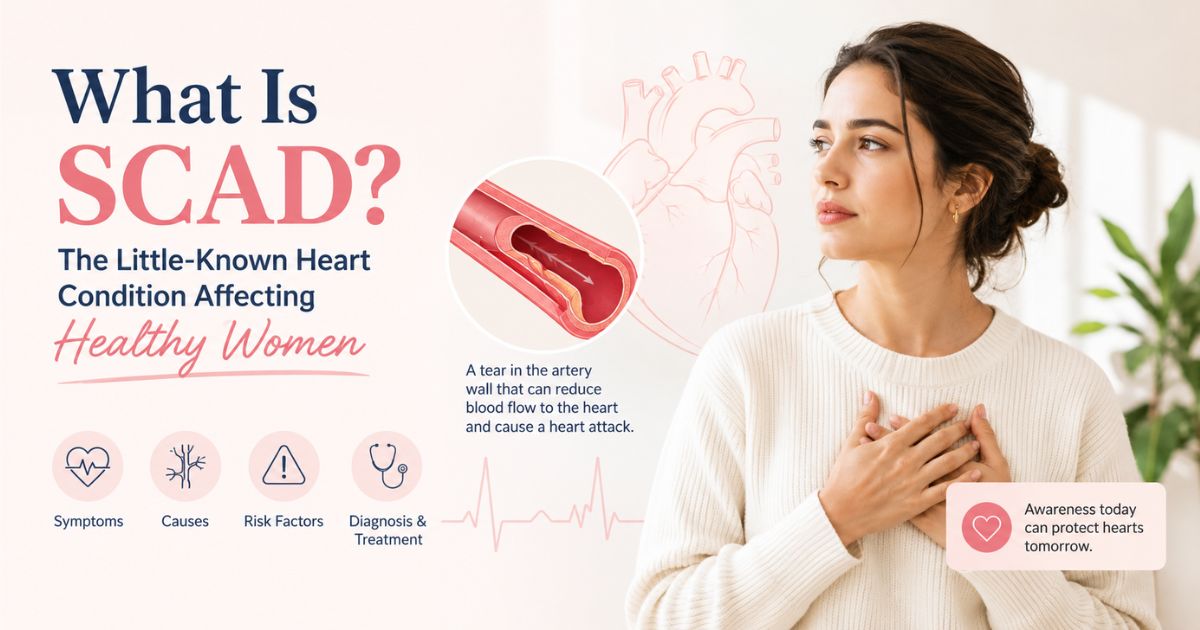
SCAD (Spontaneous Coronary Artery Dissection) occurs when a tear forms within a coronary artery wall.
It can reduce blood flow to the heart and trigger a heart attack.
SCAD often affects otherwise healthy women with few or no traditional cardiovascular risk factors.
Symptoms may include chest pain, shortness of breath, dizziness, nausea, and pain radiating to the arms or jaw.
Early diagnosis and appropriate medical care are critical for recovery and long-term heart health.
What Is SCAD?
Spontaneous Coronary Artery Dissection (SCAD) is a condition in which a tear develops within one of the arteries supplying blood to the heart.
Unlike a traditional heart attack caused by cholesterol plaque buildup, SCAD happens when layers of the artery wall separate. Blood can become trapped between these layers, creating a blockage that reduces oxygen delivery to heart muscle.
As a result, SCAD can lead to:
Heart attack
Heart rhythm abnormalities
Heart muscle damage
Rarely, sudden cardiac death
According to guidance from organizations such as the NHS and ACOG, SCAD is increasingly recognized as an important cause of heart attacks among younger and middle-aged women.
Source: NHS Heart Disease Information
https://www.nhs.uk
Source: ACOG Women's Cardiovascular Health
https://www.acog.org
Why Is SCAD Different From Traditional Heart Disease?
Most heart attacks occur because fatty plaques narrow arteries over time.
SCAD is different .Most heart attacks occur because fatty plaques narrow arteries over time.
SCAD is different.
Traditional Heart Attack
Usually caused by plaque buildup
More common in older adults
Associated with cholesterol and diabetes
Develops gradually
SCAD Heart Condition
Caused by a tear in the artery wall
Often affects younger women
May occur without traditional risk factors
Often occurs suddenly
This distinction is important because SCAD patients may look completely healthy before symptoms begin.
Who Is Most Affected by SCAD?
Research suggests women account for the majority of SCAD cases.
SCAD is particularly seen among:
Women aged 30–60
Women during or after pregnancy
Women with certain vascular conditions
Women experiencing significant physical or emotional stress
The condition is now recognized as a significant contributor to heart disease in young women, a group often overlooked in traditional cardiovascular discussions.
What Are the Symptoms of SCAD?
Symptoms of SCAD
The symptoms of SCAD can closely resemble those of a heart attack.
Common symptoms include:
Sudden chest pain
Pressure or tightness in the chest
Pain spreading to the arm, shoulder, neck, or jaw
Shortness of breath
Nausea
Sweating
Dizziness
Extreme fatigue
Rapid heartbeat
Some women report feeling unwell for several days before seeking medical attention.
Can SCAD Symptoms Be Mistaken for Anxiety?
Yes.
Many women initially attribute symptoms to:
Stress
Panic attacks
Anxiety
Indigestion
Muscle strain
This is one reason SCAD may be underdiagnosed or diagnosed later than ideal.
If chest pain is severe, persistent, or accompanied by shortness of breath, emergency evaluation is essential.
What Causes SCAD?
SCAD Causes
Researchers continue to study exactly why SCAD occurs.
Current evidence suggests that multiple factors may weaken or stress the coronary artery wall.
Potential contributors include:
Hormonal changes
Blood vessel abnormalities
Connective tissue disorders
Intense physical exertion
Severe emotional stress
Pregnancy-related cardiovascular changes
Importantly, SCAD is not usually caused by unhealthy lifestyle choices.
Women who exercise regularly, maintain a healthy weight, and eat nutritious diets can still develop SCAD.
SCAD Risk Factors in Women
Although the condition can occur unexpectedly, certain factors appear to increase risk.
Pregnancy-Related SCAD
One of the strongest known associations involves pregnancy and the postpartum period.
Hormonal and cardiovascular changes during pregnancy may affect blood vessel integrity.
Pregnancy-related SCAD most commonly occurs:
During late pregnancy
Within weeks after delivery
During the early postpartum period
Women experiencing chest pain after childbirth should seek urgent medical evaluation.
Other Risk Factors
Potential SCAD risk factors in women include:
Fibromuscular dysplasia (FMD)
High blood pressure
Connective tissue disorders
Chronic inflammation
Extreme physical stress
Severe emotional stress
History of migraines in some patients
Not every woman with these factors will develop SCAD, and many women diagnosed with SCAD have no obvious risk factors at all.
How Is SCAD Diagnosed?
Diagnosis requires prompt medical assessment.
Healthcare professionals may use:
Medical History and Physical Examination
Doctors assess symptoms, risk factors, and cardiovascular history.
Electrocardiogram (ECG)
An ECG can identify changes associated with a heart attack.
Blood Tests
Cardiac biomarkers help determine whether heart muscle damage has occurred.
Coronary Angiography
This imaging procedure is considered one of the primary methods for confirming SCAD.
Additional imaging may be used to evaluate blood vessels elsewhere in the body.
How Is SCAD Treated?
Treatment depends on the severity and location of the dissection.
Conservative Management
Many SCAD cases heal naturally over time.
Doctors may recommend:
Close monitoring
Blood pressure management
Heart medications
Cardiac rehabilitation
Interventional Treatment
In some situations, procedures may be necessary.
These may include:
Coronary stenting
Surgical intervention
Specialized cardiovascular care
Treatment plans are individualized based on patient needs and clinical findings.
Can Lifestyle Changes Help After SCAD?
Lifestyle changes cannot cure SCAD, but they may support recovery and long-term cardiovascular health.
Lifestyle Tips
Focus on:
Regular follow-up appointments
Heart-healthy nutrition
Stress management
Adequate sleep
Gradual return to physical activity under medical guidance
Avoiding tobacco products
Women recovering from SCAD may benefit from learning about heart-healthy nutrition for women, stress management strategies for hormonal health, and preventive cardiovascular screenings for women.
Nutrition and Heart Recovery
Nutrition supports overall cardiovascular wellness.
Many experts recommend:
Vegetables and fruits
Whole grains
Lean protein sources
Omega-3-rich foods
Nuts and seeds
Reduced intake of highly processed foods
While nutrition alone cannot prevent SCAD, maintaining overall heart health remains important.
Women can also use personalized wellness resources such as a women's nutrition assessment tool or an AI-powered symptom tracker to better understand patterns affecting their overall health.
The Mental Wellness Impact of SCAD
A SCAD diagnosis can be emotionally overwhelming.
Many women experience:
Anxiety
Fear of recurrence
Health-related stress
Reduced confidence in physical activity
Emotional recovery deserves attention alongside physical recovery.
Mental health support, counseling, support groups, and cardiac rehabilitation programs can play an important role in long-term healing.
This highlights an important reality: preventive healthcare is not only about physical symptoms—it also includes emotional wellbeing.
Is There a Hormonal Connection?
Researchers continue exploring possible hormonal influences on SCAD.
The higher prevalence among women, particularly during pregnancy and postpartum periods, suggests hormones may contribute to blood vessel vulnerability in some individuals.
However, hormones alone do not appear to directly cause SCAD.
Understanding hormonal patterns remains an important area of ongoing cardiovascular research.
Women interested in broader hormonal health may also benefit from learning about hormonal balance and cardiovascular health and the relationship between estrogen changes and heart health throughout life stages.
When to See a Doctor
Seek immediate medical attention if you experience:
Sudden chest pain
Chest pressure
Shortness of breath
Pain radiating to the jaw or arm
Unexplained dizziness
Fainting
Prompt treatment can significantly improve outcomes.
Red Flag Symptoms
Call emergency services immediately if symptoms include:
Severe chest pain
Difficulty breathing
Loss of consciousness
Sudden weakness
Persistent pain lasting several minutes
Never assume symptoms are "just stress" if they could represent a cardiac emergency.
Common Mistakes Women Make
Many women delay care because they:
Assume they are too young for heart disease
Attribute symptoms to anxiety
Ignore warning signs
Wait for symptoms to improve
Focus only on traditional heart attack risk factors
Listening to your body and seeking medical evaluation when symptoms feel unusual is an important act of self-care.
Final Thoughts
The SCAD heart condition challenges many assumptions about who is at risk for serious cardiovascular events.
It reminds us that heart health is not defined solely by age, weight, or cholesterol levels. Healthy, active women can experience significant cardiac events, and awareness remains one of the most powerful preventive tools available.
Understanding the symptoms of SCAD, recognizing potential risk factors, and seeking timely medical attention can make a meaningful difference.
At NexaFem, we believe the future of women's healthcare lies in combining medical expertise, preventive intelligence, symptom awareness, and AI-powered health insights. By helping women recognize patterns earlier and make informed decisions, we can support healthier outcomes across every stage of life.
Sources & References
NHS Heart Disease Information
https://www.nhs.uk/conditions/heart-disease/
American College of Obstetricians and Gynecologists (ACOG) Women's Heart Health
https://www.acog.org/womens-health
Centers for Disease Control and Prevention (CDC) Heart Disease and Women
https://www.cdc.gov/heartdisease/women.htm
National Institute for Health and Care Excellence (NICE) Cardiovascular Disease Guidance
https://www.nice.org.uk
World Health Organization (WHO) Cardiovascular Diseases
https://www.who.int/health-topics/cardiovascular-diseases
Disclaimer
This article is for informational and educational purposes only and is not intended to replace professional medical advice, diagnosis, or treatment. If you have symptoms such as chest pain, shortness of breath, or other concerning health issues, seek immediate medical attention. Always consult a qualified healthcare professional regarding any medical concerns or decisions related to your health.
Frequently Asked Questions
Share this post
Comments (0)
No comments yet. Be the first to comment!