
SCAD vs Traditional Heart Attacks: Key Differences Every Woman Should Know
Learn the key differences between SCAD and traditional heart attacks, including symptoms, causes, risks, diagnosis, and prevention for women.
Heart attacks are often associated with older adults, high cholesterol, smoking, and blocked arteries. However, many women are surprised to learn that a heart attack can occur even in someone who appears healthy, exercises regularly, and has no obvious cardiovascular risk factors.
One important reason is a condition called Spontaneous Coronary Artery Dissection (SCAD).
SCAD is increasingly recognized as a leading cause of heart attacks in younger and middle-aged women. Yet many women have never heard of it until it affects them or someone they love.
Understanding the difference between SCAD vs traditional heart attack can help women recognize symptoms earlier, seek timely care, and make informed decisions about their heart health.
At NexaFem, we believe that preventive health starts with awareness. The more women understand their bodies and risk factors, the more empowered they become to protect their long-term health.
Quick Summary (TL;DR)
SCAD is a heart attack caused by a tear in a coronary artery, not by plaque buildup.
Traditional heart attacks are usually caused by blocked arteries from cholesterol plaque.
SCAD often affects younger women who may have few or no traditional cardiovascular risk factors.
Symptoms can be similar to a traditional heart attack and require immediate emergency care.
Early diagnosis, ongoing monitoring, and preventive lifestyle support are essential for recovery and future heart health.
What Is SCAD?
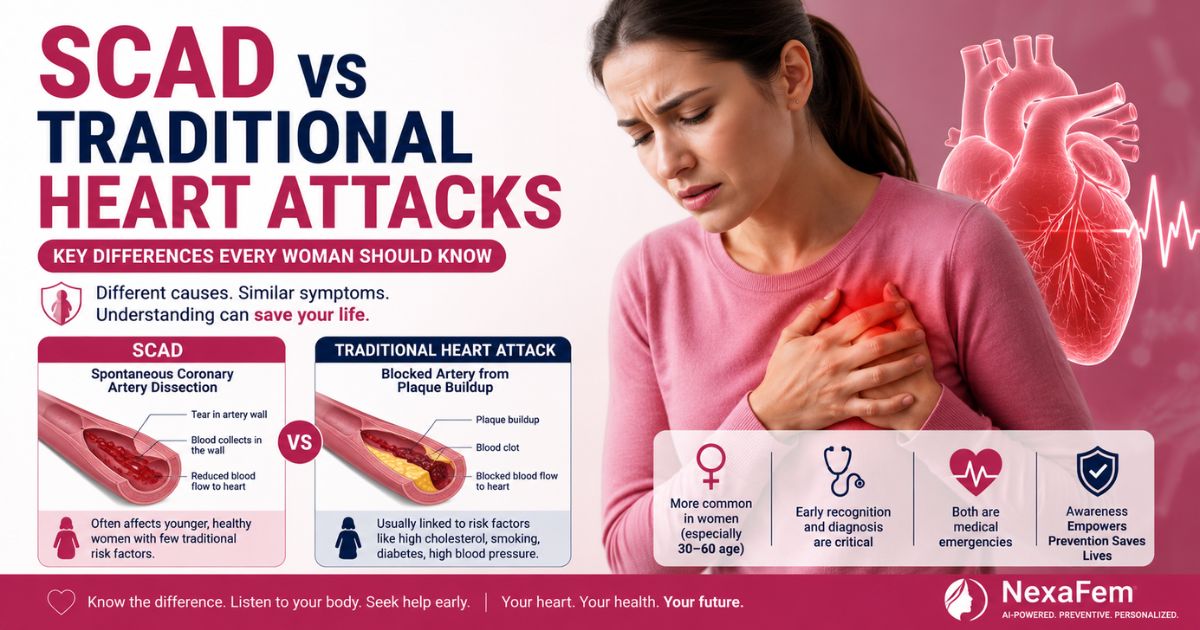
Spontaneous Coronary Artery Dissection (SCAD) occurs when a tear forms within the wall of a coronary artery.
The tear allows blood to collect between layers of the artery wall, creating a blockage that reduces blood flow to the heart muscle. This can cause a heart attack, abnormal heart rhythms, or other serious complications.
Unlike traditional heart attacks, SCAD is not usually caused by cholesterol plaques.
According to information from the NHS and major cardiovascular organizations, SCAD most commonly affects women, particularly those between ages 30 and 60. Women account for the vast majority of SCAD cases.
Source: NHS Heart and Circulatory Information
https://www.nhs.uk
What Is a Traditional Heart Attack?
A traditional heart attack, medically known as a myocardial infarction, typically occurs when plaque builds up inside the coronary arteries over time.
When the plaque ruptures, a blood clot may form and suddenly block blood flow to the heart.
Common contributors include:
High cholesterol
Smoking
Diabetes
Obesity
High blood pressure
Sedentary lifestyle
Family history of cardiovascular disease
This process is known as atherosclerosis and remains the most common cause of heart attacks worldwide.
Source: CDC Heart Disease Resources
https://www.cdc.gov/heartdisease
SCAD vs Traditional Heart Attack: What Is the Difference?
Quick Comparison
Feature
SCAD
Traditional Heart Attack
Main Cause
Tear in artery wall
Plaque buildup and blockage
Typical Age
Younger to middle-aged women
More common with increasing age
Cholesterol Levels
Often normal
Frequently elevated
Coronary Arteries
Usually not significantly blocked beforehand
Often narrowed by plaque
Risk Factors
Hormonal, connective tissue disorders, stress
Smoking, diabetes, hypertension, cholesterol
Prevention Strategy
Monitoring, individualized care, risk awareness
Lifestyle modification and risk factor control
Although the causes differ, both conditions are medical emergencies requiring immediate treatment.
What Are the Symptoms of SCAD?
One reason SCAD can be overlooked is that its symptoms often resemble a traditional heart attack.
Common SCAD Symptoms
Chest pain or pressure
Pain in the jaw
Neck discomfort
Arm pain
Shortness of breath
Sweating
Nausea
Dizziness
Unusual fatigue
Rapid heartbeat
Heart Attack Symptoms in Women
Women frequently experience symptoms that are less obvious than the classic crushing chest pain often portrayed in media.
Many women report:
Extreme exhaustion
Indigestion-like discomfort
Back pain
Neck pain
Shortness of breath
Nausea
The CDC emphasizes that women should not ignore these symptoms, especially when they appear suddenly or feel unusual.
Source: CDC Heart Attack Symptoms
https://www.cdc.gov/heartdisease/women.htm
Why Does SCAD Affect Women More Often?
Researchers are still studying why women are disproportionately affected by SCAD.
Several factors may contribute.
Hormonal Influences
Changes in estrogen and other reproductive hormones may affect blood vessel structure and function.
Some SCAD cases occur:
During pregnancy
Shortly after childbirth
During significant hormonal transitions
This connection highlights the importance of understanding the relationship between hormones and cardiovascular health.
Women interested in broader hormonal health may also benefit from learning about hormone imbalance symptoms in women and how hormonal shifts influence overall wellness.
Fibromuscular Dysplasia (FMD)
Many individuals diagnosed with SCAD are later found to have fibromuscular dysplasia, a condition that affects artery development and structure.
Connective Tissue Disorders
Certain inherited conditions may weaken blood vessel walls and increase vulnerability to arterial tears.
Intense Physical or Emotional Stress
Some SCAD events occur after:
Extreme exercise
Heavy lifting
Significant emotional distress
Major life events
However, many cases occur without a clearly identifiable trigger.
What Causes Traditional Heart Attacks?
Traditional heart attacks generally develop over many years.
Key causes include:
High Cholesterol
Elevated LDL cholesterol contributes to plaque formation.
High Blood Pressure
Persistent hypertension damages artery walls.
Smoking
Smoking significantly increases cardiovascular risk.
Diabetes
High blood sugar damages blood vessels and promotes plaque buildup.
Obesity and Inactivity
These factors increase inflammation and cardiovascular disease risk.
Unlike SCAD, traditional heart attacks are more closely linked to long-term lifestyle and metabolic factors.
How Is SCAD Diagnosed?
Because SCAD symptoms closely mimic a traditional heart attack, emergency evaluation is essential.
Doctors may use:
Electrocardiogram (ECG)
Blood tests for cardiac enzymes
Coronary angiography
Cardiac CT imaging
Intravascular imaging techniques
Accurate diagnosis is critical because treatment approaches can differ from those used in traditional heart attacks.
How Is SCAD Treated?
Treatment depends on the severity of the arterial tear and the patient's overall condition.
Options may include:
Careful monitoring
Medications
Blood pressure management
Cardiac rehabilitation
Lifestyle adjustments
Many SCAD arteries heal naturally over time, which is why aggressive interventions are not always required.
Treatment decisions should always be individualized and guided by a cardiologist experienced in SCAD management.
How Are Traditional Heart Attacks Treated?
Treatment often focuses on restoring blood flow quickly.
Approaches may include:
Angioplasty
Stent placement
Blood-thinning medications
Cholesterol-lowering therapies
Cardiac rehabilitation
Long-term risk factor management
Source: NICE Cardiovascular Disease Guidance
https://www.nice.org.uk
Can SCAD Be Prevented?
Currently, there is no guaranteed way to prevent SCAD.
However, women can support cardiovascular health through:
Regular medical checkups
Blood pressure monitoring
Stress management
Adequate sleep
Personalized exercise plans
Following specialist recommendations
Early awareness remains one of the most powerful preventive tools.
Nutrition and Heart Health Support
While nutrition may not directly prevent SCAD, a heart-supportive diet benefits overall cardiovascular health.
Focus on:
Fruits and vegetables
Whole grains
Healthy fats
Lean protein
Omega-3-rich foods
Adequate hydration
Limiting highly processed foods, excessive sodium, and added sugars may support long-term heart health.
Women exploring preventive nutrition strategies may also benefit from learning about foods for hormonal balance and anti-inflammatory eating patterns.
The Mental Health Impact of SCAD
Experiencing a heart attack at a young age can be emotionally overwhelming.
Many women report:
Anxiety
Fear of recurrence
Depression
Reduced confidence in physical activity
Mental wellness is an important part of recovery.
Support groups, counseling, mindfulness practices, and cardiac rehabilitation programs can help women regain confidence and improve quality of life.
The WHO recognizes mental health as a critical component of overall well-being and recovery from major health events.
Source: WHO Mental Health Resources
https://www.who.int
Red Flag Symptoms That Need Immediate Medical Attention
Seek emergency medical care immediately if you experience:
Sudden chest pain
Severe chest pressure
Difficulty breathing
Pain spreading to the arm, jaw, neck, or back
Fainting
Rapid heartbeat with dizziness
Sudden unexplained sweating
Never attempt to self-diagnose a potential heart attack.
Common Mistakes Women Make
Many women delay treatment because they:
Assume they are too young for heart disease
Dismiss symptoms as stress
Attribute symptoms to indigestion
Wait for symptoms to worsen
Ignore unusual fatigue
Prompt medical evaluation can save lives.
When Should You See a Doctor?
Schedule a medical evaluation if you experience:
Recurring chest discomfort
Unexplained shortness of breath
Significant cardiovascular risk factors
Pregnancy-related cardiovascular concerns
Persistent fatigue with other symptoms
Preventive conversations with healthcare providers can help identify risks before a crisis develops.
Using a heart health risk assessment tool or symptom tracking platform may also help women identify patterns worth discussing with a healthcare professional.
Lifestyle Tips for Better Heart Health
Heart health is built through consistent daily habits.
Focus on:
Regular physical activity
Stress management
Quality sleep
Balanced nutrition
Smoking avoidance
Blood pressure monitoring
Routine preventive screenings
Women should also pay attention to menstrual changes, hormonal transitions, and overall wellness patterns that may provide valuable clues about long-term health.
A women's health symptom tracker can be useful for identifying recurring patterns and supporting informed conversations with healthcare providers.
Final Thoughts
Understanding the differences between SCAD vs traditional heart attack is essential because the two conditions can look similar but develop for very different reasons.
For women, especially younger women who may not fit the traditional profile of heart disease, awareness can be lifesaving.
SCAD reminds us that cardiovascular health is not defined solely by cholesterol levels or age. Hormonal changes, vascular conditions, genetics, stress, and overall wellness all play important roles.
At NexaFem, we believe preventive health starts with knowledge. By tracking symptoms, understanding risk factors, and paying attention to changes in your body, you can become an active participant in protecting your long-term heart health.
Sources & References
World Health Organization (WHO)
https://www.who.int
National Health Service (NHS)
https://www.nhs.uk
Centers for Disease Control and Prevention (CDC)
https://www.cdc.gov/heartdisease
National Institute for Health and Care Excellence (NICE)
https://www.nice.org.uk
American College of Obstetricians and Gynecologists (ACOG)
https://www.acog.org
Disclaimer: This article is for informational and educational purposes only and is not intended to replace professional medical advice, diagnosis, or treatment. If you have concerns about your heart health or experience symptoms such as chest pain, shortness of breath, dizziness, or other signs of a heart attack, seek immediate medical attention. Always consult a qualified healthcare professional for personalized medical guidance.
Frequently Asked Questions
Share this post
Comments (0)
No comments yet. Be the first to comment!