
7 Symptoms Women Think Are Normal (But Aren't)
Discover the most common women's health symptoms that are dismissed as "normal" and learn how AI-powered preventive intelligence is transforming women's healthcare.

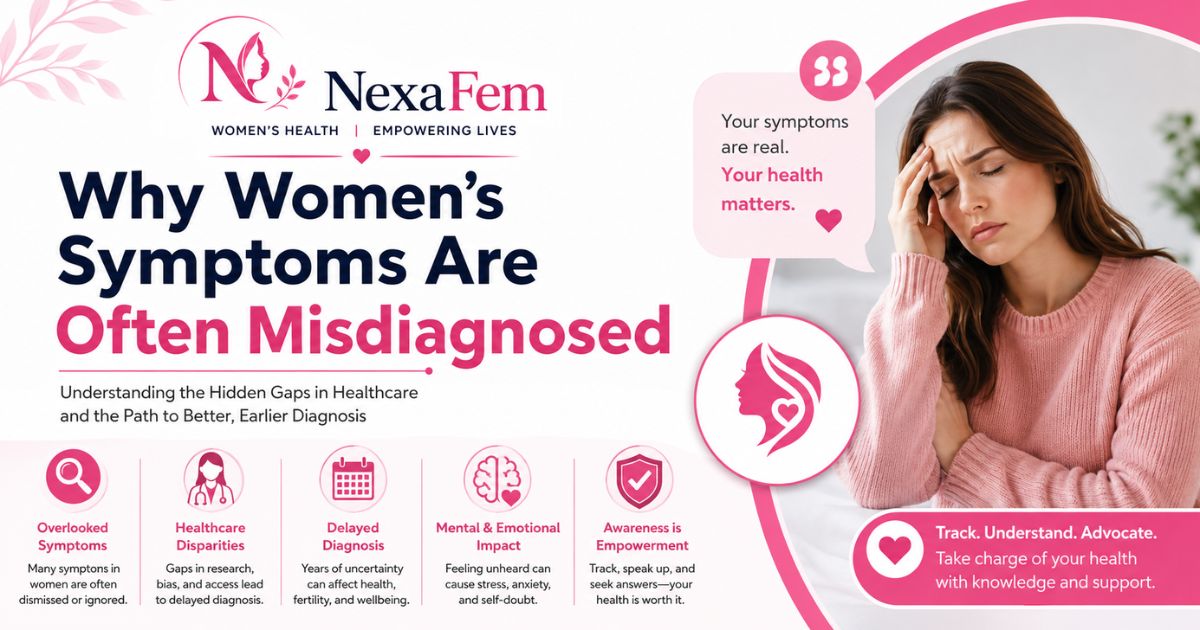
For decades, the global healthcare narrative has subtly conditioned women to tolerate physiological discomfort. Whether you are a newly minted college graduate or a senior executive navigating the demanding corridors of a Fortune 500 company, chances are you have minimized your own bodily warning signs at some point. You push through the debilitating fatigue, medicate the severe pelvic pain, and attribute intense mood fluctuations to standard workplace burnout. But ignoring critical women's health symptoms is not just a detriment to your personal well-being—it is a systemic oversight that costs the global economy billions. The time has come to stop normalizing female suffering and start leveraging data to demand better care.
Historically, medical research has severely underrepresented the female body, leading to a massive diagnostic gap. According to a landmark 2024 report by the World Economic Forum in collaboration with the McKinsey Health Institute, addressing the women's health gap could add $1 trillion to the global economy by 2040. Yet, millions of women continue to suffer in silence, believing their daily struggles are simply the "price of being a woman." Today, leading tech companies like Apple, through its comprehensive Women's Health Study, and AI-driven platforms are proving that our data tells a different story. It is time to decode the signals your body is sending.
The Danger of the "Power Through" Mentality
High-achieving women are particularly susceptible to dismissing their health concerns. When you are managing teams, closing deals, or studying for advanced degrees, taking time off to investigate a heavy period or chronic exhaustion feels like a luxury you cannot afford. Corporate cultures historically rewarded the "power through" mentality, leaving women to quietly manage complex neuroendocrine and gynecological issues between meetings.
"Women are routinely told that their pain is psychosomatic or a normal part of the aging process. This systemic medical gaslighting delays life-changing diagnoses by an average of seven to ten years." — ACOG (American College of Obstetricians and Gynecologists)
Fortunately, the corporate landscape is shifting. Major enterprises like Amazon, Microsoft, and Salesforce are now integrating specialized women's health benefits into their employee wellness programs. They recognize that preventive healthcare is a critical pillar of workforce productivity and retention. However, before you can utilize these resources, you must first recognize which symptoms warrant medical intervention. Here are the most common physical and emotional red flags women mistake for normal.
1. Debilitating Pelvic Pain: The Endometriosis Epidemic
It is a universally accepted myth that periods are supposed to be excruciatingly painful. While mild cramping (dysmenorrhea) is a common byproduct of the uterus contracting to shed its lining, pain that forces you to cancel plans, miss work, or take high doses of painkillers is a glaring red flag. If you are curled up on your bathroom floor or unable to conduct a boardroom presentation because of pelvic pain, your body is sounding an alarm.
Beyond "Just a Bad Period"
Severe pelvic pain is often the primary indicator of Endometriosis or Adenomyosis—conditions where tissue similar to the uterine lining grows outside the uterus or into its muscular walls. Despite affecting roughly 1 in 10 women globally, the World Health Organization (WHO) notes that endometriosis takes an average of 7 to 10 years to be correctly diagnosed. When we normalize extreme pain, we delay critical interventions that could preserve fertility and improve quality of life.
- Red Flag: Pain that radiates to your lower back or legs during your cycle.
- Red Flag: Over-the-counter pain medications provide little to no relief.
- Red Flag: Experiencing sharp pelvic pain outside of your menstrual window.
- Red Flag: Painful intercourse (dyspareunia) that is consistently dismissed as normal.
2. The Executive Productivity Killer: Chronic Brain Fog and Fatigue
In our hyper-connected, always-on work culture, being tired feels like a status symbol. If you are a working professional or a busy mother, you likely attribute your chronic exhaustion and inability to focus to a packed schedule. You drink another espresso, push through the afternoon slump, and assume everyone else is functioning at the exact same level of depletion. But persistent fatigue and cognitive impairment—often referred to as "brain fog"—are not standard byproducts of a busy lifestyle.
Thyroid Dysfunction and Hormonal Imbalance
When high-level female executives experience sudden drops in cognitive sharpness or unyielding lethargy, the root cause often lies in the thyroid or adrenal glands. Hypothyroidism and Polycystic Ovary Syndrome (PCOS) are notorious for draining cellular energy and impairing executive function. A report by Deloitte Insights highlighted that undiagnosed chronic conditions in the workplace lead to significant "presenteeism"—where employees are physically present but cognitively impaired. Do not accept exhaustion as your baseline.
3. The Missing "Vital Sign": Highly Irregular Cycles
Many women, particularly young professionals and college students, view a skipped period as a stroke of luck or a convenient break. Unless they are actively trying to conceive, irregular cycles are frequently ignored or quickly masked by the prescription of oral contraceptives. However, the American College of Obstetricians and Gynecologists officially recognizes the menstrual cycle as the "fifth vital sign." Its regularity is a direct mirror of your overall metabolic and hormonal health.
The Canary in the Coal Mine
Cycles that consistently fall outside the standard 21-to-35-day window, or periods that disappear entirely (amenorrhea), can indicate severe underlying issues. These include hypothalamic amenorrhea (often triggered by chronic stress, over-exercising, or under-eating) or insulin-resistant PCOS. Ignoring irregular cycles can lead to long-term consequences, including compromised bone density, cardiovascular disease, and severe fertility challenges later in life. Your cycle is a complex bio-feedback loop; when it goes offline, your health needs immediate attention.
4. Severe Emotional Whiplash: The Reality of PMDD
Premenstrual Syndrome (PMS) is a widely recognized phenomenon, often trivialized in media as a craving for chocolate and a slight mood dip. Because of this societal framing, women who experience severe, life-altering emotional distress in the days leading up to their period often blame themselves, believing they just lack emotional resilience. This internal blame game masks a very real, very severe neuroendocrine disorder known as Premenstrual Dysphoric Disorder (PMDD).
A Neurobiological Response, Not a Character Flaw
Affecting roughly 5% to 8% of women of reproductive age, PMDD causes extreme mood shifts, severe depression, anxiety, and even suicidal ideation during the luteal phase of the menstrual cycle. This is not a slight mood swing; it is an abnormal neurobiological reaction to normal hormone fluctuations. Women with PMDD often report feeling like two completely different people depending on the week of the month. Recognizing PMDD as a legitimate medical condition—and not a personal failure—is the first step toward accessing SSRIs, targeted hormone therapy, and specialized cognitive behavioral support.
5. Unexplained Weight Gain and Hair Loss: The Metabolic Link
Changes in body composition and hair thinning are frequently dismissed by primary care physicians as natural signs of aging or the result of poor diet and lack of exercise. Women are often handed a generic pamphlet on weight loss and told to "eat less and move more." This dismissive approach entirely ignores the complex metabolic shifts associated with women's hormonal transitions, particularly during perimenopause and in cases of PCOS.
Insulin Resistance and Hormonal Shifts
Sudden weight gain around the midsection, adult-onset cystic acne, and androgenic alopecia (hair thinning at the crown) are textbook signs of insulin resistance and hyperandrogenism. According to the CDC, women with PCOS are at a significantly higher risk of developing type 2 diabetes by age 40. By recognizing these physical changes as metabolic warning signs rather than cosmetic frustrations, women can advocate for comprehensive endocrine testing, fasting insulin panels, and targeted interventions before chronic disease sets in.
From Reactive Care to Preventive Intelligence: The NexaFem Era
For too long, women’s healthcare has been purely reactive. You wait until the pain is unbearable, the fatigue is insurmountable, or the fertility journey hits a wall before seeking help. But the future of women's health relies on proactive, predictive technology. Tech giants and leading consultancies like IBM and Accenture are heavily investing in AI-driven healthcare solutions to bridge the diagnostic gap, recognizing that data is the ultimate equalizer.
This is exactly why NexaFem was built. As the premier AI-powered preventive intelligence platform for women’s health, NexaFem is redefining how women interact with their biology. By aggregating complex biometric data, lifestyle inputs, and menstrual cycle tracking, our advanced AI algorithms detect subtle physiological anomalies long before they manifest as chronic conditions. We are transitioning women from a state of guessing to a state of profound knowing.
Imagine a platform that doesn't just record your symptoms, but actively analyzes them against millions of clinical data points to flag a potential thyroid issue or an increased risk of endometriosis. NexaFem empowers women—from the busy college student to the Fortune 500 executive—with actionable, evidence-based insights, seamlessly integrating clinical credibility with modern wellness technology.
Key Takeaways
- Pain is not a baseline: Severe pelvic pain that disrupts daily life is a primary indicator of conditions like endometriosis and should never be normalized.
- Your cycle is a vital sign: Irregular or missing periods are critical indicators of metabolic and hormonal health, not just a matter of convenience.
- Fatigue is a symptom, not a lifestyle: Chronic brain fog and exhaustion frequently point to undiagnosed thyroid issues or PCOS, significantly impacting cognitive performance.
- PMDD requires medical intervention: Severe mood swings and depressive episodes before your period are symptoms of a neurobiological disorder, distinct from standard PMS.
- Data is power: Leveraging AI-powered platforms like NexaFem transforms women's healthcare from reactive symptom management to proactive preventive intelligence.
Final Thoughts
The days of tolerating physical discomfort and dismissing vital bodily signals as "normal" are officially over. Your health is the foundational asset that drives your career, your relationships, and your overall quality of life. It is time to advocate for yourself with the same ferocity and data-driven precision you apply to your professional endeavors. Stop settling for medical gaslighting and start utilizing the technology designed to protect your future. Join NexaFem today, and harness the power of AI-driven preventive intelligence to take absolute control of your hormonal and metabolic health.
Frequently Asked Questions
Share this post
Comments (0)
No comments yet. Be the first to comment!