
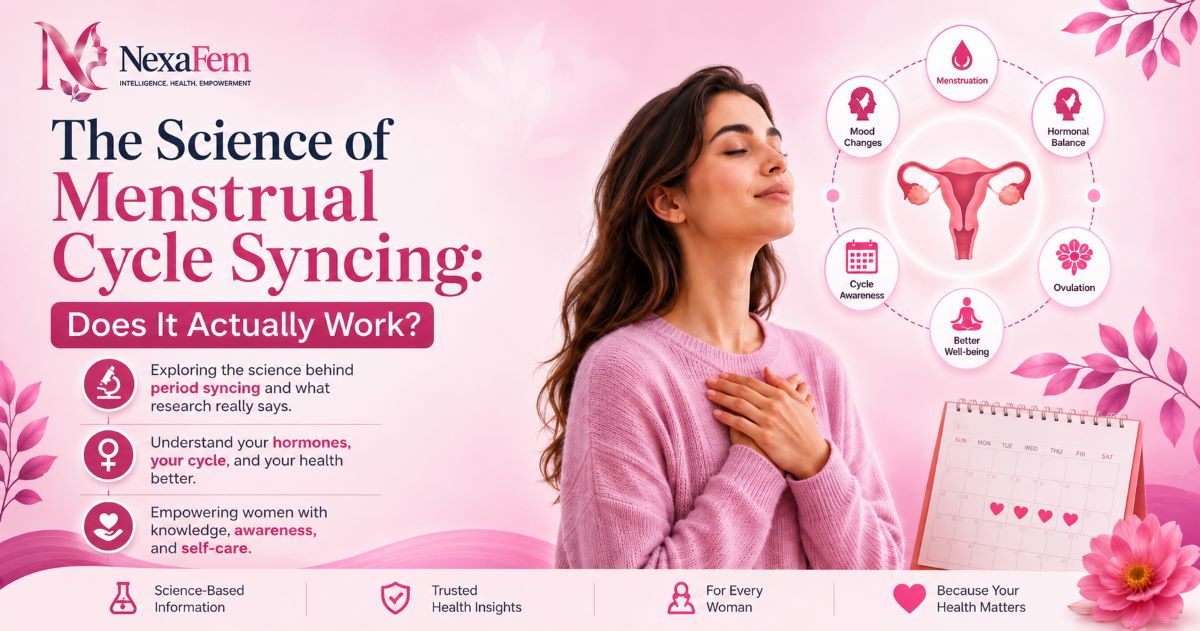
The Science of Menstrual Cycle Syncing: Does It Actually Work?
Discover the science behind menstrual cycle syncing and whether periods really synchronize among women. Learn what research says about hormones, period patterns, and menstrual health awareness
For years, many women have shared stories about their periods “syncing” with roommates, sisters, coworkers, or close friends. Maybe you’ve noticed it too — you and your best friend suddenly getting your periods around the same time after spending months together. But is menstrual cycle syncing a real biological phenomenon, or simply a coincidence?
Let’s explore the science behind menstrual cycle syncing, what research actually says, and why understanding your own cycle matters more than matching someone else’s.
What Is Menstrual Cycle Syncing?
Menstrual cycle syncing, also known as the McClintock Effect, is the idea that women who spend a lot of time together begin to have overlapping menstrual cycles over time.
This theory became widely popular after a 1971 study by psychologist Martha McClintock suggested that women living together in dormitories experienced synchronized periods. Since then, the concept has spread through pop culture, social media, and everyday conversations.
But modern science paints a much more complicated picture.
Why Do People Believe Period Syncing Happens?
At first glance, cycle syncing seems believable because menstrual cycles naturally fluctuate.
A “normal” menstrual cycle can range anywhere from:
21 to 35 days in adults
Slightly different lengths every month
Earlier or later due to stress, sleep, hormones, travel, diet, or health conditions
Because cycles are not perfectly predictable, they can occasionally overlap with another person’s cycle by chance.
For example:
One person may have a 26-day cycle
Another may have a 31-day cycle
At some point, their periods may naturally line up — even without any biological syncing.
This temporary overlap often makes it feel like syncing is happening.
What Does Science Actually Say?
Most modern studies have found little to no scientific evidence supporting true menstrual synchronization.
Researchers have re-examined the original claims and found several issues:
1. Small Sample Sizes
The early studies involved limited participants, making results less reliable.
2. Statistical Coincidence
When many women live or work together, some overlap in cycles is mathematically expected.
3. Natural Cycle Variability
Menstrual cycles constantly shift slightly month to month, creating random alignment patterns.
Large-scale research over the years has failed to consistently prove that women’s cycles biologically synchronize through pheromones or close contact.
In short:
Current scientific evidence suggests menstrual cycle syncing is more likely a coincidence than a proven biological process.
Can Pheromones Influence Menstrual Cycles?
One of the biggest theories behind cycle syncing involves pheromones — chemical signals that may influence behavior or hormones.
Some researchers once believed that pheromones exchanged through sweat or close proximity could alter ovulation timing.
However:
Human pheromones are still not fully understood
Research findings remain inconsistent
No strong evidence confirms pheromones cause menstrual synchronization
While pheromones may play subtle roles in attraction or social behavior, their impact on menstrual cycles remains unproven.
Why Your Menstrual Cycle Changes Naturally
If your cycle seems “off,” syncing is usually not the reason.
Many real-life factors affect hormones and period timing, including:
Stress
Stress increases cortisol levels, which can disrupt ovulation and delay periods.
Sleep Changes
Poor sleep affects hormone regulation and reproductive health.
Diet & Nutrition
Low iron, nutrient deficiencies, or sudden dieting can influence cycles.
Exercise
Overtraining or extreme workouts may lead to irregular periods.
Travel & Routine Changes
Time zone changes and disrupted schedules can affect hormones temporarily.
Hormonal Conditions
Conditions like:
Polycystic Ovary Syndrome
Endometriosis
Thyroid Disease
can significantly impact menstrual regularity.
The More Important Trend: Cycle Awareness
Instead of focusing on syncing with others, health experts encourage women to understand their own unique menstrual patterns.
Tracking your cycle can help you notice:
Irregular bleeding
Severe PMS symptoms
Mood changes
Ovulation patterns
Pain levels
Hormonal imbalances
Using a period-tracking app or journal can provide valuable insights into your reproductive health.
Popular tracking apps include:
Flo
Clue
Period Tracker
When Should You See a Doctor?
Occasional cycle variation is normal. However, it’s important to speak with a healthcare professional if you experience:
Missing periods frequently
Extremely painful cramps
Heavy bleeding
Cycles shorter than 21 days or longer than 35 days
Sudden major changes in your cycle
Severe fatigue or hormonal symptoms
Your menstrual cycle is often considered a “vital sign” of overall health.
Final Thoughts
The idea of menstrual cycle syncing is fascinating and emotionally relatable, especially among close friends and family members. But according to current scientific research, there is no strong evidence proving that women’s periods truly synchronize biologically.
What’s far more important is understanding your own body, recognizing changes in your cycle, and supporting your hormonal health through proper nutrition, stress management, sleep, and medical care when needed.
Every woman’s cycle is unique — and that’s completely normal.
Frequently Asked Questions
Share this post
Comments (0)
No comments yet. Be the first to comment!