
Turmeric in Ayurveda: Benefits for Women’s Health
Explore turmeric in Ayurveda, its traditional uses, potential women’s health benefits, evidence, safety, and when to seek professional advice.
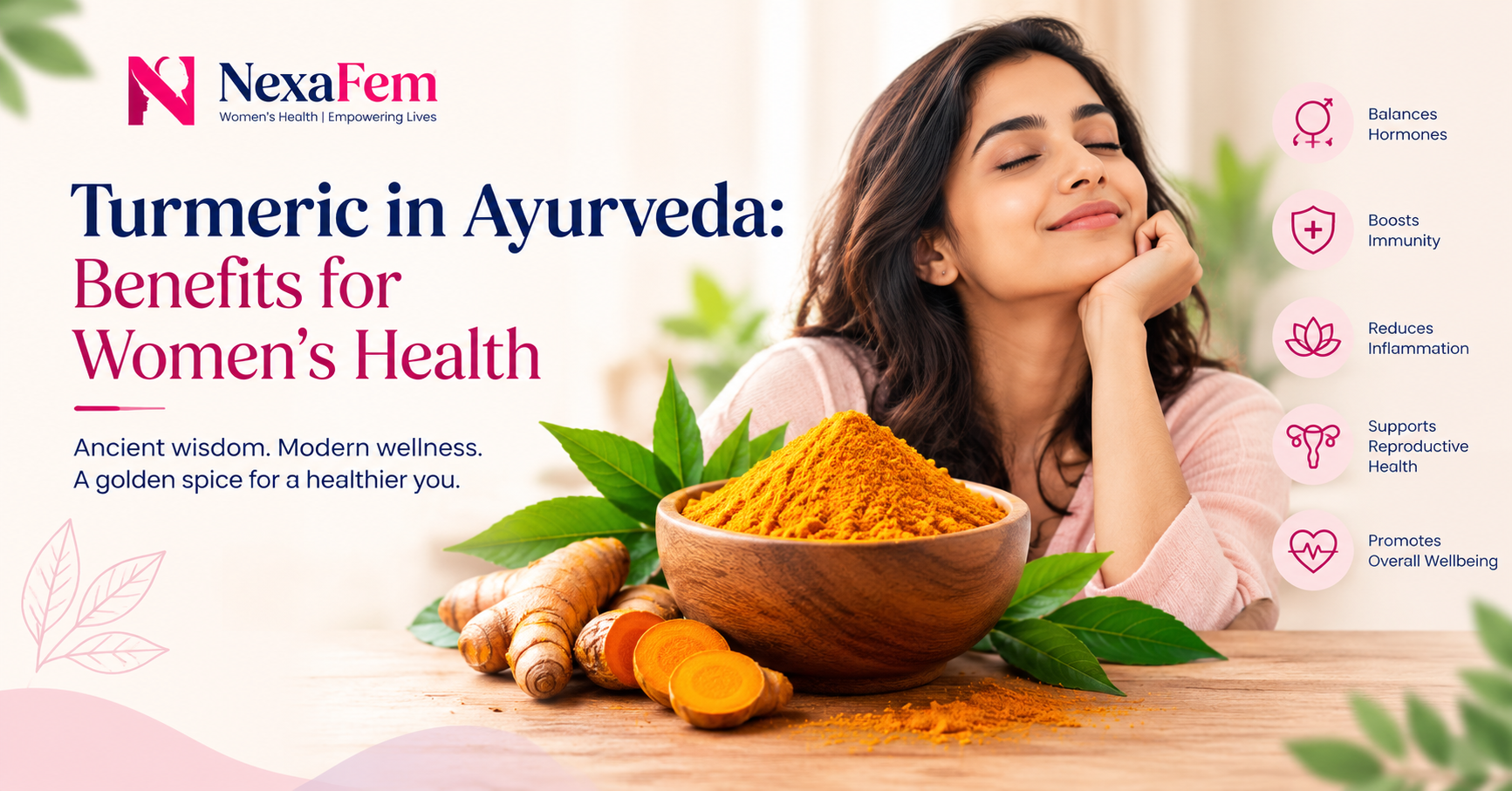
Turmeric in Ayurveda: Benefits for Women’s Health
Turmeric is probably one of the most familiar ingredients in an Indian kitchen. Known as haldi or Haridra, its bright golden colour has long been part of Indian food, cultural traditions and traditional wellness practices.
But turmeric is also increasingly discussed in modern health conversations. You may have heard that it can support inflammation, digestion, menstrual comfort, skin health or metabolic wellness. You may also have come across concentrated curcumin supplements marketed for everything from hormonal balance to PCOS.
So what does the evidence actually tell us?
The answer is more nuanced than many wellness claims suggest. Turmeric has a long history of traditional use, and curcumin—the best-studied group of compounds in turmeric—has biological activity that researchers continue to investigate. However, evidence varies considerably by health condition, product, dose and formulation. Turmeric should therefore be viewed as a potential component of a healthy lifestyle, not as a cure or replacement for medical treatment. (NCCIH)
For women, this distinction matters. Menstrual symptoms, PCOS/PMOS, fertility concerns, pregnancy, menopause and chronic health conditions can have different causes and often require individualized medical care.
This article explains turmeric through both an Ayurvedic lens and a modern evidence-informed perspective, so you can make a more informed decision about how it fits into your wellness routine.
Quick Summary
Turmeric (Curcuma longa) is a culinary spice and traditional Ayurvedic ingredient commonly known as Haridra or haldi.
Ayurveda has traditionally used turmeric in several wellness contexts, including digestive, skin and inflammatory concerns.
Curcumin, a major group of compounds in turmeric, has been studied for inflammation, menstrual symptoms and metabolic parameters.
Early research in PMS, period pain and PCOS is interesting but does not establish turmeric as a treatment or cure for these conditions. (PubMed)
Turmeric used as a food is different from concentrated curcumin supplements. Higher-dose or enhanced-absorption products can have side effects and drug interactions and may carry additional safety concerns. (NCCIH)
What Is Turmeric?
Turmeric comes from the rhizome of Curcuma longa, a plant belonging to the ginger family.
The rhizome is dried and commonly ground into the familiar yellow powder used in Indian cooking. Turmeric contains several compounds called curcuminoids, with curcumin being one of the best studied.
Turmeric has been used historically in Indian, Chinese, Islamic and other traditional medical systems, as well as in cooking and cultural practices. The National Center for Complementary and Integrative Health (NCCIH) notes its traditional use for several concerns, including indigestion, abdominal discomfort and skin-related conditions. (NCCIH)
It is useful to distinguish three things:
Turmeric as a food spice
Turmeric powder used in traditional preparations
Concentrated curcumin or turmeric supplements
These are not interchangeable.
A capsule containing a concentrated curcumin extract can provide substantially different exposure than the turmeric you use in dal, vegetables or curry.
Turmeric in Ayurveda: What Is the Traditional Perspective?
In Ayurveda, turmeric is commonly known as Haridra.
Traditional Ayurvedic approaches have used Haridra in different formulations and contexts, including digestive, skin and inflammatory concerns. The Ministry of AYUSH identifies Curcuma longa among Ayurvedic medicinal plants, while its resources also describe Haridra/turmeric in traditional dietary and wellness contexts. (Ayush)
From an Ayurvedic perspective, herbs are not necessarily selected simply because they contain one particular active compound. Traditional practice considers the qualities of the substance, the individual's constitution, digestive capacity, symptoms, diet, lifestyle and the broader clinical context.
That is an important difference from modern supplement marketing.
What modern evidence says
Modern research focuses heavily on curcuminoids, particularly curcumin, and investigates mechanisms such as inflammatory signalling and oxidative stress.
However, laboratory activity does not automatically translate into a clinically meaningful benefit in humans. NCCIH currently states that there is not enough evidence to definitively conclude that oral turmeric or curcumin is beneficial for many health conditions. (NCCIH)
Practical takeaway
Turmeric has a legitimate place in Indian food and traditional wellness, but traditional use and modern clinical evidence should be described separately.
A long history of use is valuable cultural and traditional context. It is not, by itself, proof that a supplement treats a medical condition.
Potential Benefits of Turmeric for Women’s Health
1. Turmeric and Inflammation
Curcumin has attracted considerable scientific interest because laboratory research suggests anti-inflammatory and antioxidant activity.
This is one reason turmeric is frequently discussed in relation to joint discomfort, exercise recovery and other inflammatory conditions. However, the quality of evidence varies considerably depending on the condition being studied. NCCIH notes that preliminary findings are promising in some areas, while evidence remains insufficient for many proposed uses. (NCCIH)
For women, inflammation can also appear in discussions around menstrual symptoms, metabolic health and chronic conditions.
But inflammation is a biological process, not a diagnosis. Trying to suppress it with a supplement without understanding why symptoms are occurring is not an appropriate substitute for medical evaluation.
2. Turmeric and Menstrual Health
Period pain, medically known as dysmenorrhea, and PMS can significantly affect daily life.
Research into curcumin for menstrual symptoms is growing. A 2025 systematic review of randomized clinical trials identified 10 trials examining curcumin for PMS and dysmenorrhea. Six reported significant reductions in relevant symptoms, but the researchers also emphasized the need for further research to establish appropriate doses and treatment durations. (PubMed)
There have also been randomized clinical trials examining curcumin supplementation in women experiencing PMS and dysmenorrhea. (PubMed)
What does this mean for you?
It is reasonable to say that curcumin is being studied as a possible complementary approach for menstrual symptoms.
It is not reasonable to say that turmeric cures period pain, fixes menstrual irregularities or replaces established treatment.
Persistent or severe period pain deserves evaluation because conditions such as endometriosis, adenomyosis or fibroids can sometimes cause significant menstrual symptoms.
3. Turmeric and PMS
PMS can involve physical and emotional symptoms such as:
abdominal discomfort
breast tenderness
headaches
fatigue
mood changes
irritability
bloating
changes in appetite
Some research suggests curcumin may help reduce certain PMS symptoms, but studies have generally been relatively small and have used specific supplement formulations.
A further complication is that curcumin products are not standardized in the same way. Different supplements may contain different amounts of curcuminoids or additional ingredients intended to increase absorption.
Therefore, evidence from one clinical trial should not automatically be applied to every turmeric capsule sold online or in a pharmacy. (NCCIH)
4. Turmeric and PCOS/PMOS
PCOS is a complex endocrine and metabolic condition. It can involve irregular ovulation, androgen-related symptoms and metabolic abnormalities.
Curcumin has been studied in women with PCOS. A systematic review and meta-analysis of randomized trials reported improvements in some measures of glucose metabolism and insulin resistance, although other outcomes were inconsistent. (PubMed)
Another meta-analysis involving seven randomized controlled trials and 447 participants reported improvements in several metabolic and inflammatory markers, but the authors also called for larger and more definitive research. (PubMed)
This is promising research, but there is an important distinction:
Curcumin is not an established treatment or cure for PCOS/PMOS.
PCOS management may involve nutrition, physical activity, sleep, weight-related care where appropriate, menstrual management, fertility care, metabolic screening and prescribed medication depending on the individual's needs.
Turmeric can be part of a nutritious dietary pattern, but it should not be presented as a substitute for comprehensive PCOS care.
5. Turmeric, Digestion and Everyday Wellness
Turmeric has traditionally been used in Indian dietary practices and Ayurveda in connection with digestive wellness.
Using turmeric as a culinary spice can be a simple way to add flavour and variety to meals. It can be incorporated into foods such as vegetables, dals, soups and other dishes.
However, more turmeric is not necessarily better.
Concentrated oral products can cause digestive symptoms including nausea, acid reflux, stomach upset, diarrhea or constipation. (NCCIH)
If turmeric consistently causes discomfort, particularly reflux or abdominal pain, continuing to take it simply because it is considered "healthy" may not be sensible.
Turmeric Powder vs Curcumin Supplements: What Is the Difference?
This is one of the most important distinctions for anyone researching turmeric.
Turmeric in food
Curcumin/turmeric supplement
Usually consumed in culinary quantities
Often concentrated
Part of an overall diet
Designed to provide a specific extract
Generally familiar as a food ingredient
May contain additional absorption-enhancing ingredients
Lower exposure than many supplements
Can produce substantially higher exposure
Usually used for flavour and traditional food practices
Often marketed for specific health outcomes
Some supplements contain piperine or other ingredients intended to improve curcumin absorption. While increased bioavailability may sound automatically beneficial, it can also alter safety considerations. NCCIH reports liver injury associated with some highly bioavailable curcumin formulations. (NCCIH)
This is why a supplement should not be judged simply by the phrase "high absorption."
How Can Women Include Turmeric in a Healthy Lifestyle?
For many people, the simplest approach is to think of turmeric first as a food ingredient rather than a medicine.
You can use culinary turmeric in:
vegetable dishes
dal and lentil preparations
soups
rice dishes
traditional milk-based preparations
other balanced meals
The Ministry of AYUSH has also published traditional guidance that includes turmeric in a golden-milk preparation. Such traditional guidance should not be interpreted as evidence that turmeric milk treats or prevents disease. (Ayush)
A healthy lifestyle should remain broader than any single ingredient.
For women, foundational habits include:
eating a varied, nutrient-dense diet
consuming adequate protein and fibre
staying physically active
getting sufficient sleep
managing stress
avoiding tobacco
moderating alcohol where applicable
attending appropriate preventive health checks
No individual spice can compensate for an overall unhealthy lifestyle.
What About Turmeric During Different Life Stages?
Young and Reproductive-Age Women
For younger women, turmeric may simply be part of a balanced Indian-style diet.
If period pain, PMS or irregular periods are persistent, however, focus should be on identifying the underlying issue rather than relying on turmeric alone.
Women With PCOS/PMOS
Research into curcumin and metabolic parameters in PCOS is interesting, but not sufficient to make turmeric a standard treatment.
Women with PCOS should continue appropriate medical monitoring and treatment while discussing any supplements with their healthcare professional.
Pregnancy
Pregnancy requires additional caution.
NCCIH states that turmeric supplements may be unsafe during pregnancy and that there is limited information about higher-than-food amounts during breastfeeding. (NCCIH)
This does not mean that turmeric-containing foods are automatically unsafe. The important distinction is between ordinary culinary use and concentrated supplementation.
If you are pregnant, trying to conceive, or breastfeeding, speak with your obstetrician or another qualified healthcare professional before using concentrated turmeric or curcumin supplements.
Perimenopause and Menopause
During perimenopause and menopause, women may experience changes in sleep, mood, body composition, metabolic health and musculoskeletal health.
Turmeric may be included as part of a nutritious diet, but there is currently not enough evidence to describe turmeric as a treatment for menopause or as a way to "balance hormones."
Menopause symptoms that interfere with sleep, work, relationships or quality of life deserve individualized medical care.
Is Turmeric Safe?
Turmeric used as a food is generally different from high-dose supplementation.
NCCIH reports that conventionally formulated oral turmeric or curcumin is likely safe in recommended amounts for up to two or three months, but side effects can include nausea, reflux, stomach upset, diarrhea and constipation. Some enhanced-bioavailability formulations have been associated with liver injury. (NCCIH)
Potential warning signs of liver injury include:
unusual fatigue
nausea
poor appetite
dark urine
yellowing of the skin or eyes
If these occur after starting a turmeric or curcumin supplement, stop the product and seek medical advice promptly. (NCCIH)
Who Should Talk to a Healthcare Professional Before Taking Turmeric Supplements?
Speak with your doctor or pharmacist before taking concentrated turmeric or curcumin supplements if you:
are pregnant or trying to conceive
are breastfeeding
take blood-thinning or antiplatelet medicines
take multiple prescription medicines
have liver disease
have a history of kidney stones
are undergoing cancer treatment
have a chronic medical condition
have experienced reactions to herbal supplements
Turmeric and curcumin may interact with medicines. Memorial Sloan Kettering Cancer Center specifically notes potential concerns with anticoagulants and certain other medications. (Memorial Sloan Kettering Cancer Center)
The risk-benefit assessment can depend on the exact product, dose and medication combination.
Natural does not automatically mean safe.
Common Myths About Turmeric
Myth 1: "Turmeric balances all hormones."
There is no good evidence that turmeric universally "balances hormones."
Women's hormonal health is complex, and symptoms can have many causes.
Myth 2: "Turmeric cures PCOS."
No. Research into curcumin and PCOS is ongoing, and some metabolic outcomes have shown potential benefits, but turmeric is not an established cure or replacement for PCOS care. (PubMed)
Myth 3: "More curcumin means better results."
Not necessarily.
Higher-dose and enhanced-absorption formulations may change both effectiveness and safety. Some highly bioavailable formulations have been associated with liver injury. (NCCIH)
Myth 4: "If something is Ayurvedic, it cannot cause side effects."
Traditional medicines can have pharmacological effects. Product quality, dose, individual health status and interactions all matter.
Myth 5: "Turmeric can replace medical treatment."
It should not.
Turmeric can be part of food and wellness practices, but persistent symptoms require appropriate assessment.
When Should You See a Doctor?
Do not rely on turmeric or another home remedy if you have symptoms that are severe, persistent or unexplained.
Seek medical evaluation for concerns such as:
severe or worsening menstrual pain
unusually heavy menstrual bleeding
bleeding between periods
persistent irregular periods
unexplained weight changes
persistent pelvic pain
difficulty becoming pregnant
symptoms suggesting anemia
yellowing of the skin or eyes
unexplained persistent fatigue
severe digestive symptoms
Women with suspected PCOS, endometriosis, fibroids or other gynecological conditions should receive appropriate assessment rather than attempting to self-treat with herbs.
s Turmeric Worth Including in a Woman's Wellness Routine?
Turmeric has a meaningful place in Indian culinary and traditional wellness culture, and modern research continues to investigate curcumin for inflammatory, menstrual and metabolic health.
For everyday wellness, using turmeric as part of a varied diet is a reasonable and culturally familiar choice for many women.
The evidence becomes more complicated when we move from food to concentrated supplements. Research into PMS, dysmenorrhea and PCOS is encouraging in some areas, but it is not strong enough to support claims that turmeric cures these conditions or universally improves women's hormonal health. (PubMed)
The most responsible approach is therefore neither to dismiss turmeric nor to treat it as a miracle remedy.
Use traditional knowledge respectfully, understand what modern research actually shows, consider your individual health circumstances and seek professional advice when symptoms need evaluation.
Sources & References
National Center for Complementary and Integrative Health (NCCIH) — Turmeric: Usefulness and Safety
Comprehensive information on turmeric, curcumin, evidence, adverse effects, pregnancy and liver safety. NCCIH: Turmeric — Usefulness and SafetyNCCIH — Myth-Busting Popular Natural Products Marketed for Disease Prevention and Wellness
Evidence context regarding turmeric and the limitations of clinical research. NCCIH: Myth-Busting Natural ProductsPubMed — Curcumin and PMS/Dysmenorrhea Systematic Review, 2025
Review of randomized clinical trials examining curcumin and menstrual symptoms. PubMed: Curcumin, PMS and Dysmenorrhea Systematic ReviewPubMed — Curcumin and PCOS Systematic Review and Meta-analysis
Evidence concerning metabolic and inflammatory outcomes in women with PCOS. PubMed: Curcumin in PCOS Meta-analysisPubMed — Curcumin and Glycaemic/Lipid Parameters in PCOS
Systematic review and meta-analysis of randomized controlled trials. PubMed: Curcumin, Glycaemic and Lipid Parameters in PCOSMinistry of AYUSH, Government of India
Official Ayurvedic resources referencing Curcuma longa/Haridra and traditional dietary applications. Ministry of AYUSH
Memorial Sloan Kettering Cancer Center — Turmeric
Information on turmeric uses, side effects and potential herb-drug interactions. Memorial Sloan Kettering: TurmericDisclaimer: This article is provided for general informational and educational purposes only and is not a substitute for professional medical advice, diagnosis or treatment. Information about Ayurveda and turmeric describes traditional practices alongside current scientific evidence and should not be interpreted as a guaranteed treatment or cure for any medical condition.
Do not stop, replace or change prescribed medication because of information in this article. Women who are pregnant, breastfeeding, planning pregnancy, taking prescription medicines, managing a chronic condition, or experiencing persistent or severe symptoms should consult an appropriate qualified healthcare professional before using concentrated turmeric or curcumin supplements.For individualized Ayurvedic guidance, consult a qualified Ayurveda practitioner who can assess your health, medicines, diet and individual circumstances.
Frequently Asked Questions
Share this post
Comments (0)
No comments yet. Be the first to comment!