

Understanding the Three Doshas: Vata, Pitta & Kapha
Learn what Vata, Pitta and Kapha mean in Ayurveda, how Prakriti works, and what modern evidence says about doshas and personalized wellness.
If you have ever taken an Ayurveda quiz or heard someone say, “I’m more Vata,” “She has a Pitta nature,” or “I need to balance my Kapha,” you may have wondered what those words actually mean.
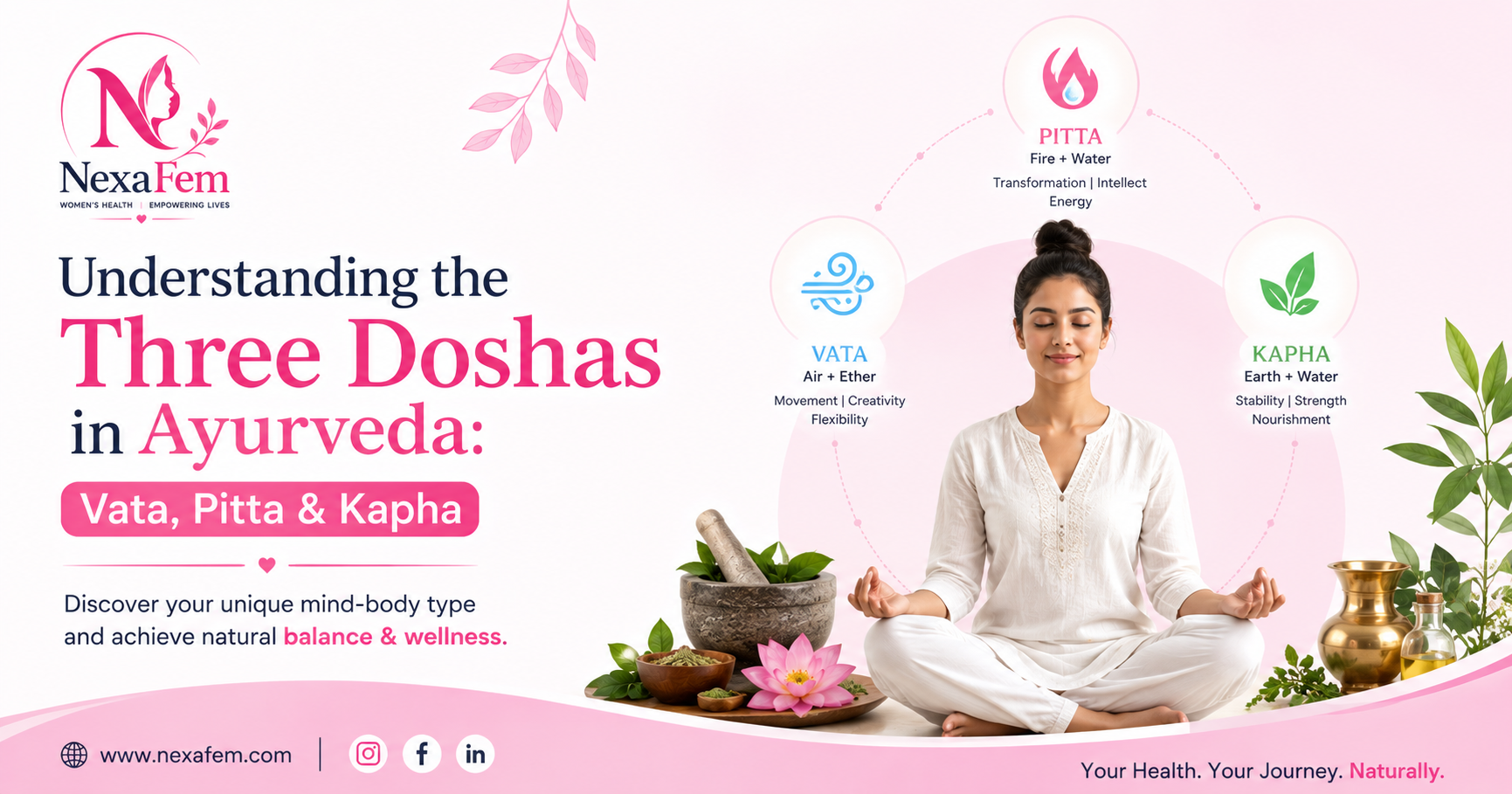
The three doshas—Vata, Pitta and Kapha—are among the central concepts of Ayurveda, India's traditional system of health. Ayurveda describes them as functional principles associated with different processes and qualities in the body and mind. The Ministry of Ayush describes Vata, Pitta and Kapha as the three doshas and links them with combinations of the five great elements, or Panchamahabhuta. (Ayusoft)
But there is an important distinction for modern readers: doshas are an Ayurvedic framework, not laboratory measurements or established medical diagnoses.
Understanding that distinction can make Ayurveda more useful—and safer. Rather than using a dosha label to explain every symptom, you can treat the concept as one traditional way of thinking about patterns such as routine, digestion, activity, sleep and response to environmental changes, while still using evidence-based medical care when symptoms need evaluation.
Quick Summary
Ayurveda describes three doshas: Vata, Pitta and Kapha, traditionally associated with different combinations of the five elements and different functions.
Vata is traditionally associated with movement, Pitta with transformation and metabolism, and Kapha with structure, stability and nourishment. (Ayusoft)
Ayurveda teaches that everyone has all three doshas in an individual proportion. This constitution is called Prakriti. (Ayusoft)
Modern research is investigating whether Prakriti can be measured consistently and whether it relates to biological characteristics, but current assessment methods are not yet sufficiently standardized to treat dosha type as a clinically validated diagnosis. (PubMed)
Ayurvedic lifestyle practices may be explored as complementary wellness approaches, but they should not replace appropriate medical diagnosis or treatment.
What Are the Three Doshas in Ayurveda?
The three doshas in Ayurveda are Vata, Pitta and Kapha. Traditionally, Ayurveda describes them as functional principles formed from combinations of the five great elements: space, air, fire, water and earth. Vata is associated primarily with space and air, Pitta with fire and water, and Kapha with water and earth. (Ayusoft)
In Ayurvedic thought, these principles help describe how different physiological and psychological processes function.
A simple way to remember them is:
Dosha
Traditional elemental association
Broad Ayurvedic function
Vata
Space + Air
Movement and communication
Pitta
Fire + Water
Transformation and metabolism
Kapha
Water + Earth
Structure, stability and nourishment
These descriptions belong to Ayurvedic theory. They should not be interpreted as direct equivalents of modern anatomical systems, hormones, neurotransmitters or individual medical conditions.
That distinction matters because a woman experiencing fatigue, irregular periods, acne, digestive symptoms or sleep problems should not assume that a “dosha imbalance” is automatically the explanation. Such symptoms can have many causes, including medical conditions that require proper assessment.
The Five Elements Behind Vata, Pitta and Kapha
Ayurveda begins with the concept of Panchamahabhuta, or five great elements:
Akasha — space
Vayu — air
Agni/Tejas — fire
Jala — water
Prithvi — earth
According to Ayurvedic theory, combinations of these elements form the three doshas. The Ministry of Ayush describes Vata as predominantly associated with space and air, Pitta with fire, and Kapha with water and earth. (Ayush)
Think of the elements as a traditional language for describing qualities rather than as literal substances inside the body.
For example, “fire” in Pitta does not mean that a person's body contains a physical fire. Instead, it is used within Ayurveda to describe qualities associated with transformation, digestion and heat.
This is one reason the dosha framework can be interesting culturally and philosophically without needing to be presented as a modern biomedical theory.
Vata Dosha: The Principle of Movement
In Ayurveda, Vata dosha is associated with space and air and is traditionally understood as the principle of movement. Ayurvedic sources associate Vata with functions such as movement, respiration, speech and the movement of substances through the body. (Ayusoft)
Traditional Ayurvedic Perspective
Vata is commonly described through qualities such as:
Light
Dry
Cold
Mobile
Quick
Irregular
Within Ayurvedic thinking, a person with a Vata-predominant constitution may traditionally be described as energetic, creative, adaptable or quick-moving.
Ayurveda also associates increased Vata with experiences such as irregularity, dryness, restlessness or difficulty maintaining consistent routines.
These descriptions are traditional constitutional concepts, not diagnostic criteria.
What Modern Evidence Says
There is ongoing scientific interest in whether Ayurvedic Prakriti categories correspond to measurable biological characteristics. Research has explored associations involving metabolism, genetics, microbiome characteristics and other biological variables. (PubMed)
However, this does not establish that Vata is a medically measurable biological entity or that a Vata classification can diagnose a health problem.
Practical Takeaway
If Ayurvedic ideas about Vata encourage you to value regular sleep, adequate nutrition, reasonable activity and a consistent daily rhythm, those habits can be sensible components of general wellness.
But persistent insomnia, unexplained weight loss, chronic digestive symptoms, anxiety, palpitations or menstrual changes should not simply be labelled “Vata imbalance.” They deserve appropriate medical evaluation.
Pitta Dosha: The Principle of Transformation
Pitta dosha is traditionally associated with fire and water and with processes of transformation. Ayurveda connects Pitta with digestion, metabolism and other transformative functions. (Ayusoft)
Traditional Ayurvedic Perspective
Pitta is commonly described as:
Warm or hot
Sharp
Light
Intense
Precise
Transformative
In Ayurvedic descriptions, Pitta-predominant individuals may be portrayed as focused, determined, organized or naturally driven.
Traditional Ayurvedic thinking may associate increased Pitta with qualities such as excess heat, irritation or intensity.
Again, these are Ayurvedic descriptions rather than modern medical classifications.
What Modern Evidence Says
Modern medicine recognizes digestion, metabolism, inflammation and temperature regulation as complex physiological processes involving multiple organs, hormones, enzymes, immune pathways and nervous-system mechanisms.
There is not enough evidence to say that these systems are literally controlled by an Ayurvedic Pitta dosha.
Research into Prakriti is promising as an area of investigation, but major methodological limitations remain. A 2025 critical review identified dozens of Prakriti assessment tools and concluded that no current tool fully satisfies accepted criteria for a clinically validated measurement system. (PubMed)
Practical Takeaway
The traditional Pitta concept can provide a cultural framework for thinking about moderation, routine and lifestyle balance.
However, symptoms such as persistent heartburn, unexplained fever, recurrent skin inflammation, severe headaches or significant menstrual changes should be evaluated medically rather than assumed to represent excess Pitta.
Kapha Dosha: The Principle of Structure and Stability
Kapha dosha is traditionally associated with water and earth. Ayurveda describes Kapha in relation to stability, structure, lubrication, nourishment and cohesion. (Ayusoft)
Traditional Ayurvedic Perspective
Kapha is commonly described as:
Heavy
Stable
Cool
Smooth
Slow
Grounded
Ayurvedic descriptions may associate Kapha-predominant individuals with steadiness, patience, endurance and a calm temperament.
Traditional Ayurvedic approaches often emphasize appropriate movement and balanced eating when Kapha qualities are considered excessive.
What Modern Evidence Says
Modern science does not recognize Kapha as a distinct physiological substance or biological system.
Some research has explored whether Ayurvedic constitutional categories correlate with measurable biological characteristics, but the evidence remains exploratory. Current Prakriti assessment methods vary substantially, and researchers continue to work toward better validation and standardization. (PubMed)
Practical Takeaway
Rather than asking, “How do I eliminate Kapha?”, a healthier approach is to focus on evidence-based habits such as regular physical activity, adequate sleep, nutritious food and appropriate medical screening.
If you have persistent fatigue, unexplained weight gain, swelling, shortness of breath or changes in mood or menstrual cycles, speak with a healthcare professional rather than attributing those symptoms to Kapha alone.
What Is Prakriti?
One of the most important concepts to understand alongside the three doshas is Prakriti.
In Ayurveda, Prakriti refers to an individual's constitutional pattern or relative proportion of Vata, Pitta and Kapha. Ayurvedic theory considers this constitution to be established early in life and relatively stable. (Ayusoft)
This is why Ayurveda generally does not view everyone as needing the same food, routine or lifestyle.
For example, two women may both report feeling tired, but an Ayurvedic practitioner may consider their overall constitution, habits, environment, digestion, sleep and other characteristics before making a traditional assessment.
That individualized philosophy is one reason Ayurveda is often discussed in the context of personalized wellness.
However, Prakriti should not be confused with a medically validated genetic or metabolic profile. Scientific research is investigating possible biological correlations, but the evidence is still developing. (PubMed)
Prakriti vs Vikriti: A Useful Ayurvedic Distinction
Ayurvedic literature commonly distinguishes between:
Prakriti: the person's constitution or baseline Ayurvedic pattern.
Vikriti: the current state or disturbance described in Ayurvedic terms.
This distinction is useful because being “Pitta dominant,” for example, does not mean a person is permanently “out of balance.”
It also helps explain why Ayurveda does not necessarily recommend that everyone with the same constitutional type follow exactly the same routine.
From a modern health perspective, however, symptoms should still be assessed according to established medical principles. A person should not use a Prakriti or Vikriti label as a substitute for diagnostic testing when testing is clinically appropriate.
How Doshas Relate to Women's Wellness
Women experience substantial physiological changes across the lifespan—from puberty and menstruation to pregnancy, postpartum recovery, perimenopause and menopause.
Ayurveda has its own traditional interpretations of these life stages, but the three doshas should not be used as a shortcut for understanding complex women's health conditions.
For example, irregular periods can occur with:
PCOS
Thyroid disorders
Changes in body weight
Excessive exercise
Stress
Perimenopause
Pregnancy
Certain medications
Other reproductive or endocrine conditions
Similarly, hot flashes during menopause should not automatically be described as “Pitta imbalance.”
A woman may choose to explore Ayurvedic lifestyle practices alongside conventional healthcare, but symptoms that are new, persistent, severe or worsening deserve appropriate medical attention.
Menstrual Health
Ayurvedic traditions have extensive concepts surrounding menstruation and reproductive health. These traditions can provide cultural context and encourage attention to routine, nutrition and self-awareness.
However, Ayurveda should not be presented as a proven treatment for conditions such as PCOS, endometriosis, infertility or abnormal uterine bleeding unless a specific intervention has adequate clinical evidence.
Tracking your menstrual cycle can be much more useful than trying to assign every menstrual change to a dosha.
Perimenopause and Menopause
During perimenopause and menopause, hormone levels fluctuate and eventually decline, producing changes such as hot flashes, sleep disruption, vaginal symptoms and menstrual irregularity.
Ayurvedic lifestyle practices such as mindful movement, relaxation and consistent routines may be explored as complementary wellness practices.
But significant symptoms should not be dismissed as simply an Ayurvedic imbalance. Evidence-based menopause care remains important, particularly when symptoms substantially affect quality of life.
Can You Determine Your Dosha From Symptoms?
This is where online dosha quizzes can become misleading.
You may see quizzes asking about your body shape, appetite, skin, sleep, personality and reactions to stress. These may be interesting educational tools, but they should not be treated as medical tests.
A 2025 critical review of Prakriti assessment found considerable variation among available tools. Of 64 identified tools, only 20 had undergone some form of validation, and the review concluded that further work is needed before Prakriti can be considered a clinically validated measurable construct. (PubMed)
A separate 2025 scoping review also found that existing assessment methods vary in their reliability and validation. (PubMed)
A Better Way to Use Dosha Information
If you are curious about your dosha, think of it as an educational framework rather than a diagnosis.
Instead of asking:
“Which dosha is causing my symptoms?”
A more useful question is:
“What patterns in my lifestyle, sleep, nutrition, stress and wellbeing should I pay attention to?”
That shift keeps the traditional framework from becoming a substitute for healthcare.
Ayurveda, Lifestyle and Everyday Wellness
One of Ayurveda's important contributions to health culture is its emphasis on daily routines and preventive living.
The Ayurvedic concept of Dinacharya refers broadly to daily routines, while Ritucharya relates to adapting routines to seasonal changes.
These ideas can encourage practical habits such as:
Maintaining a consistent sleep schedule
Eating a varied and nutritious diet
Staying physically active
Practising stress-management techniques
Paying attention to digestion and appetite
Making time for rest and recovery
Adjusting routines when seasons or circumstances change
These are not exclusive to Ayurveda. Modern preventive healthcare also emphasizes sleep, nutrition, physical activity, stress management and regular health screening.
The value lies in using traditional ideas thoughtfully without making claims that exceed the evidence.
Yoga and Meditation
Yoga and meditation can be reasonable complementary practices for many people when performed appropriately.
They may support relaxation, physical activity, body awareness and stress management. However, the effect of a particular practice varies, and yoga or meditation should not be promoted as a guaranteed treatment for a medical disorder.
If you have an injury, significant pain, pregnancy-related concerns or another medical condition, choose an appropriate practice with qualified guidance.
What Modern Science Says About the Three Doshas
The scientific discussion around Ayurveda requires nuance.
There is research examining whether Prakriti categories correspond with measurable characteristics such as genetics, metabolism and microbiome patterns. Some studies have reported potentially interesting associations. (PubMed)
At the same time, researchers have identified important limitations in how Prakriti is assessed and classified. Current tools are not sufficiently standardized or validated to establish doshas as equivalent to modern clinical diagnoses. (PubMed)
The broader evidence base for Ayurveda is also mixed. The U.S. National Center for Complementary and Integrative Health notes that some studies suggest potential benefits for particular Ayurvedic preparations or conditions, but many studies are small or have methodological limitations, and evidence for many other health applications remains limited. (NCCIH)
Traditional Ayurvedic Perspective
Ayurveda views Vata, Pitta and Kapha as fundamental functional principles and uses constitutional assessment to individualize health practices. (Ayusoft)
What Modern Evidence Says
Research into Prakriti and Ayurvedic interventions is growing, but many concepts and assessment methods require stronger validation, standardization and larger, well-designed clinical studies. (PubMed)
Practical Takeaway
You can appreciate Ayurveda as an important traditional Indian health system while maintaining a clear boundary between traditional theory and scientifically established medical evidence.
That is especially important when discussing women's health, where delaying diagnosis can sometimes have serious consequences.
Safety: Natural Does Not Automatically Mean Safe
The three-dosha concept itself is generally discussed as a traditional framework, but problems can arise when dosha-based advice leads someone to take supplements, herbs or proprietary Ayurvedic products without appropriate guidance.
The NCCIH warns that some Ayurvedic preparations may contain potentially toxic amounts of lead, mercury or arsenic. (NCCIH)
Extra caution is appropriate if you are:
Pregnant or trying to conceive
Breastfeeding
Taking prescription medication
Living with a chronic medical condition
Preparing for surgery
Managing kidney or liver disease
Allergic to particular herbs or ingredients
Do not stop prescribed medication because an Ayurvedic product or dosha-based recommendation suggests you no longer need it.
If you are considering Ayurvedic medicines or concentrated herbal preparations, discuss them with an appropriately qualified healthcare professional and, where relevant, a qualified Ayurveda practitioner.
Common Misconceptions About Doshas
“Everyone is only one dosha.”
Not necessarily. Ayurveda describes everyone as having all three doshas in different proportions. Traditional classifications can include single-dosha, dual-dosha and more balanced combinations. (Ayusoft)
“My dosha explains all my symptoms.”
No. A dosha framework cannot safely replace medical assessment.
“If I am Pitta, I must always eat a Pitta diet.”
Not necessarily. Dietary needs depend on many factors, including nutritional requirements, health conditions, allergies, medications, activity and personal preferences.
“Dosha quizzes are medical tests.”
They are not. Research into Prakriti assessment is still developing, and existing tools have important limitations. (PubMed)
“Ayurvedic means completely natural and therefore safe.”
This is incorrect. Some Ayurvedic preparations may contain potentially harmful metals or other substances. (NCCIH)
“Ayurveda and modern medicine cannot be used together.”
They can sometimes be used as complementary approaches, provided safety, evidence, interactions and the individual's medical needs are considered.
When Should You See a Healthcare Professional?
Do not rely on dosha explanations when you have symptoms that require medical assessment.
Seek professional healthcare advice for symptoms such as:
Very heavy or unusually prolonged menstrual bleeding
Severe or persistent pelvic pain
Fainting or significant dizziness
Unexplained weight loss or weight gain
Persistent fatigue
New or severe headaches
Chest pain or difficulty breathing
Persistent digestive symptoms
Significant mood changes
Symptoms during pregnancy that concern you
New bleeding after menopause
Your healthcare professional can determine whether symptoms require examination, laboratory testing, imaging or other investigation.
Ayurvedic care may be considered complementary when appropriate, but it should not delay necessary medical evaluation.
A Balanced Way to Think About Vata, Pitta and Kapha
The most useful way to approach the three doshas may be neither to dismiss them nor to treat them as established biomedical facts.
Instead, understand them for what they are: a traditional Ayurvedic framework for describing patterns of constitution, function and balance.
For a modern woman, that framework may prompt valuable questions:
Am I sleeping consistently?
Am I eating enough nutritious food?
Am I moving my body regularly?
Am I allowing time for recovery?
Is stress affecting my daily functioning?
Have my menstrual or menopausal symptoms changed?
Am I paying attention to symptoms that need professional assessment?
Those questions can support health awareness regardless of whether you personally identify with Vata, Pitta, Kapha—or none of them.
NexaFem's preventive-health approach similarly emphasizes paying attention to patterns, understanding symptoms and making informed decisions rather than ignoring changes until they become difficult to manage.
Sources & References
Ministry of Ayush — Principles of Ayurveda / Ayusoft
Describes the Ayurvedic framework of Vata, Pitta, Kapha, Panchamahabhuta and Prakriti. (Ayusoft)
Ministry of Ayush — Principles of AyurvedaMinistry of Ayush — Government of India
Official information about India's AYUSH systems and Ayurveda. (Ayush)
Ministry of AyushNational Center for Complementary and Integrative Health (NCCIH) — Ayurvedic Medicine: In Depth
Evidence and safety information concerning Ayurvedic medicine. (NCCIH)
NCCIH — Ayurvedic Medicine: In DepthVenkatesh et al., 2025 — Prakriti assessment tools and scientific validity, PubMed
Critical review of available Prakriti assessment methods and their methodological limitations. (PubMed)
PubMed — Prakriti Assessment ReviewGupta et al., 2025 — Standardization of Prakriti Evaluation, PubMed
Scoping review of modern Prakriti assessment tools and psychometric properties. (PubMed)
PubMed — Prakriti Evaluation ReviewPrakriti and associations with metabolism, chronic diseases and genotypes, PubMed
Review examining possible relationships between Ayurvedic Prakriti concepts and contemporary biological research. (PubMed)
PubMed — Prakriti, Metabolism and Genotypes
Health Disclaimer: This article is intended for general informational and educational purposes only. It is not a substitute for professional medical advice, diagnosis or treatment.
The Ayurvedic concepts discussed including Vata, Pitta, Kapha and Prakriti represent traditional Ayurvedic frameworks and should not be interpreted as scientifically established diagnoses or guaranteed explanations for health symptoms. Evidence for Ayurvedic interventions varies by condition and intervention.
Do not stop, replace or change prescribed medication based on information in this article. If you have persistent, severe or concerning symptoms, consult a qualified healthcare professional.
If you are considering Ayurvedic medicines, herbs or individualized Ayurvedic treatment, consult an appropriately qualified Ayurveda practitioner and discuss the approach with your healthcare professional, particularly during pregnancy, breastfeeding or when taking prescription medicines.
Natural does not automatically mean safe.
Frequently Asked Questions
Share this post
Comments (0)
No comments yet. Be the first to comment!