
What Your Menstrual Blood Colour Says About Your Health
For many women, periods are something they experience every month without thinking too much about the details. But did you know that the colour of your menstrual blood can actually provide important clues about your health, hormones, and cycle?
For many women, periods are something they experience every month without thinking too much about the details. But did you know that the colour of your menstrual blood can actually provide important clues about your health, hormones, and cycle?
From bright red to dark brown — period blood colours can vary throughout your cycle, and most changes are completely normal. However, some unusual shades may indicate hormonal imbalance, infection, or other health concerns worth paying attention to.
Let’s understand what different period blood colours may mean and when you should consider speaking with a healthcare professional.
Why Does Menstrual Blood Change Colour?
Menstrual blood is not just blood. It also contains:
Uterine lining tissue
Vaginal fluids
Cervical mucus
Hormones
The colour mainly changes due to:
How quickly blood leaves the body
Oxidation (exposure to oxygen)
Hormonal fluctuations
Flow intensity
This is why your period may start one colour and end with another.
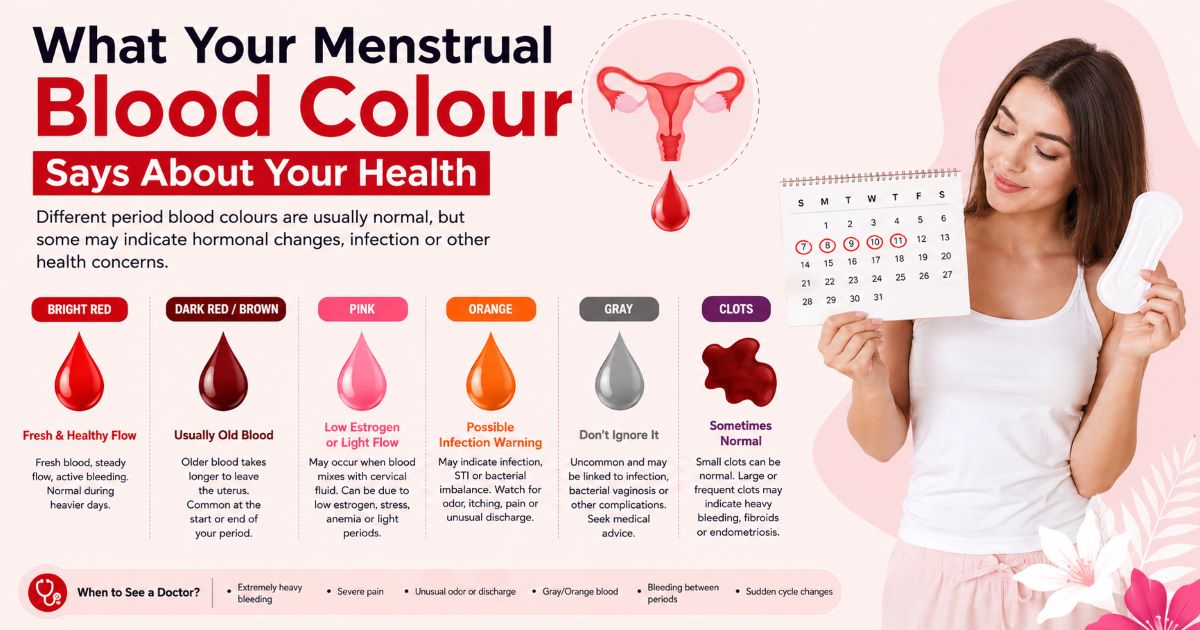
Bright Red Blood: Fresh & Healthy Flow
Bright red blood usually means:
Fresh blood leaves the uterus quickly
A steady and healthy flow
Active bleeding during the middle of your period
This is generally considered normal, especially during heavier flow days.
When to Watch Out
If bright red bleeding is:
Extremely heavy
Accompanied by severe pain
Lasting longer than 7 days
…it may be linked to fibroids, hormonal imbalance, or other conditions.
Dark Red or Brown Blood: Usually Old Blood
Dark red or brown blood is very common at:
The beginning of your period
The end of your cycle
This color usually means:
Older blood took longer to leave the uterus
Blood oxidized after exposure to oxygen
Brown spotting before or after periods is often harmless.
Possible Causes
Light flow
Delayed shedding of uterine lining
Hormonal contraceptives
Perimenopause
Pink Period Blood: Low Estrogen or Light Flow
Pink-colored blood may appear when menstrual blood mixes with cervical fluid.
Possible reasons include:
Low estrogen levels
Sudden weight loss
Excessive exercise
Stress
Anemia
Very light periods
Sometimes it’s temporary, but frequent pink periods may deserve medical attention.
Orange Blood: Possible Infection Warning
Orange-colored discharge or blood may occur due to mixing with cervical fluids. In some cases, it could signal:
Vaginal infection
Sexually transmitted infection (STI)
Bacterial imbalance
Seek medical advice if you also notice:
Strong odor
Itching
Fever
Pelvic pain
Unusual discharge
Gray Blood: Don’t Ignore It
Gray menstrual blood is uncommon and should not be ignored.
It may be associated with:
Infection
Bacterial vaginosis
Pregnancy complications (in rare cases)
If you notice gray discharge or tissue-like material, consult a healthcare professional promptly.
Clots During Periods: Are They Normal?
Small clots can be completely normal during heavier days.
However, large or frequent clots may be linked to:
Heavy bleeding
Fibroids
Hormonal imbalance
Endometriosis
You should seek medical guidance if:
Clots are larger than a coin
Bleeding feels excessive
You experience dizziness or fatigue
When Should You See a Doctor?
Consider medical advice if you experience:
Extremely heavy bleeding
Severe cramps
Missed periods repeatedly
Unusual odors
Gray or orange discharge
Sudden major cycle changes
Bleeding between periods
Tracking your menstrual cycle can help identify patterns early.
Final Thoughts
Your period is one of your body’s natural health indicators. While different blood colors are often completely normal, paying attention to changes can help you better understand your hormonal and reproductive health.
Instead of ignoring symptoms, think of your cycle as your body’s way of communicating with you.
The more informed women are about their health, the easier it becomes to recognize when something needs attention.
Frequently Asked Questions
Share this post
Comments (0)
No comments yet. Be the first to comment!