
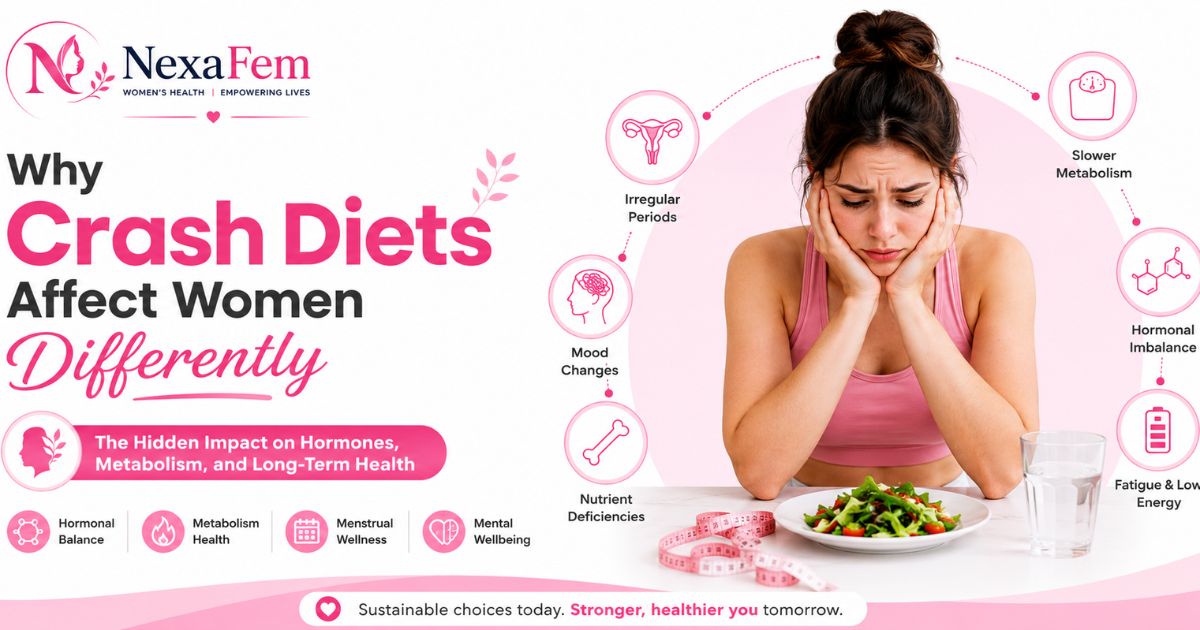
Why Crash Diets Affect Women Differently: The Hidden Impact on Hormones, Metabolism, and Long-Term Health
Learn why crash diets affect women differently, how they impact hormones and metabolism, and safer approaches to healthy weight loss.
Many women have experienced it.
You start a strict diet hoping for quick results. The scale drops rapidly during the first few weeks. You feel encouraged. Then suddenly, fatigue appears. Your mood changes. Cravings become overwhelming. Your period becomes irregular—or disappears altogether.
If this sounds familiar, you're not imagining it.
The reality is that women's bodies respond differently to extreme calorie restriction than men's bodies do. Female physiology is closely connected to reproductive hormones, energy availability, metabolism, and nutrient status. When the body senses prolonged energy shortage, it may trigger protective mechanisms that affect everything from menstrual cycles to metabolism.
Understanding why crash diets affect women differently can help women make informed, sustainable choices that support both weight management and long-term health.
Quick Summary (TL;DR)
Crash diets often create severe calorie deficits that can disrupt female hormones.
Women may experience menstrual irregularities, fatigue, mood changes, and slowed metabolism.
Extreme dieting can increase the risk of nutrient deficiencies and muscle loss.
Sustainable weight loss typically supports better long-term outcomes than rapid weight loss.
Personalized nutrition, hormonal awareness, and preventive health monitoring can help women lose weight safely.
What Is a Crash Diet?
A crash diet is an eating pattern designed to produce rapid weight loss through significant calorie restriction or elimination of major food groups.
Common examples include:
Extremely low-calorie diets
Juice cleanses
Detox diets
Single-food diets
Severe carbohydrate restriction without medical supervision
While these approaches may produce short-term weight changes, they often fail to provide sufficient nutrients and energy needed for normal body functions. According to the World Health Organization (WHO), a healthy diet should provide adequate energy, balance, moderation, and nutritional diversity. (World Health Organization)
Why Do Crash Diets Affect Women Differently?
Women's Bodies Prioritize Survival and Reproductive Health
Female biology is designed to protect reproductive function.
When calorie intake becomes too low, the body may interpret this as a period of famine or stress. As a result, it may reduce energy available for non-essential functions, including reproduction.
This is one reason some women experience:
Missed periods
Irregular menstrual cycles
Reduced ovulation
Fertility challenges
The body is essentially trying to conserve energy.
Hormones Are Highly Sensitive to Energy Availability
Women's hormones respond closely to nutritional intake.
Estrogen, progesterone, insulin, cortisol, thyroid hormones, leptin, and ghrelin all interact to regulate:
Hunger
Metabolism
Menstrual cycles
Mood
Energy levels
Fertility
When calorie intake drops dramatically, these systems can become disrupted, leading to a crash diet and hormonal imbalance.
Research and clinical guidance suggest that female reproductive hormones are particularly sensitive to prolonged calorie restriction and fasting patterns. (The Times of India)
How Crash Diets Affect Female Hormones
Estrogen Changes
Estrogen plays an essential role in:
Menstrual health
Bone health
Mood regulation
Fertility
Inadequate calorie intake may contribute to lower estrogen production.
Potential symptoms include:
Missed periods
Vaginal dryness
Mood changes
Reduced fertility
Cortisol Increases
Crash dieting can place the body under physiological stress.
This may increase cortisol, commonly known as the stress hormone.
Higher cortisol levels may contribute to:
Anxiety
Sleep disturbances
Increased cravings
Abdominal fat storage
Thyroid Function May Slow
The thyroid helps regulate metabolism.
When the body perceives prolonged energy shortage, thyroid hormone activity may decrease to conserve calories.
Women may notice:
Fatigue
Feeling cold
Slower metabolism
Reduced exercise performance
Hunger Hormones Become More Active
Calorie restriction often increases ghrelin (the hunger hormone) while reducing leptin (the fullness hormone).
This biological response can make maintaining a crash diet increasingly difficult over time. (The Times of India)
Women's Metabolism and Weight Loss: Why Faster Isn't Always Better
One of the biggest misconceptions about weight loss is that eating dramatically less always leads to better results.
The body is more complex than that.
Metabolic Adaptation
When calorie intake falls sharply, the body may:
Burn fewer calories at rest
Reduce physical activity levels unconsciously
Increase hunger signals
Preserve fat stores
This adaptive response is sometimes called metabolic adaptation.
While it is a normal survival mechanism, it can make long-term weight management more challenging. (The Times of India)
Muscle Loss Instead of Fat Loss
Rapid weight loss often includes loss of lean muscle mass.
Muscle tissue supports:
Strength
Mobility
Metabolic health
Healthy aging
Less muscle may reduce overall calorie expenditure, making future weight management harder.
Symptoms That May Suggest a Crash Diet Is Affecting Your Health
Some symptoms develop gradually and can be easy to overlook.
Watch for:
Persistent fatigue
Frequent dizziness
Hair thinning
Brittle nails
Mood swings
Increased anxiety
Missed periods
Difficulty concentrating
Poor sleep
Intense food cravings
Reduced exercise performance
If these symptoms appear during restrictive dieting, they should not be ignored.
Nutrient Deficiencies: An Often Overlooked Risk
Women have unique nutritional needs throughout different life stages.
Crash diets may increase the risk of deficiencies in:
Iron
Low iron can contribute to:
Fatigue
Weakness
Reduced concentration
Calcium and Vitamin D
These nutrients support bone health and are especially important for women approaching perimenopause and menopause.
B Vitamins
Essential for:
Energy production
Nervous system health
Cognitive function
Protein
Insufficient protein may contribute to:
Muscle loss
Poor recovery
Increased hunger
The WHO emphasizes the importance of adequate micronutrient intake for overall health, growth, and physiological function. (World Health Organization)
Mental Health Effects of Crash Dieting
Weight loss discussions often focus on physical health while overlooking emotional wellbeing.
Many women report:
Increased stress
Food guilt
Obsessive calorie tracking
Social isolation around eating
Reduced self-esteem
Repeated cycles of restrictive dieting followed by weight regain may also contribute to frustration and body image concerns.
A preventive health approach recognizes that emotional health and physical health are deeply connected.
Who Is Most Vulnerable to the Effects of Crash Dieting?
Certain groups may be more sensitive to severe calorie restriction.
Women With PCOS
Women with PCOS often experience insulin resistance and hormonal imbalances.
Extreme dieting may worsen stress responses and create unsustainable eating patterns.
This topic connects closely with understanding the relationship between PCOS and weight gain.
Women Trying to Conceive
Adequate nutrition is essential for ovulation and fertility.
Perimenopausal Women
Hormonal fluctuations during perimenopause already affect metabolism and body composition.
Crash diets may intensify fatigue and hormonal symptoms.
Athletes and Highly Active Women
Inadequate energy intake may increase the risk of menstrual dysfunction and reduced performance.
Healthy Weight Loss for Women: What Works Better?
Sustainable weight loss is rarely dramatic.
Instead, it focuses on supporting metabolism, hormones, and long-term habits.
Prioritize Adequate Protein
Protein supports:
Muscle preservation
Satiety
Recovery
Healthy metabolism
You may also find value in learning about why women need more protein than they think.
Build Balanced Meals
The WHO recommends balanced dietary patterns that include a variety of minimally processed foods. (World Health Organization)
Aim for:
Lean protein
Vegetables
Fruits
Whole grains
Healthy fats
Strength Training
Strength training helps:
Preserve muscle mass
Improve metabolic health
Support healthy aging
Get Enough Sleep
Poor sleep may affect appetite regulation and weight management. ACOG notes that insufficient sleep is associated with higher body fat levels. (ACOG)
Track Health Beyond the Scale
Weight is only one metric.
Consider monitoring:
Energy levels
Menstrual regularity
Sleep quality
Strength improvements
Mood changes
NexaFem's symptom tracking tools and hormonal intelligence assessments can help women identify patterns that may otherwise go unnoticed.
Common Mistakes Women Make
Many women are simply following advice that was never designed for female physiology.
Common mistakes include:
Skipping meals regularly
Following social media detox diets
Eliminating entire food groups unnecessarily
Ignoring menstrual cycle changes
Prioritizing scale weight over overall health
Underestimating protein needs
Overexercising while under-fueling
Lifestyle Tips for Sustainable Success
Healthy habits often outperform extreme diets over time.
Focus on:
Consistent meal timing
Strength training two to four times weekly
Adequate hydration
Stress management
Mindful eating
Regular health screenings
Tracking menstrual health patterns
Women interested in personalized guidance may also benefit from a women's metabolic health assessment tool or a hormonal symptom checker to better understand their body's unique responses.
When to See a Doctor
Consult a healthcare professional if you experience:
Missed periods for several months
Significant fatigue
Rapid unexplained weight changes
Persistent dizziness
Hair loss
Fertility concerns
Signs of nutrient deficiency
Early intervention can help prevent complications and support recovery.
Red Flag Symptoms
Seek prompt medical evaluation if you experience:
Fainting
Severe weakness
Chest pain
Heart palpitations
Severe dehydration
Significant menstrual disruption
Symptoms of an eating disorder
Final Thoughts
Understanding why crash diets affect women differently is about more than weight loss.
Women's bodies are sophisticated systems that constantly balance energy, hormones, reproductive health, metabolism, and emotional wellbeing. While crash diets may promise quick results, they often overlook the biological realities that make female health unique.
At NexaFem, we believe preventive healthcare begins with understanding your body's signals. Through hormonal intelligence, symptom awareness, personalized wellness insights, and AI-powered preventive health support, women can make informed decisions that prioritize both immediate goals and lifelong health.
The healthiest transformation is rarely the fastest one. It is the one that supports your hormones, protects your metabolism, and helps you feel stronger—not just lighter.
Sources & References
World Health Organization (WHO) – Healthy Diet: https://www.who.int/en/news-room/fact-sheets/detail/healthy-diet
World Health Organization (WHO) – Nutrition: https://www.who.int/health-topics/nutrition
World Health Organization (WHO) – Micronutrients: https://www.who.int/nutrition/topics/micronutrients/en/
American College of Obstetricians and Gynecologists (ACOG) – Weight Control: Eating Right and Keeping Fit: https://www.acog.org/womens-health/faqs/weight-control-eating-right-and-keeping-fit
Disclaimer
This article is intended for informational and educational purposes only and should not be considered medical advice, diagnosis, or treatment. Health information is constantly evolving, and individual needs vary. Always consult a qualified healthcare professional, registered dietitian, gynecologist, or physician regarding any medical concerns, symptoms, dietary changes, weight management plans, or treatment decisions. NexaFem does not replace professional medical care, diagnosis, or emergency services.
Frequently Asked Questions
Share this post
Comments (0)
No comments yet. Be the first to comment!