
Why More Women Are Freezing Their Eggs Today: A Complete Guide to Egg Freezing and Fertility Planning
Learn why egg freezing is becoming more popular, who may benefit, costs, success rates, risks, and fertility planning options for women.
For many women, life does not always follow a predictable timeline.
Higher education, career goals, financial stability, finding the right partner, health challenges, or simply wanting more time can influence when a woman feels ready to start a family.
At the same time, fertility naturally changes with age. This reality has led many women to explore egg freezing as a proactive way to preserve future reproductive possibilities.
Once considered a niche fertility treatment, egg freezing has become an increasingly common part of modern fertility planning for women. Advances in reproductive medicine, improved success rates, greater awareness, and changing social trends have all contributed to its growing popularity.
Understanding what egg freezing can and cannot do is essential for making informed reproductive health decisions.
Quick Summary (TL;DR)
Egg freezing is a fertility preservation technique that allows women to store unfertilized eggs for future use.
More women are choosing egg freezing because they are delaying motherhood, pursuing education or career goals, or managing medical conditions that may affect fertility.
Egg quality and quantity naturally decline with age, making earlier fertility planning beneficial for some women.
Egg freezing does not guarantee a future pregnancy, but it may increase reproductive options later in life.
A fertility specialist can help determine whether egg freezing aligns with your personal goals and health needs.
What Is Egg Freezing?
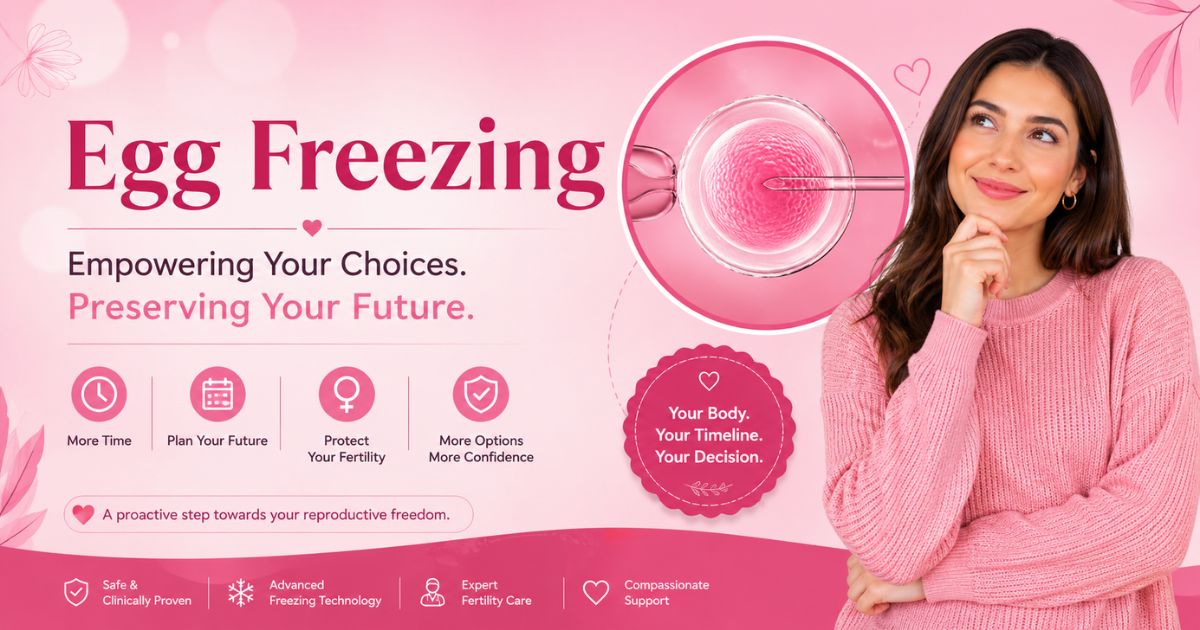
Egg freezing, also known as oocyte cryopreservation, is a medical procedure used to preserve a woman's eggs for future pregnancy attempts.
The process involves:
Hormonal stimulation of the ovaries
Monitoring egg development through blood tests and ultrasound scans
Egg retrieval through a minor procedure
Rapid freezing of mature eggs using vitrification technology
Long-term storage in specialized fertility laboratories
When a woman decides to pursue pregnancy later, the eggs may be thawed, fertilized with sperm, and transferred to the uterus through IVF (in vitro fertilization).
According to the American College of Obstetricians and Gynecologists (ACOG), egg freezing is considered an established fertility preservation method for appropriate candidates.
Source: ACOG Fertility Preservation Guidance
Why Are More Women Choosing Egg Freezing?
The rise in egg freezing reflects broader changes in women's lives and healthcare choices.
Greater Focus on Fertility Planning
Today's women are becoming more informed about reproductive health than previous generations.
Many now recognize that fertility is an important aspect of preventive healthcare, similar to monitoring hormonal health, menstrual cycles, and overall wellness.
This increased awareness encourages earlier conversations about fertility preservation.
Delaying Motherhood
One of the most common reasons women consider egg freezing is delaying motherhood.
Women may choose to postpone pregnancy because of:
Educational goals
Career development
Financial planning
Personal circumstances
Relationship considerations
Desire for greater life stability
Egg freezing may provide additional reproductive flexibility while these life goals evolve.
Increased Awareness of Age-Related Fertility Changes
Female fertility gradually declines with age, especially after the mid-30s.
The NHS explains that both egg quantity and egg quality decrease over time, making conception more difficult for some women.
Source: NHS Fertility Information
As awareness of this biological reality grows, many women are exploring reproductive health options earlier than previous generations.
Medical Reasons
Some women pursue egg freezing because medical treatments may affect fertility.
Examples include:
Cancer treatment
Certain autoimmune diseases
Endometriosis
Ovarian surgery
Genetic conditions affecting ovarian reserve
For these individuals, fertility preservation may become part of their overall treatment planning.
Advances in Technology
Modern vitrification techniques have significantly improved egg survival after thawing.
Compared with earlier freezing methods, current technologies offer better preservation outcomes, helping increase confidence in the procedure.
Who May Consider Egg Freezing?
Egg freezing is a personal decision.
Women who may wish to discuss fertility preservation with a specialist include:
Women Ages 25–34
Many fertility experts consider this age range favorable for egg quality.
Women who are not planning pregnancy in the near future may want to understand their options.
Women Ages 35–40
Egg freezing may still be beneficial, although egg quantity and quality generally begin to decline.
Individual fertility assessments become especially important during this stage.
Women With Medical Conditions
Certain health conditions can impact future fertility.
Examples include:
Endometriosis
Premature ovarian insufficiency
Cancer diagnoses
Autoimmune disorders
Women Seeking Reproductive Flexibility
Some women simply want additional reproductive choices while pursuing other personal goals.
How Does Age Affect Egg Freezing Success?
One of the most important factors influencing outcomes is age at the time eggs are frozen.
In general:
Younger eggs tend to have higher reproductive potential.
More eggs may be required as age increases.
Egg quality declines naturally over time.
Earlier fertility preservation often provides more options later.
This is why fertility specialists often recommend evaluating fertility health before age-related changes become more significant.
Women interested in understanding their reproductive timeline may benefit from a fertility assessment and ovarian reserve evaluation.
What Tests Are Done Before Egg Freezing?
A fertility specialist typically performs several assessments.
Medical History Review
Your healthcare provider may discuss:
Menstrual cycle history
Reproductive history
Previous pregnancies
Medical conditions
Family history
Hormone Testing
Common tests may include:
AMH (Anti-Müllerian Hormone)
FSH (Follicle-Stimulating Hormone)
Estradiol
Ultrasound Evaluation
An antral follicle count can help estimate ovarian reserve.
Together, these assessments help guide personalized recommendations.
Are There Risks Associated With Egg Freezing?
Egg freezing is generally considered safe when performed by experienced fertility specialists.
Potential risks may include:
Temporary bloating
Pelvic discomfort
Injection site reactions
Mild ovarian hyperstimulation syndrome (OHSS)
Rare procedural complications
Women should discuss benefits and risks thoroughly with their healthcare team.
Hormonal and Emotional Considerations
The conversation around egg freezing often focuses on biology and technology.
However, emotional wellbeing matters too.
Some women experience:
Relief
Empowerment
Anxiety
Uncertainty
Hope
Decision fatigue
It is important to remember that fertility decisions are deeply personal.
Mental health support, counseling, and trusted medical guidance can help women navigate these choices with greater confidence.
At NexaFem, we believe reproductive decisions should be supported by both medical expertise and emotional understanding.
What Are Common Misconceptions About Egg Freezing?
Myth: Egg Freezing Guarantees Pregnancy
Reality: Egg freezing preserves reproductive potential but does not guarantee a future baby.
Myth: Only Older Women Freeze Their Eggs
Reality: Many women freeze eggs in their late 20s or early 30s when egg quality is generally higher.
Myth: Egg Freezing Is Only for Career-Focused Women
Reality: Women choose egg freezing for many reasons, including medical concerns, personal circumstances, and fertility preservation.
Myth: Fertility Decline Happens Suddenly
Reality: Fertility changes gradually over time, although the rate varies among individuals.
Lifestyle Factors That Support Fertility Health
While no lifestyle habit can stop reproductive aging, certain behaviors support overall reproductive wellness.
Nutrition
Focus on:
Fruits and vegetables
Whole grains
Healthy fats
Lean protein
Adequate hydration
Physical Activity
Regular movement supports overall health and hormonal balance.
Sleep
Consistent sleep supports reproductive and metabolic health.
Avoid Smoking
The CDC notes that smoking may negatively affect fertility and reproductive health.
Source: CDC Reproductive Health Resources
Manage Stress
Chronic stress may impact overall wellbeing and quality of life.
Mindfulness, therapy, exercise, and social support can be beneficial.
What Are the Different Reproductive Health Options Available?
Egg freezing is one of several reproductive health options available today.
Depending on individual circumstances, women may consider:
Natural conception planning
Egg freezing
Embryo freezing
IVF
Fertility preservation before medical treatment
Donor eggs in certain situations
A fertility specialist can help determine which option best aligns with personal goals and medical history.
When Should You See a Fertility Specialist?
Consider scheduling a consultation if:
You are considering egg freezing.
You have concerns about future fertility.
You have irregular menstrual cycles.
You have endometriosis.
You have a family history of early menopause.
You are planning fertility-preserving medical treatment.
Early conversations often provide the greatest range of options.
Red Flag Symptoms That Should Not Be Ignored
Seek medical evaluation if you experience:
Absent menstrual periods
Significant cycle irregularity
Severe pelvic pain
Suspected endometriosis
Early menopause symptoms
Recurrent pregnancy loss
These symptoms may indicate underlying reproductive health conditions requiring assessment.
Common Mistakes Women Make
Many women unintentionally delay fertility conversations because they assume fertility will remain unchanged until later in life.
Other common mistakes include:
Waiting too long to learn about fertility health
Assuming regular periods guarantee fertility
Believing egg freezing guarantees future pregnancy
Ignoring symptoms of reproductive disorders
Relying solely on online information without medical guidance
The Future of Fertility Planning
Healthcare is increasingly shifting toward prevention rather than reaction.
Women today have access to more reproductive information, fertility assessments, hormonal monitoring tools, and personalized healthcare solutions than ever before.
AI-powered platforms like NexaFem represent the next generation of preventive women's healthcare by helping women understand patterns in their hormonal, menstrual, and reproductive health before concerns become larger problems.
The goal is not simply preserving fertility.
The goal is empowering women with knowledge, timing, and informed choices.
Final Thoughts
The growing popularity of egg freezing reflects a broader shift in how women approach health, family planning, and personal goals.
While egg freezing is not a guarantee, it can be a valuable fertility preservation option for some women. Understanding your fertility, discussing concerns early, and seeking evidence-based medical guidance can help you make informed decisions about your reproductive future.
At NexaFem, we believe preventive healthcare begins with awareness. By combining women's health expertise with AI-powered health intelligence, we aim to help women make confident, informed choices throughout every stage of life.
Sources & References
WHO Women's Health Resources: https://www.who.int
NHS Fertility Information: https://www.nhs.uk
ACOG Fertility Preservation Guidance: https://www.acog.org
CDC Reproductive Health Resources: https://www.cdc.gov
NICE Fertility Guidelines: https://www.nice.org.uk
SEO Metadata
Primary Keyword: Egg Freezing
Secondary Keywords:
Fertility Planning for Women
Delaying Motherhood
Reproductive Health Options
Article Category: Fertility Health
Search Intent: Informational
Medical Disclaimer
This content is provided for informational and educational purposes only and should not be considered medical advice, diagnosis, or treatment. Every woman's health situation is unique. If you have concerns about fertility, reproductive health, hormonal health, or any medical condition, please consult a qualified healthcare professional, fertility specialist, or licensed physician for personalized guidance and appropriate care.
Frequently Asked Questions
Share this post
Comments (0)
No comments yet. Be the first to comment!