
Women's Hormone Health Across Every Life Stage: What Every Woman Should Know
Learn how women's hormone health changes from puberty to menopause, common symptoms, preventive care tips, and ways to support hormonal balance.
Hormones quietly influence nearly every aspect of a woman's health.
From the first menstrual cycle during adolescence to the hormonal shifts of perimenopause and menopause, these chemical messengers affect energy levels, mood, metabolism, fertility, sleep, bone health, heart health, and overall well-being.
Yet many women are never taught how their hormones naturally change throughout life. As a result, symptoms such as irregular periods, fatigue, mood changes, weight fluctuations, sleep disturbances, or hot flashes can feel confusing or even alarming.
Understanding women's hormone health isn't about striving for perfection. It's about learning how your body evolves, recognizing what's normal, identifying when something may need medical attention, and supporting your health proactively.
At NexaFem, we believe hormonal intelligence is a key part of preventive healthcare. The more you understand your body's signals, the better equipped you are to make informed decisions throughout every life stage.
Quick Summary (TL;DR)
Women's hormones naturally change from puberty through menopause.
Estrogen, progesterone, testosterone, thyroid hormones, and cortisol all influence overall health.
Different life stages bring unique hormonal challenges and symptoms.
Lifestyle habits, nutrition, sleep, stress management, and preventive healthcare can support hormone health.
Persistent or severe symptoms should be evaluated by a healthcare professional.
What Is Women's Hormone Health?
Women's hormone health refers to the balance and function of hormones that regulate reproduction, metabolism, mood, sleep, stress responses, and many other body systems.
The primary hormones involved include:
Estrogen
Progesterone
Testosterone
Follicle-stimulating hormone (FSH)
Luteinizing hormone (LH)
Thyroid hormones
Cortisol
Insulin
According to the World Health Organization (WHO) and major women's health organizations, hormonal health plays a crucial role in long-term physical and mental well-being.
Why Do Hormones Change Throughout Life?
Hormones are not static.
They naturally fluctuate in response to:
Age
Menstrual cycles
Pregnancy
Breastfeeding
Stress
Sleep patterns
Nutrition
Medical conditions
Perimenopause and menopause
Understanding women's health by age helps put these changes into context rather than viewing every symptom as a problem.
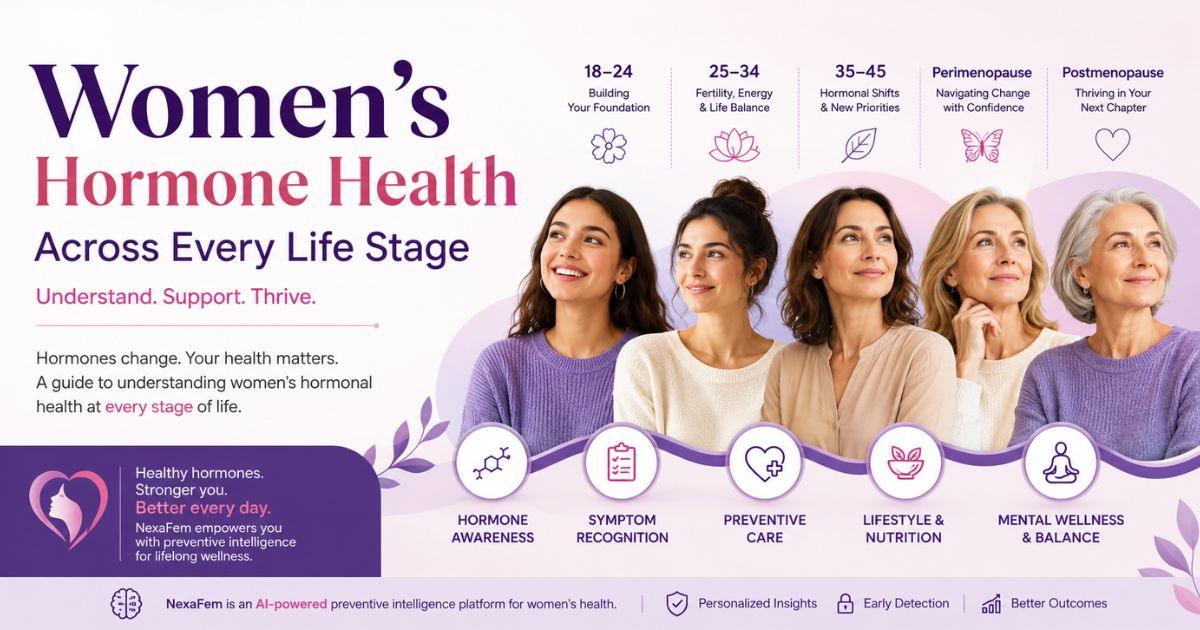
Women's Hormone Health in Your Late Teens and Early 20s (18–24)
This period is often characterized by hormonal maturation.
Although menstruation may have started years earlier, hormone patterns are still stabilizing.
Common Hormonal Experiences
Women may experience:
Irregular menstrual cycles
Acne
Mood fluctuations
PMS symptoms
Painful periods
Changes in appetite
Sleep disruption
Potential Hormonal Conditions
Some women begin showing signs of:
Polycystic Ovary Syndrome (PCOS)
Thyroid disorders
Endometriosis
Iron deficiency related to heavy periods
If symptoms significantly affect daily life, early assessment can improve long-term health outcomes.
For women experiencing irregular cycles, understanding menstrual cycle phases can provide valuable insight into normal hormonal patterns.
Women's Hormone Health in Your 20s and Early 30s (25–34)
This stage is often associated with career growth, relationships, family planning, and increased life stress.
Hormonal health may be influenced by:
Stress
Shift work
Sleep deprivation
Pregnancy
Postpartum recovery
Contraceptive use
Common Symptoms Women Notice
Fatigue
Anxiety
Mood changes
Weight fluctuations
Fertility concerns
Low libido
Cycle irregularities
Fertility and Hormonal Health
Hormones play a central role in:
Ovulation
Egg quality
Menstrual cycle regularity
Pregnancy support
The American College of Obstetricians and Gynecologists (ACOG) recommends discussing menstrual changes, fertility concerns, and reproductive planning with a healthcare professional when needed.
Women tracking fertility or cycle symptoms may benefit from a hormone symptom tracker or cycle insights tool that helps identify patterns over time.
Women's Hormone Health in Your Mid-30s to Mid-40s (35–45)
This stage often represents a transition period.
Hormonal shifts may begin years before menopause becomes noticeable.
What Changes May Occur?
Women may notice:
Increased PMS symptoms
Sleep difficulties
Mood swings
Heavier periods
Shorter cycles
Fatigue
Weight redistribution
These symptoms do not automatically indicate menopause but may reflect changing ovarian hormone production.
Risk Factors That Can Affect Hormonal Health
Certain factors may increase hormonal challenges:
Chronic stress
Smoking
Obesity
Insulin resistance
Thyroid disorders
Family history of reproductive conditions
Preventive screenings become increasingly important during this life stage.
Women's Hormone Health During Perimenopause
What Is Perimenopause?
Perimenopause is the transitional period leading up to menopause.
According to the National Health Service (NHS), perimenopause may begin several years before menopause and often starts during the 40s, although some women experience changes earlier.
Common Perimenopause Symptoms
Irregular periods
Hot flashes
Night sweats
Sleep disturbances
Anxiety
Mood changes
Brain fog
Vaginal dryness
Reduced libido
Hormone fluctuations during this stage can be unpredictable, which often explains why symptoms vary significantly from month to month.
Women concerned about these changes may find it helpful to learn about early perimenopause symptoms and how they differ from other hormonal conditions.
Women's Hormone Health After Menopause
Menopause is officially diagnosed after 12 consecutive months without a menstrual period.
After menopause:
Estrogen levels decline significantly
Bone density decreases more rapidly
Heart health risks increase
Vaginal tissues may become thinner
Metabolism may slow
The focus shifts toward maintaining long-term health and quality of life.
Healthy Aging Strategies
Research from organizations including the Centers for Disease Control and Prevention (CDC) supports:
Regular physical activity
Strength training
Adequate protein intake
Bone health monitoring
Cardiovascular risk assessment
Preventive healthcare visits
How Hormones Affect Mental Wellness
Hormones and mental health are closely connected.
Changes in estrogen and progesterone can influence:
Mood regulation
Stress responses
Anxiety levels
Emotional resilience
Sleep quality
Women may notice emotional changes during:
PMS
Pregnancy
Postpartum recovery
Perimenopause
Menopause
Persistent anxiety, depression, or significant mood changes should be evaluated by a healthcare professional.
Mental health deserves the same attention and care as physical health.
What Causes Hormonal Imbalances?
Hormonal imbalance is not a diagnosis itself but a description of hormone levels or patterns that may contribute to symptoms.
Potential causes include:
PCOS
Thyroid disorders
Perimenopause
Premature ovarian insufficiency
Chronic stress
Obesity
Insulin resistance
Certain medications
Sleep disorders
Understanding the causes of hormonal imbalance can help women seek timely evaluation and appropriate treatment.
How Are Hormonal Issues Diagnosed?
Diagnosis typically begins with:
Medical History
Your healthcare provider may ask about:
Menstrual cycles
Symptoms
Family history
Lifestyle habits
Medications
Physical Examination
This may include assessment of:
Weight changes
Blood pressure
Skin changes
Hair growth patterns
Laboratory Testing
Depending on symptoms, tests may include:
Thyroid function tests
Blood glucose testing
Reproductive hormone levels
Iron studies
Lipid profiles
Testing recommendations vary depending on age, symptoms, and medical history.
Nutrition for Women's Hormone Health
No single food can "balance hormones," but nutrition plays an important supportive role.
Focus on:
Fruits and vegetables
Whole grains
Lean proteins
Healthy fats
Omega-3-rich foods
Calcium-rich foods
Vitamin D sources
Limit Excessive:
Ultra-processed foods
Added sugars
Excess alcohol
Highly refined carbohydrates
The principles outlined in guidance from organizations such as NICE (National Institute for Health and Care Excellence) emphasize overall dietary quality rather than restrictive eating approaches.
Lifestyle Tips for Better Hormonal Health
Small daily habits can support hormonal wellness.
Prioritize Sleep
Aim for consistent sleep schedules whenever possible.
Manage Stress
Helpful strategies include:
Mindfulness
Walking
Yoga
Therapy
Relaxation techniques
Stay Physically Active
Exercise supports:
Insulin sensitivity
Heart health
Bone health
Mood regulation
Track Symptoms
Using a symptom checker or hormone health assessment tool can help identify patterns worth discussing with a healthcare provider.
Common Mistakes Women Make About Hormone Health
Many women unintentionally delay support because they:
Ignore persistent symptoms
Assume severe symptoms are "normal"
Rely solely on social media advice
Self-diagnose without medical evaluation
Overuse supplements without professional guidance
Hormonal health is highly individual. Personalized care matters.
When to See a Doctor
Schedule a medical evaluation if you experience:
Very irregular periods
Heavy menstrual bleeding
Severe pelvic pain
Persistent fatigue
Sudden weight changes
Fertility concerns
Frequent hot flashes
Significant mood changes
Early intervention can often improve outcomes and quality of life.
Red Flag Symptoms That Require Prompt Medical Attention
Seek urgent medical care if you experience:
Sudden chest pain
Severe shortness of breath
Fainting
Extremely heavy bleeding
New neurological symptoms
Severe abdominal pain
These symptoms may indicate conditions unrelated to routine hormonal changes and require immediate evaluation.
Final Thoughts
Women's hormone health is not a single phase of life—it's a lifelong journey.
From adolescence to menopause and beyond, hormones continuously shape physical, emotional, and reproductive health. Understanding these changes can reduce confusion, support informed decision-making, and encourage earlier intervention when symptoms arise.
At NexaFem, we believe that preventive healthcare begins with awareness. Through hormonal intelligence, menstrual intelligence, symptom tracking, and personalized wellness insights, women can better understand their bodies and advocate for their long-term health.
The goal is not to control every hormonal fluctuation. The goal is to understand your body's signals, recognize meaningful changes, and seek support when needed.
Sources & References
World Health Organization (WHO): https://www.who.int
National Health Service (NHS): https://www.nhs.uk
American College of Obstetricians and Gynecologists (ACOG): https://www.acog.org
Centers for Disease Control and Prevention (CDC): https://www.cdc.gov
National Institute for Health and Care Excellence (NICE): https://www.nice.org.uk
Disclaimer
This article is intended for informational and educational purposes only and should not be considered medical advice, diagnosis, or treatment. Health information is constantly evolving, and individual circumstances vary. Always consult a qualified healthcare professional, gynecologist, endocrinologist, or other licensed medical provider regarding any symptoms, medical concerns, treatment decisions, or questions about your personal health.
Frequently Asked Questions
Share this post
Comments (0)
No comments yet. Be the first to comment!