
How to Recognize PCOS Early: 10 Common Symptoms in Women
Learn the early symptoms of PCOS, warning signs, causes, diagnosis, fertility impact, and when to seek medical advice.
Have your periods become unpredictable? Are you struggling with unexplained weight gain, persistent acne, or unwanted facial hair?
At first, these symptoms may seem unrelated. You might blame stress, a busy lifestyle, poor sleep, or simply getting older. But when several of these changes occur together, they could be early signs of Polycystic Ovary Syndrome (PCOS).
PCOS is one of the most common hormonal disorders affecting women of reproductive age. Yet many women spend years searching for answers before receiving a diagnosis.
The challenge is that PCOS symptoms often develop gradually. What starts as occasional missed periods may eventually lead to hormonal imbalances, fertility concerns, metabolic issues, and emotional distress.
The good news? Early recognition can make a meaningful difference.
Understanding the Early Symptoms of PCOS can help women seek appropriate medical guidance, improve hormone health, support fertility, and reduce future health risks.
Related Reading: Complete Guide to PCOS Symptoms and Treatment.
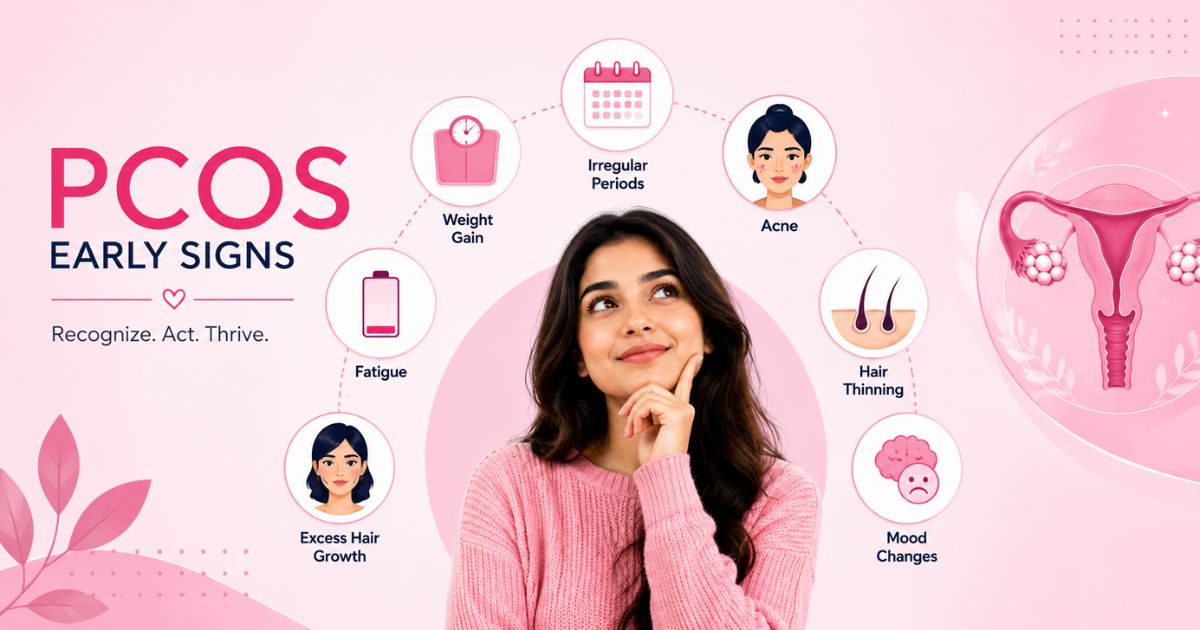
Quick Answer: What Are the Early Signs of PCOS?
The most common early symptoms of PCOS include:
Irregular periods
Weight gain
Persistent acne
Excess facial hair
Hair thinning
Fatigue
Mood changes
Difficulty losing weight
Dark skin patches
Fertility challenges
Many women experience several symptoms at the same time rather than just one isolated issue.
Why Early Recognition Matters
PCOS affects more than reproductive health.
It can influence:
Hormones
Metabolism
Mental wellbeing
Skin health
Fertility
Long-term cardiovascular health
Benefits of Identifying PCOS Early
Early diagnosis may help:
✓ Improve hormone balance
✓ Support healthier menstrual cycles
✓ Reduce the risk of insulin resistance
✓ Lower future diabetes risk
✓ Improve fertility outcomes
✓ Support emotional wellbeing
✓ Encourage preventive healthcare decisions
Quick Summary
The earlier PCOS is recognized, the more opportunities women have to manage symptoms and protect long-term health.
Symptom #1: Irregular Periods
Why Does PCOS Affect Menstrual Cycles?
One of the earliest and most common signs of PCOS is irregular menstruation.
Because PCOS can disrupt ovulation, menstrual cycles often become unpredictable.
Common Signs
Missed periods
Delayed periods
Cycles longer than 35 days
Fewer than eight periods per year
Heavy menstrual bleeding
Inconsistent cycle lengths
Many women assume irregular periods are normal. However, persistent cycle irregularities deserve medical attention.
Symptom #2: Unexplained Weight Gain
Why Does PCOS Cause Weight Gain?
Many women notice gradual weight gain before they ever hear the term PCOS.
A major reason is insulin resistance, which is common among women with PCOS.
Higher insulin levels can encourage:
Fat storage
Increased hunger
Sugar cravings
Belly fat accumulation
Common Pattern
Women often report:
"I'm eating the same way I always have, but I'm gaining weight."
This experience is common and can be linked to hormonal and metabolic changes rather than lack of effort.
Symptom #3: Persistent Acne
Hormonal Acne and PCOS
Acne during the teenage years is common.
However, acne that continues into adulthood may signal an underlying hormonal imbalance.
Typical PCOS Acne Areas
Jawline
Chin
Lower cheeks
Neck
Why It Happens
Women with PCOS often produce higher levels of androgens.
These hormones can increase oil production, leading to:
Clogged pores
Inflammation
Persistent breakouts
Adult acne that does not improve with standard skincare may warrant further evaluation.
Symptom #4: Excess Facial or Body Hair
Hirsutism and PCOS
Excess hair growth is another common early warning sign.
Areas Commonly Affected
Upper lip
Chin
Jawline
Chest
Abdomen
Back
Why It Occurs
Elevated androgen levels stimulate hair growth in areas where women typically have minimal hair.
For many women, this symptom can significantly affect confidence and emotional wellbeing.
Symptom #5: Hair Thinning or Hair Loss
PCOS and Female Pattern Hair Loss
While excess facial hair may increase, scalp hair may become thinner.
This seemingly contradictory pattern occurs because androgen hormones affect hair follicles differently throughout the body.
Signs to Watch For
Increased hair shedding
Widening hair part
Thinning at the crown
Reduced hair volume
Hair changes often develop gradually and may be overlooked for years.
Symptom #6: Constant Fatigue
Why PCOS Can Make You Feel Exhausted
Fatigue is one of the most overlooked symptoms of PCOS.
Many women describe feeling tired even after getting enough sleep.
Potential Contributors
Insulin resistance
Blood sugar fluctuations
Sleep disturbances
Chronic inflammation
Hormonal imbalances
What Fatigue May Feel Like
Low energy
Brain fog
Reduced motivation
Difficulty concentrating
If fatigue persists despite adequate rest, it may be worth discussing with a healthcare provider.
Symptom #7: Mood Swings, Anxiety and Low Mood
PCOS and Emotional Wellbeing
Hormones influence more than physical health.
They also play a major role in emotional regulation.
Women with PCOS may experience:
Anxiety
Irritability
Mood swings
Low self-esteem
Depression symptoms
Emotional exhaustion
Why Mental Health Matters
Living with visible symptoms such as acne, weight gain, or unwanted hair growth can also affect confidence and body image.
Mental wellness should always be considered part of PCOS management.
Symptom #8: Difficulty Losing Weight
Why Diet and Exercise May Feel Less Effective
Many women with PCOS work extremely hard to lose weight but see limited results.
This can feel frustrating and discouraging.
Contributing Factors
Hormonal imbalances
Insulin resistance
Appetite regulation changes
Blood sugar fluctuations
Slower metabolic responses
This does not mean weight loss is impossible.
It simply means that women with PCOS often require more personalized strategies and long-term approaches.
Symptom #9: Dark Skin Patches
Acanthosis Nigricans
Darkened skin patches may appear in certain areas of the body.
Common Locations
Neck
Underarms
Groin
Skin folds
Why It Happens
Acanthosis Nigricans is often associated with insulin resistance.
The skin may appear:
Darker
Thicker
Velvety in texture
Because insulin resistance plays a major role in PCOS, this symptom can provide an important clue during early diagnosis.
Symptom #10: Fertility Challenges
PCOS and Ovulation Problems
PCOS can affect fertility because it may disrupt regular ovulation.
Without consistent ovulation, conception becomes more difficult.
Common Fertility Symptoms
Irregular ovulation
Missed ovulation
Difficulty identifying fertile windows
Delayed conception
Can Women With PCOS Get Pregnant?
Yes.
Many women with PCOS successfully become pregnant.
With appropriate medical care, lifestyle support, and fertility guidance, pregnancy is often achievable.
Do You Have These PCOS Symptoms?
Use this checklist as a general awareness tool.
PCOS Symptom Checklist
☐ Irregular periods
☐ Weight gain
☐ Acne
☐ Facial hair growth
☐ Hair thinning
☐ Fatigue
☐ Mood changes
☐ Difficulty losing weight
☐ Dark skin patches
☐ Fertility concerns
If several of these symptoms apply to you, consider discussing them with a qualified healthcare professional.
Other Symptoms That May Occur
Some women also experience:
Oily skin
Sleep problems
Brain fog
Increased cravings
Bloating
Headaches
Difficulty concentrating
Not every woman experiences the same symptoms.
PCOS can look different from person to person.
What Causes PCOS?
While the exact cause remains unclear, experts believe multiple factors contribute.
Common Risk Factors
Family history
Insulin resistance
Hormonal imbalance
Chronic inflammation
Sedentary lifestyle
Poor sleep quality
Chronic stress
PCOS is a complex condition involving both reproductive and metabolic health.
How Is PCOS Diagnosed?
Healthcare professionals may use:
Medical History Review
Questions about:
Menstrual cycles
Weight changes
Skin concerns
Fertility issues
Blood Tests
May evaluate:
Testosterone
Insulin
Blood sugar
Thyroid function
Ultrasound
May help assess ovarian appearance.
Rotterdam Criteria
Diagnosis is often based on at least two of the following:
Irregular ovulation
Elevated androgen levels
Polycystic ovaries
Treatment Overview
There is currently no cure for PCOS.
However, symptoms can often be managed effectively.
Common Treatment Approaches
Lifestyle modifications
Nutrition support
Exercise
Sleep optimization
Stress management
Hormonal medications when appropriate
Insulin management strategies
Treatment plans should always be personalized.
Lifestyle Tips for Managing PCOS
Focus on Balanced Nutrition
Prioritize:
Lean protein
Vegetables
Fiber-rich foods
Healthy fats
Stay Physically Active
Helpful activities include:
Walking
Strength training
Yoga
Cycling
Prioritize Sleep
Aim for consistent, restorative sleep whenever possible.
Manage Stress
Helpful techniques include:
Meditation
Journaling
Therapy
Mindfulness practices
Small sustainable habits often produce better results than extreme approaches.
Red Flag Symptoms
Seek medical advice promptly if you experience:
Missing periods for several months
Rapid unexplained weight gain
Severe acne
Excessive facial hair growth
Fertility concerns
Heavy or prolonged bleeding
Significant mood changes
Common Mistakes Women Make
Many women delay diagnosis because they:
Ignore irregular periods
Assume weight gain is only lifestyle-related
Self-diagnose through social media
Delay medical evaluation
Follow restrictive crash diets
Focus only on symptoms instead of root causes
Early medical guidance can prevent unnecessary frustration.
Can PCOS Be Prevented?
PCOS cannot always be prevented.
However, women can support hormonal health through:
Regular physical activity
Balanced nutrition
Healthy sleep habits
Stress management
Symptom tracking
Preventive healthcare checkups
Awareness remains one of the most powerful tools.
How AI Is Helping Women Detect Symptoms Earlier
Women's healthcare is entering a new era of preventive intelligence.
AI-powered tools can help women:
Track menstrual cycles
Monitor symptom patterns
Recognize hormonal trends
Identify changes earlier
Support informed healthcare conversations
At NexaFem, our vision is to help women better understand their bodies through AI-powered hormonal intelligence, preventive health insights, and personalized wellness support.
By combining technology with evidence-based education, women can take a more proactive approach to their health journey.
Final Thoughts
The Early Symptoms of PCOS are often subtle at first.
A missed period here.
A little extra facial hair there.
Some unexplained fatigue or stubborn weight gain.
Individually, these changes may not seem significant. Together, however, they can tell an important story about hormonal health.
Recognizing PCOS early can improve fertility outcomes, metabolic wellness, emotional wellbeing, and long-term quality of life.
If several symptoms in this article sound familiar, consider speaking with a healthcare professional for proper evaluation.
Take the Next Step
Explore NexaFem's hormonal health resources, symptom-awareness guides, and AI-powered wellness tools to better understand your body, identify patterns, and take a more preventive approach to women's health.
External Authority References
Frequently Asked Questions
Share this post
Comments (0)
No comments yet. Be the first to comment!