
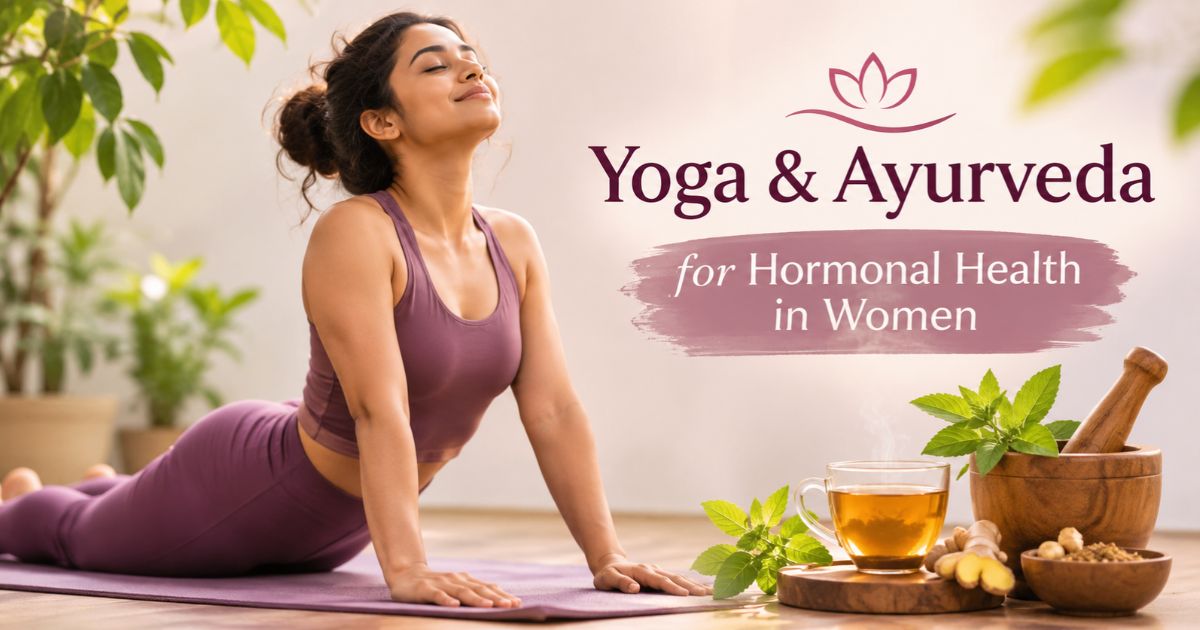
Yoga and Ayurveda for Hormonal Health in Women
Explore how yoga and Ayurvedic lifestyle practices may support women's hormonal health, stress management, menstrual wellness and overall wellbeing.
Yoga and Ayurveda for Hormonal Health: A Gentle Guide to Supporting Your Body Naturally
Hormonal changes can influence many aspects of a woman's life, from menstrual cycles and energy levels to sleep, mood, skin and metabolism. Sometimes these changes are part of a normal life stage. At other times, persistent symptoms may point to an underlying health concern that deserves attention.
Yoga and Ayurveda offer traditional approaches to wellbeing that focus on daily habits, movement, rest, food and the connection between the mind and body. When practised thoughtfully, these approaches may complement modern healthcare by supporting stress management, physical activity and a more consistent self-care routine.
But can yoga and Ayurveda actually balance hormones?
The answer needs some context. Yoga may help support wellbeing and certain symptoms, and early research has explored its role in conditions such as PCOS and premenstrual syndrome. Ayurveda offers a traditional framework for understanding individual health and daily routines. However, neither yoga nor Ayurvedic practices are proven cures for hormonal disorders, and they should not replace medical assessment or prescribed treatment.
This guide explores how these traditions approach women's hormonal health, what modern research suggests, and how to build a safe, realistic routine.
1. Understanding Hormonal Health in Women
Hormones are chemical messengers produced by glands and tissues throughout the body. They travel through the bloodstream and help coordinate processes such as growth, reproduction, metabolism, sleep and stress responses.
Women's hormonal health involves several interconnected systems.
Key hormones involved in women's health
Oestrogen: Plays a role in menstrual cycle regulation, reproductive health, bone health and other body functions.
Progesterone: Helps regulate the menstrual cycle and supports the uterine lining during the reproductive cycle and pregnancy.
Follicle-stimulating hormone (FSH) and luteinising hormone (LH): Produced by the pituitary gland, these hormones help regulate ovarian function and ovulation.
Insulin: Helps regulate blood glucose. Insulin resistance can be associated with PCOS in some women.
2. The Ayurvedic Perspective on Hormonal Health
Ayurveda is a traditional Indian system of health that considers a person's constitution, daily habits, digestion, environment and overall wellbeing.
Rather than describing hormones in the same way as modern endocrinology, Ayurveda uses concepts such as doshas, agni, dhatus and ojas to explain health and physiological balance.
These are traditional Ayurvedic concepts, not direct equivalents of hormone levels or modern medical diagnoses.
Understanding the three doshas
Ayurveda describes three doshas: Vata, Pitta and Kapha. Each is traditionally associated with different qualities and functions.
Vata
Vata is associated with movement and regulation. In Ayurvedic descriptions, it is connected with processes such as movement, circulation and elimination.
Pitta
Pitta is associated with transformation, heat and metabolism. It is traditionally linked with digestion and metabolic processes.
Kapha
Kapha is associated with stability, structure and lubrication. It is traditionally linked with strength, nourishment and physical stability.
Ayurvedic practitioners may consider these principles when discussing an individual's health and lifestyle. However, dosha assessments cannot diagnose PCOS, thyroid disease, infertility or other endocrine conditions.
What are agni and ojas?
Agni refers to the digestive and transformative principle in Ayurveda. Traditional Ayurvedic approaches emphasise regular meals and digestive wellbeing.
Ojas is traditionally described as a subtle essence associated with vitality and resilience.
These ideas may encourage reflection on nourishment, rest and sustainable habits. They should not be interpreted as measurable medical markers of hormone balance.
What modern evidence says
There is not enough high-quality clinical evidence to show that adjusting doshas, agni or ojas directly changes reproductive hormone levels or treats endocrine disorders.
Practical takeaway: Ayurveda can provide a culturally meaningful framework for building consistent routines, but symptoms and suspected hormonal conditions still need appropriate medical evaluation.
3. How Yoga May Support Hormonal Wellbeing
Yoga combines physical postures, breathing exercises, relaxation and, in some traditions, meditation. Its benefits are not limited to flexibility.
For many women, yoga can be a manageable form of physical activity and a way to create time for rest and awareness.
Stress management and emotional wellbeing
Stress can influence sleep, mood, appetite and daily functioning. Relaxation practices such as slow breathing, meditation and gentle yoga may help some people feel calmer and manage perceived stress.
This does not mean that yoga directly controls reproductive hormones or reverses a hormonal disorder. Its potential value is as one part of a broader approach to wellbeing.
Physical activity and metabolic health
Regular physical activity supports cardiovascular fitness, muscle strength, insulin sensitivity and general health.
For women with PCOS, physical activity is an important part of long-term health management. The 2023 international evidence-based PCOS guideline recommends sustainable activity based on individual preferences and goals. It does not identify one exercise type as best for all hormonal, reproductive or metabolic outcomes.
Yoga can contribute to a movement routine, but it may not provide all the aerobic and muscle-strengthening activity a person needs.
Sleep and relaxation
A calming evening routine, gentle stretching and relaxation exercises may help some women prepare for sleep. Better sleep can support energy, mood and overall health.
Persistent insomnia, severe fatigue or sleep disturbances should not automatically be attributed to hormonal imbalance. They may need separate assessment.
What research says about yoga and PCOS
A systematic review and meta-analysis published in 2021 examined yoga therapy in women with PCOS. It reported possible improvements in some outcomes, including menstrual irregularity and measures related to insulin and blood glucose. However, the authors rated the overall strength of evidence as low and called for better-designed trials.
A 2026 systematic review also described yoga as a promising complementary approach, while highlighting the small number of studies, differences in study methods and limited generalisability.
Practical takeaway: Yoga may be a useful addition to PCOS care and general wellbeing, but it should not replace prescribed medication, recommended investigations, nutrition support or follow-up with a healthcare professional.
4. Yoga Practices to Include in a Women's Wellness Routine
There is no single yoga sequence that is proven to balance hormones. The most appropriate practice depends on fitness, symptoms, medical history, pregnancy status and personal comfort.
The following poses are examples of gentle movements that some people find helpful for flexibility, relaxation and body awareness.
1. Baddha Konasana (Bound Angle Pose)
How To Do Bound Angle Pose + Modifications & Misalignments | The Yogatique
Sit with the soles of your feet together and allow your knees to relax outward. Keep your spine comfortably upright.
May support: Hip mobility, gentle stretching and relaxation.
Remember: It does not directly regulate ovarian hormones or treat menstrual disorders.
2. Marjaryasana-Bitilasana (Cat-Cow Pose)
腰痠到不行?這7招「下背放鬆伸展」幫你快速解除疼痛,重拾輕盈感!
Begin on your hands and knees. Slowly round your back as you exhale, then gently lift your chest and tailbone as you inhale.
May support: Spinal mobility, coordination with breathing and gentle movement.
3. Balasana (Child's Pose)
Woman in light green sportswear practices yoga. Balasana pose. child's pose.
Kneel on the mat, bring your hips towards your heels and rest your upper body forward as comfortably as possible. Support your head or knees with cushions if needed.
May support: Relaxation and gentle stretching.
4. Viparita Karani (Legs-Up-the-Wall Pose)
Legs Up the Wall Pose: How to Practice Viparita Karani
Lie on your back with your legs supported by a wall. Adjust the distance so the position feels comfortable.
May support: Relaxation after a tiring day.
Caution: Avoid or modify this pose if it causes discomfort or is unsuitable for your health condition. Ask your clinician if you have concerns about inversion-like positions.
5. Sukhasana (Easy Seated Pose)
Yoga for Stress Relief | Liforme
Sit comfortably with your legs crossed, shoulders relaxed and spine naturally upright. Rest your hands on your thighs.
May support: Comfortable breathing, mindfulness and a regular relaxation practice.
A note on yoga during menstruation
There is no universal rule that every woman must stop yoga during menstruation. Gentle movement may feel comfortable for some, while others may prefer rest.
Choose what feels appropriate for your body. Avoid pushing through severe pain, dizziness, unusually heavy bleeding or significant weakness. Seek medical advice for symptoms that are severe or unusual for you.
5. Pranayama and Meditation for Stress Management
Pranayama refers to traditional yogic breathing practices. Some techniques use slow, controlled breathing, while others involve more vigorous or specialised patterns.
For a beginner, gentle breathing exercises are usually a sensible place to start.
Nadi Shodhana (Alternate Nostril Breathing)
This practice involves gently alternating the flow of breath through the nostrils.
A simple approach:
Sit in a comfortable position.
Relax your shoulders and jaw.
Use your thumb to close one nostril and breathe gently through the other.
Switch sides and continue at a comfortable pace.
Stop if you feel dizzy, breathless or uncomfortable.
It may help create a calm, focused pause in the day. There is not sufficient evidence to say that it directly balances oestrogen, progesterone or other reproductive hormones.
Bhramari (Humming Bee Breath)
Bhramari involves making a soft humming sound while exhaling.
A simple approach:
Sit comfortably with your eyes gently closed.
Take a relaxed breath in.
Exhale slowly while making a soft humming sound.
Repeat a few times without straining.
Some people find the practice soothing. Avoid forcing the breath or holding it for long periods.
Meditation and mindfulness
A few minutes of quiet attention can help some women become more aware of stress, emotions and physical sensations.
You might try:
A short guided meditation
Mindful breathing
A body-scan relaxation exercise
A few minutes of quiet reflection before bedtime
These practices are supportive tools, not treatments for anxiety disorders, depression or endocrine conditions.
6. Ayurvedic Daily Routines for Women's Wellness
Ayurveda places importance on Dinacharya, often translated as a daily routine. The traditional idea is that regular habits can support wellbeing and create a steady rhythm to everyday life.
Modern health research also recognises the value of consistent sleep, balanced nutrition and regular physical activity. The specific Ayurvedic explanations and modern scientific explanations are not necessarily the same.
Start the day at a consistent time
Try to wake up at a time that allows adequate sleep. A fixed wake-up time can help create a predictable daily rhythm.
There is no need to follow an early-morning schedule if it leaves you sleep-deprived.
Eat regular, balanced meals
Ayurveda traditionally emphasises meal routines and digestive comfort. A practical modern approach is to eat varied meals that provide enough energy, protein, fibre and essential nutrients.
Avoid restrictive diets or skipping meals in an attempt to change hormone levels.
Include daily movement
Yoga, walking, cycling, swimming, dancing and strength training can all contribute to physical activity.
Choose a routine that is enjoyable and realistic enough to maintain. If you have PCOS, the international guideline supports sustainable physical activity according to individual needs and preferences.
Protect your sleep routine
Try to:
Keep a consistent bedtime and wake-up time.
Reduce bright-screen use close to bedtime if it affects your sleep.
Create a comfortable, quiet sleeping environment.
Avoid relying on caffeine late in the day if it disrupts your rest.
Adults generally need at least seven hours of sleep each night, although individual needs vary.
Make space for recovery
Rest is part of a sustainable wellness routine. If you feel exhausted, unwell or unusually sore, adjust your activity rather than forcing yourself through a demanding yoga session.
7. Ayurvedic Food Habits and Hormonal Health
Food is an important part of both traditional Ayurveda and modern preventive healthcare. Ayurveda often recommends considering digestion, season, constitution and food combinations when planning meals.
Modern nutrition focuses on the overall dietary pattern, nutrient adequacy and individual health needs.
No particular food or Ayurvedic diet has been proven to balance all hormones. A varied, balanced eating pattern can, however, support general and metabolic health.
Include a variety of nourishing foods
A balanced Indian meal may include:
Protein: Dal, chickpeas, rajma, beans, paneer, tofu, curd or other suitable protein sources.
Whole grains: Whole-wheat roti, oats, millets, brown rice or other minimally processed grains.
Vegetables: A range of seasonal and colourful vegetables.
Fruits: Whole fruits such as guava, papaya, oranges, apples and berries.
Healthy fats: Nuts, seeds and appropriate amounts of oils.
Calcium-rich foods: Milk, curd, fortified alternatives or other suitable sources.
The right portions and food choices vary with age, activity, medical history, dietary needs and personal preferences.
Foods containing fibre
Fibre-rich foods such as vegetables, fruits, legumes and whole grains support digestive health and can help with blood glucose management.
For women with PCOS or insulin resistance, a balanced eating pattern may form part of a broader care plan. There is no single PCOS diet that works best for every woman.
Include adequate protein
Protein supports muscle maintenance, tissue repair and general nutrition. Include a suitable protein source in meals according to your dietary preferences and health needs.
Avoid unnecessary food restrictions
Eliminating entire food groups without a medical reason can make it harder to meet nutritional needs. If you suspect a food intolerance or have a condition requiring dietary changes, consult a registered dietitian or qualified healthcare professional.
8. Yoga and Ayurveda Across Different Stages of a Woman's Life
Hormonal needs and experiences change throughout life. A routine that feels comfortable in one stage may need adjustment in another.
Menstrual health and PMS
Some women experience cramps, bloating, fatigue, breast tenderness or mood changes before or during their periods.
Gentle yoga, relaxation and regular physical activity may help some women manage discomfort. A 2024 systematic review and meta-analysis examined yoga for premenstrual syndrome and reported potential benefits, although individual responses and the quality of the underlying evidence should be considered.
Ayurveda traditionally encourages routines and food habits that support comfort during menstruation. These practices can be adapted to personal needs, but should not be used to dismiss severe symptoms.
Seek medical advice if period pain affects everyday activities, bleeding is unusually heavy, or symptoms are worsening.
PCOS and metabolic health
PCOS is a complex hormonal and metabolic condition. It may involve irregular ovulation, elevated androgen levels, acne, excess facial or body hair, scalp hair thinning and metabolic concerns.
Yoga may support physical activity, stress management and quality of life. Some small studies have explored changes in menstrual and metabolic outcomes, but the evidence is not strong enough to regard yoga as a standalone PCOS treatment.
Ayurvedic lifestyle practices may help some women develop consistent routines. However, they should complement—not replace—evidence-based PCOS care.
Fertility and preconception
Trying to conceive can be emotionally demanding. Gentle yoga, relaxation and mindful routines may support general wellbeing during this time.
However, yoga and Ayurveda have not been established as treatments for infertility. If conception is taking longer than expected, a fertility assessment can help identify possible causes and appropriate options.
Women who are pregnant or trying to conceive should check with their healthcare professional before starting herbal preparations, intensive cleansing practices or unfamiliar yoga techniques.
Pregnancy and postpartum
Pregnancy changes the body's movement, balance, circulation and nutritional needs. Prenatal yoga may be suitable for some women when adapted to the stage of pregnancy and their health circumstances.
Postpartum recovery also varies. The timing and type of exercise should take account of delivery, healing, pelvic-floor symptoms, bleeding and overall recovery.
Avoid assuming that a general online yoga sequence is appropriate during pregnancy or after childbirth. Seek guidance from a qualified prenatal or postnatal yoga instructor and your healthcare professional.
Perimenopause and menopause
During perimenopause and menopause, changing hormone levels can be associated with hot flashes, night sweats, sleep disturbance, mood changes and vaginal or urinary symptoms.
Gentle yoga, breathing exercises and regular movement may support relaxation, mobility and general wellbeing. They are not proven to stop menopause or replace treatments for troublesome symptoms.
Women experiencing persistent symptoms can discuss evidence-based options with a healthcare professional.
9. Myths and Facts About Yoga, Ayurveda and Hormones
Myth 1: Yoga can cure hormonal imbalance.
Fact: Yoga may support physical activity, stress management and quality of life. It has not been established as a cure for hormonal disorders such as PCOS or thyroid disease.
Myth 2: Certain yoga poses directly stimulate the ovaries.
Fact: Some poses may improve flexibility or provide a feeling of relaxation, but there is no reliable evidence that a particular posture directly activates the ovaries or corrects hormone levels.
Myth 3: Ayurveda can balance every woman's hormones naturally.
Fact: Ayurveda is a traditional system with individualised approaches to health. Its practices have not been proven to treat every hormonal condition. Some herbal products may also have side effects or interact with medication.
Myth 4: More intense yoga produces better hormonal results.
Fact: A demanding routine is not necessarily more beneficial. The appropriate level of activity depends on fitness, health conditions, recovery and personal comfort.
Myth 5: If you have regular periods, your hormones must be normal.
Fact: Menstrual regularity alone cannot confirm that all aspects of hormonal health are normal. Symptoms and medical history may indicate a need for assessment even when periods are regular.
10. Safety Considerations Before Starting Yoga or Ayurvedic Practices
Yoga is generally considered suitable for many people when appropriately adapted, but injuries can occur, especially with difficult postures, forceful movements or unsupervised practice.
Keep these precautions in mind:
Start with beginner-friendly movements and increase intensity gradually.
Do not force a stretch or continue through sharp pain.
Avoid breath-holding or forceful breathing if it causes discomfort.
Use modifications or props when needed.
Tell your instructor about relevant injuries, medical conditions or pregnancy.
Seek professional guidance before beginning yoga after surgery or a significant health event.
Be careful with Ayurvedic herbs and supplements
Natural products are not automatically safe. Herbal preparations can vary in quality, strength and ingredients. Some may interact with prescription medicines or be unsuitable during pregnancy and breastfeeding.
Certain Ayurvedic products have also been found to contain potentially harmful metals, including lead, mercury or arsenic. Discuss any supplement or herbal preparation with a qualified healthcare professional before using it, particularly if you take medication or have a chronic condition.
Do not stop prescribed medication or delay investigations in favour of yoga, herbs or detox practices.
11. A Simple Daily Yoga and Ayurveda-Inspired Routine
A routine does not need to be complicated to be useful. The following is a general example that can be adapted to your schedule and comfort.
Morning
Wake up after adequate sleep.
Drink water according to thirst.
Spend 5–10 minutes on gentle mobility or stretching.
Practise a few minutes of comfortable breathing.
Eat a balanced breakfast if it suits your routine.
During the day
Take regular movement breaks.
Include a balanced lunch with vegetables, protein and whole grains.
Stay hydrated.
Make time for a short walk or another form of enjoyable activity.
Evening
Choose gentle yoga, walking or another comfortable activity.
Eat a nourishing dinner that suits your needs.
Reduce activities that interfere with sleep.
Try a short relaxation or mindfulness practice before bed.
This is a flexible example, not a prescribed treatment plan. You can start with just a few minutes of movement and build gradually.
12. When Should You Consult a Healthcare Professional?
Lifestyle practices can support wellbeing, but they cannot identify the cause of persistent symptoms.
Consider seeking medical advice if you experience:
Repeatedly missed or significantly irregular periods
Very heavy menstrual bleeding
Severe period pain or pelvic pain
New or worsening facial hair growth or scalp hair thinning
Persistent acne alongside menstrual changes
Unexplained weight changes with other symptoms
Ongoing fatigue, palpitations or unusual temperature sensitivity
Hot flashes or sleep problems that affect daily life
Difficulty conceiving
Seek urgent medical care for severe or sudden pelvic pain, fainting, very heavy bleeding with weakness or dizziness, or symptoms that may indicate an emergency.
A gynaecologist, endocrinologist or primary healthcare professional can assess symptoms and recommend appropriate investigations. A qualified Ayurveda practitioner may be consulted for traditional lifestyle guidance, provided this does not delay necessary medical care.
Final Thoughts: Build a Routine That Supports Your Wellbeing
Yoga and Ayurveda offer two different but potentially complementary ways to think about everyday wellbeing. Yoga can provide movement, breathing and relaxation. Ayurvedic traditions can encourage reflection on food habits, daily routines and individual needs.
Neither approach should be treated as a guaranteed way to balance hormones. The strongest foundation for women's health remains a combination of appropriate medical care, nourishing food, regular physical activity, sufficient sleep and support for emotional wellbeing.
Start gently, choose practices you can maintain and pay attention to how your body responds. If symptoms persist or interfere with daily life, seek professional advice rather than trying to manage them through lifestyle changes alone.
Your health deserves an approach that respects both traditional knowledge and modern medical evidence.
Disclaimer
This article is intended for educational and informational purposes only. It does not replace professional medical advice, diagnosis or treatment. Yoga and Ayurvedic practices should not be considered guaranteed treatments for hormonal conditions or substitutes for prescribed medication. Consult a qualified healthcare professional
before making significant changes to your health routine. Seek guidance from an appropriately qualified Ayurveda practitioner when considering individualised Ayurvedic care, particularly if you are pregnant, breastfeeding, taking medication or managing a chronic health condition.
Frequently Asked Questions
Share this post
Comments (0)
No comments yet. Be the first to comment!